
Introduction
Every fall the lawn goes quiet. Grass stops growing, leaves fall, and the mower earns a long rest. The question every owner faces is how to winterize a lawn mower for storage so that it starts again in spring. A mower pushed into the corner dirty and full of old gasoline often refuses to start when warm weather returns. Old fuel turns thick and gummy. Moisture finds its way into the engine. Metal parts rust in the damp air of winter. Each spring, repair shops fill up with mowers that need only one thing: they were never put to bed properly. This guide walks through the whole job in plain steps. With a few basic tools and one free afternoon, you can do it yourself and save a repair bill.
Why Winterizing Your Mower Matters: How to Winterize Lawn Mower for Storage
A lawn mower is a small machine, but it holds fuel, oil, and sharp steel. Left alone for four or five months, each of these can cause trouble.
Gasoline goes stale in about thirty days. After that it begins to break down, and the ethanol blended into most pump gas pulls moisture from the air. The mixture turns into a sticky varnish that clogs the narrow passages of the carburetor. A clogged carburetor is the number one reason mowers fail to start in spring. Treating or draining the fuel in fall prevents this problem before it starts.
Old oil is almost as bad. Used engine oil holds acids and fine metal dust from a season of work. When it sits in the crankcase all winter, those acids eat at seals and bearings. Fresh oil costs a few dollars and protects the engine while it waits.
Rust is the third enemy. Caked grass under the deck holds moisture against bare steel. Over a winter, that moisture leaves pits and flakes. A deck with rust holes cuts poorly and can be unsafe. Cleaning and drying the deck in fall adds years to the machine.
Finally, winterizing protects your money. A basic tune-up at a dealer costs between seventy-five and one hundred fifty dollars. The same job at home costs twenty to forty dollars in parts. Owners who follow the owner’s manual also keep their warranty in good standing. A mower that is stored well simply lasts longer, cuts better, and asks for less each year.
What You Will Need
Gather your supplies before you begin. You will need fuel stabilizer, fresh engine oil of the grade your manual calls for, a new spark plug, a new air filter or filter oil, a wire brush, dish soap, a bucket or garden hose, clean rags, a funnel, an oil drain pan, and a breathable storage cover. A pair of work gloves and safety glasses round out the list.
Check the owner’s manual for the exact oil grade, plug number, and filter type. Manuals for most major brands are posted online. You can find Toro maintenance guidance at the Toro website, and Deere owner manuals cover their full line of walk-behind and riding mowers. Briggs and Stratton publishes clear engine maintenance tips for the engines found on many mowers.
Related searches people use include “winterize riding mower for winter storage”, “lawn mower winter storage checklist”, and “prepare lawn mower for winter storage”. The steps below cover them all.
When to Winterize
Timing matters as much as method. In most of the country, mowers should be winterized after the last cut of the season, usually in late October or early November. Do not wait for the first hard frost. Fuel begins to break down the moment it leaves the pump, and a mower that sits for weeks before you get to it has already started the decay process.
A good rule is simple: when the grass stops growing, winterize the mower that same week. Clean it, treat the fuel, and put it away. Owners in warm states who mow year round can skip the full job, but a mid-season cleaning and oil change still pays off. Owners who store mowers in unheated sheds in the north face the harshest cold, and for them the fuel and battery steps are the most important of all.
How to Winterize a Gas Lawn Mower, Step by Step
Start with a mower that is cool. Never work on a hot engine, and never work near an open flame. Work outside or in a garage with the door open so fumes can escape.
Treat the Fuel
You have two choices: stabilize the fuel or drain it. Stabilizing is easier. Add fuel stabilizer to a tank of fresh gasoline, following the amount printed on the bottle. Run the engine for five minutes so the treated fuel moves through the carburetor. Then shut the mower off.
Draining works too. Run the mower until it uses up the gas in the tank, then let it cool. Some owners siphon the tank dry instead. Pour leftover gas into an approved container and take it to a fuel disposal site. Do not pour it on the ground or into a drain.
Change the Oil
Warm the engine for two or three minutes so the oil flows freely, then shut it off and let it cool enough to touch. Disconnect the spark plug wire. Tip the mower toward the oil drain or open the drain plug, and let the old oil flow into the pan. Refill with fresh oil to the mark on the dipstick. Do not overfill. Take the used oil to a recycling drop-off.
Clean the Deck
Tilt the mower so the air filter side faces up. Pull the spark plug wire off and tuck it aside. Scrape the caked grass from under the deck with a wire brush or a plastic scraper. Wash the deck with soap and water, then dry it fully. A dry deck cannot rust. While the deck is clean, inspect the blade. If it is dull or nicked, now is the right time to act. Many owners look up where to buy lawn mower blades near me before spring, but a fall swap means the mower is ready to cut on the first warm day. Others prefer a lawn mower blade sharpening service near me to keep the original blade in shape.
Check the Spark Plug and Air Filter
Pull the spark plug and look at it. If it is black, oily, or cracked, put in a new one. A new plug costs a few dollars and makes spring starts much easier. Replace the air filter as well, or clean a foam filter with soap and water and re-oil it lightly. A clean filter lets the engine breathe.
Fog the Engine
With the plug out, spray a short shot of fogging oil into the cylinder. Pull the starter cord slowly two or three times to spread the oil over the cylinder walls. Put the plug back in and reconnect the wire. This thin coat of oil stops rust from forming inside the engine during the long rest. This step is optional, but it is wise in damp climates.
Winterizing a Riding Mower
Riding mowers need the same steps plus a few extras. Remove the battery, clean the terminals, and store it on a shelf indoors on a trickle charger. A battery left in a cold shed often dies by spring. Check the deck belt for cracks and wear; a riding mower deck belt replacement guide shows how to swap it before it snaps in tall grass. Inflate the tires to the pressure printed on the sidewall, and park the mower on boards or a mat so the tires do not sit in damp concrete.
How to Winterize a Battery or Electric Mower
Battery and corded electric mowers need no fuel or oil, so the job is shorter. Clean the deck and housing with a damp rag. Dry everything. Remove the battery pack and bring it indoors. Charge it to about half full; a battery stored fully dead or fully charged loses life. Wipe the battery contacts clean. Coil the charger cord loosely and store it with the mower. Keep the whole unit in a dry place. Corded models need only a cleaning and a dry spot, with the cord coiled free of kinks.
What Winterizing Costs
Doing the job yourself costs little. A bottle of fuel stabilizer runs five to eight dollars. A quart of small-engine oil costs four to seven dollars. A spark plug costs three to six dollars, and an air filter costs five to fifteen dollars depending on the model. A basic cover costs fifteen to thirty dollars. Most owners spend twenty to forty dollars in total.
A dealer winterization service costs seventy-five to one hundred fifty dollars for a walk-behind mower and more for a riding mower. The service includes the same steps plus a general inspection. Owners who are short on time or unsure about the blade often choose the dealer. Either way, the cost is far less than a carburetor rebuild, which often runs over one hundred dollars.
Care and Upkeep During Storage
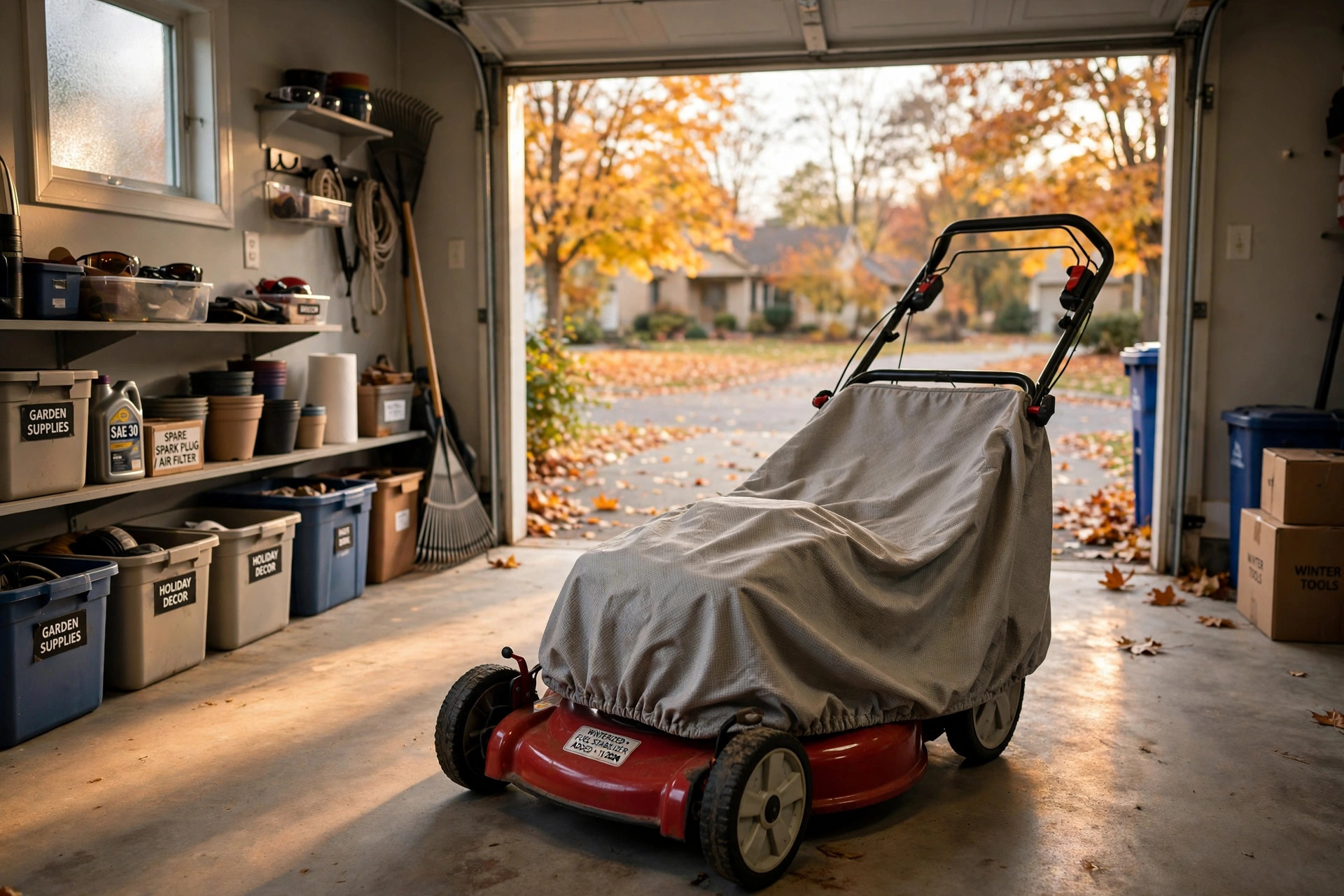
Store the mower indoors if you can. A garage or shed keeps rain and snow off the machine. Cover it with a breathable cover, not a plastic tarp that traps moisture. Keep the mower level so no fluids leak, and keep it away from furnaces, water heaters, and any open flame.
Resist the urge to start the mower “just to keep it running” in midwinter. A brief start builds moisture in the muffler and crankcase without burning it off, which does more harm than good. Once a month, look under the cover. Check for mouse nests, chewed wires, or puddles. On a riding mower, glance at tire pressure. That is all the winter care the machine needs.
Safety Tips
Safety comes first with any small engine. Let the engine cool fully before you begin. Always disconnect the spark plug wire before you tip the mower or touch the blade. Wear gloves and safety glasses when you scrape the deck or handle the blade. Work where fumes can escape, and keep gasoline in approved containers far from heat and sparks. Keep children and pets away from the work area. Wash your hands after handling oil and fuel.
Frequently Asked Questions
Should I drain the gas or use fuel stabilizer?
Either method works. Stabilizer is easier: add it to fresh gas, run the engine five minutes, and you are done. Draining works well too, but you must get the carburetor dry or leftover fuel will still gum up. Most owners choose stabilizer for its simplicity.
Can I leave the old oil in the mower over winter?
It is not wise. Used oil holds acids that attack engine parts during long storage. An oil change takes ten minutes and costs a few dollars. Put it on your fall checklist and do it every year.
Where is the best place to store my mower?
A dry garage or shed is best. Keep it covered, level, and away from heat sources. If you must store it outside, use a quality breathable cover and park it on boards or concrete, never on bare soil.
Do I need to winterize an electric mower?
Yes, though the job is simpler. Clean it, dry it, remove the battery, store the battery half charged indoors, and keep the mower in a dry spot. No fuel or oil steps apply.
How long does winterizing take?
About one hour for a walk-behind mower and about two hours for a riding mower. The first time takes longer as you learn the steps. After that it becomes a quick fall habit.
A Final Word
A mower asks for little. One hour of care in the fall buys a machine that starts on the first pull in spring. Clean the deck, treat the fuel, change the oil, and store it dry. Your mower, your wallet, and your spring weekends will all be better for it.
References
Briggs & Stratton. (n.d.). Small engine maintenance and repair. https://www.briggsandstratton.com Deere. (n.d.). Lawn mower manuals and maintenance. https://www.deere.com Toro. (n.d.). Lawn mower care and maintenance guides. https://www.toro.com
Was this guide helpful?

About Lisa Anderson
The My Garden US editorial team writes practical, in-depth home and garden guides for American homeowners — tested advice, no fluff.
You May Also Like

The Best Dandelion Killer That Wont Kill Grass
February 4, 2026 0 views
Affordable Tree Pruning Service Near Me: How to Find Good Work at a Fair Price
May 24, 2026 0 views
Zoysia Sod Installation Cost Near Me: What Homeowners Pay and Why
September 2, 2026 0 views