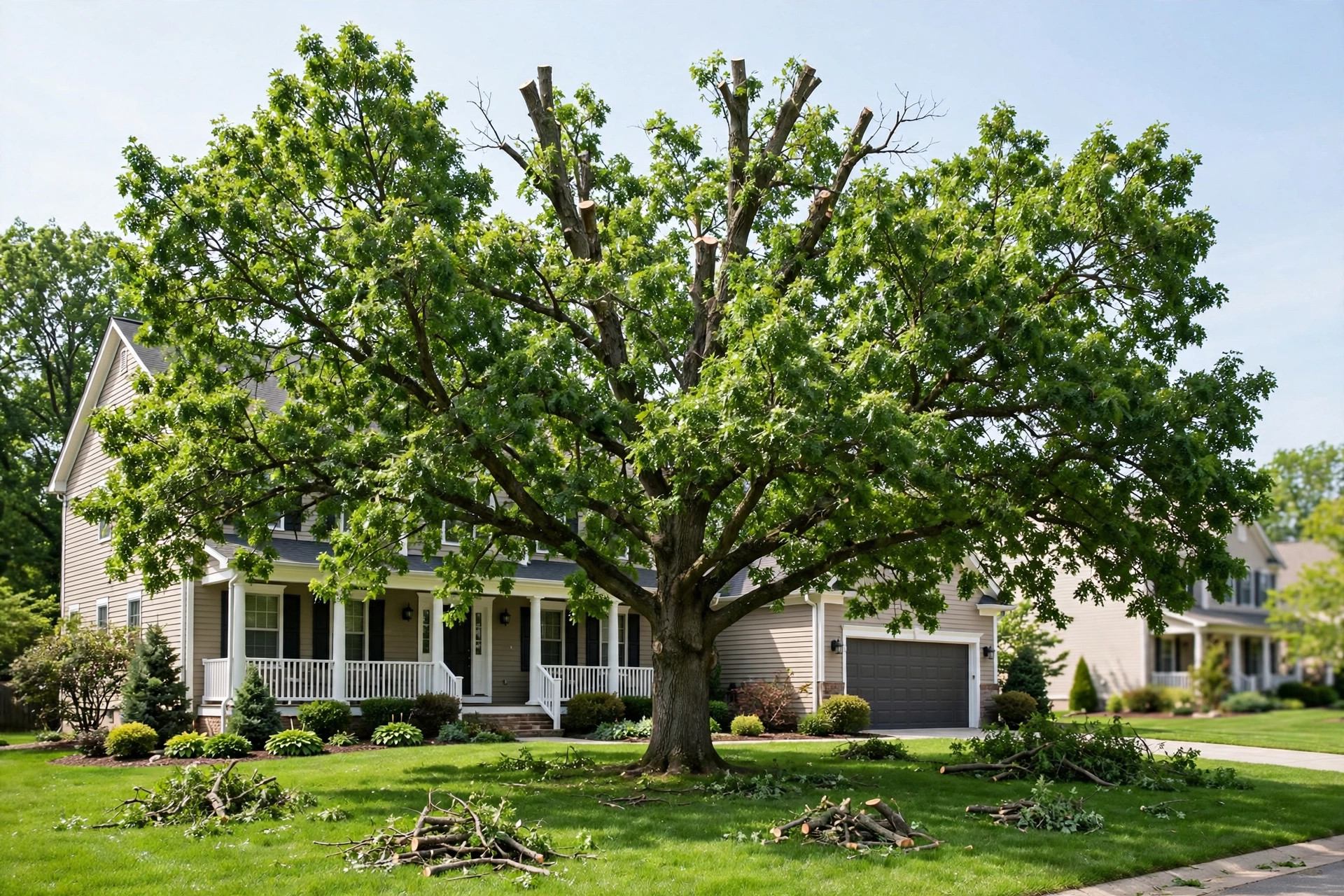

Most homeowners type “affordable tree pruning service near me” into a search box after a storm bends a limb over the roof, or after they notice dead branches hanging above the driveway. Trees are patient things. But every few years they need a careful hand. Pruning is that hand. It removes dead wood, opens the crown to light and air, and keeps branches clear of wires, roofs, and sidewalks.
The trouble is price. Tree work is skilled work, and it is not cheap. A bad company can charge too much and leave a tree worse than it found it. A good company does honest work at a fair price. This guide explains what pruning is, why it matters, what it should cost, and how to find an affordable tree pruning service near me that you can trust with your yard.
Why Tree Pruning Matters
A tree left to itself will grow fine in the woods. In a yard it is another story. Yard trees grow close to houses, fences, power lines, and play areas. Branches die back with age and drop in wind. A thick crown blocks sun from the lawn and traps damp air that invites disease. Pruning answers these problems before they turn into bills.
Dead branches are the first reason to prune. Dead wood is brittle. It falls without warning, and it can fall on a car, a roof, or a person. A good pruner finds dead limbs and removes them at the branch collar, the swollen ring where the branch meets the trunk. This is the tree’s own healing point. Cut there and the wound seals itself in time.
The second reason is shape. A young tree trained with a few well placed cuts will grow strong for decades. A mature tree benefits from thinning. Thinning takes out crowded or crossing branches so light reaches the inner leaves and wind passes through instead of pushing against a solid wall of leaves. This is how trees survive storms.
The third reason is safety around structures. Branches that rub the roof wear away shingles. Branches that touch power lines can start fires or knock out service. Many power companies clear their own lines, but the branches over your own yard are your duty. Homeowners who plan pruning before branches reach the house save money and avoid emergency calls.
What to Look For When You Hire: Affordable Tree Pruning Service near Me
Not every person with a chainsaw is a tree worker. The best crews study trees for years. When you search for an affordable tree pruning service near me, use these points to judge the companies that answer.
First, look for training and proof. A certified arborist has passed a national exam on tree care. Ask for proof of insurance too. The company should carry liability insurance and workers’ compensation. Tree work is dangerous. If a worker is hurt on your land and the company has no coverage, the bill can land on you.
Second, ask how they will prune. The answer should name the method: cleaning dead wood, thinning the crown, or raising low limbs. Beware of anyone who suggests “topping” a tree, cutting the top branches straight across to make it shorter. Topping ruins the tree’s shape, leaves large open wounds, and causes weak new growth that breaks in storms. Any honest service refuses to top trees.
Third, get the price in writing. A clear quote lists the trees, the work to be done on each, the cleanup, and the total price. A vague quote invites surprise charges. Good companies visit the property before they quote.
Fourth, watch how they treat the tree. Professional pruners sterilize tools between cuts on diseased trees. They never leave torn bark. They cut just outside the branch collar and never cut into the trunk. Ask one question: “Where will you make the cut?” The answer tells you if they know the craft.
Types of Tree Pruning Services
Most jobs fall into a few common types. Knowing the names helps you ask for the right work and understand the quote.
Crown Cleaning
Cleaning is the simplest job. The crew removes dead, dying, and diseased branches from the crown. They also remove weak sprouts and broken limbs. Cleaning is good maintenance for healthy trees, and it is often the most affordable option. Many homeowners schedule a cleaning every three to five years.
Crown Thinning
Thinning removes select live branches to reduce crowding. It does not change the size or shape of the tree. It lets light and air move through the crown. Thinning is common for oaks, maples, and other shade trees that grow dense crowns. It costs more than cleaning because every cut is a choice.
Crown Raising
Raising removes the lower branches to lift the crown. It gives clearance over lawns, driveways, and sidewalks. It lets mower decks pass under and gives shade trees a tidy look. Raising is often done on street trees and on trees near play areas. The rule is simple: never remove so much lower growth that the tree loses more than a quarter of its live crown in one year.
Some companies also offer fine pruning for ornamental trees such as a japanese maple tree for front yard. Ornamental trees need smaller, more careful cuts. If you own one, ask whether the crew has experience with that species. Fine pruning takes longer and costs a little more, but it keeps the tree’s natural shape.
If a dead tree must come out, pruning no longer helps. The stump that remains is a separate job. You can read about an affordable tree stump grinding service near me to learn what that work involves and what it costs.
Cost and Price: What Affordable Really Means
Tree pruning prices vary with the size of the tree, the number of branches, and how hard the tree is to reach. Small ornamental trees may cost one to two hundred dollars to prune. A medium shade tree often runs two to four hundred. A large mature oak with a wide crown can cost five hundred to a thousand dollars or more. These are broad ranges, and prices differ by region.
Affordable does not mean the lowest price. It means fair work for a fair price. The cheapest quote often skips the cleanup, rushes the cuts, or comes from an uninsured crew. The most expensive quote is not always the best either. The middle quote, in writing, from an insured company, is usually the honest one.
You can lower the cost in a few ways. Schedule pruning in late winter or early spring, when trees are dormant and crews have open calendars. Combine trees: having three trees pruned in one visit costs less per tree than three separate visits. Clear the area under the tree so the crew can work fast. Ask whether the company chips the brush on site or hauls it away, and agree on that point before work starts.
One more point on price: free estimates are the standard in this trade. If a company wants to charge you to look at the tree, look elsewhere. And never pay the full amount up front. A small deposit for a large job is fair. The balance is due when the work is done and the yard is clean.
How to Check a Local Service
Once you have a few names, check them before you sign. This takes an hour and saves many headaches.
Call two or three references and ask what the yard looked like after the crew left. Ask whether the crew arrived on time and whether the final bill matched the quote. Read online reviews, but read them with care. A few bad reviews among many good ones are normal. A pattern of the same complaint is a warning.
Check the company’s standing with the state or county if your area requires a license for tree work. Some states require one, some do not. Where a license exists, it is a basic test of competence. Insurance matters more. Ask for a certificate of insurance with your name on it as the certificate holder. This is a normal request, and honest companies provide it gladly.
Meet the crew leader if you can. Ask how long they have pruned trees and what method they plan for your trees. A worker who speaks about trees with respect is a worker who will treat your yard with respect. Trust your own eyes. A clean truck, sharp tools, and ropes in good order are small signs of a careful trade.
Safety on the Job
Tree work is one of the most dangerous trades in the country. Branches fall where physics says they fall, and physics does not care about your fence. A safe crew plans the work before the first cut. They rope off the drop zone. They know where each branch will land. They never work under another person’s cutting zone.
Homeowners have a safety role too. Keep children and pets inside while the crew works. Falling branches bounce in odd directions. Park cars well away from the tree. Tell the crew about buried lines, septic fields, and soft ground where a truck could sink. If the tree stands near power lines, say so at once. Utility lines need the power company, not a private crew.
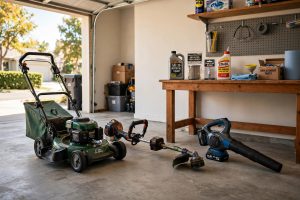
Equipment matters. Modern pruning tools and pole saws from established makers help crews make clean cuts. If a company shows up with one ladder and a dull saw, send them home. Good tools are a sign of good work, and many homeowners read product reviews to learn which saws and trimmers professionals favor. For the heavier yard equipment behind a tree service, makers like Deere set the standard.
Caring for Your Trees After Pruning
Pruning is surgery, and trees heal with time and care. After a crew leaves, walk the yard and check the cuts. They should be smooth and just outside the branch collar. There should be no stubs and no torn bark.
Water young trees in dry weeks after pruning. Do not paint the cuts. Tree paint was once common, but studies showed it slows healing. The tree seals its own wounds if the cut is placed right. Mulch around the base with two to three inches of wood chips, kept a hand’s width from the trunk. This holds moisture and keeps mowers from nicking the bark.
Watch the tree through the growing season. New growth should be even and green. If a branch starts to die back below a cut, call the company. Good companies stand behind their work and will come back to look. Pruning on a schedule is the cheapest form of tree care. A small cut today stops a big bill tomorrow.
After pruning, tree roots sometimes send up shoots into the lawn. These suckers are normal, especially after heavy work. Mowing them down is usually enough. If roots are lifting concrete or breaking into pipes, the problem is larger than pruning. You can learn how serious root problems are handled in this guide on how to remove tree roots from lawn.
Frequently Asked Questions
How often should I prune my trees? Most shade trees need attention every three to five years. Young trees benefit from a light training prune every two to three years. Fast-growing species need it more often. A yearly walk around the yard to spot dead limbs is free and wise.
What is the best season for tree pruning? Late winter to early spring, while the tree is dormant, is best for most species. The branch structure is easy to see, cuts heal fast in spring growth, and crews are less busy. Flowering trees that bloom in spring should be pruned just after they flower, so you do not cut off the buds.
Will pruning hurt my tree? Correct pruning does not hurt a healthy tree. Bad pruning does. Large cuts, cuts made into the trunk, and topping all cause lasting harm. This is why the skill of the crew matters more than the price. A fair quote from a trained crew is better than a cheap quote from a careless one.
Do I need a permit to prune my own trees? On your own land, pruning rarely needs a permit. But many cities protect certain trees, especially large heritage trees and street trees. Check with the city before you cut anything large. The fine for removing a protected tree can be steep.
Can I prune the trees myself? Small branches within reach of the ground are fine for a careful homeowner with sharp, clean tools. Anything that needs a ladder, a chainsaw, or rope work belongs to professionals. Falls from ladders and kickback from saws injure thousands of people each year. The savings are not worth the risk.
A Final Word
Trees add value to a home that no other feature can match. They ask only for a little care now and then. When you search for an affordable tree pruning service near me, you are not just buying a few hours of labor. You are buying the long life of a living thing in your yard.
Take the time to choose well. Get quotes in writing. Check insurance. Ask about methods and listen to the answers. Then stand back and let skilled hands do the work. In a year or two the cuts will be hard to find, and the tree will stand stronger for it. That is the quiet mark of honest tree care, and it is worth every dollar of a fair price.
References
Toro. (n.d.). Lawn and landscape equipment. https://www.toro.com Deere & Company. (n.d.). Outdoor power equipment. https://www.deere.com Consumer Reports. (n.d.). Product reviews and ratings. https://www.consumerreports.org
Was this guide helpful?

About Sarah Mitchell
The My Garden US editorial team writes practical, in-depth home and garden guides for American homeowners — tested advice, no fluff.
You May Also Like
The Best Gas Leaf Blower Under 300 Dollars for American Yards
August 19, 2026 0 views
Natural Mosquito Yard Treatment Safe for Pets
June 1, 2026 0 views
Lawn Care Service for Rental Properties: What Every Landlord Should Know
January 27, 2026 0 views