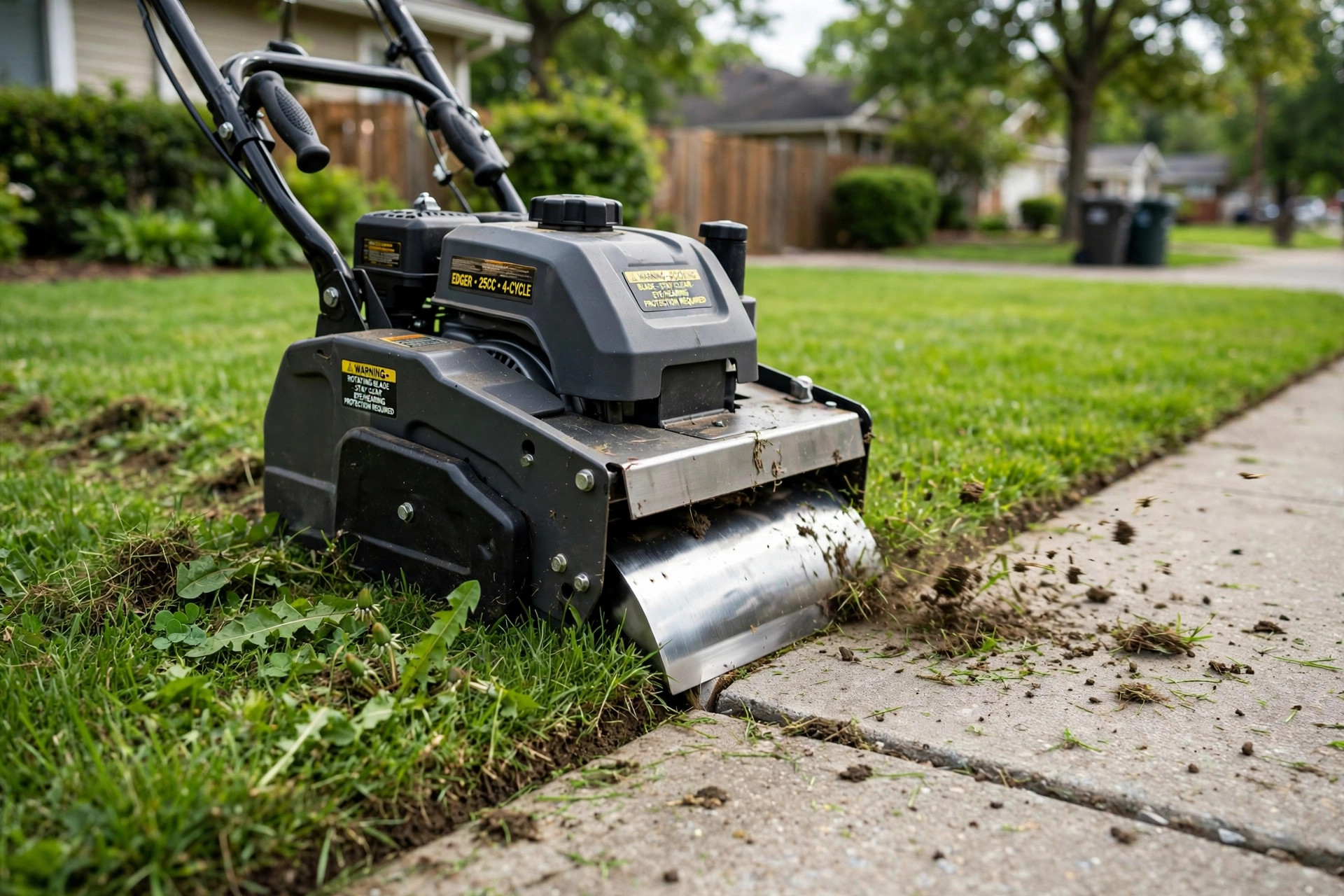
A lawn edger is a simple tool. It cuts a clean line where grass meets the walkway, the driveway, or the curb. When the blade wears down, the cut grows ragged. Grass tears instead of cutting. The lawn looks tired even after mowing. This best lawn edger blade replacement guide will walk you through the whole job, from spotting a worn blade to choosing the right new one and putting it on.
An edger blade is not expensive. Most replacements cost less than a tank of gas. Yet many homeowners wait too long to change one. They blame the tool when the real problem is a dull or bent blade. A fresh blade can make an old edger feel new again. The work takes about fifteen minutes with basic hand tools.
Why It Matters
Crisp lawn edges change the whole look of a yard. They frame the grass the way a frame holds a picture. Real estate agents know this trick well. A home with sharp edges looks cared for from the street. A home with ragged edges looks forgotten, even if the grass is green.
A sharp edger blade also keeps grass healthy. A clean cut heals fast. A torn edge gives fungus and weeds a way in. Over a season, ragged edging can let grass creep into beds and paths, which means more work later. The best lawn edger blade replacement guide starts with this simple point: a fresh blade saves time, money, and grass.
There is also a safety side to this story. A bent or cracked blade can break at speed. A worn blade forces you to push harder and walk faster, which raises the chance of a slip. Keeping the blade in good shape is basic care for any power tool.
Signs Your Blade Needs Replacing: Best Lawn Edger Blade Replacement Guide
Dull or Rounded Teeth
Look at the cutting edge. A good blade has a crisp edge or sharp teeth, depending on the type. If the edge shines like a spoon and feels round to the touch, it is worn. Filing can help for a time, but once metal is gone, it is gone. Plan a replacement.
Bent or Cracked Blade
Hold the blade up and sight along it. It should be straight and flat. A bend from hitting a rock or curb will not straighten well. A crack is worse. Hairline cracks can spread under speed and heat. Do not use a cracked blade. Replace it at once.
Vibration and Poor Cuts
If the edger shakes more than it used to, or the cut leaves torn grass instead of clean slices, the blade is past its best. Uneven wear can throw the blade off balance. This is a clear sign it is time for a new one.
Rust and Pitting
Some rust on the surface is normal, especially after rain. Deep pitting is not. Pits thin the metal and weaken the edge. If more than a third of the blade face is pitted, replacement is the safe choice.
What to Look for When Buying a Replacement
Blade Size and Diameter
Edger blades come in fixed sizes, often 7-1/2 inch or 9 inch for common walk-behind and stick edgers. Check your owner manual for the exact size. A blade that is too large will hit the housing. One that is too small will cut shallow and leave grass behind. Measure the old blade across its widest point if the manual is lost.
Arbor Hole and Mount Style
The arbor hole is the center hole that fits on the shaft. Common sizes are 5/8 inch and 1 inch, but some brands use their own mount. Bring the old blade to the store for a match, or write down the model number of your edger before you shop.
Steel Quality and Thickness
Look for hardened steel. Thicker blades, usually around 0.080 to 0.105 inch, hold up longer in tough soil. Thin blades cut well at first but bend more easily on rocks and roots. For sandy soil, a good hardened blade will last a full season or more.
Tooth Style
Flat blades with a beveled edge cut clean in soft ground. Toothed blades bite better in hard, packed soil. Some blades have a star or serrated pattern that helps pull through roots. Match the style to your soil. If your yard has many roots near the edge, a toothed blade is worth the small extra cost.
Brand Match vs. Universal Fit
Maker blades, sold by the company that built your edger, fit with no guesswork. Universal blades fit many models and often cost less. Both can work well. If you choose universal, check the size, arbor, and thickness against your old blade before you buy. Many owners find that the maker blade is the surest path when they are following a best lawn edger blade replacement guide for the first time.
Types of Edger Blades
Steel Flat Blades
The standard choice. A flat disc of hardened steel with a sharpened edge. It suits most lawns and most edgers. Simple, cheap, and easy to find.
Serrated or Toothed Blades
These blades carry teeth around the rim. They chew through packed soil, roots, and thick thatch. They are a good pick for first-time edging along old, overgrown borders. They cost a bit more and wear faster on concrete, so keep them off the sidewalk.
Heavy-Duty and Commercial Blades
Thicker steel, sometimes with extra hardening. Made for daily use by lawn crews. A homeowner may never wear one out, but the higher price is hard to justify for a small yard. They are a fair choice for large lots or rental use.
Replacement Blade Kits
Some kits bundle the blade with a new bolt, washer, and depth guide. This is handy when the old hardware is rusted. A fresh bolt threads on easier and holds torque better. If your edger is more than five years old, a kit can be good value.
Step-by-Step Blade Replacement
Work on a flat, stable surface. Wear gloves and eye protection. Unplug the edger or remove the spark plug wire so the motor cannot start by accident.
1. Secure the edger. Tip a gas or electric stick edger so the blade is easy to reach. For walk-behind models, set the parking brake and block the wheels. 2. Remove the old blade. Most edgers hold the blade with a single bolt or nut. The thread is often reverse, meaning you turn clockwise to loosen. Check the manual. Hold the blade still with a gloved hand or a block of wood and turn the bolt. 3. Clean the shaft and housing. Wipe away grass, dirt, and rust from the shaft and the inside of the guard. Check the shaft for wobble. A bent shaft will ruin a new blade fast and should be fixed first. 4. Fit the new blade. Slide the arbor hole over the shaft. Note the direction of cut, which is usually marked with an arrow on the blade or guard. The blade must spin so the cutting edge meets the grass first. 5. Tighten the hardware. Use a new washer if one came with the kit. Tighten the bolt to a firm snug, not with all your strength. Over-tightening can warp a thin blade. 6. Test by hand. Spin the blade by hand. It should turn free and true, with no wobble or rubbing on the guard. Then run the edger for a few seconds and listen for new vibration.
Keep the old blade for reference until the job is done. If the new blade does not fit, the old one helps the store find the right match. When you are sure the new blade is right, recycle the old steel with other scrap metal.
Cost and Price Expectations
A basic replacement blade costs between eight and twenty dollars at most home stores. Maker blades run a few dollars more than universal ones. Toothed and heavy-duty blades can reach twenty-five dollars. Blade kits with hardware add five to ten dollars.
Hiring a small-engine shop to do the swap usually costs thirty to sixty dollars, including the part. Most homeowners do it themselves in under twenty minutes. Compared with the cost of a new edger, which can run several hundred dollars, a fresh blade is one of the cheapest ways to renew a yard tool.
If you also want your mower blades kept sharp, a lawn mower blade sharpening service near me search can find local shops, and a riding mower deck belt replacement guide covers the other common wear part on larger machines.
Care and Upkeep
A blade lasts longer with a little care. After each use, brush off wet grass and soil. Moisture left on steel invites rust. Once a month in season, wipe the blade with an oily rag. This thin coat of oil keeps rust away.
Set the cutting depth so the blade cuts soil and grass, not concrete. Every scrape on the sidewalk wears the edge fast. If your edger has a depth guide wheel, keep it clean and rolling. A stuck wheel drags the blade too deep.
Sharpen a flat blade once or twice a season with a file or a bench grinder, keeping the original bevel angle. Take off as little metal as you can. A blade can be sharpened only a few times before it grows too thin. When sharpening no longer brings back a clean cut, replace it. Readers comparing tool types may like this cordless edger vs gas edger comparison guide before their next purchase.
Store the edger in a dry shed or garage. Hanging it on the wall keeps the blade off damp concrete. Before winter storage, clean the blade, oil it, and cover the tool. In spring, inspect the blade before the first cut.
Safety Tips
Treat the blade with respect at all times. Disconnect power before you touch it. Wear gloves when handling, because even a worn blade can cut skin. Wear safety glasses when edging, since the blade throws small stones and dirt.
Clear the work area before you start. Pick up toys, sticks, and stones along the edge. Keep children and pets away while the edger runs. Never reach under the guard while the motor is on, even if grass is caught. Stop the motor first.
Check that the guard is in place and undamaged. The guard is your shield against flying debris. If it is cracked or missing, replace it before you use the tool. The U.S. Consumer Product Safety Commission offers general guidance on safe use of outdoor power tools at https://www.cpsc.gov.
FAQ
How often should I replace an edger blade?
For a typical home lawn edged every week or two, expect one season to two seasons from a blade. Heavy soil, roots, and frequent contact with concrete shorten its life. Inspect the blade each spring and mid-season.
Can I sharpen my edger blade instead of replacing it?
Yes, a few times. Flat blades sharpen well with a file. Toothed blades are harder to sharpen by hand. Once the blade is thin, bent, or cracked, sharpening is no longer safe or useful. Replace it.
Do all edger brands use the same blade?
No. Size, arbor hole, and thickness vary by brand and model. Always check your manual or measure the old blade. A cordless edger vs gas edger comparison guide can also help you learn which blade types each style uses.
What size blade does my edger need?
Most home edgers use 7-1/2 inch or 9 inch blades. Look for the size stamped on the old blade or listed in the manual. When in doubt, bring the old blade to the store.
Why does my new blade vibrate?
A new blade should run smooth. Vibration often means the blade is on backward, the bolt is loose, or the washer is missing. It can also mean the shaft is bent. Stop the tool and check each of these.
Is it worth buying the brand-name blade?
Often yes, for the exact fit. Universal blades work too if the size and arbor match. For a first replacement, the brand blade removes the guesswork, which is why this best lawn edger blade replacement guide suggests it for beginners.
A Short Final Word
Replacing an edger blade is one of the simplest jobs in lawn care. It costs little, takes minutes, and changes the look of the whole yard. Keep a spare blade on the shelf so you never have to edge with a dull one. For trusted product information, see the maker sites at https://www.toro.com and https://www.deere.com, engine guidance at https://www.briggsandstratton.com, and independent reviews at https://www.consumerreports.org. A sharp blade, a steady hand, and a clean edge will make your lawn the best-looking one on the street.
References
Briggs & Stratton. (n.d.). Outdoor power equipment engines. https://www.briggsandstratton.com Consumer Reports. (n.d.). Product ratings and reviews. https://www.consumerreports.org Toro. (n.d.). Lawn care and landscape equipment. https://www.toro.com Deere & Company. (n.d.). Lawn and grounds care equipment. https://www.deere.com U.S. Consumer Product Safety Commission. (n.d.). Outdoor power equipment safety. https://www.cpsc.gov
Was this guide helpful?

About Robert Taylor
The My Garden US editorial team writes practical, in-depth home and garden guides for American homeowners — tested advice, no fluff.