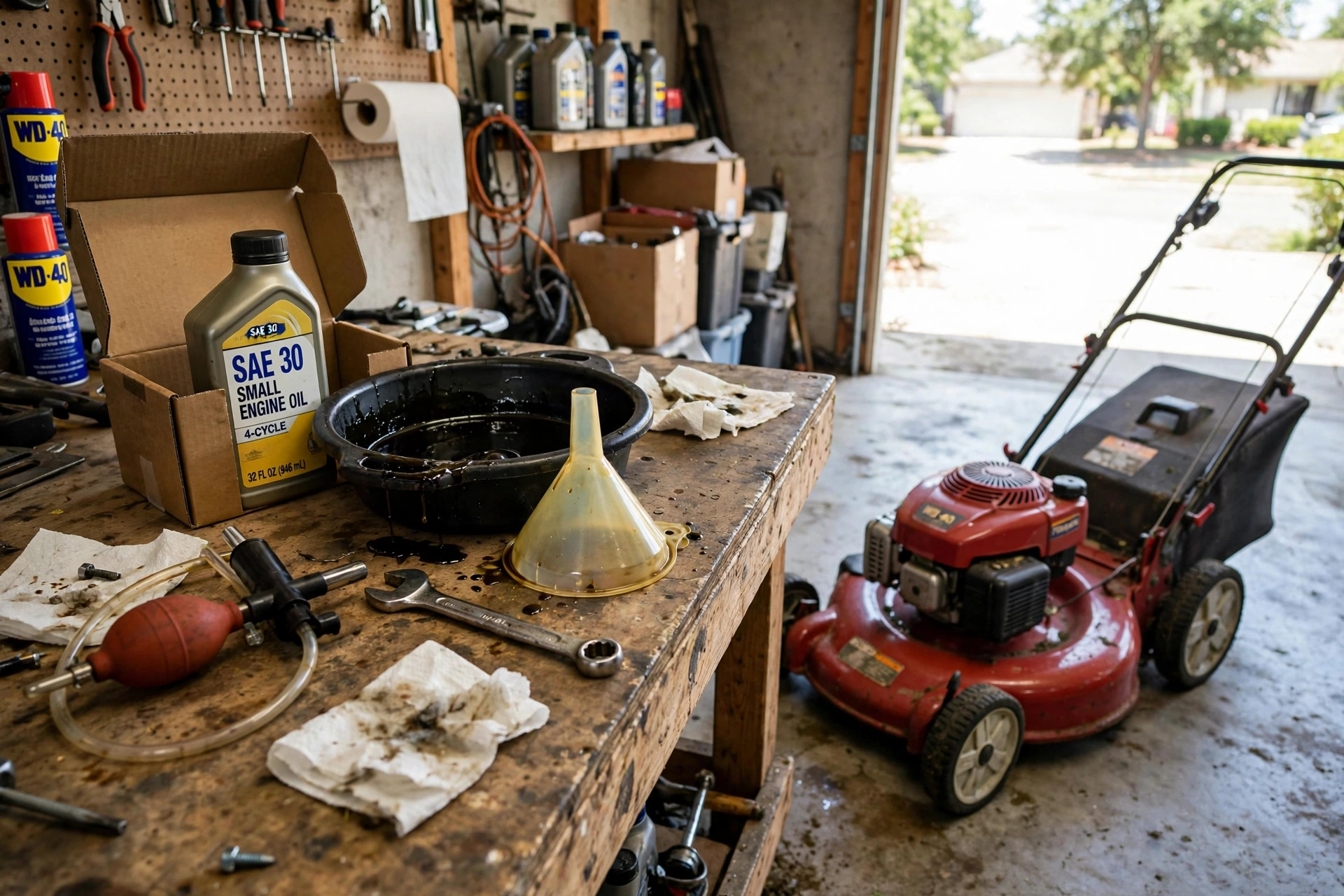

Every spring, millions of Americans roll their lawn mower out of the garage and pull the cord. The engine turns over, the blade spins, and the season begins. What many people forget is what sits inside that small engine. A lawn mower oil change kit for homeowners takes care of that forgotten detail. It is a simple box of parts and fluids that lets a person change the engine oil at home, without a trip to the repair shop.
Clean oil is the lifeblood of a small engine. Old oil breaks down and collects dirt, metal dust, and moisture. When oil goes bad, the engine runs hot and wears out faster. A kit removes the guesswork from the job. It holds the right oil, a drain container, and often a small funnel or pump. Everything arrives in one package.
This guide explains what these kits include and how to pick one.
Why It Matters
A lawn mower engine works hard. It runs at high speed in dust and heat. It shakes. It vibrates. The oil inside it has a hard life. Most makers of small engines suggest an oil change once a year, or every 25 to 50 hours of use. Many owners never change the oil at all. They add a little when the level drops low. That is not the same as a change. Old oil keeps getting older.
Fresh oil protects moving parts. It carries heat away from the piston and traps tiny bits of dirt so they do not grind between metal surfaces. When oil stays too long, it turns dark and thin, and the engine wears out years earlier than it should.
A kit matters because it lowers the barrier. Without a kit, the owner must research which oil the engine takes and find a container for the old oil. A kit answers those questions in advance.
There is also a money angle. A shop may charge thirty dollars or more for a mower oil change, while a kit often costs less than half of that. It also saves the trip of hauling a heavy mower to the dealer.
What to Look For When You Choose a Kit: Lawn Mower Oil Change Kit for Homeowners
Not every kit suits every mower. The first thing to check is the engine maker and model. Common small engines come from Briggs & Stratton, Honda, Kohler, and Tecumseh. The owner can find the model number stamped on the engine cover or on a label near the spark plug. That number tells which oil weight the engine needs. Many walk-behind mowers use SAE 30 oil. Many newer engines use 10W-30. The kit label should state which weight is inside. When in doubt, the engine maker’s site can confirm the right oil. Briggs & Stratton keeps oil charts for its engines.
The second thing to check is oil capacity. A small walk-behind mower holds about 15 to 20 ounces of oil. A riding mower holds more, often 48 to 64 ounces. A kit made for a push mower will not hold enough oil for a rider. The box should list the oil volume. Match it to the mower’s manual.
The third thing is what comes in the box. A good kit includes the oil itself, a way to drain the old oil, and a way to pour the new oil without spilling. Some kits include a drain bottle that screws onto the drain plug. Some include a hand pump that pulls oil out through the fill tube. Pumps are clean and easy. They are a good pick for first-time owners.
Some kits also include extras, such as a new spark plug or air filter. These are nice, but buy them only if the mower also needs them.
One more point. Check that the oil is rated for small air-cooled engines. Car oil can work in a pinch, but small-engine oil handles heat better. The label often says “small engine” or shows a mower on the box. That is the right pick.
Types of Kits and Options on the Shelf
The simplest type is an oil-only kit: a bottle of the right oil and a small drain pan or bottle, while the owner supplies the funnel and wrench. The next type is the complete tune-up kit, which adds a spark plug, an air filter, and sometimes fuel stabilizer for the spring start-up. It costs more, but it covers the whole yearly service.
The third type is the no-mess kit, which uses a pump or a sealed drain bottle so there is no plug to open and no pan to spill. These kits cost the most and are worth it for first-time owners or for anyone who works in a clean garage.
There are also brand-specific kits and universal kits. A brand kit, sold by the engine maker such as Toro or Deere, is matched to their engines. A universal kit fits many engines but may not match perfectly. Either can do the job if the oil weight and volume match the engine.
Related maintenance often goes hand in hand with an oil change. Many owners sharpen or replace the blade in the same session; a look at a guide to finding a lawn mower blade sharpening service near you can help, or check where to buy lawn mower blades near you before the season starts. Riders may also need a riding mower deck belt replacement guide when belts crack with age. Doing these jobs together saves time.
Cost and Price
An oil-only kit usually sells for eight to fifteen dollars. A complete tune-up kit runs fifteen to thirty dollars. A no-mess pump kit can reach twenty-five to forty dollars. Brand kits sit at the high end of these ranges. Store-brand kits sit at the low end.
Compared with shop service, the savings are clear. A dealer oil change often costs thirty to sixty dollars, plus the cost and time of transport. A do-it-yourself change costs the price of the kit and about thirty minutes of work. Over ten years of mower life, that is a few hundred dollars saved.
Prices move with the season. Kits are cheapest in late winter, when stores stock up for spring, and dearest in mid-summer, when demand peaks. Buying one kit each spring is enough for most homes.
One cost people forget is the disposal of old oil. Many auto parts stores take used oil for free. Some towns have drop-off days. Dumping oil on the ground or in the trash is against the law in most states. The kit makes this easy because the drain bottle can be sealed and carried to the drop-off point.
Care and Upkeep of the Kit Itself
A kit is simple to store. Keep it in a dry place, out of direct sun and away from furnaces or water heaters, since heat and light break oil down over time. A garage shelf or a basement corner works well.
Check the seal on the oil bottle before use. If the seal is broken, the oil may be old or dirty. Do not use it. Most engine oil keeps for three to five years in a sealed bottle. After that, it is best to buy fresh oil.
After the job, clean the funnel and drain tools. Old oil left on tools gets sticky and attracts dirt. A rag and a little dish soap are enough. Let the tools dry before putting them away.
Keep the empty oil bottle for the used oil. Pour the old oil from the drain pan into the empty bottle. Cap it tight. Write “used oil” on the side with a marker. Take it to a collection point within a few weeks. Do not leave used oil sitting for months. It can leak and stain the floor.
Some owners keep a small log of maintenance. A note on the mower works well: write the date of the oil change on a piece of tape and stick it to the handle.
Safety
Small engines are simple machines, but they still demand care. Always work on a cool engine. Hot oil can burn skin. Let the mower sit for at least thirty minutes after its last use.
Work in a well-aired space. Run the engine only outdoors when warming it up. Exhaust fumes carry carbon monoxide, which is deadly in a closed garage. A short warm-up of one or two minutes is enough to thin the oil for draining. Then shut the engine off.
Disconnect the spark plug wire before tipping or touching the mower. This stops the engine from starting by accident. Pull the boot off the plug and tuck it away from the plug. Reconnect it only when the job is done.
Wear gloves and eye protection. Old oil irritates skin, and glasses guard against splashes when pouring.
Never tip the mower with the air filter side down. Oil can flood the filter and ruin it. Tip the mower toward the muffler side, or use a pump through the fill tube instead of tipping at all. The manual shows the safe direction.
Keep children and pets away from the work area. Clean up every spill right away. Cat litter soaks up oil on a garage floor; sweep it up and bag it for the trash.
Fire safety matters too. Wipe up spilled oil. Keep rags soaked in oil in a metal can with a lid. Do not smoke near gasoline or oil. These are small steps, but they prevent real harm.
How to Change the Oil, Step by Step
The actual job is short. Here is the full routine in plain order.
First, gather the kit and a few tools. You will need the kit, a wrench or socket for the drain plug, a rag, and gloves. If the kit has a pump, you will not need the wrench.
Second, warm the engine. Start the mower and let it run for one or two minutes. This thins the oil so it drains fast. Shut the engine off. Disconnect the spark plug wire.
Third, drain the old oil. With a drain plug: place the drain pan under the plug at the base of the engine, loosen it with the wrench, and let the oil flow out. With a pump: push the pump tube down the oil fill tube and pump the old oil into the sealed jug.
Fourth, let it finish. Give the engine five minutes to drip dry, tilting the mower slightly toward the drain side to get the last drops out.
Fifth, close the plug or remove the pump. If you used the plug, tighten it by hand and then give it a firm turn with the wrench. Do not over-tighten. It can strip the threads.
Sixth, add the new oil. Set the mower on level ground. Pour the new oil slowly through the funnel into the fill tube. Add a little less than the full amount, then check the dipstick. Top up in small pours until the level reaches the full mark. Do not overfill.
Seventh, clean up and check. Wipe the fill area. Reconnect the spark plug wire. Start the engine and let it run for one minute. Look under the mower for drips. If all is dry, the job is done. Write the date on a piece of tape and stick it to the handle.
The whole job takes about thirty minutes the first time. After that, it takes twenty.
Frequently Asked Questions
How often should I change the oil in my lawn mower? Most engine makers say once a year, or every 25 to 50 hours of use. For a normal weekly mowing routine, one change per year is enough: do it in spring before the season starts, or in fall before storage.
Can I use regular car oil in my lawn mower? You can in a pinch, but small-engine oil is better. Small engines run hotter than car engines, so oil made for them holds up better. Use the weight the manual calls for, usually SAE 30 or 10W-30.
Do I need to change the filter too? Most walk-behind mowers have no oil filter. Riding mowers often do. If your rider has an oil filter, change it with the oil. The kit or the manual will say if a filter is needed.
What do I do with the old oil? Put it in a sealed bottle and take it to a collection point. Most auto parts stores accept used oil for free. Never pour it on the ground or in the trash.
How do I know which kit fits my mower? Find the engine model number on the engine cover or a label. Match the oil weight and oil volume on the kit box to the engine’s needs. When in doubt, ask at the store or check the engine maker’s site.
Is it worth buying a pump kit if I have never changed oil before? Yes. A pump kit is the cleanest way to learn. There is no drain plug to find and no pan to spill.
A Final Word
A lawn mower oil change kit for homeowners is a small purchase with a large payoff. It keeps the engine clean, the mower running, and money in the pocket. The job takes less than an hour, the tools are few, and the steps are plain. Once a person does it the first time, it becomes a simple yearly habit.
References
Briggs & Stratton. (n.d.). Lawn mower engines and maintenance. https://www.briggsandstratton.com Toro. (n.d.). Lawn mowers and yard care products. https://www.toro.com Deere. (n.d.). Lawn care equipment. https://www.deere.com
Was this guide helpful?

About Jennifer Lee
The My Garden US editorial team writes practical, in-depth home and garden guides for American homeowners — tested advice, no fluff.
You May Also Like

Sod vs Seed Cost Comparison Guide: Which Way Saves You More?
September 28, 2026 0 views
Best Walk Behind String Mower Reviews: What the Tests Show
June 26, 2026 0 views
Best Weed Eater String Thickness for Weeds: A Plain Guide
January 10, 2026 0 views