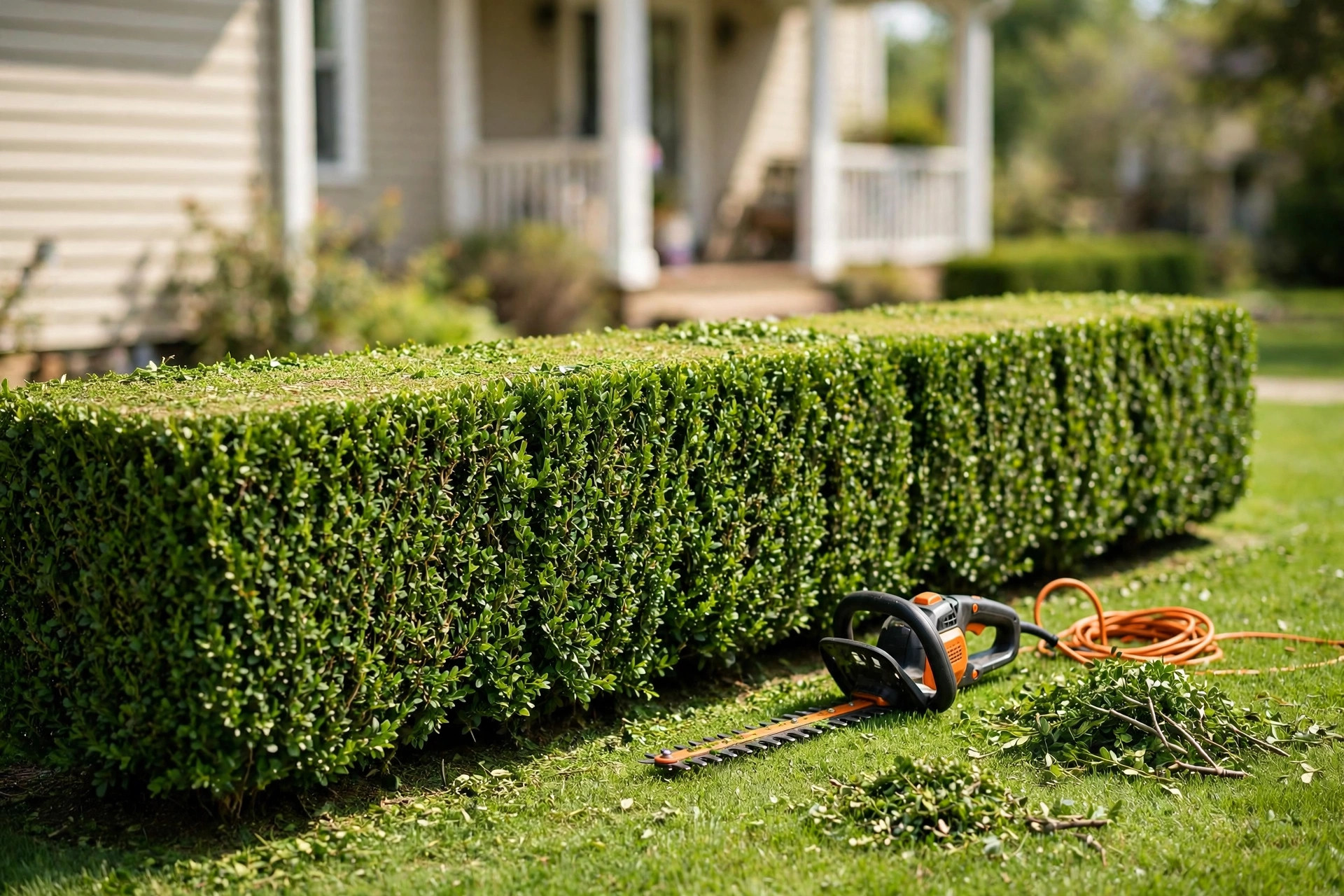

Many people who own a home also own a row of shrubs. They plant them for privacy or for looks. Then the shrubs grow. Branches reach out in every direction. The row starts to look wild. This is where the electric trimmer helps. To learn how to trim hedges with electric trimmer is to learn a basic home skill. It is not hard. It takes care, a few tools, and a little time. This guide walks through the whole job in plain steps.
Why Trimming Hedges Matters
A hedge is a living fence. It marks the edge of a yard. It gives shade to small birds. It softens the look of a house. But a hedge that no one trims soon becomes a problem. Long branches block walkways. They rub against the siding of a house. They shade out the lower leaves. Then the bottom of the hedge turns bare and brown. Light trimming each year keeps the plant thick from top to bottom.
Trimming also keeps the plant healthy. Dead branches invite insects and rot. When you cut them away, air moves through the leaves. Sun reaches the inner twigs. The plant answers with new growth. A trimmed hedge looks cared for. That lifts the look of the whole street. Neighbors notice. Home buyers notice too. A neat yard suggests a sound house.
There is also a question of timing. Most hedges do best with one main trim in late spring or early summer. This is after the first flush of growth hardens a little. A light second trim in late summer keeps the shape. Do not cut late in the fall in cold states. New growth needs weeks to harden before frost. Many lawn guides from makers such as Toro stress the same point. Cut at the right season, and the plant will thank you with dense green leaves.
What to Look for in an Electric Trimmer: How to Trim Hedges with Electric Trimmer
Before you cut, you need the right tool. Electric trimmers come in two kinds. Corded models plug into an outlet. Battery models run on a rechargeable pack. Both cut with a row of small teeth that slide back and forth. They are lighter than gas trimmers. They start at the press of a button. They make less noise. For a home hedge, either kind will do.
Look at blade length first. An 18-inch blade suits most home hedges. A 22-inch blade covers more ground with each pass. It also weighs more. If your arms tire fast, pick the shorter blade. Look at cutting capacity next. Most electric trimmers cut branches up to three-quarters of an inch thick. For thick old branches, use loppers by hand. Do not force the trimmer through thick wood. That dulls the teeth and strains the motor.
Check the grip. You will hold the tool at arm’s length for many minutes. A wrap-around front handle lets you turn the blade sideways for top cuts. A lock-off switch is a must. It stops the tool from starting by accident. Some models add a blade guard that flips down during work. That is a good safety touch.
If you are shopping, read a few battery powered hedge trimmer reviews before you buy. In practice, owners who read such battery powered hedge trimmer reviews often learn which brands last. Briggs & Stratton has sold small power gear for many years. Its site lists trimmer specs that help you compare. Match the tool to your yard, not to the largest motor on the shelf.
Types of Electric Trimmers and Options
Corded trimmers are the old hands. They cost less. They never run out of charge mid-job. Their weak point is the cord. You must plan your path so the cord stays behind you. You need an outdoor-rated extension cord of the right gauge. A thin cord starves the motor of power. For a small yard near the house, a corded trimmer is a fine choice.
Battery trimmers are the new wave. They free you from the cord. They weigh a little more because of the pack. Run time is the main limit. A 40-volt pack gives about forty to sixty minutes of light cutting. That is enough for most home hedges. Keep a second pack on the charger. Then you can swap and keep working. Many makers now share one battery across many tools. One pack may fit a trimmer, a mower, and a blower from the same line.
Pole trimmers are a third option. A long shaft reaches tall hedges from the ground. This saves you a ladder. If your hedge stands above your head, a pole trimmer is the safe answer. Some pole trimmers break into two parts for storage. Check the total reach before you buy. Add your own arm length to the shaft length. That is how high you can cut.
There is also the simple hand shear. It has no motor. For a short hedge or for small touch-ups, hand shears give the cleanest cut. Many gardeners use the electric trimmer for the bulk of the work. Then they finish the fine edges with hand shears. The mix gives speed and a sharp look.
How to Trim Hedges With an Electric Trimmer: Step by Step
Work on a dry day. Wet leaves clog the teeth. Wet ground makes you slip. Wear eye protection, gloves, and long pants. Long sleeves guard your arms from scratches. Ear plugs help with the buzz of the motor. Keep children and pets inside the house while you work.
Start with a plan. Decide the shape before you cut. Most hedges look best a little wider at the bottom than at the top. This shape lets sun reach the lower leaves. The top may sit a few inches narrower than the base. Walk the length of the hedge. Mark dead or broken branches with a twist of string. You will cut these first.
For a straight top, set a guide line. Tie a string between two stakes at the height you want. Keep the string tight. This line is your level. It is the oldest trick in the trade. It works every time.
Begin with the sides. Hold the trimmer so the blade runs up and down. Start at the bottom. Sweep the blade in a slow arc up toward the top. Let the teeth do the work. Do not push hard. Move the tool a few feet, then step to the side. Work in short passes. Step back often to check your line. It is easy to cut too much when you stand too close.
Cut the top last. Turn the blade flat. Sweep it along the string line. Keep a light touch. The top sets the look of the whole hedge. Take your time here. If the hedge is tall, use a pole trimmer or a steady ladder with a helper holding it. Never lean far off a ladder with a running tool.
After the rough shape is set, walk the hedge again. Look for high spots and low spots. Snip them with hand shears. This second pass is what turns a rough cut into a clean job. Rake up the clippings. A lawn full of cut twigs looks poor. The clippings also choke the grass under the hedge. Bag them for the curb or feed them to a compost pile.
If you are new to power tools, the learning curve is short. Most owners feel at ease after one session. For tips on pairing tools, see this guide to top rated string trimmers for thick weeds which covers edge work around shrubs. And for steep ground near hedges, read about fence line trimmers for steep slopes.
Cost and Price
An electric hedge trimmer is not a dear tool. Corded models sell for about forty to eighty dollars. Battery models with one pack sell for about one hundred to two hundred dollars. A spare battery pack adds thirty to eighty dollars. Pole trimmers cost a little more than hand-held models. Hand shears cost ten to twenty dollars. A good pair of loppers for thick branches costs twenty to forty dollars.
Safety gear is cheap. Eye glasses cost a few dollars. Work gloves cost under ten dollars. A sturdy extension cord rated for outdoor use costs twenty to thirty dollars. Buy the cord once. A good cord lasts for years.
Hiring a pro is the other choice. A yard service may charge fifty to one hundred fifty dollars for a hedge trim, based on length and height. If you trim twice a year, the cost adds up. Buying your own trimmer pays for itself in one or two seasons. The tool also serves other jobs. You can shape shrubs, cut back vines, and trim ornamental grasses with the same tool.
Care and Upkeep of Your Trimmer
A trimmer is a simple machine. It still needs care. After each use, brush the blades clean. A stiff brush takes off sap and leaf paste. Wipe the blades with a cloth. Then add a light coat of oil along the teeth. This stops rust. It also keeps the teeth sliding free. Many makers sell a spray oil made for this job.
Check the bolts now and then. Vibration shakes them loose. Tighten the blade bolts with the tool unplugged. Never service a trimmer that is plugged in or has a battery in place. For a corded model, check the cord for cuts before each use. A cut cord is a shock risk. Replace it at once.
Store the trimmer in a dry place. Hang it on the wall or lay it flat with the blade cover on. Do not leave it out in rain. For battery models, charge the pack as the maker directs. Do not leave a dead pack on the shelf for months. Most packs last longer when stored at about half charge in a cool room.
Sharpening matters too. Dull teeth tear leaves instead of cutting them. Torn leaves turn brown at the edges. The hedge looks ragged. A file and a steady hand can sharpen the teeth. Follow the angle of the factory edge. If the teeth are nicked or bent, take the tool to a shop. Some makers, such as Deere, list service dealers on their homepages. A yearly shop check keeps the tool like new.
Safety Rules to Respect
An electric trimmer is a cutting tool. Treat it with respect. Always unplug the tool or remove the battery before you touch the blades. Never clear a jam with your fingers while the tool has power. Use a stick or a brush.
Watch the cord. With a corded model, keep the cord over your shoulder and behind you. Cut away from the cord, never toward it. It is easy to slice a cord that lies in your path. If you cut the cord, stop. Unplug at the outlet first. Then deal with the damage.
Watch your footing. Do not stand on a wobbly chair. Do not reach too far. Move the ladder often instead of leaning. Do not work in rain or on wet grass with an electric tool. Water and current do not mix. The Consumer Product Safety Commission tracks tool injuries each year. Many could be stopped by simple habits like these.
Take breaks. Arms tire. Tired arms make poor cuts and poor choices. Rest every twenty minutes. Drink water. Work in the cool of the morning if you can. A fresh worker is a safe worker.
Frequently Asked Questions
When is the best time of year to trim hedges? Late spring or early summer suits most hedges. Cut after the spring growth firms up. Avoid heavy cuts in late fall. New growth needs time to harden before cold weather comes.
Can an electric trimmer cut thick branches? It can cut branches up to about three-quarters of an inch. For thicker wood, use loppers. Forcing the trimmer through thick branches dulls the teeth. It can also burn out the motor.
How often should I trim my hedges? Once or twice a year is enough for most hedges. Fast growers like privet may need three light trims. A light trim more often beats one harsh cut. Harsh cuts stress the plant.
Is a battery trimmer as strong as a corded one? For home hedges, yes. Modern battery trimmers match corded power for light to medium work. The corded tool wins on run time. It never needs a recharge. Pick the kind that fits your yard and your habits.
What shape should a hedge be? Make it a little wider at the bottom than at the top. This lets light reach the lower leaves. A flat top with straight sides looks neat. Rounded tops suit some styles. Keep one shape along the whole row.
What do I do with the clippings? Rake them up the same day. Small soft clippings can go in a compost pile. Thick woody stems go in yard waste bags for curb pickup. Do not leave them on the lawn. They smother the grass.
A Final Word
Learning how to trim hedges with electric trimmer is a skill that pays back each year. The job takes an hour or two. The hedge rewards you with clean lines and thick growth. Start with the right tool. Wear your safety gear. Cut in small passes. Step back and look often. The hedge will look sharp, and you will know you did it yourself.
References
Toro. (n.d.). Lawn and landscape equipment. https://www.toro.com Deere. (n.d.). Lawn care and outdoor power equipment. https://www.deere.com Briggs & Stratton. (n.d.). Outdoor power equipment and engines. https://www.briggsandstratton.com
Was this guide helpful?

About Sarah Mitchell
The My Garden US editorial team writes practical, in-depth home and garden guides for American homeowners — tested advice, no fluff.
You May Also Like
Lawn Irrigation Winterization Service Near Me: What to Know Before the First Freeze
September 23, 2026 0 views
Lawn Grub Treatment Schedule by Zone: A Year-Round Plan
September 17, 2026 0 views
How to Find Affordable Lawn Care Plans Near Me
March 11, 2026 0 views