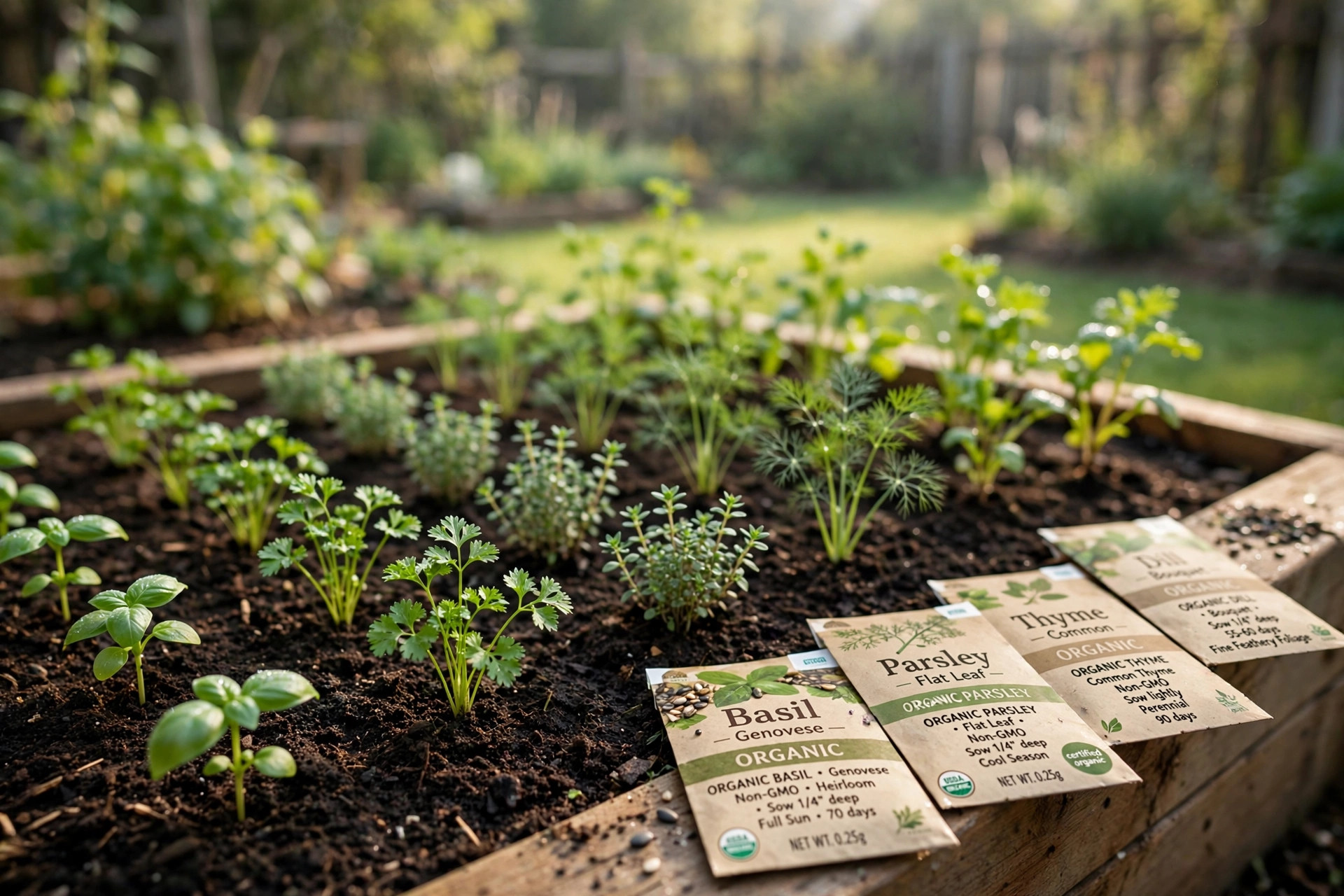

More Americans are growing their own herbs at home, and many of them begin with this organic herb seeds reviews buying guide usa search. Fresh basil, parsley, and thyme grown from seed taste better than the dried jars on a store shelf. They also cost less over time. A packet of seeds that sells for two or three dollars can fill a whole garden bed. But not all seed packets are equal. This guide explains what “organic” means on a seed packet, how to read reviews, and how to choose seeds that will actually grow.
Why Growing Herbs From Organic Seed Matters
Herbs are among the easiest plants a beginner can grow. They ask for little: sunlight, decent soil, and water. When you start them from organic seed, you control the whole story of the plant. No chemical seed coatings go into your soil. No synthetic treatments touch your food. For families with children, this matters. For cooks who care about flavor, it matters too.
Growing from seed also gives you choice. A garden center may sell six kinds of basil. A seed catalog can offer sixty. You can pick a lemon basil for fish, a purple ruffle basil for salads, or a slow-bolting basil that holds up through hot summers. That range is the real reward of buying seeds.
There is one more benefit. Herbs grown at home draw bees and other helpers to your yard. A small patch of flowering thyme or dill feeds pollinators all season long.
What “Organic” Means on a Seed Packet: Organic Herb Seeds Reviews Buying Guide Usa
The word organic on a seed packet has a legal meaning in the United States. Certified organic seed comes from plants grown under organic rules. The farm uses no synthetic pesticides or fertilizers on the parent plants. The seed itself carries no chemical coating.
Some packets say “untreated” instead. Untreated means the seed has no chemical coating, but the parent farm may not have been certified organic. Some packets say “open-pollinated.” That means the variety breeds true to type, so you can save the seed. Some say “hybrid,” which means the seed was crossed for vigor but may not grow true next year.
Read the label before you buy. Look for the words “certified organic seed” and the name of the certifying body. A trustworthy seller prints the lot number and the germination test date on the packet. The Burpee seed racks at many garden centers show how this labeling should look, with clear dates and variety names on every packet.
How to Read Seed Reviews
Seed reviews are helpful, but only if you read them the right way. A packet may carry hundreds of five-star ratings and still disappoint in your yard. Here is how to judge what you read.
First, look for reviews from your region. A gardener in Maine and a gardener in Arizona live in different worlds. A variety that thrives in cool coastal fog may fail in desert heat. Reviews that mention a state or zone carry the most weight.
Second, look at the date of the reviews. Seed quality changes from year to year. A packet from the 2024 harvest may not match the 2026 harvest. Recent reviews tell you about the seed you will actually receive.
Third, read the middle ratings. Three-star reviews often give the most honest picture. They tell you that germination was good but slow, or that the flavor was fine but mild. These details help you set fair hopes.
Fourth, check what the reviewer actually grew. A review of “great basil” tells you little. A review that says “grew in a south-facing window box in Ohio, sprouted in six days” tells you a great deal.
The Old Farmer’s Almanac planting calendars make a fine companion to reviews, since they show when each herb should be sown in your zone.
What to Look for When You Buy
Choosing a good seed packet takes only a minute once you know the signs.
Packed for the current year. Most herb seeds stay good for one to three years. Basil and parsley lose strength fastest. Check the “packed for” year on the back. Seed packed for the current year gives the best germination.
Germination rate. Some companies print the germination rate on the packet. Anything above 80 percent is strong for most herbs. Parsley is naturally slow, so a rate near 70 percent can still be fine.
Seed count, not just price. A cheap packet with fifty seeds can cost more per seed than a three-dollar packet with five hundred. Compare the count when prices look close.
Variety name. “Basil” is not enough. Look for a named variety like Genovese, Sweet Thai, or Lemon. Named varieties have known traits, and reviews can be trusted.
Disease resistance. Some modern varieties resist common problems like fusarium wilt in basil. If you have lost plants to disease before, pick a resistant variety.
Your growing space. Tall dill and fennel need room. Low creeping thyme fits a small pot. Match the variety to the space you have. Gardening guides from Gardening Know How describe the mature size of most common herbs.
Types of Organic Herb Seed Packs
Seed sellers package herbs in several ways. Each suits a different kind of gardener.
Single-variety packets. One herb, one packet. Best for gardeners who know what they want. These give the largest seed count per dollar.
Herb garden collections. Five to ten packets bundled as a set. Best for beginners who want a ready-made kitchen garden. Check that every variety in the set suits your zone.
Culinary blends. Mixed seeds of several herbs in one packet. Best for small spaces where one pot must hold many flavors. Expect uneven sprouting, since each herb grows at its own pace.
Microgreen mixes. Herbs meant to be cut young, ten to twenty days after sowing. Best for indoor growers with a sunny sill. These give the fastest harvest of all.
Sprouting seed. Specially tested for eating raw as sprouts. Only buy seed labeled safe for sprouting. Regular garden seed is not tested for this use.
If you are new to herb growing, a beginner’s herb seed collection can remove the guesswork, and a seed starting tray set gives young plants the right start indoors.
Starting Seeds Indoors vs. Sowing Outside
Most herbs can be started either way, but the choice changes your harvest date.
Starting indoors gives you a head start of four to eight weeks. Sow basil, parsley, and thyme in small pots six weeks before your last frost. Use a light seed-starting mix, not heavy garden soil. Keep the soil moist but not wet. A clear plastic dome holds in warmth until the seeds sprout.
Sowing outside is simpler. Wait until the soil warms to at least 60 degrees for most herbs. Dill, cilantro, and chervil dislike transplanting, so sow them where they will grow. Press the seed into the soil and cover lightly. Many small herb seeds need light to sprout, so a thin covering is enough.
A good rule: start slow herbs indoors and sow fast herbs outside. Parsley can take three weeks to appear. Sow it inside and you gain a month. Dill sprouts in days and resents moving, so sow it in place.
Cost and Price: What to Expect
Organic herb seed is one of the great bargains in gardening. Most single packets cost between two and four dollars. Collections of five to ten packets run eight to twenty dollars. Large bulk packs for market growers can cost fifteen to forty dollars.
Price differences come from a few honest causes. Certified organic seed costs more to produce than conventional seed. Rare heirloom varieties cost more than common ones. Companies that test every lot for germination charge a little more, and the seed is worth it.
Beware of prices that look too good. A packet sold far below market price may be old stock. Check the packed-for year. Old seed is the most common reason for poor germination, and no bargain makes up for a packet that will not sprout.
Over a season, a three-dollar packet of basil can replace twenty dollars of store-bought herbs. The math favors the gardener.
Care and Upkeep for Herbs From Seed
Seedlings are tender, and the first weeks decide the season.
Light. Herbs need six hours of sun or a strong grow light. Weak, stretched stems mean too little light. Move the light closer or add hours.
Water. Keep the soil evenly moist. Let the top of the soil dry slightly between waterings for woody herbs like rosemary and thyme. Leafy herbs like basil and parsley like steady moisture.
Feeding. Seeds carry their own food for the first weeks. Once true leaves appear, feed lightly with a balanced organic fertilizer at half strength. More is not better. Overfed herbs grow soft and lose flavor.
Thinning. Crowded seedlings compete and weaken. Thin them to the spacing on the packet. It feels wasteful, but the survivors grow stronger.
Pinching. When basil and mint reach six inches, pinch the top set of leaves. The plant branches out and grows bushy instead of tall and thin. Pinch flowers off basil all season to keep the leaves sweet.
Harvest. Cut no more than one-third of a plant at once. Morning harvest gives the best flavor, after the dew dries but before the heat of the day. The National Institute of Food and Agriculture publishes home garden research that supports these simple practices.
Safety Tips for Home Herb Growers
Herb gardening is safe work, but a few habits protect your household.
Buy seed from sellers who test for purity. Weed seeds mixed into a packet can introduce invaders to your garden. Reputable companies clean and test their lots. Gurney’s and other long-standing seed houses publish their testing standards for this reason.
Wear gloves when handling seed-starting mixes that contain perlite or vermiculite. The dust irritates lungs. Dampen the mix before you fill pots.
Wash all harvests before eating, even from your own yard. Dust, insects, and bird droppings reach every garden.
Keep seed packets away from small children and pets. The seeds themselves are not food, and some packets include silica gel packs that must not be eaten.
If you use any pest control, choose products labeled safe for edible plants and follow the label exactly. Most herb gardens need none at all. A strong spray of water removes aphids, and hand-picking handles the rest.
Frequently Asked Questions
How long do organic herb seeds last? Most herb seeds keep for one to three years in a cool, dry place. Basil and parsley fade fastest, often within two years. Dill, fennel, and cilantro can last three to four years. Store packets in a sealed jar in the refrigerator to stretch their life.
Why did my parsley take so long to sprout? Parsley is naturally slow. Three weeks is normal, and cool soil makes it slower still. Soaking the seed in warm water overnight before sowing can speed things up. Do not give up on a tray before four weeks have passed.
Can I grow herbs from seed on a windowsill? Yes, with enough light. A south-facing window works for basil, chives, mint, and parsley. Turn the pots every few days so the plants grow straight. In winter, a simple grow light for twelve hours a day gives far better results than a window alone.
Are expensive seeds better than cheap ones? Not always. Price follows the cost of organic certification, rare varieties, and lot testing. A two-dollar packet from a tested lot beats a five-dollar packet of old stock. Check the packed-for year and the germination rate instead of the price tag.
What is the easiest herb to grow from seed? Dill and cilantro are the easiest. They sprout fast, need little care, and forgive mistakes. Basil is nearly as easy once the weather warms. Start with these three and add slower herbs like thyme and rosemary in your second season.
Should I buy a collection or single packets? Beginners do well with a collection, since it removes the choice problem. Experienced gardeners prefer single packets, because they can pick exact varieties and get more seed per dollar. A lavender seed packet guide can help if you want to add a perennial herb to your beds.
A Short Final Word
Choosing organic herb seed is simple once you know the markers: current packed-for year, a named variety, a printed germination rate, and honest reviews from your region. Spend a few dollars on good seed, give it light and steady water, and your kitchen will have fresh herbs from spring to frost. For more variety ideas, browse the White Flower Farm herb listings or compare notes with fellow growers at Monrovia plant guides, and keep this organic herb seed buying guide handy when you shop.
Related guides on this site include heirloom vegetable seeds buying guide usa, organic herb seeds buying guide usa, and wildflower seed mixes buying guide usa.
References
Burpee. (n.d.). Seeds, plants, and gardening supplies. https://www.burpee.com Gardener’s Supply Company. (n.d.). Gardening tools and supplies. https://www.gardeners.com Gardening Know How. (n.d.). Gardening guides and plant care. https://www.gardeningknowhow.com Gurney’s Seed & Nursery Co. (n.d.). Seeds, plants, and garden supplies. https://www.gurneys.com Lavender seed packets buying guide usa. (n.d.). Home and garden information. https://www.lavender-seed-packets-buying-guide-usa/ Monrovia. (n.d.). Plants for home gardens. https://www.monrovia.com National Institute of Food and Agriculture. (n.d.). Agricultural research and extension. https://www.nifa.usda.gov Organic herb seeds buying guide usa. (n.d.). Home and garden information. https://www.organic-herb-seeds-buying-guide-usa/ Seed starting trays buying guide usa. (n.d.). Home and garden information. https://www.seed-starting-trays-buying-guide-usa/ The Old Farmer’s Almanac. (n.d.). Gardening calendars and advice. https://www.almanac.com White Flower Farm. (n.d.). Plants, bulbs, and garden supplies. https://www.whiteflowerfarm.com
Was this guide helpful?

About James Carter
The My Garden US editorial team writes practical, in-depth home and garden guides for American homeowners — tested advice, no fluff.
You May Also Like
Peat Pots for Seedlings in California Homes: A Complete Guide
June 11, 2026 0 views
Organic Herb Seeds USA Online Deals: How to Grow Your Own Kitchen Garden
April 26, 2026 0 views
Daffodil Bulb Packs Buying Guide USA: How to Choose, Buy, and Plant
September 28, 2026 0 views