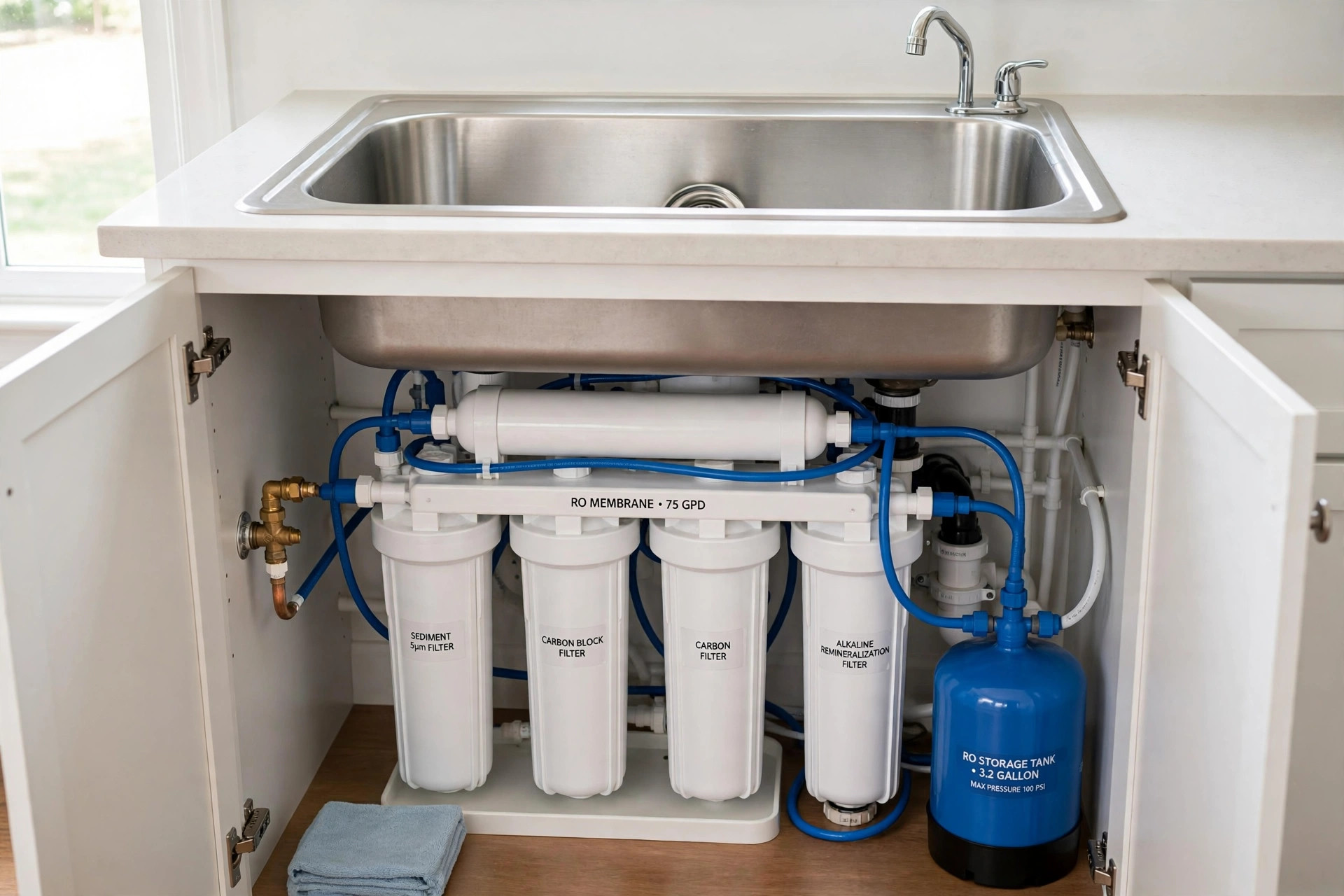

Many American families now buy their drinking water in plastic bottles. They do this because they do not trust the water that comes from the tap. A reverse osmosis unit with an alkaline stage can change that. The best alkaline RO system reviews 2026 USA buyers can find online all point to the same trend. More homes want filtered water that also tastes smooth and feels clean. This guide gathers what those reviews say. It explains how these units work, what to look for, and what to avoid. It also covers price, upkeep, and safety in plain terms.
Why an Alkaline RO System Matters
A standard reverse osmosis unit does one job very well. It pushes tap water through a fine membrane. That membrane strips out lead, fluoride, nitrates, chlorine, arsenic, and many dissolved salts. The result is water that is almost pure. But water that pure often tastes flat. It can also read slightly acidic on a pH scale. Many buyers do not like that flat taste.
An alkaline RO system adds one more stage. After the membrane does its work, the water passes through a bed of mineral media. That media is often made of calcium and magnesium compounds. It raises the pH of the water back toward the mild alkaline range. It also adds a small amount of minerals back into the water. The taste becomes smoother and less sharp. Many of the best alkaline RO system reviews 2026 USA homeowners write mention taste first. They say the water tastes like spring water from a bottle. That is the main reason these units sell.
There is a second reason. Some buyers believe alkaline water helps the body. They say it balances acidity. They say it improves hydration. Health agencies do not back most of these claims. The United States Environmental Protection Agency sets no special rule for water pH in the neutral to mild range. You can read their drinking water standards at the EPA. Buyers should know the truth. The real benefit of an alkaline stage is taste. It is also the added mineral content. It is not a medical cure. Reviews that promise miracle health results should be read with care.
What to Look for When You Choose: Best Alkaline Ro System Reviews 2026 Usa
Shopping for these units can be confusing. Boxes carry big claims. Reviews use many terms. Here is what matters most.
Certifications. Look for NSF or IAPMO marks on the unit or in its manual. NSF 58 covers reverse osmosis units. NSF 42 covers taste and odor reduction. A mark does not prove every claim on the box. It does prove the unit was tested by an outside lab. Units without any third-party test deserve extra doubt.
Stages and filters. Most units have five to seven stages. The first stages are sediment and carbon pre-filters. They protect the membrane from dirt and chlorine. Then comes the membrane itself. Then the alkaline remineralization stage. Some units add a final carbon polish. More stages are not always better. A well-built five-stage unit can beat a cheap seven-stage unit.
Water waste ratio. Reverse osmosis always wastes some water. Old units wasted four gallons for every gallon made. Newer designs use permeate pumps or better membranes. They can reach ratios near one to one. If your town charges high water rates, this number matters.
Tank or tankless. Tank units store filtered water in a pressure tank under the sink. They fill slowly and give water fast when you open the tap. Tankless units make water on demand. They need more space and cost more. Most reviews in 2026 still favor tank units for value.
Ease of filter changes. You will change filters every six to twelve months. The membrane lasts two to three years. Twist-off filter heads make the job quick. Units that need tools and shut-off tricks make it slow. Check this before you buy. Guidance on simple home water projects appears on Family Handyman.
Faucet quality. The small drinking-water faucet on your sink gets used every day. Cheap plastic faucets crack and leak. Look for solid metal construction. Trusted fixture makers like Moen, Delta, and Kohler show what good faucet build looks like, even when you buy a different brand with your RO kit.
Types and Options on the Market
The best alkaline RO system reviews 2026 USA forums discuss fall into three broad groups.
Countertop models. These sit beside the sink. They connect to the faucet with a hose. No drilling is needed. They suit renters. They make less water per day. They also take up counter space.
Under-sink models. These hide inside the cabinet. They connect to the cold water line and the drain. A small faucet goes on the sink deck. This is the most popular type. If you want a full under-sink water filter guide for 2026 USA homes, many of the same buying rules apply.
Alkaline add-on stages. Some buyers already own a plain RO unit. They can add an alkaline cartridge to the line. This costs less than a full new system. It works well if the base unit is still in good shape.
A related category worth knowing is the alkaline water filter system reviews USA segment. Those units raise pH without a membrane. They do not remove the same wide range of contaminants. An RO-based unit cleans more deeply. A non-RO alkaline filter costs less and wastes no water. Pick based on your water test results.
For a deeper look at membrane units in general, see reverse osmosis system under sink reviews USA. Many of the models covered there offer an alkaline version.
Cost and Price
Prices in 2026 run in clear bands. Countertop alkaline RO units cost about 150 to 350 dollars. Under-sink units cost about 200 to 600 dollars. Tankless units with alkaline stages cost 500 to 1,000 dollars or more. Installation by a plumber adds 150 to 300 dollars if you do not want to do it yourself.
Yearly upkeep costs matter more than the sticker price. Pre-filters cost 20 to 60 dollars a set. They need a change every six to twelve months. The RO membrane costs 40 to 90 dollars. It lasts two to three years. The alkaline cartridge costs 20 to 50 dollars. It needs a change about once a year. Plan on 80 to 150 dollars per year in parts. You can compare current prices at large home stores like Lowes.
Watch for hidden costs. Some brands sell filters only through their own site. Prices stay high. Other brands use standard-size cartridges. You can buy those from many sellers. Standard sizes save money over time. Reviews often praise brands that keep filter prices fair. Specialist water companies such as Aquasana publish their replacement filter prices openly, which is a good habit to look for in any brand.
Care and Upkeep
An RO unit is not a device you install and forget. It needs a simple routine.
Change the pre-filters on time. A clogged sediment filter starves the membrane. The unit then makes less water and wastes more. Mark the date on the filter housing with a marker. That simple habit works.
Sanitize the system once a year. Drain the tank. Run a mild sanitizing solution through the housings. Rinse well. The manual will give the exact steps. If you skip this, bacteria can grow in the tank.
Check the tank pressure once a year. An empty tank should read about seven to eight pounds per square inch. Low pressure means slow flow at the faucet. A bicycle pump can add air through the tank valve.
Test the water now and then. Cheap TDS meters cost under twenty dollars. They measure total dissolved solids. A new membrane should cut TDS by ninety percent or more. When the number creeps up, the membrane is wearing out. Note that an alkaline stage adds minerals back. So the final TDS will read a bit higher than plain RO water. That is normal.
Flush a new alkaline cartridge before first use. Run two full tanks to drain. The first water can carry fine mineral dust. It is not harmful, but it looks cloudy. Flushing clears it. Long-form repair guidance for many home systems is published at This Old House.
Safety Notes
Reverse osmosis water is safe to drink. Health agencies agree on this. The alkaline stage adds small amounts of calcium and magnesium. Those are normal dietary minerals. They do not create a health risk at the levels these units produce.
Three safety points deserve note. First, never connect an RO unit to hot water. Heat ruins the membrane. Use the cold line only. Second, keep the drain connection above the trap with an air gap. This stops sink water from backing into the clean side. Third, if your home has very old lead pipes, test the water after install. A filter helps, but it cannot fix lead coming from the pipe after the filter point.
One more caution. Some sellers claim their alkaline water cures disease. No fair review supports that. Buy for clean taste and lower contaminants. Ignore the miracle talk.
Frequently Asked Questions
Does alkaline RO water really taste different? Yes, most users say so. Plain RO water tastes flat because the membrane removes nearly everything. The alkaline stage adds minerals back and lifts the pH. The water tastes smoother and less sharp. Many reviewers call it the closest tap water can get to bottled spring water.
How often must I change the alkaline cartridge? About once a year for a typical family. Heavy use wears it faster. Some cartridges carry a rated gallon count. Follow the lower of the time or gallon limit. An old cartridge stops raising pH. A cheap pH test strip can show when it is spent.
Will an alkaline RO system remove fluoride? Yes. The RO membrane removes most fluoride, usually over ninety percent. The alkaline stage does not add fluoride back. It adds calcium and magnesium. If fluoride removal is your main goal, any good RO membrane does the job.
Can I install one myself? Many homeowners do. Under-sink kits include saddle valves, tubing, and a drain clamp. Basic hand tools are enough. The job takes one to three hours. If your sink deck is stone or you fear drilling, hire a plumber. A pro install runs 150 to 300 dollars.
Does it waste a lot of water? Older designs did. Modern units waste far less. Look for a stated waste ratio near one to one. A permeate pump kit can cut waste on older tank units too. If you live where water is scarce or costly, pick the lowest waste ratio you can find.
Is alkaline water from these units safe for pets and plants? For pets, yes. The mineral levels are mild. For plants, mildly alkaline water is fine for most houseplants. Very sensitive plants may prefer plain filtered water. When in doubt, use the unfiltered tap for plants and the RO tap for drinking.
A Final Word
The best alkaline RO system reviews 2026 USA buyers share keep coming back to the same points. Pick a unit with real third-party testing. Choose the type that fits your kitchen and your skill level. Budget for yearly filter costs, not just the box price. Keep up the simple maintenance routine. Do that, and the water from your own tap can taste as good as the bottles you used to buy.
References
Aquasana. (n.d.). Water filtration systems. https://www.aquasana.com Delta Faucet. (n.d.). Kitchen and bathroom faucets. https://www.deltafaucet.com Family Handyman. (n.d.). DIY home repair and maintenance. https://www.familyhandyman.com Kohler. (n.d.). Bathroom and kitchen fixtures. https://www.kohler.com Lowe’s. (n.d.). Home improvement products. https://www.lowes.com Moen. (n.d.). Faucets and plumbing fixtures. https://www.moen.com This Old House. (n.d.). Home renovation guidance. https://www.thisoldhouse.com U.S. Environmental Protection Agency. (n.d.). Protecting human health and the environment. https://www.epa.gov
Was this guide helpful?

About Michael Thompson
The My Garden US editorial team writes practical, in-depth home and garden guides for American homeowners — tested advice, no fluff.
You May Also Like
Shower Head Filter for Chlorine Reviews USA
July 10, 2026 0 views
Matte Black Kitchen Faucet: Pros and Cons for American Homes
January 28, 2026 0 views
Fluoride Water Filter for Home Reviews USA: A Plain Guide
March 15, 2026 0 views