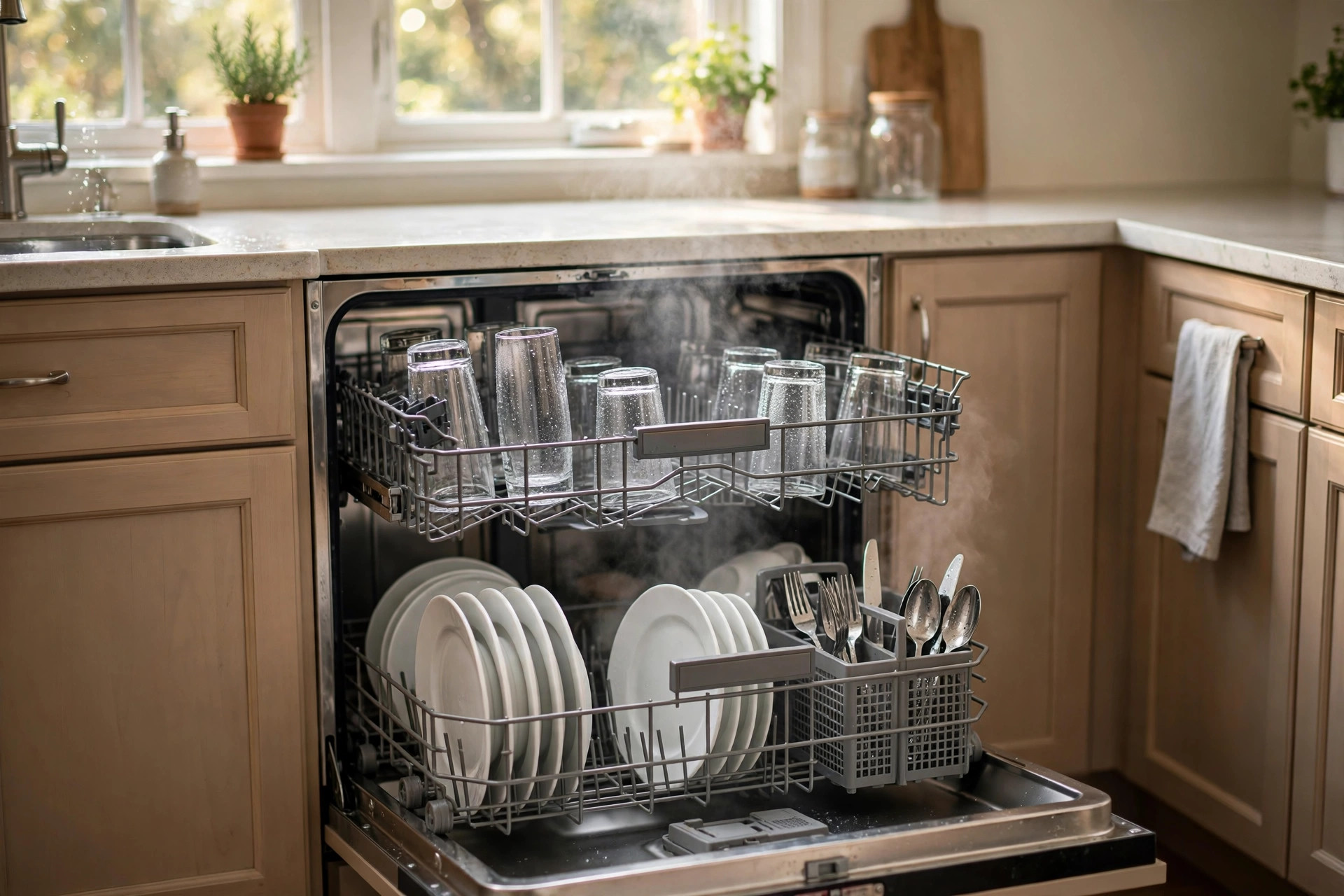

Nothing spoils the shine of clean dishes like cloudy white spots. You open the dishwasher, pull out a glass, and find it streaked with chalky marks. The plates look dull. The silverware has a pale film. The cause is hard water spots on dishes, and it is one of the most common kitchen complaints across the United States. The good news is that the hard water spots on dishes solutions USA households use are simple, proven, and often cheap.
Hard water leaves its mark when water with high mineral content dries on a surface. Calcium and magnesium are the two minerals behind most spots. When wash water evaporates, these minerals stay behind as a thin white crust. Over time, the crust builds up and looks like permanent cloudiness. This article explains why the spots form, what you can do right now to stop them, and which long term fixes give the best value.
Why Hard Water Causes Spots on Dishes
Water picks up minerals as it moves through soil and rock. Groundwater in many parts of the Midwest, Southwest, and Texas carries heavy loads of calcium and magnesium. The United States Environmental Protection Agency notes that mineral content in tap water varies widely by region, which is why some homes see spots and others do not. You can learn more about drinking water quality on the EPA water pages.
In the dishwasher, hot water sprays the dishes clean and then drains away. A thin film of rinse water stays behind. If that water is hard, the minerals settle onto the dishes as the heat of the drying cycle bakes them in place. Hand washing has the same problem when dishes air dry without a final rinse. Spots are not dirt. They are mineral deposits, and they cling harder each time the cycle repeats.
Very hard water can also damage the dishwasher itself. Heating elements, spray arms, and door seals collect scale. Appliance makers such as Moen and Kohler design faucets and fixtures to resist mineral buildup, but even well built hardware needs help when water is extreme.
How to Test Your Hardness
You cannot fix what you have not measured. Cheap test strips change color to show grains per gallon. Fill a glass, dip a strip, and match the color. Zero to 3 grains is soft. Four to 7 is moderate. Eight to 12 is hard, and above 12 is very hard. Write the number down. It tells you whether rinse aid will do the job or whether you need a softener. Many water utilities publish yearly quality reports with hardness by zip code, and a quick call can save you a guess.
Quick Fixes You Can Try Today: Hard Water Spots on Dishes Solutions Usa
You do not need to buy new equipment to see improvement. These simple hard water spots on dishes solutions work with what you already have.
Use a Rinse Aid
Rinse aid is the single easiest fix. It lowers the surface tension of water so droplets sheet off the dishes instead of beading and drying in place. Fill the rinse aid dispenser in your dishwasher and set it to a high setting. Most users see fewer spots after one cycle. Refill the dispenser every month or so.
Try White Vinegar
White vinegar dissolves mineral deposits. Place a small cup of plain white vinegar on the top rack of an empty dishwasher and run a hot cycle. This cleans the machine and helps with light spotting. You can also soak spotted glasses in a sink of warm water with one cup of vinegar for twenty minutes, then rinse and dry by hand.
Load and Run Smart
Overloading the dishwasher blocks the spray arms and leaves detergent residue that mixes with minerals. Give dishes space. Use the heated dry cycle rather than air dry, since full heat helps the rinse aid do its work. Clean the filter in the base of the tub every few weeks, because trapped food changes the chemistry of the wash water.
Hand Dry When It Matters Most
For glasses and items you want to keep sparkling, skip the machine dry. Shake off the water and dry each piece with a clean lint free towel right after the cycle ends. It takes a few minutes, but it removes minerals before they can dry in place. Retailers like Lowe’s sell glass polishing cloths that work well for this task.
Best Dishwashing Products for Hard Water
Regular detergent is not enough in hard water. Look for products made for the job.
Hard water detergents. These powders and packs contain extra water softening agents. They tie up calcium and magnesium in the wash water so less of it reaches the dishes.
Rinse agents. Beyond the dispenser type, some detergents include built in rinse aid. Check the label.
Citric acid boosters. Citric acid is a natural mineral fighter. Many readers of Family Handyman recommend adding a spoonful of food grade citric acid to the bottom of the dishwasher for tough cases. It dissolves fresh scale and brightens the tub.
Lemon based cleaners. Lemon juice has mild acid action. A lemon half on the top rack can help with light spots, though it is weaker than citric acid powder.
For step by step repair and cleaning guidance, the guides at This Old House cover dishwasher care in detail.
Reading the Label
Not every product labeled for hard water performs the same. Check for enzymes that break down food soils, since clean food soils let the softening agents focus on minerals. Powders let you adjust the dose for your water hardness, which is useful in very hard areas. Packs are simpler but give you no control over dose. Avoid using extra detergent beyond the label amount. More soap in hard water can leave its own residue, which looks much like mineral spots.
What to Skip
Skip hand dish soap in the dishwasher. It foams too much and can overflow the machine. Skip steel wool on glass, since it scratches and makes future spotting worse. Harsh acids meant for toilets or drains should stay away from dishes, as they can damage glazes and finishes. Stick with products made for dishes and dishwashers, and you will stay safe.
Water Softener and Filtration Options
Quick fixes manage the symptom. If your water is very hard, the real answer is to treat the water itself. Two main approaches exist.
Whole House Water Softeners
A softener swaps calcium and magnesium for sodium or potassium through a resin bed. Every tap in the house gets softer water. That ends spotting on dishes, protects pipes and heaters, and cuts down on soap scum in the bathroom. If you want to compare whole house options, our guide to the best whole house water filter system usa is a good next read.
Salt Free Conditioners
Salt free systems do not remove minerals. They change the crystal form of calcium so it does not stick to surfaces. These units need less upkeep and keep healthy minerals in the water. See our salt free water softener reviews for hard water to weigh the trade offs.
Point of Use Filters
A reverse osmosis unit under the kitchen sink gives very pure water for drinking and cooking. It will not fix the dishwasher, but it is a solid choice if spots matter most on glasses you drink from. Faucet makers like Delta Faucet offer models with built in filtration features worth a look.
How to Choose
Test your water first. Hardness test strips cost a few dollars and take one minute. Home supply stores such as Home Depot carry them, as do water treatment firms like Aquasana. If hardness is under 7 grains per gallon, rinse aid and good detergent may be enough. Above 10 grains, a softener or conditioner earns its keep.
Cost and Price Guide
Prices vary by home and region, but these ranges are typical for USA buyers.
– Rinse aid bottle: 4 to 8 dollars, lasts one to two months. – White vinegar and citric acid: under 10 dollars for months of use. – Hard water dishwasher detergent: 8 to 15 dollars per container. – Water test kit or strips: 5 to 25 dollars. – Under sink reverse osmosis system: 150 to 500 dollars plus filters. – Salt free conditioner: 400 to 1,200 dollars installed. – Whole house water softener: 800 to 3,000 dollars installed.
To learn what installation usually runs in your area, read our water softener installation cost near me guide before you call for quotes.
Care and Upkeep
A few habits keep dishes spot free over time.
1. Keep the rinse aid dispenser full. Check it monthly. 2. Clean the dishwasher filter every two to three weeks. 3. Run an empty hot cycle with vinegar or citric acid once a month. 4. Wipe the door gasket and check spray arm holes for clogs. 5. If you have a softener, check the salt level each month and keep it above the water line. 6. Change point of use filters on the schedule the maker gives.
These small steps also extend the life of the machine. Scale shortens heating element life and dulls racks, so regular cleaning pays for itself.
Safety Notes
Vinegar and citric acid are safe for most dishwashers, but check your manual first. Never mix vinegar with chlorine bleach, since the mix can release harmful gas. Keep citric acid powder away from children and pets. When you install a softener, set it to match your actual hardness. Over softening wastes salt and water. If you rent, ask your landlord before adding any treatment equipment.
Frequently Asked Questions
Will hard water spots harm my health?
No. Calcium and magnesium in water are common minerals and are not a health hazard at normal levels. The spots are a cosmetic and housekeeping issue, not a safety one.
Can spotted glasses be saved?
Yes, in most cases. Soak the glass in warm water with white vinegar or citric acid for twenty to thirty minutes. Rub gently with a soft cloth. Old, heavy etching is different from spots and may be permanent, since etched glass has actual surface damage.
Why do spots get worse over time?
Each wash adds another thin layer of minerals. Heat from the dry cycle bakes the layers on. Regular rinse aid and monthly machine cleaning stop the buildup cycle.
Is a rinse aid safe with septic systems?
Standard rinse aids are fine for most septic systems when used as directed. If you have concerns, look for phosphate free products and follow the label dose.
Should I choose a softener or a salt free conditioner?
Softeners remove the minerals and solve spotting completely. Conditioners reduce sticking without removing minerals and need less maintenance. Your hardness level and budget should guide the choice.
How do I know how hard my water is?
Buy test strips or a liquid test kit. You can also ask your local water utility for a water quality report, which lists hardness by area.
Final Word
Hard water spots on dishes are stubborn but beatable. Start with the easy wins: rinse aid, vinegar, smart loading, and a monthly machine cleaning. If the spots keep coming back, test your water and look at a softener or conditioner for a lasting fix. Clean sparkling dishes are within reach, and the solutions above are proven in homes across the country.
References
Aquasana. (n.d.). Water filtration systems. https://www.aquasana.com Delta Faucet. (n.d.). Kitchen and bathroom faucets. https://www.deltafaucet.com Family Handyman. (n.d.). DIY home repair and maintenance. https://www.familyhandyman.com Kohler. (n.d.). Bathroom and kitchen fixtures. https://www.kohler.com Lowe’s. (n.d.). Home improvement products. https://www.lowes.com Moen. (n.d.). Faucets and plumbing fixtures. https://www.moen.com The Home Depot. (n.d.). Home improvement products. https://www.homedepot.com This Old House. (n.d.). Home renovation guidance. https://www.thisoldhouse.com U.S. Environmental Protection Agency. (n.d.). Protecting human health and the environment. https://www.epa.gov
Was this guide helpful?

About Emily Rodriguez
The My Garden US editorial team writes practical, in-depth home and garden guides for American homeowners — tested advice, no fluff.
You May Also Like
High Pressure Shower Head Reviews 2026 USA: Strong Shower Flow Without the Plumber
August 28, 2026 0 views
Best Tankless Reverse Osmosis System USA: A Simple Guide for Homeowners
May 12, 2026 0 views
Best Widespread Bathroom Faucet Reviews USA
July 1, 2026 0 views