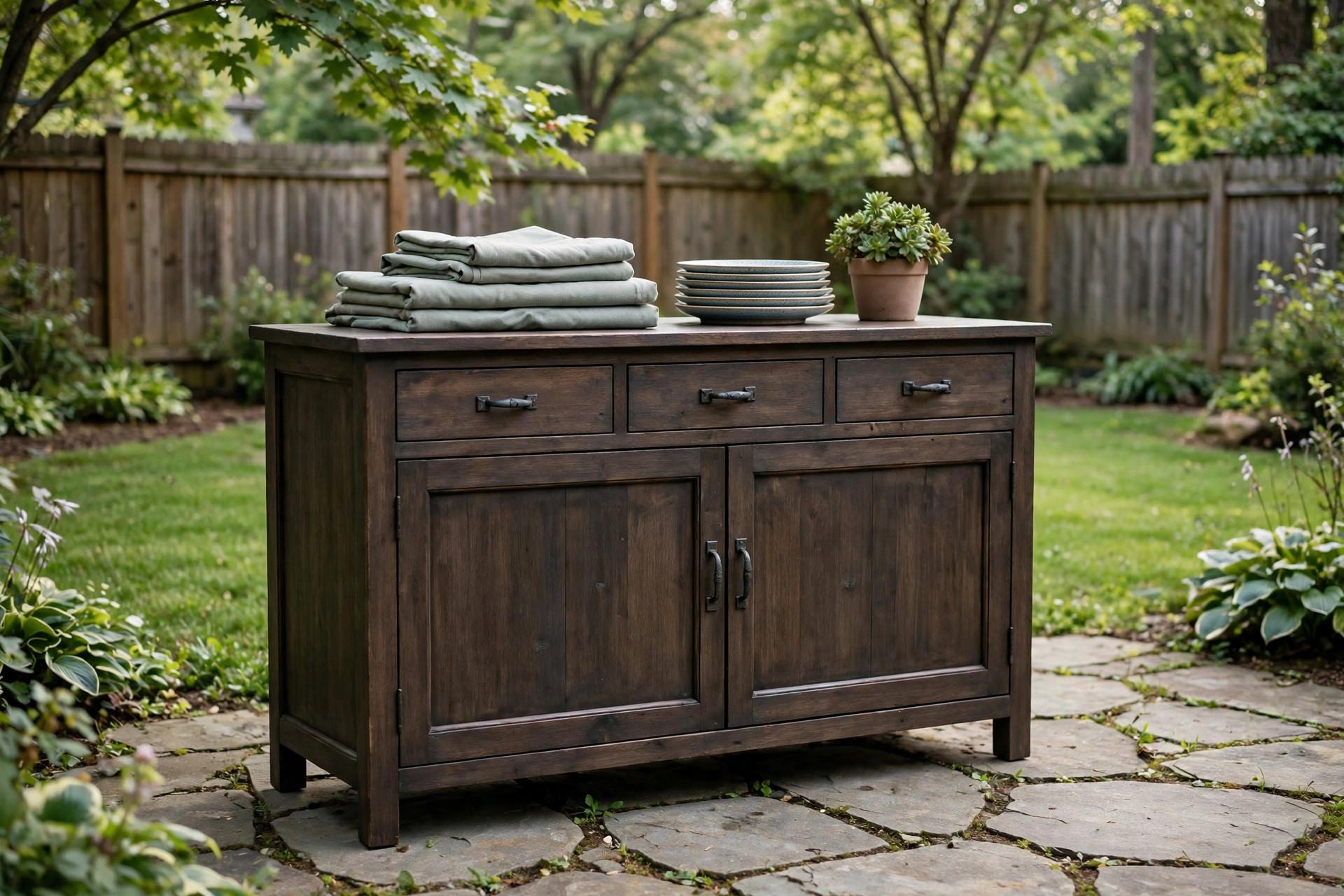

When shoppers read outdoor sideboard for patio storage reviews, they are usually trying to answer one plain question. Can a piece of furniture built for the indoors really hold up on the patio, and will it keep things dry and neat? The answer is yes, if you choose the right one. A good outdoor sideboard gives you a place to store chair cushions, outdoor dinnerware, grill tools, and pool towels, right where you use them. It also keeps a patio looking tidy, because everything has a door to go behind.
This guide walks through what matters in these reviews. It covers the materials that last, the storage layouts that work, the price ranges you can expect, and the care steps that keep the cabinet looking new. It draws on the kinds of tests and buying notes published by long standing names in home and garden retail and media, such as Home Depot, Lowe’s, Wayfair, and The Spruce.
Why an Outdoor Sideboard Matters
A patio sideboard is more than a storage box. It is the bridge between the house and the yard. People who own one use it every day of the season. Cushions go in when the sky turns gray. Serving bowls and platters come out when guests arrive. Grill tools, citronella candles, and sunscreen live inside the drawers.
Readers of outdoor sideboard for patio storage reviews often mention the same benefit. They stop carrying things in and out of the house. One review after another describes a family that used to stack cushions on the living room floor. After the sideboard arrived, the cushions went into the cabinet, and the living room stayed clear. That small change makes the patio easier to use. When the work of setting up and packing away is small, people spend more time outside.
A sideboard also protects your things. Outdoor cushions left in the rain grow mold. Dinnerware left in the sun fades and cracks. A closed cabinet with solid doors keeps out most rain, sun, and dust. It does not replace a shed for the winter, but for the season it is a fine first line of defense.
What to Look for in a Good Patio Sideboard: Outdoor Sideboard for Patio Storage Reviews
Weather Resistance
The first thing to check in any review is the material. Wood sideboards made from teak or acacia stand up to rain better than pine or soft wood. They still need oil or sealant once a year. Metal cabinets, usually aluminum or powder coated steel, resist rust but can get hot in the sun. High density polyethylene, the plastic used by brands such as Polywood, shrugs off rain and needs almost no care. Wicker and rattan look warm and classic, but the frame under the weave must be aluminum or resin, never plain steel, or rust will bleed through.
Doors and lids should close tight. Many reviewers test the cabinet with a garden hose to see if water gets in. A small gap at the top is fine if the floor of the cabinet is raised, so water drains out instead of pooling.
Storage Layout
Think about what you will store. Tall items like pool noodles and umbrellas need a deep cabinet bay. Plates and bowls stack better on shelves. Small things like matches, bottle openers, and grill lighters belong in drawers. The best sideboards mix two cabinet bays with one or two drawers. Adjustable shelves are a plus. They let you change the layout when your needs change.
Measure your patio before you buy. A sideboard that is 55 to 65 inches wide fits a standard serving wall or the side of a dining area. Depth matters too. A 20 inch deep cabinet sits close to the wall and leaves the walkway clear. Anything deeper than 24 inches starts to eat into a small patio.
Weight and Stability
An empty sideboard should feel heavy. Wind is the enemy of patio furniture. Light cabinets blow over in a storm, even with the doors closed. Reviewers often praise models that weigh 60 pounds or more, or that have holes for anchoring the back panel to a wall or deck rail. If your patio is open and windy, look for one of these options. Guides at Bob Vila and HGTV often stress anchoring tall outdoor storage for this reason.
Types of Outdoor Sideboards
Wooden Sideboards
Teak and acacia are the classic choices. They weather to a silver gray if left alone, which many owners like. They cost more up front, often 400 to 900 dollars, but last 10 years or more with yearly oiling. Cedar is lighter and cheaper. It resists rot on its own but can warp if it dries out too fast. Budget wood cabinets under 200 dollars are usually made of fir with a stain. Reviews say they look good for two or three seasons, then need a fresh coat of sealant or start to crack.
Metal Sideboards
Aluminum is the best metal for this job. It never rusts and is light enough to move. Powder coated steel is strong and often cheaper, but any scratch in the coating lets rust start. Reviewers check the welds and corners closely. Good metal sideboards run from 250 to 700 dollars. They suit modern patios and hold up well in humid places like Florida and the Gulf Coast.
Resin and Plastic Sideboards
Resin cabinets are the workhorses. They do not rot, rust, or need paint. Many come in wood grain patterns that look fine from a few feet away. They are the cheapest option, usually 150 to 400 dollars, and the easiest to clean with a hose. The weak point is the hinges. Cheap resin doors can sag after a few years. Reviews that test doors over time are worth reading closely. Notes from Consumer Reports on outdoor storage durability are a helpful second check.
Wicker and Rattan Sideboards
All weather wicker over an aluminum frame gives a warm look that matches wicker dining sets. These sideboards often have fabric lined interiors that protect dishes. They cost 300 to 800 dollars. The weave can trap dirt, so they need a brush down now and then. They do best on covered porches rather than open decks.
Cost and Price: What Reviews Say You Get
Prices fall into three bands. Under 250 dollars you find small resin cabinets and basic wood models. They work well for one or two seasons of light use. Reviewers in this range care most about whether the doors close well and the unit survives its first winter.
From 250 to 600 dollars you get the heart of the market. Mid range resin, aluminum, and acacia sideboards dominate here. This is where most positive outdoor sideboard for patio storage reviews sit. Shoppers report sturdy builds, decent hinges, and finishes that last. Retailers like IKEA and Frontgate carry popular models in this band, though the styles differ greatly between budget and premium lines.
Above 600 dollars you enter premium territory. Teak cabinets, large double bay units, and designer pieces live here. Reviews say you pay for thicker wood, better hardware, and a finish that looks right next to expensive patio sets. For most families, the middle band is the sweet spot. Spend enough to get solid hinges and a tight seal, but no more.
Shipping can add 50 to 150 dollars for heavy units. Some sellers offer free delivery over a set amount. Always check the return policy. A sideboard that arrives with a warped door is not rare, and a good return policy turns a bad box into a small delay instead of a loss.
Care and Upkeep Through the Seasons
A patio sideboard asks for little, but it asks for it every year. Wood cabinets need a wash and a coat of teak oil or outdoor sealant each spring. This takes an afternoon. Metal cabinets need a wash with mild soap and a check for chips in the coating. Touch up paint stops rust before it starts. Resin cabinets need only a hose down and a scrub with a soft brush.
Before winter, empty the cabinet. Wash the inside and leave the doors open for a day so it dries fully. Store cushions and fabric items inside the house. In cold states, cover the sideboard with a weatherproof patio furniture cover or move it under an overhang. Snow sitting on a flat top can bend thin lids over time.
Check the hardware once a year. Tighten the hinge screws. A drop of silicone spray keeps locks and latches working. These five minute jobs add years to the life of the cabinet. For more seasonal routines, the cleaning and care guides at The Spruce and Wayfair are practical references.
Safety and Smart Placement
Place the sideboard on level ground. A cabinet that rocks will stress its joints and swing its doors open in the wind. On a deck, use the gaps between boards for drainage and put small feet or pads under the legs so water does not sit against the wood.
Keep grill tools and lighter fluid in a separate spot from paper napkins and cushions if you can. Most sideboards have two bays, so put fire related items on one side and soft goods on the other. Never store a propane tank inside a closed sideboard. Tanks belong upright in the open air, away from heat.
If small children use the patio, choose a sideboard with soft close hinges or a lid that cannot slam. Heavy doors can pinch small fingers. Some models include a child safety latch. On a related note, families comparing storage options sometimes also look at outdoor loveseats with storage boxes, ottomans with hidden storage, or a waterproof deck box for pool toys for items that do not need a full cabinet.
Frequently Asked Questions
Can an outdoor sideboard survive heavy rain?
A well built one can. Look for reviews that mention a hose test or a full season of rain. Resin and aluminum models handle rain best. Wood models need their sealant in good shape. No sideboard is fully waterproof like a sealed cooler, so keep the most delicate items in plastic bins inside the cabinet.
How much storage does a typical sideboard hold?
A standard 55 inch sideboard holds about 25 to 35 cubic feet. That fits four to six chair cushions, a stack of dinnerware, and a drawer of small tools. Measure your largest cushion and compare it to the interior depth before you buy. Many reviewers post the inside measurements, which helps.
Is assembly hard?
Most sideboards arrive flat packed and take one to two hours to build. Reviews often rate the instructions. Resin models snap together with few tools. Wood and metal models need a screwdriver and sometimes a second pair of hands. Check the review notes on missing parts before you start.
Wood or resin: which lasts longer?
Resin wins on low care. It will not rot or rust, and it needs no yearly treatment. Good teak wins on looks and can last just as long with yearly oiling. The choice comes down to how much care you want to do. If you oil your deck each year anyway, a wood sideboard fits your routine. If you want to hose it down and forget it, choose resin.
Can I use a sideboard as a serving station?
Yes. Many owners top the cabinet with a tray and use it as a buffet during cookouts. Just check the weight rating of the top. Most hold 50 to 100 pounds, which is plenty for dishes and drinks. Put a heat proof mat under hot platters to protect the finish.
What should I do if the doors warp?
First try adjusting the hinges. Most doors have slotted holes that allow a small shift. If a wood door warps from sun on one side, turn the cabinet or shade that side for a few weeks. It often settles back. If the warp is bad, contact the seller. Warped doors in the first year usually fall under warranty.
A Short Final Word
Reading outdoor sideboard for patio storage reviews pays off. The reviews tell you which doors seal, which hinges last, and which finishes survive real weather. Pick a material that fits your climate and your care habits. Measure your space. Spend in the middle range for the best mix of build and price. Then fill the cabinet, close the doors, and enjoy a patio that stays neat all season.
References
Bob Vila. (n.d.). Home improvement advice. https://www.bobvila.com Consumer Reports. (n.d.). Product reviews and ratings. https://www.consumerreports.org Frontgate. (n.d.). Outdoor furniture and decor. https://www.frontgate.com HGTV. (n.d.). Home and garden ideas. https://www.hgtv.com IKEA. (n.d.). Home furnishings. https://www.ikea.com Lowe’s. (n.d.). Home improvement products. https://www.lowes.com Polywood. (n.d.). Outdoor furniture. https://www.polywood.com The Home Depot. (n.d.). Home improvement products. https://www.homedepot.com The Spruce. (n.d.). Home and garden advice. https://www.thespruce.com Wayfair. (n.d.). Furniture and home goods. https://www.wayfair.com
Was this guide helpful?

About Jennifer Lee
The My Garden US editorial team writes practical, in-depth home and garden guides for American homeowners — tested advice, no fluff.
You May Also Like

Patio Shade Sail Installation Guide: A Step-by-Step Plan for Cool, Shady Summers
April 15, 2026 0 views
The Best Patio Furniture Brands Made in USA: Quality for Your Outdoor Space
March 8, 2026 0 views
How to Keep Patio Cushions From Fading: A Practical Guide
January 18, 2026 0 views