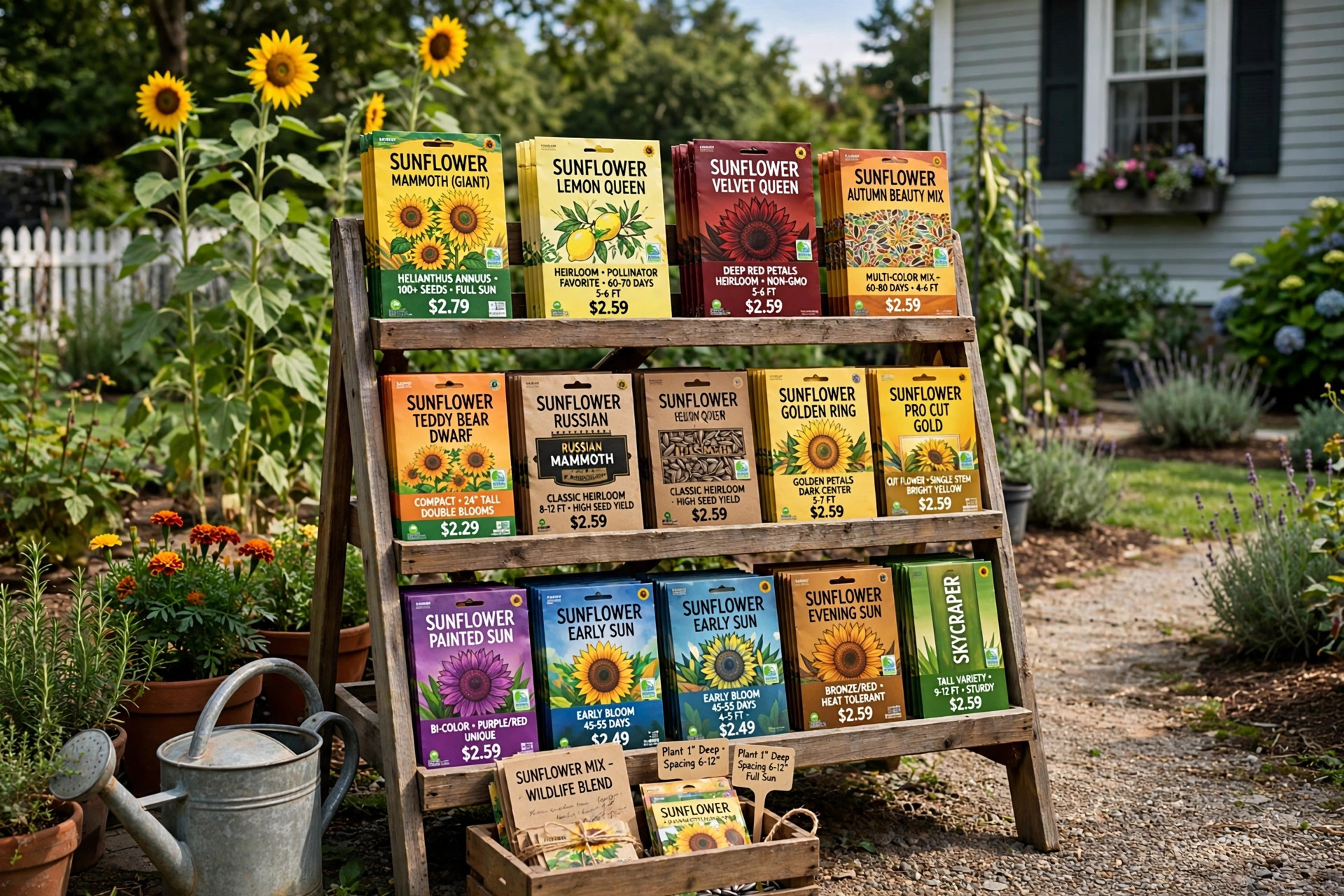

Many gardeners ask one simple question each spring: sunflower seed packs where to buy USA stores sell them at fair prices? The answer is broad. Seeds are sold in garden centers, farm stores, hardware shops, and on the web. This guide lists the best places. It also tells what to look for and what to pay.
Why Sunflower Seed Packs Matter
Sunflowers are among the easiest flowers to grow. The seed is large. It is easy to sow. It sprouts fast in warm soil. Most types bloom in sixty to ninety days. That is why seed packs are so common in American shops.
A pack gives you many seeds for a small sum. A packet may hold twenty to one hundred seeds. That is enough for a long row or a whole bed. Larger packs serve big gardens. Bulk bags serve farms and schools.
Choice matters too. Some sunflowers grow two feet tall. Some grow ten feet tall. Some are cut for vases. Some make seeds for birds. The right pack fits your plan. That is why many buyers read a sunflower seed packs buying guide usa before they shop.
A Short History of the Pack
Seed packs have been sold in America for over a century. Early packs were paper envelopes with simple drawings. They are still sold that way today. The Old Farmer’s Almanac notes that mail-order seed firms grew fast in the late 1800s. Firms like Burpee and Park Seed are still in business. Their catalogs made sunflower packs a staple in American homes.
Where to Buy Sunflower Seed Packs in the USA: Sunflower Seed Packs Where to Buy Usa
Local Garden Centers and Nurseries
The best place to start is a local garden center. These shops sell packs suited to your region. Staff can tell you which types grow best nearby. Packs cost about two to five dollars. You can look at the pictures on the envelopes. You can read the back for days to bloom and height.
Local nurseries also sell regional types. Some sell loose seed by the ounce. This suits buyers who want more than a small pack. Gurney’s Seed and Nursery and similar firms keep regional lists that help with choice.
Farm and Feed Stores
Farm stores serve rural buyers well. They stock seed packs in spring. They also stock large bags for fields. Prices are often lower than in city shops. A store clerk can help you pick a type for cut flowers or for oil seed.
Hardware and Home Stores
Big home stores sell seed racks each spring. They carry common brands at low prices. You can find dwarf types for pots and tall types for fences. These racks appear early in the year. They sell out fast in warm states. Shop in March or April for the best picks.
Grocery and Drug Stores
Many grocery stores sell seed packs near the garden aisle in spring. The choice is small. The price is low. This works for a buyer who needs one pack fast. The types are often basic kinds like giant sunflowers or mixed colors.
Online Seed Stores
The web offers the widest choice. You can find types that local shops never stock. Good online sellers include Burpee, Park Seed, Gurney’s Seed and Nursery, White Flower Farm, Monrovia, and Proven Winners. Shipping is fast in spring. Read the germination rates before you buy. Sites like Gardening Know How give plain advice on sowing depth and spacing.
Garden Catalogs by Mail
Paper catalogs still arrive each winter. They list dozens of sunflower types with photos. Ordering by mail is slow but reliable. Some firms offer old and rare types not sold in stores. This is a good route for a gardener who plans ahead.
Seed Exchanges and Local Groups
Some towns have seed swaps. Garden clubs give away extra packs. These events are free. They are a fine way to try new types. Ask at your library or local nursery. The National Institute of Food and Agriculture supports extension offices that often know about local seed events.
How to Choose the Right Pack
Read the Back of the Packet
Every good pack tells you the facts. Look for these lines:
– Type name. Common names include Mammoth, Autumn Beauty, Teddy Bear, and Lemon Queen. – Height. Dwarf types suit pots. Tall types suit borders. – Days to bloom. Most need sixty to ninety days. – Seed count. A pack may hold twenty to one hundred seeds. – Year. Seeds keep best for two to three years.
Match the Type to Your Goal
Tall types suit back fences and fields. They make big heads and lots of seed. Cut-flower types have long stems and small heads. They bloom for many weeks. Dwarf types fit pots on patios. They bloom fast and stay short.
If you want seeds for birds, pick a type that makes heavy heads. If you want color, pick a mix with reds and golds. A full guide to seed types can be found at The Spruce.
Check the Source
Buy from known seed firms. Their packs show test dates and germination rates. A germination rate above eighty percent is good. Cheap packs from unknown sellers may hold old seed. Old seed sprouts poorly.
Types of Sunflower Seed Packs
Standard Flower Packs
These are the most common packs. They hold seed for garden flowers. Prices run two to five dollars. You will find them in every garden shop.
Giant and Mammoth Packs
These packs hold the largest types. The flowers can reach ten feet or more. The heads can span a foot wide. They suit fields and fair contests. Prices are about the same as standard packs.
Dwarf Packs for Pots
Dwarf packs suit balconies and patios. The plants stay under three feet. They bloom in pots of twelve inches or more. These packs often cost a dollar more than standard types.
Cut-Flower Mixes
Cut-flower packs hold types bred for vases. They have strong stems and many blooms per plant. Some are pollen-free, which keeps the house clean. These packs cost three to six dollars.
Birdseed and Oil Packs
These packs grow types with heavy seed heads. Birds love them. Some gardeners grow them and leave the heads up all winter. Farm stores sell these in larger sizes too.
Organic and Heirloom Packs
Organic packs come from plants grown without synthetic sprays. Heirloom packs hold old types passed down for years. Both cost a bit more. They suit gardeners who want a natural bed.
Cost and Price
Prices for sunflower seed packs are low. Here is a plain range seen across the USA:
– Single standard pack: two to four dollars. – Dwarf or cut-flower pack: three to six dollars. – Organic or heirloom pack: four to seven dollars. – Large bulk pack: eight to twenty dollars. – Farm bag by the pound: ten to forty dollars.
Mail orders add shipping. Most firms ship free over a set sum. Buying early in spring can save money. Some shops cut prices in late May to clear racks.
Watch the seed count. A cheap pack with ten seeds may cost more per seed than a four-dollar pack with one hundred. Read the count before you judge the price. Also compare germination rates. A pack with a high rate gives more plants per dollar than a cheap pack with a low rate.
Planting and Care
When to Sow
Sunflowers love warm soil. Sow after the last frost. Soil above fifty degrees works. In the south, sow in March. In the north, wait until May. You can sow every two weeks for a long bloom season.
How to Sow
Sow seeds one inch deep. Space them six inches apart. Thin to twelve inches for large types. Water well after sowing. Keep the soil moist until sprouts show. Sprouts appear in seven to fourteen days. Do not sow too early. Cold soil rots the seed before it can grow.
Light and Water
Sunflowers need full sun. Give them at least six hours a day. Water deeply once a week. In dry heat, water more often. Mulch helps hold moisture.
Support for Tall Types
Tall types can fall in wind. Stake them with bamboo poles. Tie stems loosely with soft twine. Plant them near a fence for shelter.
Pests and Trouble
Birds eat young sprouts. Cover rows with light cloth until plants are six inches tall. Cutworms can cut stems. A paper collar around the stem helps. Slugs eat young leaves in wet weather. Keep the bed clear of debris.
Harvesting Seeds
Leave the heads on the plant until the back turns brown. Cut the head with a foot of stem. Hang it in a dry shed. Rub out the seeds when dry. Store them in paper bags in a cool, dry place. They keep for two to three years. Label each bag with the type name and the year. This helps you track which packs gave the best results. If you saved seeds from a strong plant, you can sow them next spring. Some types breed true. Some are hybrids that do not. Read the pack to see if the type is open-pollinated. Open-pollinated types give plants like the parent. Hybrids may give mixed results.
For bird feed, leave some heads on the plants. Birds will come all winter. This is a simple joy that costs nothing.
Safety
Sunflower seeds are safe to handle. The plants are not toxic to people or pets. Sharp leaf edges can scratch skin. Wear gloves when working among tall stalks.
Do not eat seeds from packs treated with fungicide. Most garden packs are not treated. Treated seed is dyed pink or blue. It is sold for farms. If a pack is dyed, do not eat the seed. Sow it only.
Keep seed packs away from small children. Loose seeds are a choking risk. Store packs on a high shelf.
Combining Sunflowers With Other Seeds
Many gardeners buy sunflower packs along with other flower seeds. A common partner is a wildflower seed mixes buying guide usa choice for a meadow bed. Sunflowers rise above low wildflowers and give height to the border.
Another fine partner is lavender. A lavender seed packets buying guide usa plan adds scent and purple color beside the tall gold heads. Both plants like sun and good drainage.
Frequently Asked Questions
When should I buy sunflower seed packs?
Buy in late winter or early spring. Shops stock the widest choice in March and April. Late buyers find fewer types. Order online in January for the best picks.
How many seeds come in a pack?
Most packs hold twenty to one hundred seeds. The count is printed on the back. Large bulk packs hold many hundreds.
How long do sunflower seeds keep?
Seeds keep for two to three years in a cool, dry place. Old seed sprouts less well. Test old seed on a damp paper towel before sowing.
Can I grow sunflowers in pots?
Yes. Pick a dwarf type. Use a pot at least twelve inches wide. Give it full sun and regular water. Tall types do poorly in pots.
Do sunflowers need rich soil?
No. They grow in average soil. Very rich soil makes tall, weak stems. Add compost but skip heavy fertilizer.
Are sunflower seed packs sold all year?
Most shops sell them in spring only. Online stores sell them year round. Buy off-season for fall sowing in warm states.
A Short Final Word
Sunflower seed packs are easy to find across the USA. Garden centers, farm stores, and the web all sell them. Read the back of the pack. Match the type to your goal. Sow after frost in full sun. For the price of a cup of coffee, you can grow a wall of gold blooms. Start with one pack this spring.
References
Burpee. (n.d.). Seeds, plants, and gardening supplies. https://www.burpee.com Gardening Know How. (n.d.). Gardening guides and plant care. https://www.gardeningknowhow.com Gurney’s Seed & Nursery Co. (n.d.). Seeds, plants, and garden supplies. https://www.gurneys.com Monrovia. (n.d.). Plants for home gardens. https://www.monrovia.com National Institute of Food and Agriculture. (n.d.). Agricultural research and extension. https://www.nifa.usda.gov Park Seed. (n.d.). Seeds, plants, and gardening supplies. https://www.parkseed.com Proven Winners. (n.d.). Plants and gardening inspiration. https://www.provenwinners.com The Old Farmer’s Almanac. (n.d.). Gardening calendars and advice. https://www.almanac.com The Spruce. (n.d.). Home and garden advice. https://www.thespruce.com White Flower Farm. (n.d.). Plants, bulbs, and garden supplies. https://www.whiteflowerfarm.com
Was this guide helpful?

About David Wilson
The My Garden US editorial team writes practical, in-depth home and garden guides for American homeowners — tested advice, no fluff.
You May Also Like
Peat Pots for Seedlings: A Guide for American Homes
July 7, 2026 0 views
Finding Heirloom Vegetable Seeds Deals Near Me: A Simple Guide
January 22, 2026 1 views
Pothos Plants Bulk Florida Homes USA: A Plain Guide for Buyers
February 5, 2026 0 views