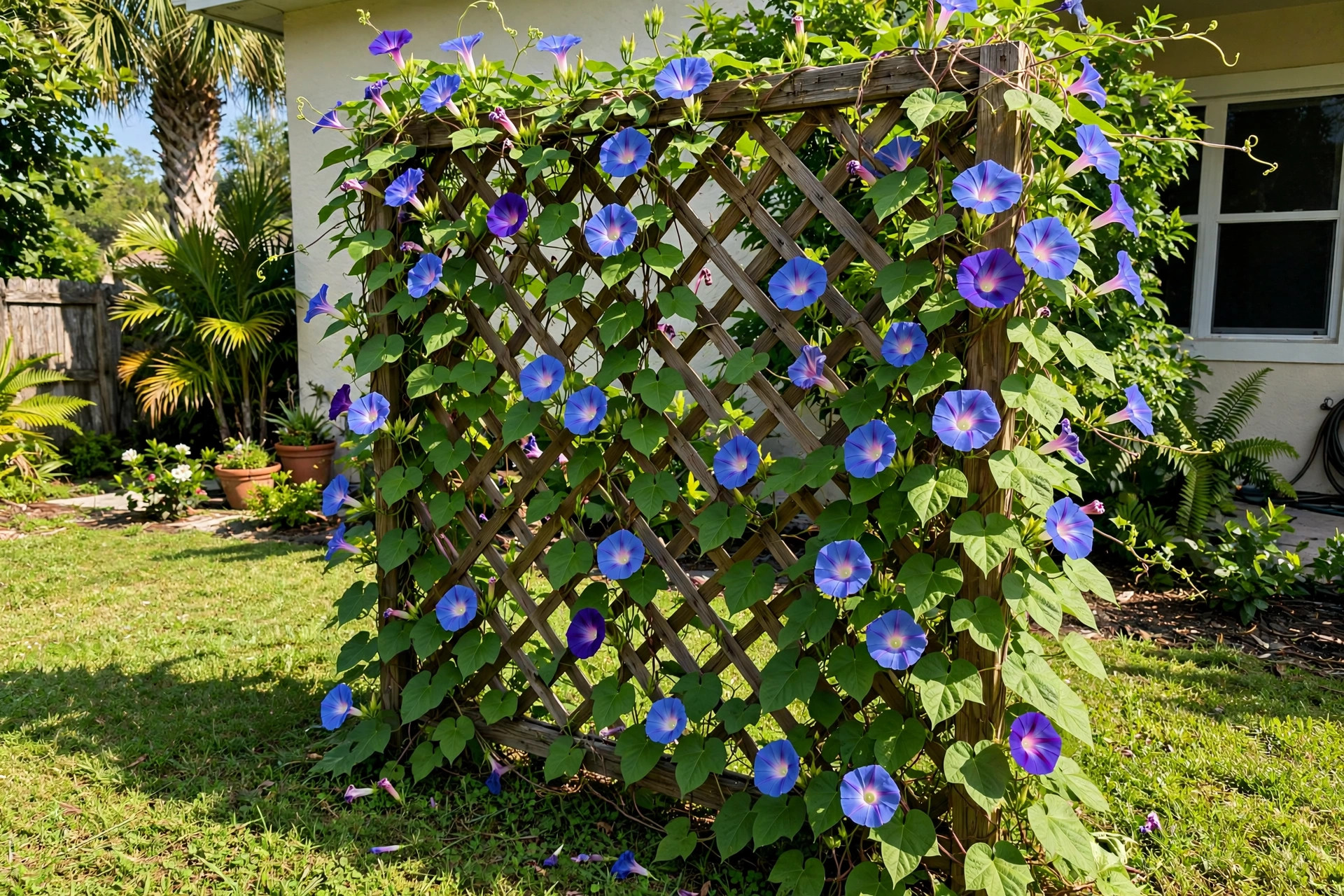
Gardeners who buy morning glory seeds florida homes usa are looking for one thing: a fast summer vine that turns a bare fence or trellis into a wall of blue and purple flowers. Florida gives these vines exactly what they want. The days are long, the heat is steady, and the growing season runs far past summer. With a packet of seed and a little care, a morning glory bed planted in April can still be in flower at Thanksgiving.
The common morning glory, Ipomoea purpurea, has been grown in American home gardens for more than two hundred years. Its trumpet flowers open at dawn and close by the afternoon heat. In Florida the plant behaves as a tender annual, although in the warmest counties it may reseed itself and return without any help from the gardener. This guide covers how to choose seed, how to sow it, what it costs, and how to keep the vine healthy through a long Florida season.
Why Morning Glories Matter in Florida Gardens
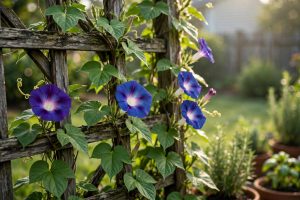
Most vines need a full year or more to cover a fence. Morning glories do the work in a single summer. From seed, a healthy vine can reach twelve to fifteen feet in four months. The flowers come in shades of blue, purple, pink, red, and white, and each plant produces dozens of blooms through the warm months.
For Florida homes, the timing is generous. In most of the state the last frost passes by mid-March, and soil temperatures climb past seventy degrees by April. Morning glory seeds need warm soil to sprout. In the cooler parts of the North, gardeners wait until June. In Florida, gardeners can sow outdoors in March or April and enjoy flowers by June. In South Florida, where frost is rare, some gardeners sow as early as February.
The flowers open early in the day, which makes them a morning attraction on patios and entryways. Bees and butterflies visit the open trumpets, so a morning glory trellis also serves as a small pollinator garden. Hummingbirds take nectar from the red and pink forms.
What to Look for When You Buy Seeds: Morning Glory Seeds Florida Homes Usa
Seed packets vary more than most new gardeners expect. Here are the points that matter most.
Freshness and germination rate. Morning glory seed stays viable for several years, but fresher seed sprouts faster and more evenly. Look for a packed-for date on the envelope. Seed packed within the last year is best. A good packet will list a germination rate, often eighty percent or higher.
Variety name. The plain seed called “mixed colors” is fine for a cottage look, but named varieties give more control over color and size. “Heavenly Blue” is the classic sky-blue form. “Grandpa Ott’s” carries deep purple flowers with a red star. “Scarlett O’Hara” is a true red. “Moonflower,” which belongs to the same family, opens large white blooms at night and is often sold alongside morning glory seed.
Coated seed. Morning glory seeds have a hard coat, and some packets contain seed that has been treated to help it sprout. Most packets are untreated. If you choose untreated seed, you will need to nick the coat or soak the seed before planting, as described below.
Quantity. A single packet of forty to fifty seeds covers about eight to ten feet of trellis. For a long fence, buy two or three packets. Seed is cheap, and leftover seed keeps well for next year if stored cool and dry.
Source reputation. Buy from a seed company with a known name and a seed-count or weight on the packet. Companies such as Burpee, Park Seed, and Gurney’s sell tested lots and print germination data. The Old Farmer’s Almanac planting guides are a useful free reference for sowing dates in your zone.
Types and Options for Florida Gardeners
The seed trade offers several kinds of morning glory, and they do not all behave the same way.
Common morning glory (Ipomoea purpurea). The standard garden vine. Fast, tough, and reseeds freely. Best for fences and arbors.
Tall morning glory (Ipomoea tricolor). Includes the famous “Heavenly Blue.” Flowers are larger than the common type. Slightly slower to start but very showy.
Moonflower (Ipomoea alba). White night-blooming flowers, sweetly fragrant. Plant it near a patio or bedroom window where the evening scent can be enjoyed. Seed takes longer to germinate, so start it a week or two earlier.
Cypress vine (Ipomoea quamoclit). Fine ferny foliage and small star-shaped red flowers. Good for a delicate look on a small trellis.
Dwarf or bush forms. Compact varieties such as “Pearly Gates” grow to only two or three feet and suit containers on porches and balconies.
For most Florida homes, a mix of one blue variety and one red or pink variety gives the best show. If you garden in a pot, pick a dwarf form. If you want night fragrance, add moonflower to the order. The Gardening Know How library has variety profiles with photographs, and The Spruce publishes beginner-friendly growing guides for each type.
Related reading on this site: /morning-glory-seeds-american-homes-guide/
Cost and Price
Morning glory seed is one of the cheapest garden buys. A standard packet costs between one and six dollars. Most packets in this price range hold forty to one hundred seeds, which is enough for a season of flowers on a medium trellis.
Bulk seed is available for gardeners who want to plant a long fence or share with neighbors. A quarter pound of seed, roughly six hundred seeds, usually costs between eight and fifteen dollars. Full retail nursery plants in four-inch pots sell for four to eight dollars each, so starting from seed saves real money when you need a dozen or more plants.
Tools for the job are modest. A small trellis or a roll of garden netting costs under twenty dollars. A bag of compost is about five dollars. Most Florida gardeners already own a watering can or hose. All told, a ten-foot morning glory planting can be set up for under twenty-five dollars.
How to Sow and Grow: Step by Step
Florida soil is warm by spring, but the hard seed coat still needs help. Follow these steps.
1. Prepare the seed. Two to three days before sowing, soak the seeds in warm water for twenty-four hours. Seeds that swell are ready. For a faster start, nick each seed with a nail file on the side away from the small dark spot, then soak. Soaking is the single most important step; unsoaked seed can take three weeks to sprout.
2. Choose the spot. Morning glories need full sun, at least six hours a day. In Florida’s summer heat, a site with morning sun and light afternoon shade also works well. Pick a place with a fence, trellis, or arbor for the vines to climb. Avoid planting where the vine can grab onto prized shrubs or young trees.
3. Prepare the soil. Morning glories are not fussy, but they dislike rich soil. Too much fertilizer grows leaves at the expense of flowers. Work a one-inch layer of compost into the top six inches of soil and leave it at that. The soil should drain well; raised beds suit the sandy soils of central Florida.
4. Sow at the right depth. Plant seeds half an inch deep and six inches apart. In Florida you can sow directly outdoors from March through June. Water the bed gently after sowing.
5. Water. Keep the soil moist until seedlings appear, usually in seven to fourteen days after soaking. After that, water deeply once or twice a week. Morning glories tolerate short dry spells once established, but regular water gives more flowers.
6. Train the vines. When seedlings are six inches tall, guide them to the support. They twine by themselves, but a loose tie of garden twine helps at first. Space plants about a foot apart along a trellis.
7. Do not overfeed. Skip the liquid fertilizer. If growth looks pale in midsummer, a light side-dressing of compost is enough. Gardeners starting other seeds indoors may want to look at /seed-starting-trays-florida-homes-usa/ for equipment that suits Florida’s early spring.
Care and Upkeep Through the Season
Once the vine is climbing, care is light. Check the support weekly and redirect stray stems. Morning glories twine tightly around anything they touch, including each other, so a little guiding keeps the trellis tidy.
Deadheading, or removing spent flowers, is not required. Each flower lasts only a day, and the plant drops them on its own. However, if you want to limit self-seeding, snip off the round seed pods before they turn brown and split. In South Florida, where the plant can become weedy, this step matters.
Watch for leaf-chewing caterpillars and flea beetles in summer. Hand-pick caterpillars or knock beetles into soapy water. Spider mites can appear in hot, dry spells; a strong spray of water on the undersides of leaves usually controls them. Healthy plants in full sun rarely suffer serious damage.
In October or November, after flowering slows, cut the vines down and compost the dry stems. Seeds that fell to the ground may sprout again the following spring, which many gardeners welcome. If you garden vegetables as well, the USDA National Institute of Food and Agriculture offers research-based guidance on crop rotation, and related seed choices are covered in /heirloom-vegetable-seeds-texas-homes-usa/.
Safety Notes
Morning glory seeds contain compounds that are toxic if eaten. Keep packets out of the reach of children and pets, and wash your hands after handling seed. This applies to all true morning glories and to moonflower. The flowers and leaves are not considered highly toxic, but they are not edible, and the vines should not be planted where a curious dog might chew them.
One more caution for Florida gardeners: morning glories reseed freely. A planting left to drop seed can send volunteers into lawns and beds for years. Remove seed pods before they ripen if you want to keep the vine where you put it. For ornamental bedding plants from professional growers, Monrovia, White Flower Farm, and Proven Winners list plant care details that apply to vining annuals as well.
Frequently Asked Questions
How long do morning glory seeds take to sprout? Soaked seed sprouts in seven to fourteen days in warm soil. Unsoaked seed may take three weeks. Soil temperature above seventy degrees gives the fastest results, which is why Florida sowings in April move quickly.
Can I plant morning glory seeds in summer in Florida? Yes. Seeds sown in June or even early July still have time to flower before the days shorten. Plants sown late will be smaller, but they bloom sooner because short days trigger flowering in many varieties.
Do morning glories need full sun? They flower best in full sun, six or more hours a day. In Florida’s intense afternoon heat, light afternoon shade is acceptable and can keep colors from fading.
Will morning glories come back next year in Florida? In much of Florida, fallen seeds sprout on their own the next spring, so the planting renews itself. In zones where winter kills the vine, it behaves as an annual. Self-seeding is so reliable that many gardeners never buy seed twice.
Are morning glories invasive in Florida? Some species can spread aggressively by seed in warm climates. The common garden morning glory is generally treated as a manageable garden annual, but gardeners should deadhead or remove seed pods to keep it from colonizing nearby beds.
Can morning glories grow in pots? Yes. Use a pot at least twelve inches wide with drainage holes, a small trellis or teepee of stakes, and potting mix. Dwarf varieties suit containers best, but standard types grow well in pots if the support is sturdy.
A Final Word
Few plants give as much for as little as the morning glory. For the price of a packet of seed and a few weeks of patience, a Florida gardener gets months of dawn-blue flowers and a living screen that cools a porch and feeds the bees. Soak the seed, give the vine something to climb, and stand back. By midsummer the trellis will be gone, hidden under leaves and trumpets, and the morning walk to the mailbox will be a better one.
References
Burpee. (n.d.). Seeds, plants, and gardening supplies. https://www.burpee.com Gardening Know How. (n.d.). Gardening guides and plant care. https://www.gardeningknowhow.com Gurney’s Seed & Nursery Co. (n.d.). Seeds, plants, and garden supplies. https://www.gurneys.com Monrovia. (n.d.). Plants for home gardens. https://www.monrovia.com National Institute of Food and Agriculture. (n.d.). Agricultural research and extension. https://www.nifa.usda.gov Park Seed. (n.d.). Seeds, plants, and gardening supplies. https://www.parkseed.com Proven Winners. (n.d.). Plants and gardening inspiration. https://www.provenwinners.com The Old Farmer’s Almanac. (n.d.). Gardening calendars and advice. https://www.almanac.com The Spruce. (n.d.). Home and garden advice. https://www.thespruce.com White Flower Farm. (n.d.). Plants, bulbs, and garden supplies. https://www.whiteflowerfarm.com
Was this guide helpful?

About Emily Rodriguez
The My Garden US editorial team writes practical, in-depth home and garden guides for American homeowners — tested advice, no fluff.