
Lavender seed packets texas homes usa is a phrase more Texas gardeners search for each spring. The idea is simple. Buy a small packet of lavender seed. Start the plants at home. Put them in a Texas yard. Enjoy the purple bloom and the sweet smell. Yet Texas is a hard place for lavender. The summers are long and hot. The soil is often heavy clay. A packet of seed costs little, but poor sowing can waste a whole season. This guide walks through the whole task in plain steps. It covers why lavender is worth the trouble, how to pick a packet, how to sow and grow it in Texas soil, what it costs, how to care for the plants, and the safety points to keep in mind.
Why Lavender Matters for Texas Homes
Lavender is one of the few fragrant shrubs that can take Texas heat. Once the plants are set, many types hold up well in zones 8 and 9. The silver gray leaves look fine all year. The flowers draw bees and butterflies. The dried buds scent drawers and closets for months. For a home garden, a small hedge of lavender along a walk can look sharp with very little upkeep.
There is another reason Texans like seed packets. A lavender seed packets buying guide usa will tell you the same: seed is far cheaper than nursery pots. One packet often holds fifty to one hundred seeds. A one gallon nursery plant can cost ten times as much. If you want a long row of lavender, or a full border, seed is the low cost way to get there.
Still, honesty helps. Lavender is slow. Seed can take two to four weeks to sprout. The plants may not bloom well in the first year. Texas rain and clay are the real enemies. Root rot kills more lavender in Texas than heat does. If you know these facts at the start, the work goes better.
What to Look for in a Lavender Seed Packet: Lavender Seed Packets Texas Homes Usa
The Variety Name
Not all lavender seed is the same. Read the packet front and back. Look for a clear variety name. Lavandula angustifolia types, often called English lavender, are the most fragrant and the most fussy. Lavandula x intermedia types, the lavandins, are taller and tougher in heat. For Texas homes, lavandin types like Provence or Grosso often fare better. A packet that only says “lavender mix” may still work, but a named variety tells you more.
Fresh Seed and Germination Rate
Check the “packed for” year on the back. Fresh seed sprouts best. Old seed loses strength fast. A good packet lists a germination rate, often near 60 to 70 percent for lavender. Do not worry if the number looks low. Lavender seed is slow by nature. Buy packets from the current season. The seed racks at the Burpee site show how packets state the year and rate.
Packet Size and Seed Count
Count the seed if the number is given. Fifty seeds is a fair start for a few plants. For a border of twenty plants, plan on two or three packets. Many gardeners sow extra seed because not all of it sprouts. This is normal. It is part of the plan, not a failure.
Organic and Untreated Seed
Some buyers want organic herb seed. The organic herb seeds buying guide usa notes that organic packets cost a little more but skip chemical seed treatments. For lavender grown near food beds or used for tea and sachets, untreated or organic seed is a sound choice.
Types and Options
Lavandula Angustifolia
English lavender gives the strongest scent and the finest oil. Munstead and Hidcote are two common types found in packets. They stay compact, about one to two feet tall. They ask for cool nights and sharp drainage. In much of Texas they do best in pots or raised beds where you control the soil.
Lavandula X Intermedia
Lavandins cross English lavender with a hardier species. They grow three to four feet tall. They take heat with more grace. Provence, Grosso, and Phenomenal are names to look for. Phenomenal was bred for humid summers, which suits East Texas well. The plant pages at Proven Winners describe how these types hold up in warm zones.
Lavandula Stoechas
Spanish lavender has showy flower heads with petal like tops. It handles heat and poor soil. It is less fragrant than English types but blooms for a long season. In South Texas it often behaves as a short lived perennial. It reseeds freely, so one planting can carry on for years.
Seed Versus Transplants
Seed packets suit gardeners with time and patience. Transplants suit gardeners who want flowers this year. Many Texas growers do both. They sow seed in late winter indoors. They buy a few pots for the front bed. The seed grown plants fill in the second year and spread the cost.
How to Sow Lavender Seed in Texas
When to Start
Start lavender seed indoors eight to twelve weeks before the last spring frost. In North Texas that means January or February. In South Texas, late December to January works. The goal is a sturdy young plant by the time nights stay above 50 degrees. The planting calendars at the Old Farmer’s Almanac give frost dates by town.
Cold Treatment
Lavender seed often sprouts better after a chill. Put the dry seed in a small bag in the refrigerator for two to four weeks before sowing. This mimics winter and wakes the seed up. Not every packet needs it, but it helps, and it costs nothing.
The Sowing Mix
Use a light, gritty seed starting mix. Half seed mix and half perlite or coarse sand works well. Do not use garden soil. Texas clay stays wet and smothers tiny seeds. Fill small pots or cell trays. Level the surface. Press the seed lightly onto the top and cover with a dusting of mix, no more than one eighth inch deep. Lavender needs light to sprout, so keep the cover thin.
Water and Warmth
Mist the surface so it is damp, not soaked. Cover the tray with a clear dome or plastic wrap to hold moisture. Keep it near 65 to 70 degrees. Check daily. Air it out for a few minutes each day to stop mold. Sprouts show in two to four weeks. Some seeds wait longer. Keep the tray going for six weeks before you give up on a cell.
Light for Seedlings
Once sprouts rise, give them strong light at once. A sunny south window may do. A simple shop light hung two inches above the plants works better. Run it fourteen to sixteen hours a day. Weak light makes tall, floppy seedlings that fall over. Turn the tray each day so stems grow straight.
Hardening Off
Texas spring can flip from cold to hot in a week. Move seedlings outside a little at a time over seven to ten days. Start with a few hours of morning sun. Bring them in at night. By the end they should take full sun and a light breeze. The growing guides at Gardening Know How lay out this step by step hardening process.
Planting Out
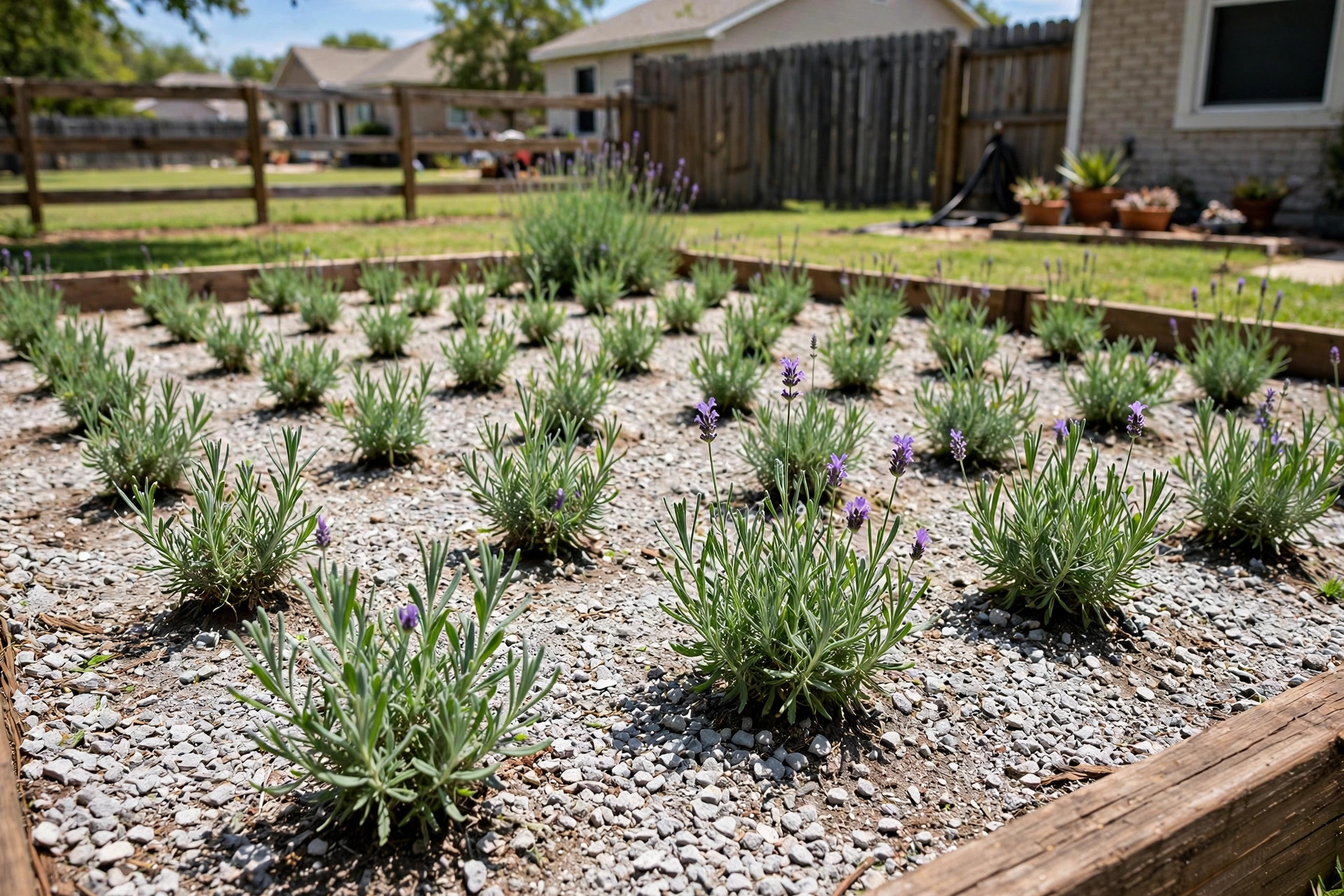
Set plants out after nights stay warm. Space them one to two feet apart for small types, two to three feet for lavandins. Dig the hole no deeper than the root ball. Lavender planted too deep rots at the crown. Water in well, then back off. Mulch with gravel or coarse sand, not bark. Bark holds water against the stems. Gravel keeps the crown dry, which lavender loves.
Texas Soil and Site Tips
Lavender wants lean, fast draining soil and a pH near neutral to slightly alkaline, about 6.5 to 7.5. Much of Texas clay is alkaline already, which is fine. The problem is drainage. Dig a wide hole and mix in expanded shale, coarse sand, or small gravel. On flat lots, plant on a low mound or in a raised bed six to eight inches high. Never let the bed sit in a puddle after rain.
Full sun is a must. Give the plants at least six to eight hours of direct sun. Afternoon shade in August helps in the hottest parts of Texas, but too much shade makes the plants lanky and weak. Good air flow matters as much as sun. Do not crowd lavender between thick shrubs where air cannot move.
Containers work very well. A clay pot with a drainage hole, filled with cactus mix, grows lavender fine on a Texas patio. Pots dry fast in summer heat, so check water daily. The container advice at The Spruce covers pot size and soil blends for lavender.
Cost and Price
Lavender seed packets for Texas homes are cheap. Most packets run from two to six dollars at garden centers and online. Two packets are enough for most home borders. Add seed trays, mix, and perlite, and a full start up runs about fifteen to thirty dollars.
Compare that with nursery pots. A one quart lavender plant often sells for six to twelve dollars. A one gallon plant runs twelve to twenty dollars. A twenty plant border from pots can cost two hundred dollars or more. From seed, the same border costs under fifty dollars in supplies. The trade off is time. Seed grown plants take a full year to reach pot size.
Drip irrigation parts add cost if you go that route. A simple soaker line for a lavender bed runs twenty to forty dollars. It pays off in Texas summers by watering roots without wetting leaves.
Care and Upkeep
Water
Water deeply but rarely. Soak the root zone, then let the soil dry out before the next watering. In Texas summer this may mean watering twice a week in beds and daily in small pots. In winter, cut back hard. More lavender dies from kind hands with a hose than from drought.
Feeding
Lavender likes poor soil. Do not feed it like roses or lawn grass. A light sprinkle of balanced fertilizer once in spring is plenty. Some growers add a handful of lime to the soil each year to keep the pH up. Too much nitrogen makes soft growth that flops and rots.
Pruning
Cut back spent flower stems after the first bloom. In late summer, trim the plants by one third to keep them dense. Never cut into bare old wood. Lavender does not regrow from woody stems with no leaves. A yearly trim keeps the plant rounded and stops it from splitting open. The Monrovia plant care pages show the right cut points.
Pests and Disease
Lavender has few insect pests. Aphids may gather on new shoots. A strong spray of water knocks them off. The real foe is root and crown rot from wet soil. Signs are gray, drooping stems and a dark base. Prevention is the cure: drainage, sun, air flow, and no mulch touching the crown.
Winter
Most lavender types take Texas winters well. In the Panhandle, a hard freeze can bite. Cover young plants with frost cloth on the coldest nights. Do not wrap them in plastic, which traps damp air. Potted plants can move to a sheltered wall.
Safety
Lavender is not food in the garden sense. The essential oil is strong and should never be swallowed straight. Keep concentrated oil away from small children and pets. Cats are sensitive to many essential oils, so keep oil diffusers out of closed rooms where cats sleep.
In the garden, lavender is safe to touch and to brush against. Some people with skin allergies react to the plant oil. Wear gloves if your skin is sensitive. Read every packet for any seed treatment warning. Treated seed is often dyed pink or blue. Do not use treated seed for sprouts you plan to eat or brew. The federal guidance at NIFA covers safe seed handling for home gardeners.
Frequently Asked Questions
Can I sow lavender seed straight into Texas soil?
Yes, but indoor starts do better. Direct sowing in March works in South and Central Texas if the soil drains well. Keep the seed bed damp until sprouts show. Birds and hard rain are the main risks outdoors.
Which lavender type is easiest for Texas beginners?
Lavandin types like Provence or Phenomenal are the most forgiving. They take heat and bounce back from a missed watering. The variety notes at Gurney’s flag which types suit hot zones.
How long do seed grown lavender plants live?
Five to ten years is common with good drainage. Plants in heavy wet soil may last only two or three years. Replanting a few each year keeps the bed full.
Do deer eat lavender?
Deer usually leave lavender alone. The strong scent puts them off. It is one reason Texas hill country gardeners plant it along fences.
Can I grow lavender from seed on a balcony?
Yes. Use a pot at least twelve inches wide with drainage holes. One packet sows enough for several pots. A sunny balcony is ideal because pots drain fast.
Should I mix lavender with wildflowers?
Many gardeners do. The wildflower seed mixes buying guide usa pairs well with this plan. Sow wildflowers in one bed and lavender along the edge. Both like sun and lean soil, and the mix draws pollinators all season.
A Short Final Word
Lavender seed packets texas homes usa sums up a small, hopeful project. A few dollars of seed. A tray on a windowsill in winter. A sunny Texas bed in spring. The work asks for patience and sharp drainage. It pays back with silver leaves, purple bloom, and a scent that fills the yard on warm evenings. Start with fresh seed of a named heat tough variety. Give it light soil and full sun. Water with a light hand. In a year or two the border will look like it cost far more than it did.
References
Burpee. (n.d.). Seeds, plants, and gardening supplies. https://www.burpee.com Gardening Know How. (n.d.). Gardening guides and plant care. https://www.gardeningknowhow.com Gurney’s Seed & Nursery Co. (n.d.). Seeds, plants, and garden supplies. https://www.gurneys.com Monrovia. (n.d.). Plants for home gardens. https://www.monrovia.com National Institute of Food and Agriculture. (n.d.). Agricultural research and extension. https://www.nifa.usda.gov Proven Winners. (n.d.). Plants and gardening inspiration. https://www.provenwinners.com The Old Farmer’s Almanac. (n.d.). Gardening calendars and advice. https://www.almanac.com The Spruce. (n.d.). Home and garden advice. https://www.thespruce.com
Was this guide helpful?

About James Carter
The My Garden US editorial team writes practical, in-depth home and garden guides for American homeowners — tested advice, no fluff.
You May Also Like
Tulip Bulbs Fall Texas Homes USA: A Complete Planting Guide
February 20, 2026 0 views
Garlic Bulbs for Planting: USA Online Deals and Growing Guide
April 26, 2026 0 views
How to Grow Blackberries: Thornless & Easy
October 7, 2026 1 views