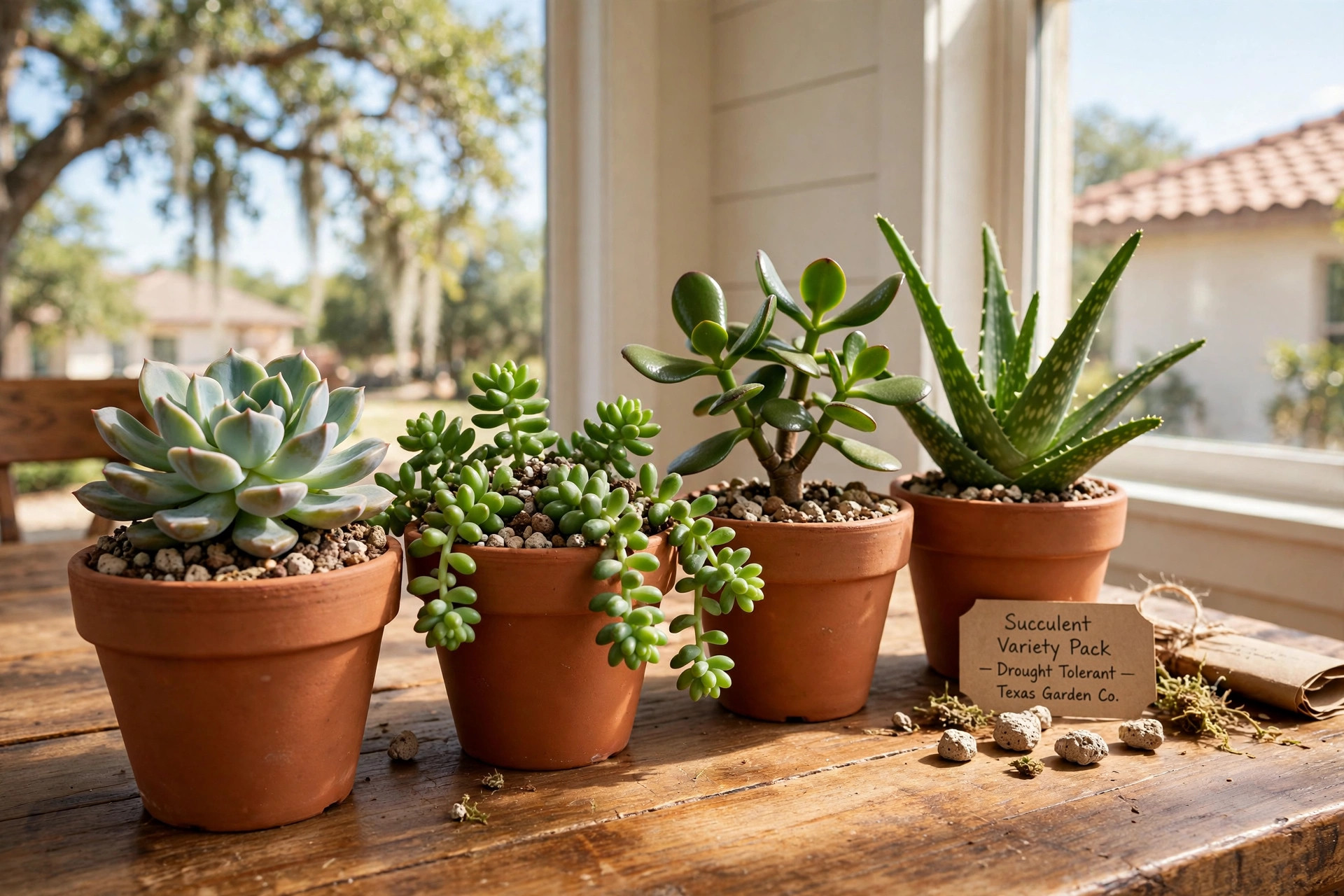
Texas homes are a natural match for succulents. The long hot season, the strong sun, and the dry air suit these plants well. For that reason, succulent variety packs texas homes usa has become a common search for homeowners who want a simple start. A variety pack gives you several kinds of succulents in one box. You get color, shape, and texture at once, and the price is lower than buying each plant alone. This guide explains what these packs are, how to pick a good one, which types do well in Texas, and how to keep them alive.
Why Succulent Variety Packs Suit Texas Homes
Texas is a large state with long summers and mild winters in most parts. South Texas can stay warm all year. North Texas sees hard freezes now and then. Central Texas sits between the two. In all these areas, succulents do well because they store water in their leaves. They forgive a missed watering. They thrive in heat that would wilt a fern.
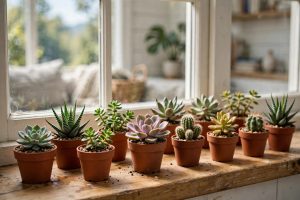
A variety pack is simply a box of small succulents, often in two inch pots or as bare root cuttings. Most packs hold six, twelve, or twenty four plants. The mix often includes rosette shapes, trailing types, and upright growers. For a Texas home, this means one order can fill a patio bowl, a window ledge, and a dish garden all at once.
What to Look for in a Good Pack: Succulent Variety Packs Texas Homes Usa
Not all packs are equal. A good pack arrives with firm, colorful plants. A poor pack arrives with pale, stretched, or rotted plants. Here is what to check before you buy.
Firm leaves. A healthy succulent leaf feels firm and full. Soft, see through leaves mean rot. Paper thin, wrinkled leaves mean long thirst. Either way, pick another seller.
Good color. Look for rich green, blue gray, purple tips, or red edges. Pale yellow green plants have been kept in the dark. They can recover, but they start life weak.
Roots and dry soil. If the plants come potted, the soil should be dry and crumbly. Wet soil in the box invites rot on the trip. Bare root cuttings should be firm at the base, with no black spots.
Labels. The best packs name each plant. Labels help you learn care needs, since not every succulent wants the same light.
Texas origin. Sellers who grow in Texas or in a similar hot climate ship plants that are used to heat. Plants from cool greenhouses need a slow change to Texas sun, or they burn.
Pack size honesty. Read the listing. Some packs show full grown plants in the photo but ship small cuttings. Small is fine, as long as you know what is coming.
Types of Succulents That Do Well in Texas
A typical pack mixes many genera. Below are the common ones, with notes on how each handles Texas conditions. Plant profiles at Monrovia and Proven Winners list mature size and light needs for many of these types.
Echeveria
These are the classic rosettes. They look like flowers made of thick leaves. Echeveria loves bright light and hates wet feet. In Texas, it does best with morning sun and some shade in the hot afternoon. Most types need winter shelter north of Austin. For more indoor plant ideas that pair well with rosettes, see our guide on succulent variety packs where to buy usa.
Sedum and Stonecrop
Sedum is one of the toughest groups for Texas. Many sedums take full Texas sun, poor soil, and long dry spells. Low growing types make fine ground cover between rocks.
Graptopetalum and Ghost Plants
Ghost plants have pale blue gray leaves and a relaxed habit. They trail over pot edges, which makes them good for hanging baskets. They handle Texas heat well but burn if moved straight from a dark box to full sun. Give them a week of shade first.
Crassula and Jade Plants
Jade plants are the slow, steady members of the family. They grow into small shrubs over years. They like bright indoor light in Texas homes and take outdoor life from spring to fall. They must come inside before a hard freeze.
Agave
Agave is the bold Texas native of the group. Many agaves live outdoors year round in Central and South Texas. They are slow but nearly care free once set. Young plants from a pack need one full season in a pot before going into the ground. Sharp leaf tips are common, so place them away from walkways. Hardiness charts at White Flower Farm show which agave types suit each Texas zone.
Aloe
Aloe vera and its cousins do well in Texas. They want bright light and dry soil between waterings. In South Texas they can stay out all year with a little frost cloth on the coldest nights.
Haworthia and Gasteria
These small, shade tolerant types suit Texas windowsills. They take less light than echeveria, which makes them good for rooms with only morning sun. They stay small, so they fit desks and shelves.
When you shop, pick a pack with a mix of tough types like sedum and agave plus pretty rosettes like echeveria. That mix gives you both beauty and easy care. Readers planning a larger planting project may also enjoy our notes on heirloom vegetable seeds texas homes usa, which cover garden planning for Texas yards.
How to Choose the Right Pack for Your Home
Start with where the plants will live. Indoor growers in Texas need types that take windowsill light and air conditioning. Haworthia, gasteria, and jade fit well. Outdoor growers need heat lovers like sedum, agave, and aloe. A porch grower can mix both.
A twelve pack fills about four six inch pots. Buy a little less than you think you need, since succulents grow and fill space fast.
Check the season. Spring and early fall are the best times to order in Texas. Summer shipping works if the seller packs well, but boxes left on a hot porch can cook plants. Ask the seller about heat packs in winter, since North Texas nights can drop below freezing from November to March.
Think about your watering habits. If you water often, pick types that take more water, like sedum and aloe. If you forget for weeks, pick agave, haworthia, and crassula. Honest self knowledge saves more plants than any product.
Finally, set a budget. Small packs of six cost little. Large packs of twenty four or more cost more but lower the price per plant. Texas nurseries often sell locally grown packs at fair prices, which also saves shipping stress.
Cost and Price
Prices for succulent variety packs vary by size and source. As a rough guide for Texas buyers:
– Small packs of 4 to 6 plants: about 10 to 20 dollars. – Medium packs of 12 plants: about 20 to 40 dollars. – Large packs of 24 or more: about 40 to 70 dollars. – Premium packs with rare types: 50 dollars and up.
Local Texas nurseries may charge a bit more per plant but save shipping costs. Online sellers compete on price and ship to all parts of the state. For soil and seed basics to go with your pack, see organic herb seeds texas homes usa.
The true cost also includes soil and pots. A bag of cactus mix costs around 8 to 12 dollars. Clay pots with drain holes cost a few dollars each. These are one time costs that last for years.
Planting and Potting
Good potting is the heart of succulent care. Texas tap water and heavy garden soil can both cause trouble, so start right.
Use gritty soil. Buy a bag marked for cactus or succulents. You can also mix two parts potting soil with one part perlite or coarse sand. The mix should drain fast. When you water, the water should run out the bottom in seconds.
Use pots with holes. Every pot must have a drain hole. No hole means water sits at the bottom, and roots rot. Clay pots dry faster than plastic, which suits Texas summers.
Plant at the right depth. Set each plant so its base sits just above the soil line. Leave a small gap between plants so air can move.
Wait to water. After potting, wait two or three days before watering. This lets small root wounds heal. Then water deeply until water runs out the drain hole. Let the soil dry fully before the next watering.
Move to sun slowly. Plants from a shipping box need a slow start. Give them bright shade for a week, then morning sun, then full placement. Texas noon sun in July can burn even tough plants if the change is sudden.
For trusted growing advice from experienced garden writers, the planting guides at Gardening Know How give clear steps for potting small succulents. The seasonal calendar at The Old Farmer’s Almanac helps Texas gardeners time outdoor planting around frost dates.
Care and Upkeep Through the Texas Year
Succulents are low care, not no care. A small routine keeps them strong.
Spring. Move outdoor pots back outside after the last frost. Repot crowded plants. Start light feeding, once a month, with a weak cactus fertilizer.
Summer. Water deeply but rarely. In a Texas heat wave, outdoor pots may need water once a week. Indoor plants in air conditioning need less. Watch for sunburn: white or brown patches mean too much direct sun. Move the plant to filtered light.
Fall. Slow down watering as nights cool. Bring frost tender types inside before the first freeze.
Winter. Keep indoor succulents near the brightest window. Water only when the soil is fully dry, which may mean once a month. In South Texas, hardy types like many sedums and agaves can stay outside with a watch on the forecast.
Pests. Mealybugs are the main pest. They look like tiny white cotton balls in leaf joints. Dab them with a cotton swab dipped in rubbing alcohol until they are gone.
For research backed plant care facts, the cooperative extension resources linked through NIFA are a solid place to start. Retail growers like Burpee and Park Seed also publish plain care sheets for the types they sell.
Safety in the Home
Most succulents are safe to touch, but a few need care around children and pets. Some euphorbia types bleed a milky sap that burns skin and eyes. Kalanchoe leaves can harm cats and dogs if eaten. Agave leaf tips are sharp enough to cut skin.
Keep spiny or sappy plants out of reach of small children and pets. Wear gloves when handling agave. If a pet chews a succulent, call your vet and note the plant name. Labels from a good pack make this step easy.
Sun safety matters too. Pot work in the early morning is cooler and kinder to both you and the plants.
Common Mistakes Texas Buyers Make
Overwatering. This kills more succulents than all other causes combined. When in doubt, do not water. The plant will tell you with wrinkled leaves when it is truly thirsty.
No drain hole. Pretty pots without holes are plant traps. Drill a hole or use them as outer covers with a plain pot inside.
Wrong soil. Regular garden soil holds too much water. Always use a gritty, fast draining mix.
Too little light indoors. A dark corner will not do. Succulents need the brightest window you have, ideally south or west facing in Texas homes.
Moving outside too fast. Spring fever is real. Harden plants off over a week or two before full outdoor life.
Ignoring the forecast. A surprise North Texas freeze can kill a whole porch collection in one night. Bring tender plants in early.
Design inspiration for showing off your collection is easy to find. The houseplant galleries at The Spruce show how mixed packs look in real rooms.
FAQ
How many succulents come in a variety pack? Most packs hold 6, 12, or 24 plants. Read the listing to see exact counts and pot sizes.
Can succulent variety packs live outside in Texas year round? Some can, some cannot. Hardy types like many sedums and agaves take Texas winters in most zones. Tender types like echeveria need shelter from freezes.
How often should I water succulents in Texas summer? Water deeply, then wait until the soil is fully dry. For outdoor pots in July heat, that may mean once a week. For indoor plants in air conditioning, every two to three weeks is common. Always check the soil first.
Are succulent variety packs good for beginners? Yes. They are one of the best beginner buys. You get many plants for little money, and the tough types forgive mistakes. Start with a small pack, learn the basics, and grow from there. Beginner guides at Gurney’s walk through first steps in plain terms.
What soil is best for a succulent variety pack? A fast draining cactus or succulent mix. Never use heavy garden soil straight from the yard.
Do I need fertilizer? A little helps in the growing season. Use a weak cactus fertilizer once a month from spring to early fall. Skip feeding in winter when growth slows.
A Final Word
Succulent variety packs give Texas homes an easy, low cost start with plants that love heat and sun. Pick a pack with firm, colorful plants from a grower who knows warm climates. Pot them in gritty soil with drain holes. Water deeply and rarely. Give them bright light and a slow move to the Texas sun. Do those simple things, and a single pack can fill your home with living color for years to come.
References
Burpee. (n.d.). Seeds, plants, and gardening supplies. https://www.burpee.com Gardening Know How. (n.d.). Gardening guides and plant care. https://www.gardeningknowhow.com Gurney’s Seed & Nursery Co. (n.d.). Seeds, plants, and garden supplies. https://www.gurneys.com Monrovia. (n.d.). Plants for home gardens. https://www.monrovia.com National Institute of Food and Agriculture. (n.d.). Agricultural research and extension. https://www.nifa.usda.gov Park Seed. (n.d.). Seeds, plants, and gardening supplies. https://www.parkseed.com Proven Winners. (n.d.). Plants and gardening inspiration. https://www.provenwinners.com The Old Farmer’s Almanac. (n.d.). Gardening calendars and advice. https://www.almanac.com The Spruce. (n.d.). Home and garden advice. https://www.thespruce.com White Flower Farm. (n.d.). Plants, bulbs, and garden supplies. https://www.whiteflowerfarm.com
Was this guide helpful?

About James Carter
The My Garden US editorial team writes practical, in-depth home and garden guides for American homeowners — tested advice, no fluff.