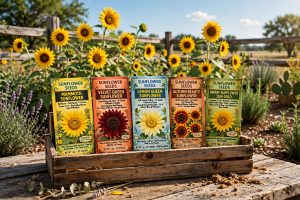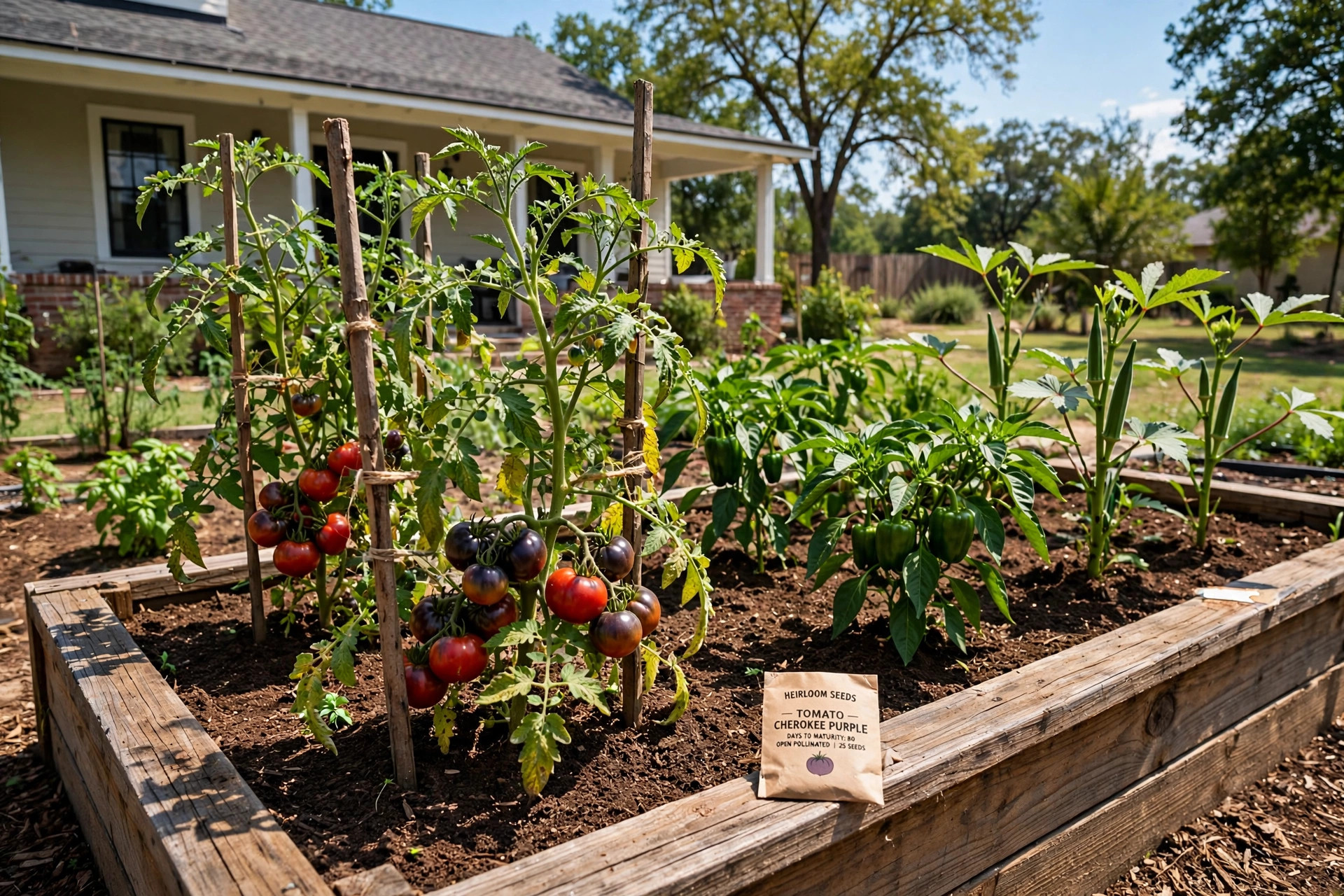

Many Texas gardeners want heirloom vegetable seeds Texas homes USA gardeners can trust. Old seed types carry flavor and history. They grow true from saved seed. They suit home plots from Houston to El Paso. This guide explains what heirloom seed means, how to pick kinds that stand up to Texas heat, and how to care for them through the season.
Why Heirloom Seeds Matter
An heirloom seed is an open-pollinated type passed down for at least fifty years. Some lines go back much further. Farmers and home gardeners kept the best plants year after year. They saved seed from strong, tasty fruit. That long selection gave each type its own character.
Modern hybrids are bred for ship shape and shelf life. They often lack deep flavor. Heirloom types kept their taste because home growers chose flavor first. A Brandywine tomato or a Cherokee Purple slice tastes different from a store tomato. The flesh is rich. The juice is full.
Seed saving is another strong reason. Heirloom plants grow true. Seed from this year’s plant gives the same plant next year. Hybrids do not do this. With heirloom vegetable seeds for sale usa you can build a small seed stock of your own. One packet can last many seasons if you save seed well.
Heirlooms also keep old plant kinds alive. Some types grow only because home gardeners kept them. When you plant them, you join that work. It is a quiet form of care for the food supply.
The Burpee company notes that heirloom seed keeps garden variety strong. The U.S. Department of Agriculture supports research into older crop types. Both agree that seed variety matters for food safety in the long run.
How to Choose Heirloom Seeds for Texas: Heirloom Vegetable Seeds Texas Homes Usa
Texas is a hard state for seed. Heat is the first test. Many heirloom types come from cooler places. They slow down when nights stay warm. Look for kinds with a note about heat set or southern growth. Tomatoes that set fruit in heat are worth more than any pretty name.
Days to maturity is the second test. Texas has two growing seasons in most parts. Spring is short before the heat comes. Fall is long and mild. A seed that needs 90 days may miss spring but fit fall. Read the packet. Match the days to your local calendar.
Disease notes matter too. Wet springs in East Texas bring blight. Look for kinds noted as blight tolerant. In West Texas the air is dry. Mites and whiteflies are the bigger threat. Choose kinds that stand up to your local trouble.
Start with a small list. Pick five or six kinds at most. A new gardener who buys forty packets often plants none well. Five kinds grown well teach more than forty grown poorly. You can add more kinds next year when you know your soil and your sun.
Good catalogs give real detail. The Park Seed site lists heat notes on many types. Gurney’s gives days to maturity on each packet. Use those facts when you choose.
Types and Options That Suit Texas
Tomatoes lead most Texas gardens. Heat-set kinds are the key. Arkansas Traveler and Homestead 24 were bred for southern heat. Both are open-pollinated. Eva Purple Ball and Porter also stand the heat well. The Proven Winners site lists many warm-climate garden plants and notes heat behavior.
Peppers love heat. Most heirloom peppers do well in Texas. Cayenne, serrano, and ancho types grow strong. Sweet bells need some shade in August. Plant bells where they get noon shade. Hot kinds can take full sun all day.
Okra is a true southern heirloom. Clemson Spineless is the old standard. It grows in poor soil and hot air. Cowhorn and Red Burgundy are other good types. Okra needs heat to start. Plant it after the soil is warm.
Beans are a fast win. Contender and Kentucky Wonder are old pole and bush types. They grow in spring and again in fall. Southern peas like Purple Hull and Blackeye do even better. They feed the soil with nitrogen while they grow.
Greens fit the cool months. Texas winters are mild in the south. Mustard, collards, and turnip greens grow from fall to spring. Georgia Southern collards are a true heirloom. Plant them in October and cut leaves all winter.
Herbs pair well with any garden. Many Texas cooks want organic herb seeds for sale usa beside their vegetables. Basil, cilantro, and dill grow fast. Perennial herbs like rosemary and thyme last for years in mild parts of the state.
Starting Seeds Indoors and Out
Texas gardeners use both methods. Tender seeds start indoors. Tough seeds go straight in the ground.
Tomatoes, peppers, and eggplant start inside. Begin six to eight weeks before the last frost. Use clean trays and fresh mix. Keep the soil near 75 degrees. A simple heat mat helps. Good seed starting trays buying guide usa advice applies here: shallow cells, drainage holes, and a clear cover to hold moisture.
Transplant when nights stay above 50 degrees. Harden the plants first. Set them out for a few hours each day over one week. This hard step stops shock. Plants moved too fast stall for weeks.
Beans, corn, okra, and squash go straight in the soil. Wait until the soil is warm. A soil thermometer is cheap and worth it. Okra seed likes 80-degree soil. Beans take 65 degrees. Plant small seeds shallow. Plant big seeds deeper.
Fall planting runs on a backward clock. Count back from the first fall frost. Add two weeks for slow fall growth. Start fall tomatoes in June. Start fall beans in August. Many Texas gardeners say the fall garden beats the spring one.
Cost and Price
Heirloom seed is cheap for what it gives. A packet of White Flower Farm seed or any good brand runs about three to five dollars. That packet holds 25 to 50 tomato seeds or hundreds of lettuce seeds. One packet can fill a whole home garden.
Price per plant is the real measure. A nursery tomato plant costs four to six dollars. A seed packet that grows thirty plants costs four dollars. Seeds win by a wide margin. The trade is time and care. Seeds need weeks of indoor work. Nursery plants skip that step.
Seed saving cuts the cost to zero. Let one fruit ripen fully on the plant. Scoop the seed. Dry it on paper for one week. Store it in a cool, dark jar. Label the jar with the kind and the year. Next spring you plant for free.
Buy from sellers who test germination. Fresh seed sprouts fast. Old seed in a hot garage sprouts poorly. Store your seed in the fridge in a sealed jar. Cold, dry seed stays good for years. Most vegetable seed keeps three to five years this way.
Care and Upkeep Through the Season
Water is the first care job. Texas sun dries soil fast. Deep watering beats light sprinkling. Water once or twice a week, deeply. Mulch helps a lot. Four inches of straw or wood chips holds soil moisture. It also keeps weeds down and fruit clean.
Feed the soil, not just the plant. Heirlooms grow best in rich soil. Mix compost into the bed before planting. Side-dress with compost in mid-season. A simple soil test from the county office tells you what is missing. The Old Farmer’s Almanac gives month-by-month garden notes that suit Texas timing well.
Support tall plants early. Put cages or stakes in at planting time. Driving a stake later cuts roots. Tie stems loosely with soft cloth. Heirloom tomatoes grow tall and heavy. They fall over without help.
Watch for pests each week. Hornworms strip a tomato plant in days. Pick them off by hand. Aphids cluster on new growth. A hard spray of water knocks them off. Row cover cloth keeps flea beetles off young plants. The Gardening Know How site has clear photos that help name common pests.
Heat care matters in July and August. Shade cloth over tomatoes helps fruit set. Water in the morning so leaves dry by night. Wet leaves at night invite disease. Pull spent spring plants. Plant the fall crop in their place.
Safety
Garden safety is simple but worth stating. Read every seed packet. Some seed is treated with fungicide. Treated seed has a colored coat. Do not eat treated seed. Keep it away from children and pets. Untreated seed is the safer buy for home gardens.
Wash all produce before eating. Soil can carry germs. Rinse under clean running water. Rub firm skins with a brush. This is basic food safety, and it applies to every garden.
Compost safely. Do not use fresh manure on food beds. Fresh manure can carry harmful germs. Compost manure fully first, or buy bagged compost that is marked safe. The Spruce garden section gives clear compost safety steps.
Use garden chemicals with care. Many heirloom growers avoid sprays. If you spray, read the label fully. Wear gloves. Keep children and pets off the bed until the label says it is safe. Store all products locked away from kids.
Sun safety matters in Texas. Garden in the morning or evening. Wear a hat. Drink water. Heat stroke is a real risk in August. Short work sessions beat long ones in high heat. Take a cold drink with you and rest in the shade every twenty minutes. Your body is more important than any weed.
Frequently Asked Questions
What does heirloom mean for vegetable seeds? It means an open-pollinated type kept for at least fifty years. Seed from the plant grows the same plant next year. Flavor and local fit are the usual reasons growers keep them.
Do heirloom vegetables grow well in Texas heat? Many do, but not all. Pick kinds with heat-set notes and southern history. Arkansas Traveler tomato, Clemson Spineless okra, and Purple Hull peas are proven in Texas. Avoid kinds bred only for cool, short summers.
When should I plant heirloom seeds in Texas? Spring planting starts after the last frost, often March in the south and April in the north. Fall planting starts in June and July for a September to November harvest. Check your county frost dates and count back.
Can I save seeds from heirloom plants? Yes. That is their main strength. Let fruit ripen fully. Scoop, clean, and dry the seed for one week. Store in a sealed jar in a cool, dark place. Label each jar. Do not save seed from hybrid plants, since they will not grow true.
Are heirloom seeds better than hybrid seeds? They are different, not simply better. Heirlooms win on flavor and seed saving. Hybrids win on even size and disease packages. Many Texas gardeners grow both and pick what works in their own soil.
How long do heirloom seeds stay good? Most keep three to five years in cool, dry storage. Onion seed fades faster, often in one year. Tomato and pepper seed can last even longer. Test old seed by sprouting ten seeds on a wet paper towel before planting season.
A Final Word
Heirloom vegetable seeds suit Texas home gardens well when chosen with care. Pick heat-tough kinds. Match days to your season. Start seed right. Water deep and mulch well. Save seed from your best plants. In a few years you will hold seed lines tuned to your own yard. That is the old way, and it still works.
References
Burpee. (n.d.). Seeds, plants, and gardening supplies. https://www.burpee.com Gardening Know How. (n.d.). Gardening guides and plant care. https://www.gardeningknowhow.com Gurney’s Seed & Nursery Co. (n.d.). Seeds, plants, and garden supplies. https://www.gurneys.com National Institute of Food and Agriculture. (n.d.). Agricultural research and extension. https://www.nifa.usda.gov Park Seed. (n.d.). Seeds, plants, and gardening supplies. https://www.parkseed.com Proven Winners. (n.d.). Plants and gardening inspiration. https://www.provenwinners.com The Old Farmer’s Almanac. (n.d.). Gardening calendars and advice. https://www.almanac.com The Spruce. (n.d.). Home and garden advice. https://www.thespruce.com White Flower Farm. (n.d.). Plants, bulbs, and garden supplies. https://www.whiteflowerfarm.com
Was this guide helpful?

About Sarah Mitchell
The My Garden US editorial team writes practical, in-depth home and garden guides for American homeowners — tested advice, no fluff.
You May Also Like
Snake Plants Indoor Reviews Buying Guide USA: How to Choose a Healthy Plant
September 4, 2026 0 views
Air Plants Bulk Florida Homes USA: A Plain Guide to Buying Tillandsia
April 20, 2026 0 views
Pothos Plants Bulk for Sale USA: A Practical Guide
April 1, 2026 0 views