
Introduction
Air plants have become one of the most loved houseplants in the country. They need no soil. They sit in glass globes, hang from wire, or rest on a shelf. They ask for little and give much. When a single plant costs five or ten dollars, it is natural to ask where to buy air plants in bulk in the USA and pay less per plant.
This guide answers that question in full. It covers the best kinds of sellers, from large plant houses to small family farms. It explains how bulk prices work and what a fair deal looks like. It shows how to pick healthy plants from a big lot. It also covers simple care, since a box of fifty plants dies fast if you treat it like one plant. Whether you plan to sell them at a craft fair, use them in wedding favors, or fill a sunny apartment, the steps below will help.
Why Buy Air Plants in Bulk: Air Plants Bulk Where to Buy Usa
Buying one air plant is easy. Buying thirty or one hundred takes more thought, but the rewards are real.
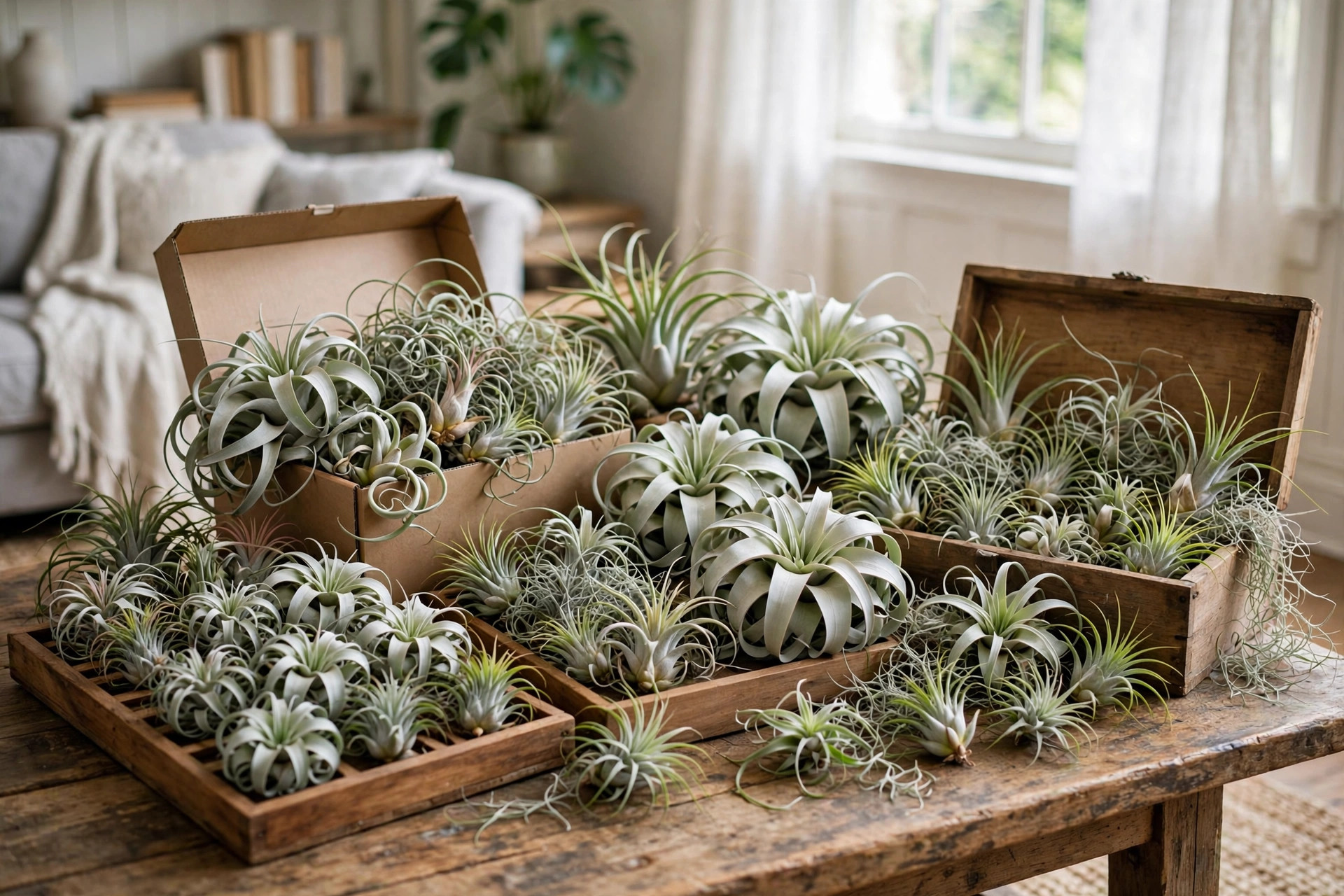
The first reason is price. A plant that costs eight dollars alone may cost three dollars in a lot of fifty. The second reason is choice. Bulk packs often mix shapes and sizes, from tiny ionantha to long Spanish moss strands. A mixed lot gives more design options than buying one plant at a time. The third reason is purpose. People buy in bulk for weddings, for gift bags, for classroom projects, and for resale. A bulk order arrives in one shipment, which saves time and shipping cost.
There is also the simple joy of plenty. A wall of air plants looks richer than a single glass globe. A table full of them at a farmers market draws a crowd. For more ideas on low-cost plants that multiply fast, see our guide on succulent variety packs.
What Air Plants Are
Air plants belong to the Tillandsia genus, a group of plants in the bromeliad family. They grow without soil. In the wild, they grip tree bark and rocks. They take water through small scales on their leaves. This is why they can live in a shell, on a piece of driftwood, or in an open bowl.
Most types sold in the United States are hardy and forgiving. They like bright light but not harsh noon sun. They like a good soak once a week. They like air moving around them. When these three needs are met, they grow slowly and can even flower. Some home growers pair them with other easy plants, and our notes on pothos plants in bulk show how another soil-light option compares.
Where to Buy Air Plants in Bulk in the USA
Now we reach the core question. There are five main kinds of sellers, and each suits a different buyer.
1. Specialty Air Plant Growers
The best choice for most buyers is a grower that sells air plants as its main business. These farms grow thousands of plants in warm states like Florida and California. They sell packs of ten, twenty-five, fifty, or one hundred. Because air plants are their whole trade, the stock is fresh and the grading is honest. A specialty grower usually lists plant size, species mix, and a live arrival guarantee.
2. Large Seed and Plant Houses
Several large plant houses carry bulk air plants alongside their usual lines. A well-known seed and plant house sometimes lists air plants in season, and an old nursery house has carried live plants for over a century. A seed company that serves home growers is another place to check. These houses are strong on service and clear return rules, though their bulk lots may be smaller than a specialist’s.
3. Garden Centers and Home Stores
Local garden centers sometimes order air plants in trays for spring sales. The price per plant is higher than online bulk, but you can see each plant before you pay. This is a good choice when you need only twenty or thirty plants and want to hand pick them. Call ahead in March or April, when new stock arrives.
4. Online Marketplaces
Large online marketplaces list many bulk air plant offers. Prices can be very low. The risk is also real. Some sellers ship plants that sat too long in a dark box. Before you order, read recent reviews, look at buyer photos, and ask the seller when the plants were pulled from the greenhouse. A home gardening reference often explains how to judge plant health from photos.
5. Wholesale Florists and Craft Suppliers
If you buy for events or resale, wholesale florists and craft suppliers are worth a call. They sell air plants by the case, often in sizes graded for terrariums or favors. Minimum orders may run to two hundred plants or more. The price per plant is the lowest you will find. Ask about their shipping days, since live plants should not sit in a warehouse over a weekend.
What to Look For Before You Order
Not all bulk lots are equal. Use this checklist before you spend money.
First, check the plant size. Bulk sellers grade by size: small (one to two inches), medium (two to four inches), and large (over four inches). A lot of “assorted” small plants is fine for favors but too small for statement pieces.
Second, ask about the species mix. Common bulk types include Tillandsia ionantha, Tillandsia xerographica, Tillandsia stricta, and Tillandsia caput-medusae. Each has a different shape and care need. A good seller names the mix on the page.
Third, read the shipping terms. Air plants travel best in two to three days. Ask whether the seller ships on Mondays or Tuesdays only, which is a sign of care. A live arrival guarantee matters more than a low price.
Fourth, look at the season. Ordering in deep winter risks cold damage in transit. Late spring and early fall are the safest times to buy in bulk. A planting calendar can help you plan the timing of any outdoor displays.
Fifth, compare the true cost per plant. Add the shipping fee to the lot price and divide by the number of plants. A lot that looks cheap can cost more per plant than a dearer lot with free shipping.
Types of Bulk Lots
Bulk air plant offers fall into a few clear types.
Mixed variety lots are the most common. They contain several species in one box. They suit beginners and gift makers who want variety without research.
Single species lots contain one type, such as fifty ionantha. They suit sellers who want a uniform look, or growers who plan to raise the plants on.
Graded size lots group plants by size. A box of medium plants works well for terrarium kits, where each plant must fit a standard glass.
Decor ready lots come with holders, such as small pots, wire stands, or shells. These cost more per unit but save assembly time for events.
Baby plant lots, sometimes called pups, are the cheapest. They are young and small. They suit patient buyers who do not mind waiting a year or two for full size.
Cost and Price
Bulk prices move with size, species, and season. As a rough guide, small mixed plants in lots of fifty often run two to four dollars per plant. Medium plants run four to seven dollars. Large specimen plants, such as a big xerographica, can cost ten dollars or more even in bulk.
Watch for hidden costs. Shipping a box of live plants costs real money, often fifteen to thirty dollars. Heat packs in winter and cold packs in summer may add to the bill. Some sellers build these into the price, and some do not. Always compare the delivered cost, not the headline price.
Buying more usually cuts the unit price. A lot of one hundred often costs twenty to thirty percent less per plant than a lot of twenty-five. But do not order more than you can care for. A dead plant is the most expensive plant of all. For shoppers comparing prices on other easy indoor plants, our guide to organic herb seed buying follows the same compare-the-true-cost method.
Care and Upkeep for a Bulk Lot
Caring for fifty air plants is not hard, but it differs from caring for one.
Unpack at once. Open the box the day it arrives. Check every plant. Set aside any that look brown or mushy and contact the seller right away.
Give them a soak. Fill a basin with room-temperature water and soak the plants for twenty to thirty minutes. Then shake off extra water and set them upside down on a towel. They must dry fully within four hours. Wet plants left sitting in water will rot.
Provide bright, soft light. A bright window with a sheer curtain is ideal. Too little light makes them pale and limp. Too much direct sun burns the leaves.
Keep air moving. These are called air plants for a reason. Do not seal them in closed jars. A ceiling fan, an open window, or a room with good flow is enough.
Water on a rhythm. Most air plants like a weekly soak and a light mist once or twice between soaks. In dry heated homes, mist more often. In humid rooms, mist less. A nursery that ships live plants and gardening how-to guides both stress the same rule: dry fully between waterings.
Feed lightly. A weak bromeliad fertilizer once a month in spring and summer helps growth. Use one quarter of the label strength. More is not better.
Safety
Air plants are not listed as toxic to people or pets, which makes them a friendly choice for homes with cats or dogs. Still, a few safety notes apply.
Keep plants out of reach of very young children, who may pull them apart or try to eat them. The plants are not poison, but the pieces are a choking risk.
Watch the decor, not the plant. Wire holders can have sharp ends. Glass globes can break. Small stones or shells used as display pieces can be swallowed by pets. A plant brand site aimed at home gardeners makes the same point about display safety.
If anyone in the home has a plant allergy, wear gloves when handling a large lot and wash hands after. This is rare, but worth the minute it takes.
Frequently Asked Questions
How many air plants should I order for a wedding?
Count one plant per guest for favors, plus ten percent extra for loss. For table decor, plan three to five plants per table in small holders. Order six to eight weeks ahead so you can water and settle them before the event.
Can air plants survive shipping in winter?
Yes, if the seller uses a heat pack and ships fast. Order early in the week so the box does not sit over a weekend. Open the box at once and let the plants warm up slowly at room temperature before soaking them.
Do air plants need soil or pots?
No. They grow without soil. They need a place to sit where air moves around them. Open bowls, wire stands, wood pieces, and shells all work. Avoid closed containers that trap moisture.
How long do bulk air plants live?
With good care, many years. Some types flower once and then produce pups, which are new plants that grow at the base. One purchase can turn into many plants over time.
What is the best beginner species in a bulk lot?
Tillandsia ionantha is a strong first choice. It is small, tough, and cheap in bulk. Tillandsia stricta is another easy type with a neat rosette shape. Both forgive small mistakes in watering.
Can I resell bulk air plants?
Yes. Many small shops and market stalls do. Buy from a grower with a resale or wholesale program, keep the plants in good light, and price them to cover losses. Check local rules for plant sales, since some states need a nursery license. Federal agriculture research pages explain how plant trade rules work at the national level.
A Short Final Word
Finding where to buy air plants in bulk in the USA comes down to three steps. Choose a seller type that fits your need. Compare the true delivered cost per plant. Care for the lot well from the day it arrives. Do these three things and a box of air plants becomes one of the best values in home gardening. Start small if you are new, learn the weekly soak rhythm, and grow your orders as your skill grows.
References
Burpee. (n.d.). Seeds, plants, and gardening supplies. https://www.burpee.com Gardening Know How. (n.d.). Gardening guides and plant care. https://www.gardeningknowhow.com Gurney’s Seed & Nursery Co. (n.d.). Seeds, plants, and garden supplies. https://www.gurneys.com National Institute of Food and Agriculture. (n.d.). Agricultural research and extension. https://www.nifa.usda.gov Park Seed. (n.d.). Seeds, plants, and gardening supplies. https://www.parkseed.com Proven Winners. (n.d.). Plants and gardening inspiration. https://www.provenwinners.com The Old Farmer’s Almanac. (n.d.). Gardening calendars and advice. https://www.almanac.com The Spruce. (n.d.). Home and garden advice. https://www.thespruce.com White Flower Farm. (n.d.). Plants, bulbs, and garden supplies. https://www.whiteflowerfarm.com
Was this guide helpful?

About Jennifer Lee
The My Garden US editorial team writes practical, in-depth home and garden guides for American homeowners — tested advice, no fluff.
You May Also Like
Monstera Plants Sale: American Homes Guide
June 2, 2026 0 views
Organic Herb Seeds USA Online Deals: How to Grow Your Own Kitchen Garden
April 26, 2026 0 views
Seed Starting Trays Deals Near Me: Where to Find the Best Prices
April 22, 2026 0 views