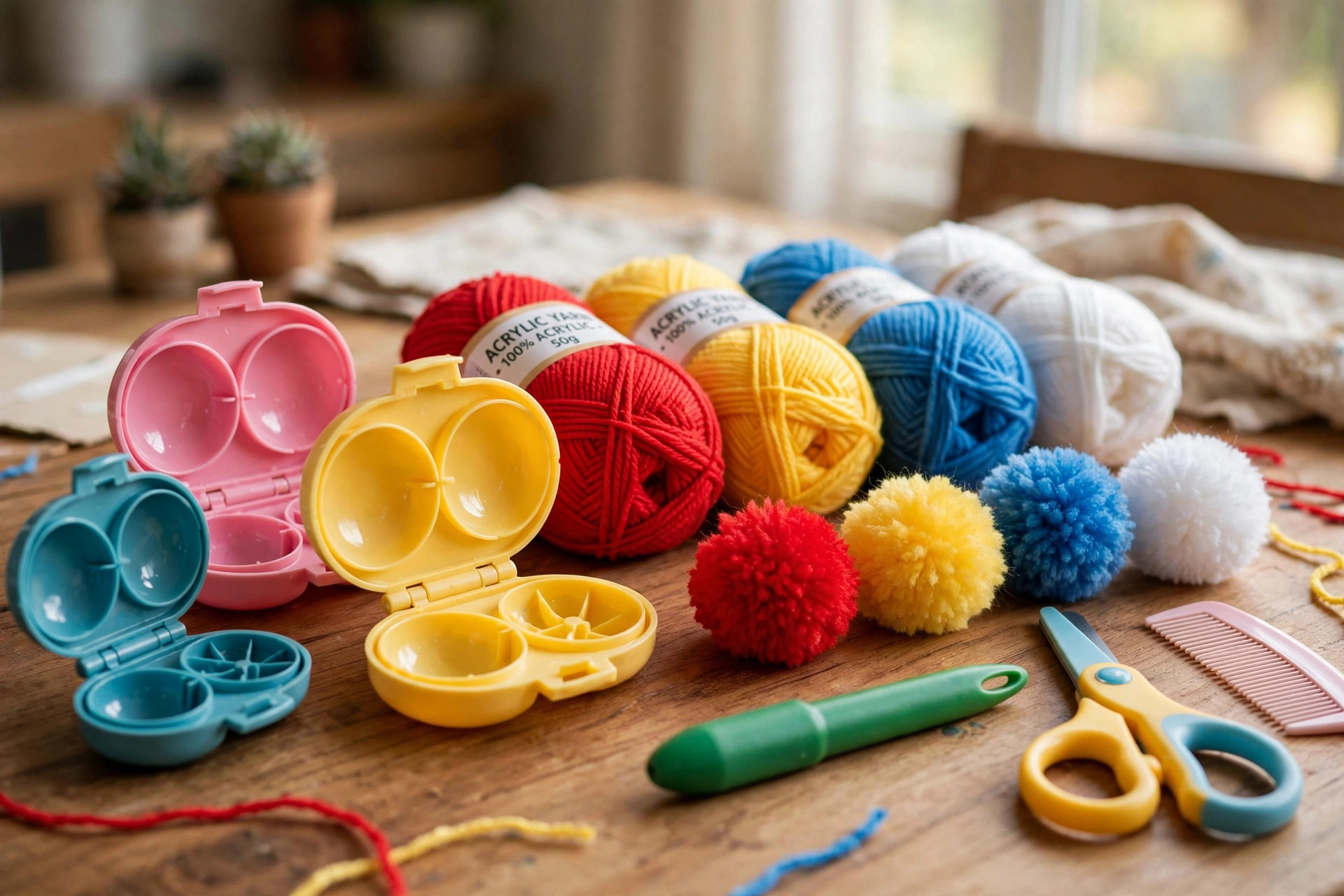

A pom pom maker kit for yarn crafts kids is one of the easiest craft tools a parent can buy. It is a small set of plastic forms and a few helpers. A child wraps yarn around the form, ties it, cuts it, and out pops a soft round pom pom. There is no glue and no paint. The child can do most of the steps alone after one short lesson. The cost is low, the mess is small, and the finished balls can become animals, key chains, garlands, and toys.
Why Pom Pom Crafts Are Good for Kids
Parents often ask why a craft this simple is worth the time. The answer is that it teaches the hands and the mind at the same time. Wrapping yarn around a small form builds fine motor skill. The child learns to hold, to wind, and to tie a knot that is tight enough. These small movements help with handwriting and with other tasks that need care. Teachers have praised simple hand crafts for years, and projects at the family craft desk show how such work keeps young hands busy in a useful way.
A pom pom also gives a quick result. Many crafts take days to finish. A child may lose interest before the end. One pom pom takes ten to fifteen minutes. The child sees a finished thing the same afternoon. That quick success builds trust in the child. It tells the child that patient work pays off. Retailers such as Michaels list pom pom kits in their kids craft section for this reason. Parents report that children sit longer and argue less when they have a clear, small task.
The craft is quiet. It needs no music and no screen. It fits well at a kitchen table on a rainy day. Two or three children can work side by side, each with a different color of yarn. They talk while they wind. They compare their balls. It is social play that does not need a toy store visit. When the family wants a larger craft corner, a craft storage guide can help keep all the yarn and tools in order.
What Is Inside a Pom Pom Maker Kit: Pom Pom Maker Kit for Yarn Crafts Kids
A standard kit is small and light. Most kits share the same parts.
– Pom pom makers. These are the heart of the kit. They are pairs of curved plastic arms that open like a clamshell. Most kits give four sizes, from about one inch to about three and a half inches across. – A needle. A large blunt needle helps thread the tie string through tight yarn. – A small pair of scissors. Cheap scissors dull fast, so many parents keep their own. – A comb or fork tool. Some kits add a small fork to fluff the pom pom after cutting. – Yarn or ribbon samples. A few kits add small yarn balls to start. Most do not, and the buyer must add yarn.
The makers open and close with a hinge. Good kits use thick plastic that snaps shut with a clear click. Thin plastic bends and lets the yarn slip. When the yarn slips, the pom pom comes out flat on one side. Many reviewers at JOANN note that the hinge is the first place a cheap kit fails.
How to Choose the Right Kit for a Child
Match the Size to the Child’s Hands
Small hands do better with larger makers. A one inch maker needs tight winding and careful tying. That is hard for a five year old. Start a young child on the two and a half or three and a half inch size. The wraps are easier to see and the tie string is easier to reach. Move to the small sizes only when the child asks for them. Older children, around nine or ten, can use the full set with care.
Check the Hinge and the Lock
Before you buy, look at pictures of the hinge. The two arms must meet flush with no gap. The lock that holds them shut must click firmly. Some kits use a slide lock, and some use a snap lock. Both work when the plastic is thick. Read the reviews and look for the word “sturdy.” A kit that breaks in week one ends up in the trash and teaches the child nothing.
Look for Blunt, Safe Tools
Children should not use sharp embroidery scissors. Pick a kit that pairs with round tip kids scissors, or buy a separate pair. The yarn needle should be blunt and large, with a big eye that is easy to thread. Guidance from stores like BLICK Art Materials helps parents match tools to age. For toddlers under four, skip the needle and let an adult tie the knot.
Choose Washable Yarn
Acrylic yarn is the best friend of a kids pom pom kit. It is soft, cheap, and it washes well. Wool looks fine but it costs more and it can shrink. Cotton yarn makes a firm pom pom that holds its shape. Keep a few colors on hand so the child can mix. A beginner candle kit article may appeal to families who want another low mess craft for quiet afternoons.
Types of Pom Pom Maker Kits
Plastic Clamshell Kits
This is the most common type. Four plastic makers in a pouch or box. They are light and they travel well. A child can take one maker and a ball of yarn in a coat pocket. They suit ages five and up. Prices are low and the range of sizes is wide.
Wooden Pom Pom Makers
A few brands make wooden forms. They feel warm and they last for years. They cost more than plastic and they come in fewer sizes. Some families like them because they avoid plastic. The steps are the same: wind, tie, cut, fluff.
Cardboard Disc Kits
Some kits use two cardboard rings instead of hinged makers. The child winds yarn through the hole in the middle. It is the old school method, and it works well. Cardboard bends after a few uses, so these kits are best as a first try before a parent buys the plastic set.
All in One Craft Kits
All in one kits add yarn, eyes, glue dots, and project cards. The child can make a pom pom chick or a pom pom monster the same day the box arrives. These kits suit gift giving. They cost more than the tool only kits. Check what is inside before you buy, because some include only a small amount of yarn.
How to Make a Pom Pom, Step by Step
1. Open one pom pom maker and wind yarn around one arm until it is full. Then wind the other arm. 2. Close both arms until they click. 3. Cut a piece of yarn about ten inches long for the tie. 4. Slide the tie yarn into the groove around the middle of the maker. Pull it tight and knot it twice. 5. Push the scissors into the groove and cut all the loops around the edge. 6. Open the maker and lift out the pom pom. 7. Roll it between your hands and fluff it with your fingers. Trim long bits with scissors.
Most children need one guided try. After that they can work alone. Show them how to pull the tie knot tight. A loose knot is the most common cause of a pom pom that falls apart. Keep the first few tries in large sizes so success comes fast.
Cost and Where to Buy
A basic four size plastic kit costs about five to twelve dollars. All in one kits with yarn and project parts cost about twelve to twenty five dollars. Wooden sets run higher, often twenty to thirty five dollars. Prices move with sales, so watch the craft store flyers in fall when holiday craft stock arrives.
Big craft chains carry these kits year round. Online shops such as Amazon, Target, and Walmart stock them with customer reviews that help a parent compare. Local craft stores let the child hold the kit before buying, which is a real advantage. A parent who buys online should check the seller rating and read the most recent reviews, not just the star count.
Yarn is the main running cost. A small skein of acrylic yarn costs three to five dollars and makes many pom poms. Buy three or four colors to start. White, black, and one bright color cover most animal projects. Store the yarn in a bin so it does not roll under the couch. Families setting up a craft area may also like ideas from a craft room organizer guide.
Care and Upkeep
The tools need little care. Wipe the plastic makers with a damp cloth when yarn dust builds up. Do not bend the hinges backward. Store the makers closed so the arms keep their shape. Keep the kit in its pouch or box so the small pieces do not scatter.
The pom poms themselves need some care too. Keep them dry. If one gets dirty, wash it by hand in cool water with mild soap and let it air dry. Do not put pom poms in the dryer. The heat can melt acrylic yarn and mat the fibers. A comb or an old toothbrush can fluff a flat pom pom back to round. Projects hung as garlands last for years indoors. Outdoor use will fade the colors, so bring them inside at night.
Safety Tips for Young Crafters
Pom pom making is one of the safer crafts, but a few rules keep it that way.
– Watch the scissors. Use round tip scissors for children under eight. An adult should do the cutting step for very young children. – Keep small parts away from toddlers. Tie strings and plastic eyes are choking hazards. Keep the kit out of reach of children under three. – Tie yarn, not cord. Use soft yarn for the tie string. Thin cord can cut small fingers when pulled tight. – Check for allergies. Some children react to wool. Acrylic or cotton yarn avoids the problem. – Work in good light. Small knots and scissor cuts are easier and safer to see under a bright lamp.
Frequently Asked Questions
What age is right for a pom pom maker kit?
Most makers suggest ages five and up. A five year old can wind and fluff with help on the tying and cutting. Children eight and older can do every step alone. Toddlers can play with finished pom poms for sorting games but should not use the tools.
How long does one pom pom take?
A large pom pom takes ten to fifteen minutes for a beginner. A small one takes five to ten minutes. Speed comes with practice. Many children make three or four in a single sitting once they learn the rhythm.
What kind of yarn works best?
Medium weight acrylic yarn is the best all round choice. It is soft, cheap, and easy to find. Wool gives a full look but costs more. Avoid very thin yarn for beginners because it takes many more wraps to fill the maker.
Why did my pom pom fall apart?
The tie knot was too loose. This is the most common mistake. Pull the tie yarn as tight as you can before you knot it, then knot it twice. Also check that you wound enough yarn. A thin pom pom has less to hold onto and sheds more.
Can kids make animals with pom poms?
Yes, and this is where the craft shines. Glue two pom poms together for a body and a head. Add plastic eyes, felt ears, and a yarn tail. Project cards in all in one kits show chicks, bunnies, bears, and monsters. Older children can design their own.
Is a pom pom maker kit a good gift?
It is a strong gift for birthdays and holidays. It is low cost, it needs no batteries, and it keeps a child busy for hours. Pair it with three skeins of yarn and a small bag for storage. Families who craft together may also enjoy a cutting machine guide for their next step up in tools.
A Short Final Word
A pom pom maker kit for yarn crafts kids earns its place in the craft box. It is cheap, it is simple, and it teaches real skill. The child learns to wind, to tie, and to finish what was started. The parent gets quiet afternoons and handmade gifts for grandparents. Start with a sturdy plastic set, add a few balls of acrylic yarn, and let the child make the first soft ball. The rest takes care of itself.
References
Amazon. (n.d.). Online shopping. https://www.amazon.com Blick Art Materials. (n.d.). Art and craft supplies. https://www.dickblick.com Family Handyman. (n.d.). DIY home repair and maintenance. https://www.familyhandyman.com JOANN. (n.d.). Fabric and craft supplies. https://www.joann.com Michaels. (n.d.). Arts and crafts supplies. https://www.michaels.com Target. (n.d.). Retail store. https://www.target.com This Old House. (n.d.). Home renovation guidance. https://www.thisoldhouse.com Walmart. (n.d.). Everyday low prices. https://www.walmart.com
Was this guide helpful?

About Lisa Anderson
The My Garden US editorial team writes practical, in-depth home and garden guides for American homeowners — tested advice, no fluff.
You May Also Like
The Best Sewing Kit for Beginners: A Practical Guide for Adults and Crafts
September 11, 2026 0 views
Best Paper Cutter for Scrapbooking and Cards: A Practical Guide
August 1, 2026 0 views
A DIY Book Nook Kit for Bookshelf Decor Crafts Turns a Plain Shelf Into a Tiny World
January 9, 2026 0 views