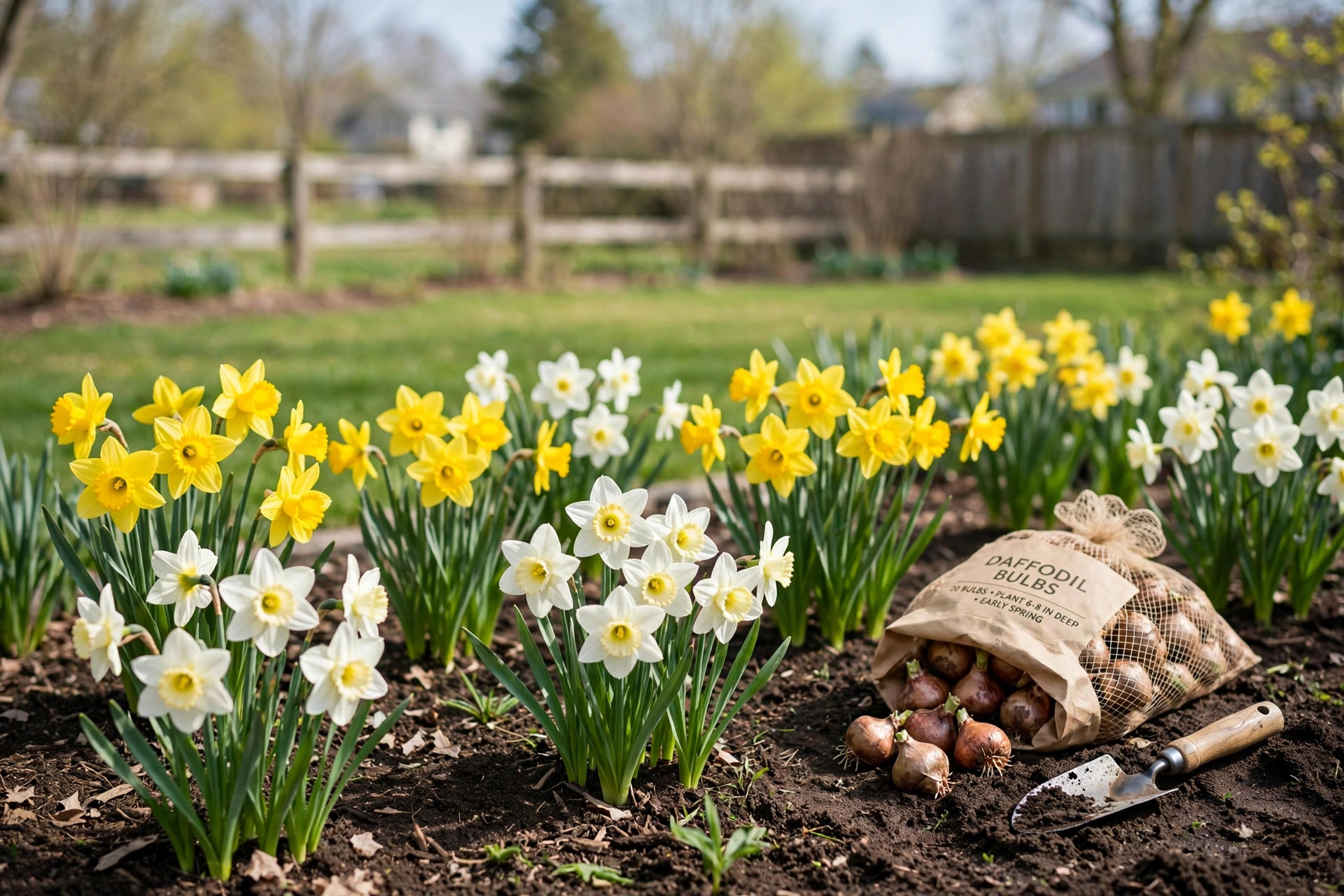

Every spring, millions of American gardens wake up with yellow and white trumpets. Daffodils are among the most trusted flowers in the country. They come back year after year. They need little care. And they start with a simple purchase. Shoppers looking for daffodil bulb packs for sale usa will find many choices online and in stores. This guide explains what to look for, what to pay, and how to plant so the bulbs thrive for years.
A daffodil bulb is a living package. Inside each brown papery bulb sits a flower bud, waiting for cold weather and spring sun. When you buy bulbs, you are buying next year’s bloom. A good pack gives you large, firm bulbs that were stored well. A poor pack gives you small, dry bulbs that may never flower. The difference is easy to spot once you know the signs.
Why Daffodil Bulbs Are Worth Buying
Daffodils earn their place in American gardens for plain reasons. They bloom early, often when little else is up. They spread slowly and form large clumps over time. Deer and squirrels leave them alone because the bulbs taste bitter and are not safe to eat. That makes them a top choice where wildlife eats tulips.
They are also long-lived. A daffodil planting can bloom for decades with almost no help. Many old farmhouses still have daffodils that were planted by people long gone. Few other garden plants give so much for so little money. A pack of twenty bulbs often costs less than a single potted plant at a nursery, yet it can bloom for twenty springs.
What to Look for When You Buy: Daffodil Bulb Packs for Sale Usa
Bulb Size and Firmness
Bulb size matters more than almost anything else. Daffodil bulbs are sold by circumference, measured in centimeters. Large bulbs, often called “top size” or “double nose,” measure 12 to 14 centimeters around. These produce the most flowers in the first spring. Smaller bulbs, around 10 to 12 centimeters, still bloom but give fewer flowers per bulb.
A firm bulb is a healthy bulb. Press it gently. It should feel solid, like a small onion. Avoid bulbs that are soft, mushy, or very light. A little dryness on the outer paper skin is normal. Mold, rot, or a sour smell is not.
Variety and Mixes
Daffodils come in hundreds of named varieties. They are grouped into divisions: trumpet, large-cupped, small-cupped, double, miniature, and more. For beginners, a mixed pack is a fine start. Mixed packs give you a range of colors and bloom times. If you want a uniform look along a path, buy packs of a single named variety.
Popular varieties sold in the United States include King Alfred types, the white and orange Ice Follies, the fragrant paperwhites for forcing indoors, and the sweet-smelling Cheerfulness doubles. Look for the variety name printed on the pack. A good seller names the variety and gives the bloom time.
Pack Counts and Pricing
Daffodil bulbs are sold in packs of five, ten, twenty, twenty-five, fifty, or one hundred. Larger packs cost less per bulb. A pack of ten often costs five to ten dollars. A pack of one hundred may cost forty to eighty dollars, which brings the price per bulb under one dollar.
Prices shift with the season. Bulbs arrive in garden centers in early fall. The best selection is in September and October. Late in the season, leftover packs may be marked down, but the quality may be lower. Buying early gives you the pick of the crop.
Where to Find Daffodil Bulb Packs
American gardeners have three main paths: local garden centers, large home stores, and mail-order sellers. Each has its strengths.
Local garden centers often stock regionally tested varieties. Staff can tell you what blooms well in your area. Home stores carry big seasonal displays at fair prices. The bulbs there are often fine, but check the packs for firmness because they may sit in warm air for weeks.
Mail-order sellers ship bulbs in fall. Many specialize in bulbs and offer wide variety lists. Reputable online sellers include well-known names such as Burpee and Park Seed, which have served American gardeners for generations. Other trusted sources include Gurney’s, White Flower Farm, and Proven Winners for quality plants and clear growing advice.
For general growing guidance, Gardening Know How offers plain planting articles. The Spruce covers bulb care for home gardeners. The Old Farmer’s Almanac gives planting dates by region. Monrovia lists hardy plant choices, and USDA NIFA supports research on home gardening across the states.
When you shop for daffodil bulb packs for sale usa, read the pack label. It should name the variety, give the bulb count, state the bloom time, and show the planting depth. Labels without variety names often hide mixed, unnamed bulbs of uncertain quality.
When and Where to Plant
Timing
Plant daffodil bulbs in fall, six to eight weeks before the ground freezes. In most of the United States, that means September through November. Northern states plant earlier. Southern states plant later. The bulbs need time to grow roots before winter sets in.
If you miss the window, plant as soon as the ground can be worked, even into early winter. Late-planted bulbs often still bloom, though the show may be smaller in the first year. Do not save bulbs for spring. They must have cold weeks to form flowers.
Location
Daffodils want full sun or light shade. A spot that gets six hours of sun in spring is ideal. They bloom before most trees leaf out, so they can grow under deciduous trees without trouble. Avoid spots where water stands after rain. Wet soil rots bulbs in winter.
Good spots include lawn edges, flower borders, rock gardens, and the ground under trees. They look best in groups of seven or more. Single bulbs scattered here and there look thin and weak.
How to Plant Step by Step
Dig a hole three times as deep as the bulb is tall. For most daffodils, that is about six inches deep. Place the bulb with the pointed end up and the flat base down. Space bulbs four to six inches apart. Cover with soil and press it firm.
Water well after planting. One deep watering settles the soil and starts root growth. A light layer of mulch, two inches of shredded leaves or bark, keeps the soil steady through winter. Do not use heavy mulch that mats down and holds water.
Some gardeners add a spoonful of bone meal or bulb fertilizer to each hole. This feeds the roots in fall. Do not use fresh manure. It can burn the young roots.
Cost and Price Guide
Here is a simple view of what shoppers pay across the United States:
– Small packs (5 to 10 bulbs): five to fifteen dollars. – Medium packs (20 to 25 bulbs): twelve to thirty dollars. – Large packs (50 bulbs): twenty-five to fifty dollars. – Bulk packs (100 bulbs): forty to eighty dollars.
Specialty and new varieties cost more. Old favorites in bulk cost less. Shipping from mail-order sellers may add five to ten dollars, but many offer free shipping above a set order size. Compare the price per bulb, not the pack price, to find the real bargain.
Care After Blooming
Daffodils are easy, but one rule matters most: leave the leaves alone. After the flowers fade, the leaves keep working. They make food and store it in the bulb for next year. Cut the leaves too soon and next spring’s bloom will be weak or missing.
Let the foliage die back on its own. This takes about six weeks after flowering. The leaves will yellow and flop. Then you may cut them at ground level or pull them away gently.
Deadhead the spent flowers by snapping off the faded bloom behind the seed pod. This keeps the plant from wasting energy on seeds. Do not tie the leaves into knots or braid them. That old habit slows the leaves down and hurts the bulb.
Daffodils rarely need dividing, but crowded clumps bloom less after many years. Dig them up after the foliage dies back, separate the bulbs, and replant at once. Share the extras with neighbors. A divided clump often blooms better than ever the next spring.
Safety Notes
Every part of the daffodil is poisonous if eaten. The bulbs are the most dangerous part. Keep packs of bulbs away from small children and pets. Wash your hands after handling bulbs, especially before eating.
Daffodil sap can irritate skin. Some gardeners get a rash from handling many bulbs. Wear gloves when planting large numbers. If a child or pet eats a bulb, call poison control or a veterinarian at once. Do not wait for symptoms.
Growing Daffodils in Different Regions
Daffodils grow in USDA zones three through nine, with some types reaching zone ten. They need twelve to sixteen weeks of cold, below about forty-five degrees, to set flower buds. In warm parts of the South and Southwest, gardeners use pre-chilled bulbs or grow varieties bred for low chill.
In the North, plant deep and mulch well. Snow is a fine blanket. In the South, plant shallower and in partial shade where afternoon heat is strong. Along the coasts, pick varieties that stand up to wind and salt spray.
Related reading can help you plan a fuller bulb season. See our heirloom vegetable seeds buying guide usa if you are planning spring crops alongside flowers, or check daffodil bulb packs deals near me for local buying options. Gardeners in the Southwest may also like air plants bulk texas homes usa for easy indoor greenery.
Frequently Asked Questions
How many bulbs should I buy for a border?
For a ten-foot border that looks full, buy fifty to seventy-five bulbs. Plant them in drifts rather than straight lines. A drift of seven to twelve bulbs of one variety makes a natural-looking cluster. Three such drifts along a border gives a rich spring display.
Can I plant daffodils in containers?
Yes. Use a pot at least twelve inches deep with drainage holes. Plant bulbs close together, almost touching, with the pointed ends up. Cover with soil and water well. Leave the pot outside through winter in cold climates, or store it in an unheated garage. Containers need more watering than garden beds in spring.
Do daffodils come back every year?
Yes. Daffodils are perennials. The same bulbs bloom for many years. They slowly multiply and form clumps. The main reason they stop blooming is cut foliage, deep shade from overgrown shrubs, or bulbs planted too shallow.
When is the best time to buy daffodil bulb packs?
Buy in early fall, September and October in most states. Selection is best and bulbs are freshest. Mail-order sellers often sell out of popular varieties by November. Late-season markdowns can be good deals if the bulbs are still firm.
What is the difference between daffodils and narcissus?
There is no difference in meaning. Daffodil is the common name. Narcissus is the genus name. All daffodils are narcissus. Jonquils and paperwhites are types of narcissus too, with their own flower shapes and scents.
Can I mix daffodils with tulips?
Yes, and it looks fine. Plant daffodils a little deeper than tulips in the same bed. The daffodils often bloom first, then the tulips follow. Because deer avoid daffodils, planting them around tulips can even help protect the tulips a little.
A Short Final Word
Buying daffodil bulb packs is one of the simplest and most rewarding garden purchases a homeowner can make. Choose firm, large bulbs from sellers you trust. Plant them in fall at the right depth. Leave the leaves to do their work. Do this, and your garden will greet every spring with trumpets of yellow and white for years to come. The small effort in October pays back in April, again and again.
References
Burpee. (n.d.). Seeds, plants, and gardening supplies. https://www.burpee.com Gardening Know How. (n.d.). Gardening guides and plant care. https://www.gardeningknowhow.com Gurney’s Seed & Nursery Co. (n.d.). Seeds, plants, and garden supplies. https://www.gurneys.com Monrovia. (n.d.). Plants for home gardens. https://www.monrovia.com National Institute of Food and Agriculture. (n.d.). Agricultural research and extension. https://www.nifa.usda.gov Park Seed. (n.d.). Seeds, plants, and gardening supplies. https://www.parkseed.com Proven Winners. (n.d.). Plants and gardening inspiration. https://www.provenwinners.com The Old Farmer’s Almanac. (n.d.). Gardening calendars and advice. https://www.almanac.com The Spruce. (n.d.). Home and garden advice. https://www.thespruce.com White Flower Farm. (n.d.). Plants, bulbs, and garden supplies. https://www.whiteflowerfarm.com
Was this guide helpful?

About Lisa Anderson
The My Garden US editorial team writes practical, in-depth home and garden guides for American homeowners — tested advice, no fluff.
You May Also Like
Pothos Plants Bulk American Homes Guide: How to Buy, Grow, and Keep Them Green
March 22, 2026 0 views
Where to Find a Good Monstera Plants Sale for Sale USA
April 12, 2026 0 views
How to Grow Oregano: Perennial Herb Guide
October 8, 2026 0 views