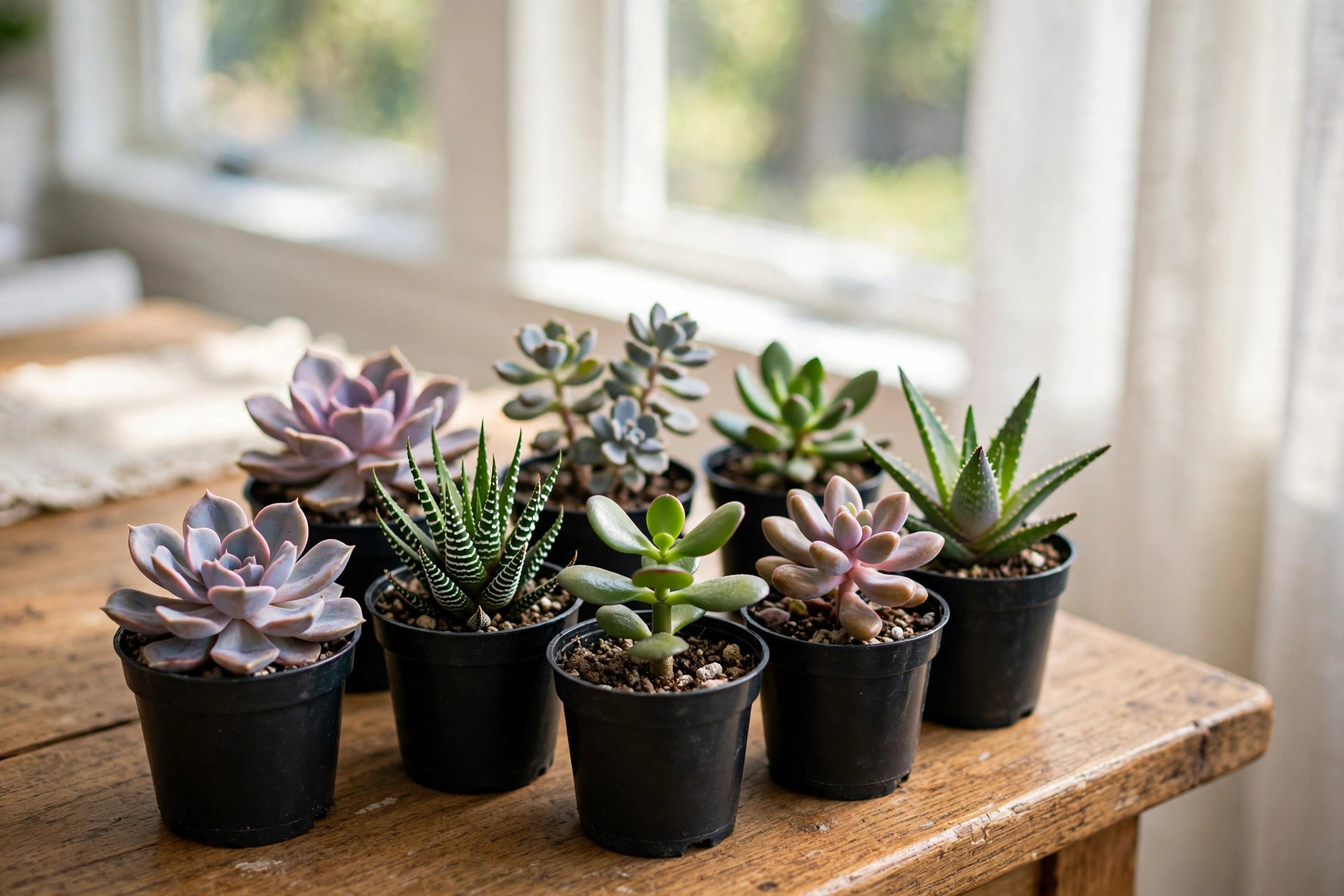

A succulent variety pack is a simple way to start a collection. One box arrives with a dozen or more small plants, all different shapes and colors. This succulent variety packs buying guide USA readers can trust will walk through the details. It covers what the packs hold, how to pick a good one, what they cost, and how to keep the plants alive once they arrive. It also answers common questions at the end. By the last page, you will know exactly what to look for and what to skip.
Why Succulent Variety Packs Matter
Succulents are among the easiest plants to grow indoors. They store water in thick leaves and stems. That means they forgive a missed watering. They need little feed and little space. A windowsill is enough for most of them.
A variety pack gives you more for your money than buying plants one at a time. Single two-inch succulents often sell for three to six dollars each at garden centers. A pack of twenty-five may cost thirty to sixty dollars. The saving is plain. You also get a ready mix of forms. Rosettes, spiky towers, trailing vines, and round pads can all share one box. That mix lets you test which kinds suit your home before you buy larger, costlier plants.
Variety packs also fit modern living. Many people rent. Many have small apartments. A pack of small plants fits on a shelf or a desk. You can group them in one wide bowl or keep them in their nursery pots. Either way, they add green life without much work.
How to Choose a Good Pack: Succulent Variety Packs Buying Guide Usa
Start with the seller. Look for growers and shops with clear reviews about live plants. The plants should ship from within the United States. Long shipping times wear them down. Check that the listing shows real photos of the actual pack, not stock photos of perfect specimens.
Count the plants. Most packs hold between ten and fifty plants. For a first try, twenty to twenty-five is a good range. That is enough variety to enjoy but not so many that care becomes a chore.
Check the size. Two-inch pots are the norm. That size is young but sturdy. Some sellers offer one-inch plugs, which are cheaper but more fragile. Four-inch plants cost more but look full right away.
Look at the species list, if one is given. Good sellers name the plants they include. Common names are fine. You may see echeveria, jade plant, aloe, haworthia, sedum, and string of pearls. If a seller will not name even a few plants, be careful. You deserve to know what is in the box.
Read the shipping terms. Live plants need heat packs in winter and fast shipping in summer. A good seller states how they protect plants from cold. If the seller ships only bare-root, plan to pot the plants the day they arrive. If they ship potted, the plants travel better but the box costs more to send.
Finally, read return terms. Even good growers lose a plant now and then in transit. Fair sellers replace dead arrivals with photo proof within a few days.
Related Plant Options
If you enjoy small easy-care plants, look at a few related choices. An air plants bulk buying guide helps you compare another low-water plant that needs no soil at all. For leafy green picks, a snake plants indoor buying guide covers one of the toughest houseplants sold. And if you want deals instead of guides, see succulent variety packs for sale for current offers.
Types of Succulent Variety Packs
Packs differ in what they hold and how they ship. Here are the main kinds you will find.
Assorted rosette packs. These are the most common. They hold echeveria, graptoveria, and similar rosette forms in shades of green, blue-gray, pink, and purple. They suit bowls and fairy gardens.
Mixed species packs. These give a wider range. You may get a jade plant, a haworthia, an aloe, some sedum, and a trailing string of pearls. They suit collectors who want one of everything.
Cactus and succulent mix packs. Some packs add small cacti. They look striking, but watch the spines. Keep them away from children and pets.
Cutting packs. These ship unrooted cuttings instead of potted plants. They cost less. You root them yourself in dry soil. They need two to three weeks to root. This kind suits gardeners with some practice.
Bare-root packs. The plants ship without pots or soil. Roots are wrapped in paper. They cost less to ship. Pot them within a day of arrival.
Large specimen packs. These hold four-inch or six-inch plants. They cost far more. They suit buyers who want instant impact.
Resources like the White Flower Farm site show how quality growers describe their mixed collections, and Monrovia lists many succulent types with clear care notes.
Cost and Price
Prices run in clear bands. Expect to pay more for potted plants, named species, and fast shipping.
– Ten to twelve plants, two-inch pots: fifteen to thirty dollars. – Twenty to twenty-five plants, two-inch pots: thirty to sixty dollars. – Forty to fifty plants, two-inch pots: sixty to one hundred dollars. – Unrooted cutting packs of twenty: fifteen to thirty-five dollars. – Four-inch specimen packs of six: thirty to fifty dollars.
Shipping adds to the cost. Many sellers charge ten to twenty dollars for live-plant shipping with heat packs. Some offer free shipping over a set amount, often seventy-five dollars. Watch the total at checkout, not just the pack price.
Price per plant is the fair way to compare. Divide the total, with shipping, by the plant count. A fifty-dollar pack of twenty-five plants with ten dollars shipping works out to two dollars and forty cents per plant. That beats most garden centers.
Sales cluster in spring and early summer. That is the best time to buy. Winter shipping risks cold damage, though heat packs help. Some sellers pause shipping to cold states in deep winter.
The Park Seed catalog and Gurney’s both list seasonal plant prices that help you judge fair value.
Where to Buy in the USA
You have three main buying routes. Online specialty growers ship the widest choice and often the healthiest plants, since they pack for travel. Big online marketplaces carry many sellers, but quality varies, so read recent plant reviews with care. Local garden centers and nurseries let you see the plants before you pay, though packs there may cost more per plant.
No matter the route, buy in spring if you can. Plants ship best in mild weather. Avoid sellers who cannot say how they protect plants from heat or cold in transit. A clear packing method is a sign of a serious grower.
Care and Upkeep After Arrival
Open the box right away. Let the plants breathe. Check each one. Toss any plant that is black and mushy; it will not recover. Set the rest in bright, indirect light for a day or two.
Potting. Use a gritty, fast-draining mix made for cactus and succulents. Plain potting soil holds too much water. Add perlite or coarse sand, about half and half, if you only have regular soil. Use pots with drain holes. Clay pots dry faster than plastic, which suits succulents.
Light. Most succulents want four to six hours of bright light daily. A south or east window works well. Too little light makes them stretch tall and pale. Too much hot midday sun can scorch new arrivals. Move them into full sun a little at a time over one to two weeks.
Water. This is where most people go wrong. Water deeply, then wait until the soil is fully dry before watering again. In a warm bright room, that may be every ten to fourteen days. In winter, once a month can be enough. When in doubt, wait. Succulents store water and survive dry spells far better than wet roots.
Feed. They need little. A half-strength cactus feed once in spring and once in summer is plenty. Skip feed in fall and winter.
Temperature. Most like room temperatures between sixty and eighty degrees. Keep them above forty degrees at night. Frost kills all but the hardiest kinds.
Practical care tips from Gardening Know How and The Spruce walk through watering and light in plain steps, and Proven Winners offers clear profiles of popular succulent types.
Safety at Home
Succulents are mostly safe, but a few points matter. Some kinds, like certain euphorbias, have milky sap that can irritate skin and eyes. Wear gloves when handling unknown plants and keep sap away from your face.
Keep cactus-spine packs out of reach of small children. A fallen pot of spiny plants is a painful mess. Place them on high, stable shelves.
Pets are another concern. Many succulents are mild, but some, like jade plants, can upset a dog or cat that chews them. If your pet chews plants, keep the collection behind a closed door or in a hanging planter.
The Old Farmer’s Almanac growing guides note which common houseplants need care around pets and children, which is worth a quick check.
Frequently Asked Questions
How long do succulents from a variety pack live? With proper care, many years. Jade plants and aloes can live a decade or more indoors. Small rosettes may outgrow their pots in one to two years and need repotting or dividing.
Can I grow them outdoors? In warm states, yes, for much of the year. Most succulents handle heat well but not frost. In zones nine and warmer, many can stay outside year-round. In colder states, bring them inside before the first frost.
Do variety packs come with names for each plant? Sometimes. Better sellers include labels or a printed list. Budget packs often do not. You can photograph each plant and use a plant ID app or a nursery guide to name them later.
How soon should I water after the pack arrives? Wait two to three days, especially for bare-root plants. The roots need time to settle. Then water deeply and let the pot drain fully.
Why are some of my new plants stretching tall? They need more light. Move them closer to a bright window a little at a time. Stretched growth will not shrink back, but new growth will stay compact in good light.
Are cuttings harder than potted plants? A little. Cuttings need to form roots before they can take up water. Lay them on dry soil in bright, indirect light and mist lightly every few days. Roots usually appear in two to three weeks.
Seasoned growers at Burpee also answer beginner questions about starting small plants, which pairs well with this guide.
A Short Final Word
A succulent variety pack is a low-risk way to fill your home with living green. Pick a seller with honest photos and clear shipping terms. Aim for twenty to twenty-five potted plants to start. Give them bright light, gritty soil, and less water than you think they need. Do that, and most of your pack will thrive for years. When you are ready for more, the related guides linked above will point you to air plants, snake plants, and current succulent deals.
References
Burpee. (n.d.). Seeds, plants, and gardening supplies. https://www.burpee.com Gardening Know How. (n.d.). Gardening guides and plant care. https://www.gardeningknowhow.com Gurney’s Seed & Nursery Co. (n.d.). Seeds, plants, and garden supplies. https://www.gurneys.com Monrovia. (n.d.). Plants for home gardens. https://www.monrovia.com Park Seed. (n.d.). Seeds, plants, and gardening supplies. https://www.parkseed.com Proven Winners. (n.d.). Plants and gardening inspiration. https://www.provenwinners.com The Old Farmer’s Almanac. (n.d.). Gardening calendars and advice. https://www.almanac.com The Spruce. (n.d.). Home and garden advice. https://www.thespruce.com White Flower Farm. (n.d.). Plants, bulbs, and garden supplies. https://www.whiteflowerfarm.com
Was this guide helpful?

About Robert Taylor
The My Garden US editorial team writes practical, in-depth home and garden guides for American homeowners — tested advice, no fluff.
You May Also Like

Monstera Plants Sale Florida Homes USA: A Complete Buyer Guide
July 12, 2026 0 views
Heirloom Vegetable Seeds for Florida Homes in the USA
January 29, 2026 0 views
Peat Pots Seedlings USA Online Deals: A Plain Guide for Home Gardeners
August 23, 2026 0 views