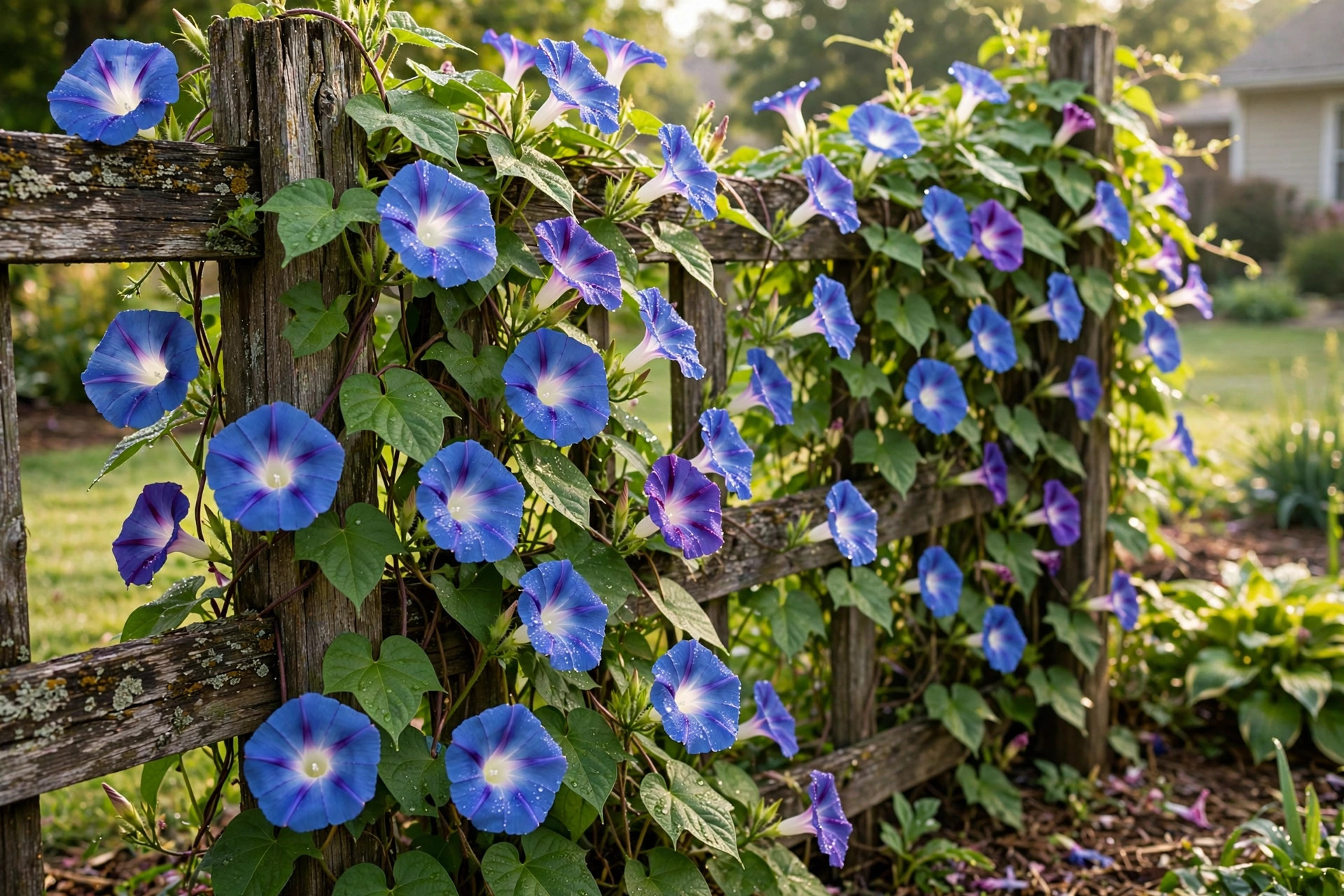

Many gardeners ask about morning glory seeds where to buy usa. The answer is simple. You can buy them at local garden centers, big box stores, and mail-order seed companies all over the country. Morning glories are fast, cheap, and easy to grow. A small packet of seed can cover a whole fence by the end of summer. This guide will show you what to look for, how much to pay, and how to plant them with care.
Why Morning Glories Are Worth Growing
Morning glories are annual vines. They grow from seed in one season and climb six to fifteen feet. The flowers open early in the day and close by afternoon. That is where the name comes from.
Gardeners love them for three reasons. First, they are cheap. One packet costs less than a cup of coffee. Second, they grow fast. In warm weather, a vine can reach the top of a trellis in eight weeks. Third, they need little care. Once they start, they grow on their own with only plain water and sun.
They also cover ugly spots. An old chain-link fence, a bare mailbox post, or a plain garage wall can look better under a sheet of blue and purple blooms. Children enjoy watching the flowers open each morning. That makes morning glories a fine plant for a family garden.
If you also like other easy flower seeds, you may enjoy our guide to sunflower seed packs. Sunflowers grow tall and bold in the same summer months.
What to Look For When You Buy: Morning Glory Seeds Where to Buy Usa
Not all seed packets are the same. A few simple checks will help you pick good seed.
Check the Date
Seed packets carry a date. Look for the words “packed for” and the year. Morning glory seed stays good for about two years when stored in a cool, dry place. Fresh seed gives the best results. Avoid packets that look faded or sun-damaged on the store rack.
Check the Seed Count
Some packets hold twenty-five seeds. Others hold fifty or more. The count should be printed on the front or back. Compare the price per packet with the count inside. A packet of fifty seeds for three dollars is a fair deal.
Check the Variety Name
The variety name tells you what the flowers will look like. “Heavenly Blue” gives large sky-blue blooms. “Grandpa Ott’s” gives deep purple blooms with a red star. If the packet says only “morning glory” with no variety name, the mix may contain many colors. Mixed packets are fine, but named varieties give a surer result.
Buy Treated or Untreated Seed
Most morning glory seed sold in stores is untreated. That is normal. Some garden centers sell seed that has been nicked or scarified to help it sprout. Either kind grows well. You can nick the seed coat yourself with a file before planting.
Advice on seed quality and garden planning can be found at Burpee, a long-standing American seed company with growing guides for beginners. You can also read general planting advice at Gardening Know How, which covers sowing and care for many annual vines.
Types and Options
Morning glory seed comes in a few common forms. Knowing the forms helps you choose.
Named Varieties
Named varieties give known colors and habits. Common ones sold in the USA include:
– Heavenly Blue. Sky-blue flowers, four to five inches wide. The classic choice. – Grandpa Ott’s. Deep purple flowers with a red star in the center. Heirloom type. – Scarlett O’Hara. Bright red flowers on dark green vines. – Pearly Gates. Pure white flowers. Nice for moon gardens. – Moonflower. Not a true morning glory, but a close cousin. Huge white flowers that open at night.
Mixed Packets
Mixed packets contain two or more varieties. They are often cheaper than named varieties. The flowers will be a mix of colors. This is a good choice for a casual garden where you do not mind surprises.
Organic Seed
Some companies sell organic morning glory seed. It is grown without synthetic chemicals. Organic packets cost a little more. For morning glories, organic seed grows the same as regular seed, since the plants need little input either way. Buy organic if you prefer it, not because the plant needs it.
Bulk Seed
If you need to cover a long fence or a large hillside, bulk seed saves money. A quarter-pound bag can plant hundreds of feet. Bulk seed is sold by mail-order firms and farm suppliers. One such firm with a wide flower seed line is Gurney’s. Another long-running source for flower seed is Park Seed.
What Morning Glory Seeds Cost
Morning glory seeds are among the cheapest flower seeds you can buy. Prices are stable across the country.
– Small packet (25 to 50 seeds): one to four dollars at most stores. – Large packet or tin (100 to 200 seeds): four to eight dollars. – Bulk quarter-pound: ten to twenty dollars from mail-order suppliers.
Store brands at big box stores sit at the low end of the range. Named seed company packets sit in the middle. Specialty or heirloom packets from small growers may cost more. You do not need to spend much. A cheap packet of fresh seed grows just as well as an expensive one.
Where to Buy in the USA
Garden Centers and Nurseries
Local garden centers sell morning glory seed each spring. The staff can tell you which varieties do well in your area. This is the best place to buy if you want advice. White Flower Farm is a well-known nursery that ships plants across the country; you can browse their site at White Flower Farm.
Big Box and Hardware Stores
Home Depot, Lowe’s, Walmart, and Target carry morning glory seed in the garden aisle each spring. The racks appear in March or April in most states. These stores sell the common varieties at low prices. Selection is small but fine for most gardeners.
Mail-Order Seed Companies
Mail-order firms offer the widest choice. You can order from a catalog or a website. They ship seed to all fifty states. Orders placed in winter or early spring arrive in time for planting. Proven Winners is a name many gardeners know for tested varieties, and Monrovia is a major grower with garden resources.
Online Marketplaces
Morning glory seed is sold on Amazon and eBay by many sellers. Prices vary. Read the seller ratings before you buy. Check that the seed is packed for the current year. Seed from unknown sellers may be old or mixed with weeds.
Seed Swaps and Clubs
Some garden clubs hold seed swaps each year. Members trade extra seed with each other. This is a free way to try new varieties. It also lets you meet other gardeners in your town.
If you want to mix morning glories with other flowers, read our guide to wildflower seed mixes for beds and borders. For larger areas at lower cost, see our piece on wildflower seed mixes for sale.
How to Plant and Grow Them
Morning glories are easy to grow. Follow these simple steps.
Soak or nick the seed. The seed coat is hard. Nick each seed with a nail file, or soak seeds in warm water for twenty-four hours. This helps water reach the seed and speeds sprouting.
Plant after frost. Morning glories hate cold. Plant seed outdoors after the last frost date in your area. The soil should feel warm to the touch. In most of the USA, that means late April or May. You can find your last frost date at The Old Farmer’s Almanac.
Plant shallow. Push each seed about a quarter inch deep into the soil. Space seeds six inches apart along a fence or trellis. Water well after planting.
Give them sun and something to climb. Morning glories need full sun, at least six hours a day. Plant them near a fence, trellis, string, or pole. They twine on their own and need no tying.
Water plainly. Water when the top inch of soil is dry. Morning glories dislike rich soil and heavy fertilizer. Too much feed gives leaves but few flowers. Poor to average soil gives the most blooms.
Deadhead if you wish. You do not need to remove spent flowers. The vines will keep blooming until frost. If you do not want self-sown seedlings next year, pull plants before they drop ripe seed pods.
General home gardening advice is easy to find at The Spruce, which has plain guides for many annual flowers. Research-based gardening help also comes from the National Institute of Food and Agriculture, which funds agricultural research across the country.
Care and Upkeep Through the Season
Once morning glories are up and climbing, they ask for little. Here is the season at a glance.
In late spring, watch for slugs and snails. Young shoots are tender. A ring of crushed eggshells or a shallow dish of beer near the bed will cut losses.
In early summer, the vines will reach the top of most fences. Guide stray vines back onto the support. They may climb nearby shrubs if you let them. That is fine if the shrub can bear it, but keep vines off small new trees.
In mid-summer, blooms should open each morning. Water during dry spells. A deep soak once a week is better than a daily sprinkle. Mulch around the base with straw or bark to hold moisture.
In fall, the vines will slow down. After the first hard frost, pull the dead vines from the fence. Add them to the compost pile. If pods opened before frost, seedlings may appear next spring. That is often welcome.
Safety to Know
Morning glory seeds contain a compound called LSA. It is not the same as a street drug, but eating the seeds can cause nausea and upset. Some store seed is coated with a bitter chemical to stop eating. Keep seed packets out of reach of small children. Teach older children that the seeds are not food.
The vines and leaves are not a danger to touch. But pets that chew many seeds may feel ill. If a pet eats a large amount of seed, call your vet. For people, the plant is grown for looks only, never for eating.
FAQ
Are morning glory seeds legal to buy in the USA?
Yes. Morning glory seeds are legal to buy and sell in all fifty states. They are sold openly in stores and online. No permit is needed.
How long do morning glory seeds take to sprout?
With nicked or soaked seed, sprouts appear in five to fourteen days. Cool soil slows them down. Warm soil speeds them up. Do not give up if they are slow in a cold spring.
Can I plant morning glory seeds in pots?
Yes. Use a large pot, at least twelve inches wide, with a small trellis or tripod of stakes. Morning glories do well in pots on sunny balconies and patios. Water pots more often than garden beds, since they dry out fast.
Will morning glories come back next year?
In warm zones, self-sown seedlings often appear in spring. In cold zones, you must plant fresh seed each year. Morning glories are true annuals. They do not live through winter cold.
Are morning glories weeds?
In warm parts of the South, morning glories can self-sow and spread. In most of the USA, they are easy to control. Pull unwanted seedlings when small. Do not plant them next to vegetable beds where they might tangle with crops.
What is the best variety for beginners?
Heavenly Blue is the best first choice. It is sold everywhere, grows fast, and blooms all summer. Grandpa Ott’s is a fine second pick for a deeper color.
A Final Word
Morning glories ask for little and give much. A few dollars of seed, a sunny fence, and plain water are all you need. Buy fresh seed, plant after frost, and give the vines something to climb. By July, you will have blue and purple trumpets opening each morning. That is a fine reward for so small an effort.
References
Burpee. (n.d.). Seeds, plants, and gardening supplies. https://www.burpee.com Gardening Know How. (n.d.). Gardening guides and plant care. https://www.gardeningknowhow.com Gurney’s Seed & Nursery Co. (n.d.). Seeds, plants, and garden supplies. https://www.gurneys.com Monrovia. (n.d.). Plants for home gardens. https://www.monrovia.com National Institute of Food and Agriculture. (n.d.). Agricultural research and extension. https://www.nifa.usda.gov Park Seed. (n.d.). Seeds, plants, and gardening supplies. https://www.parkseed.com Proven Winners. (n.d.). Plants and gardening inspiration. https://www.provenwinners.com The Old Farmer’s Almanac. (n.d.). Gardening calendars and advice. https://www.almanac.com The Spruce. (n.d.). Home and garden advice. https://www.thespruce.com White Flower Farm. (n.d.). Plants, bulbs, and garden supplies. https://www.whiteflowerfarm.com
Was this guide helpful?

About Lisa Anderson
The My Garden US editorial team writes practical, in-depth home and garden guides for American homeowners — tested advice, no fluff.
You May Also Like
Onion Sets Planting for Florida Homes Across the USA
June 30, 2026 0 views
Pothos Plants Bulk American Homes Guide: How to Buy, Grow, and Keep Them Green
March 22, 2026 0 views
Pothos Plants Bulk: Where to Buy USA for Homes, Offices, and Events
April 19, 2026 0 views