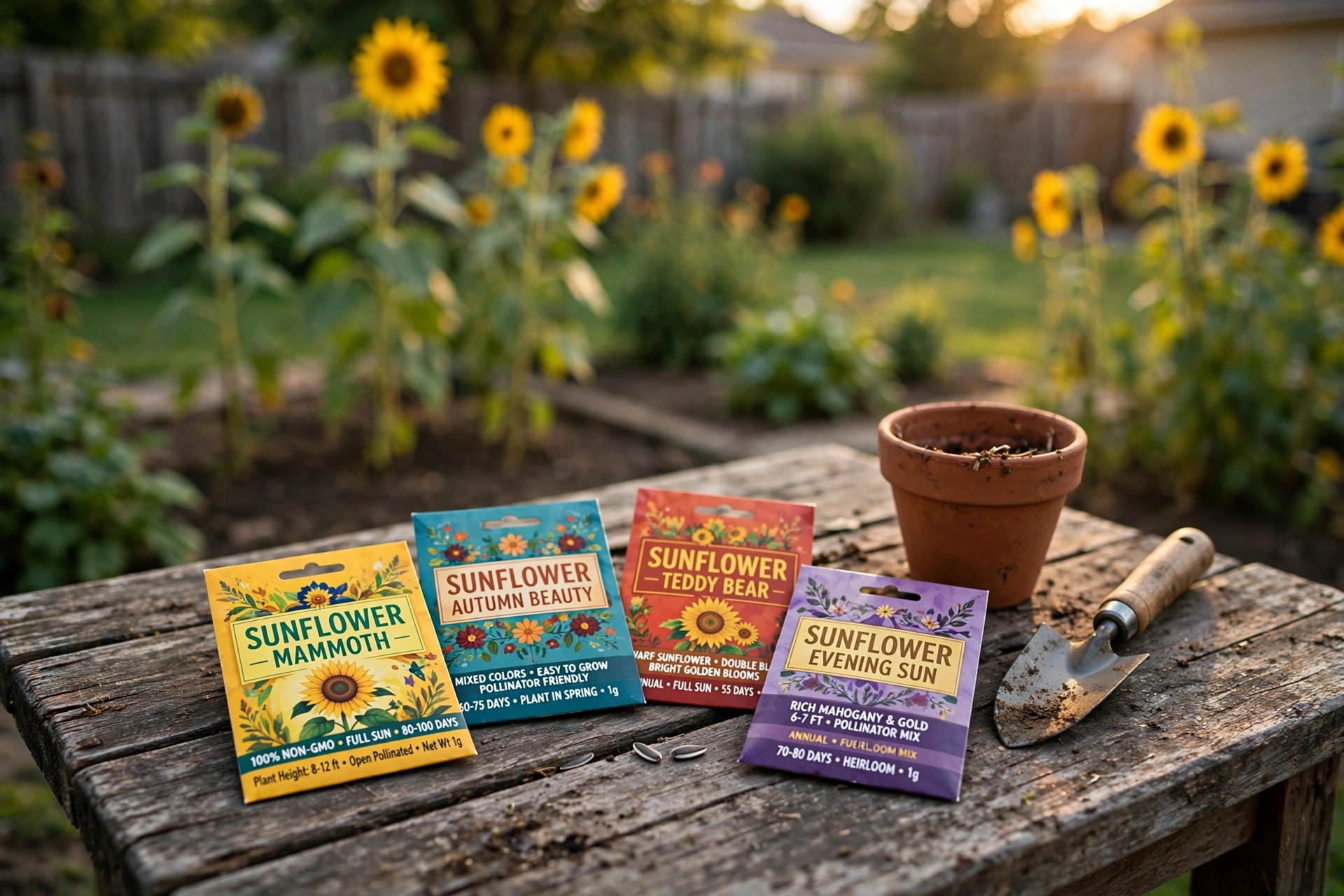
This sunflower seed packs buying guide usa is written for the home gardener who wants a simple path from the store shelf to a row of tall summer blooms. Sunflowers are among the easiest flowers to grow in the United States. They sprout fast. They ask for little. They reward the grower with large heads of gold that turn to face the sun. Yet the rack of seed packs at the garden center can confuse a first-time buyer. Some packs hold a few dozen seeds. Some hold a few hundred. Some promise giant heads. Some promise dwarf plants for pots. This guide explains what the packs contain, how to read them, and how to pick the right one for your yard.
Why a Buying Guide Helps
Seed packs look alike. The photos on the front show bright flowers. The small print on the back holds the facts that matter. A guide helps you read that small print with care.
Many new gardeners buy on looks alone. They pick the tallest plant shown on the packet. Then they learn that a twelve-foot stem needs strong support and deep soil. Others buy the cheapest pack and later find that it holds fewer seeds than the label led them to expect. A short guide saves money and time. It also saves the garden season, which comes only once a year.
Sunflowers grow across all hardiness zones in the United States. They suit big backyards and small city plots. Some types even grow well in large pots on a deck. The right pack matches the plant to the place. The wrong pack still grows, but it may grow in a way you did not want.
What to Look For on the Pack: Sunflower Seed Packs Buying Guide Usa
Turn the pack over. The back panel carries the key facts. Read them before you buy.
Seed Count and Weight
The pack states the number of seeds or the weight in grams. Small packs may hold 25 seeds. Large packs may hold 500 seeds or more. Count the seeds you need. A row of sunflowers ten feet long needs about twenty seeds. Most gardeners plant more than they need and thin the weak ones later. Buy a pack with a small margin extra.
Check whether the count is printed clearly. Good packs state it in bold type. Vague packs say “net weight” without a count. When the count is missing, the weight can guide you. One ounce of sunflower seed holds roughly 200 to 300 seeds, though the number shifts with seed size.
Germination Rate
The germination rate tells you how many seeds are likely to sprout. A rate of 85 percent is common and good. A rate below 70 percent is poor. The pack should also show a “packed for” date or a “sell by” date. Fresh seed sprouts best. Seed packed for the current year gives the best results. Seed that is two or three years old may still grow, but fewer plants will come up.
Variety Name
Every pack names the variety. Common names include Russian Mammoth, Velvet Queen, Teddy Bear, and Sunspot. Each variety has its own height, bloom size, and color. Write down the names of the varieties you like. Then you can ask for them by name each spring.
Days to Maturity
The back panel lists days to maturity. This number counts the days from planting to first bloom. Most sunflowers need 60 to 90 days. In short-summer states, pick varieties with fewer days. Plant early in the season so the blooms open before the first fall frost.
Types of Sunflower Seeds in Packs
Seed packs fall into a few clear groups. Each group suits a different garden.
Giant and Tall Types
Giant types grow eight to twelve feet high. Russian Mammoth is the best known. The flower heads can reach ten inches across. These plants suit large yards and farm edges. They need full sun and deep soil. They also need space. Plant them along a fence or at the back of a bed where they will not shade smaller plants.
Branching and Cut-Flower Types
Branching types grow several stems from one plant. Each stem carries a bloom. These types suit cutting gardens. You can cut flowers through the summer, and new buds keep opening. Velvet Queen and Indian Blanket are popular picks. The blooms are smaller than giants, often three to five inches across, but there are many more of them.
Dwarf and Patio Types
Dwarf types grow two to three feet high. They fit in pots and small beds. Teddy Bear is a well-loved dwarf with fluffy double blooms. Sunspot grows short but carries a full-size head. These packs are the right choice for balconies, decks, and small city yards. You can read more about small-space picks in our guide to morning glory seeds usa online deals.
Seed for Snacking and Oil
Some packs are sold for edible seed, not for flowers. These varieties grow large heads filled with striped seed. The seed can be roasted and eaten. Read the pack. If you want blooms for the garden, pick a flower variety. If you want a crop for the kitchen, pick an oilseed or confectionery variety.
Mixed and Wildflower Packs
Some packs mix sunflower seed with other wildflowers. These suit meadow-style plantings. The mix may hold fewer sunflower seeds per pack than a pure pack. Check the label for the percentage of sunflower seed.
How to Choose the Right Pack for Your Yard
Start with the space you have. Measure the bed or the pots. Then match the plant height to the space. A twelve-foot giant does not belong in a two-foot window box.
Next, think of the sun. Sunflowers need at least six hours of direct sun each day. Eight hours is better. Watch your yard through a day in spring. Mark the sunny spots. Plant there.
Think of the soil. Sunflowers accept most soils, but they dislike standing water. Loose soil that drains well is best. If your ground is heavy clay, work in compost before planting. Our sunflower seed packs for sale usa guide lists packs by size and price for easy comparison.
Consider the season. In warm southern states, you can plant from early spring through early summer. In northern states, wait until the soil warms in late May. The pack often gives a planting map or a table of dates. Follow it.
Finally, think of the goal. Do you want tall stems for a contest? Do you want cut flowers for the table? Do you want blooms that feed bees? Each goal points to a different variety. Bee-friendly growers often pick branching types, because many small blooms feed more insects than one large head. Gardeners in warm states may also like lavender seed packets texas homes usa for a second bee-friendly bed.
Cost and Price
Sunflower seed packs are cheap. Most small packs cost between one and three dollars. Larger packs cost four to six dollars. Bulk packs with several hundred seeds can cost eight to twelve dollars. The prices shift with the brand and the variety. Rare or new varieties cost more than old favorites.
Compare the cost per seed, not the cost per pack. A three-dollar pack with 25 seeds costs twelve cents a seed. A six-dollar pack with 500 seeds costs about one cent a seed. If you plant a long row, the bulk pack wins. If you plant one pot, the small pack is enough.
Mail-order packs cost a bit more than store packs, because shipping is added. Some mail-order houses offer free shipping above a set order size. Buying several packs at once can bring the per-pack cost down. Watch for end-of-season sales in late summer, when stores cut prices on leftover seed.
Where to Buy in the USA
Garden centers carry the widest choice in spring. Staff can answer questions about local planting dates. Big home improvement stores carry the main brands at low prices. Hardware stores often stock regional favorites that suit the local climate.
Mail-order seed houses offer the largest catalogs. Well-known houses include Burpee and Gurneys, which carry many sunflower varieties in several pack sizes. Park Seed sells both flower and edible types. Online plant and garden sites such as White Flower Farm and Proven Winners also carry seed and plant lines. For growing advice, Gardening Know How and The Spruce publish plain how-to articles. The National Institute of Food and Agriculture offers research-based gardening resources. Monrovia is known for nursery plants, and the Old Farmer’s Almanac carries planting calendars by region.
Local seed swaps and farm stands can be fine sources too. Ask the seller for the variety name and the year the seed was packed. Fresh, named seed beats old, unnamed seed every time.
Reading the Fine Print
The back of the pack holds more than dates and counts. Look for these lines.
Treated or untreated. Some seed is coated with fungicide. The pack will say so. Treated seed resists rot in cool soil. Organic gardeners prefer untreated seed.
Open-pollinated or hybrid. Open-pollinated varieties breed true. You can save seed from the heads and plant it next year. Hybrids, marked F1, may not grow true from saved seed. If you want to save seed, pick open-pollinated types.
Pelleted or raw. Most sunflower seed is sold raw. Pelleted seed is rare for sunflowers but exists for tiny seeds. It does not matter much here.
Lot number. A lot number helps if you ever need to report a bad batch. Keep the empty pack until the plants are up.
Storing Leftover Seed
Most packs hold more seed than one season needs. Store the rest for next year. Seal the opened pack with tape or move the seed to a small jar. Keep it cool and dry. A drawer in an air-conditioned room works well. Some gardeners store seed in the refrigerator. If you do, seal the seed in a dry jar first, and let the jar warm to room temperature before you open it, so no moisture forms on the cold seed.
Label the jar with the variety name and the year. Do a quick germination test before planting old seed. Place ten seeds on a damp paper towel, fold it, and keep it warm for a week. Count how many sprout. If seven or more sprout, the seed is still good. If fewer sprout, plant more seed per spot or buy fresh.
Safety Notes
Sunflower seeds and plants are safe for most home gardens. A few notes still apply.
Treated seed is coated with chemicals. Keep it away from children and pets. Wash your hands after handling it. Do not let treated seed mix with food.
Tall sunflowers can fall in strong wind. Tie stems to a stake or a fence with soft ties. Place tall rows where a fallen plant cannot hit a walkway or a power line.
Sunflower pollen and seed can bother people with allergies. If you suffer from pollen allergies, pick pollen-free varieties. These are marked on the pack. They also make cleaner cut flowers, since no pollen drops on the table.
Pet owners should know that sunflower plants are not toxic to dogs and cats, but large amounts of seed shells can upset a stomach. Keep bulk seed bags closed and out of reach.
Frequently Asked Questions
How many seed packs do I need for a small garden?
One small pack is usually enough. A pack of 25 seeds plants a row about ten feet long with space for thinning. A pack of 100 seeds plants a bed four feet wide and ten feet long. Start with one pack. Buy more only if you plant large areas.
When should I plant sunflower seeds in the USA?
Plant after the last spring frost, when the soil reaches about 50 degrees. In the South, that can be March or April. In the North, wait until late May. You can plant in stages two weeks apart for blooms that last longer.
How deep should I plant the seeds?
Plant one to one and a half inches deep. Cover with soil and press it down lightly. Water well after planting. Keep the soil moist until the sprouts appear, which takes about seven to ten days.
Can I grow sunflowers from store-bought seed packs in pots?
Yes, if you pick a dwarf variety. Use a pot at least twelve inches wide and deep. Fill it with good potting mix. Give the plant full sun. Water when the top inch of soil feels dry. Tall varieties can grow in pots too, but they need very large pots and strong support.
Do sunflower seed packs expire?
They do not expire on a set date, but they lose strength with age. Seed packed for the current year is best. Two-year-old seed still grows fairly well if stored cool and dry. Seed older than three years is a gamble. Test old seed on a damp paper towel before you plant a whole bed with it.
What is the difference between flower seed and birdseed sunflowers?
Birdseed bags hold seed meant for feeding birds, not for planting. The seed may be old or mixed with other grains. Flower seed packs hold named varieties chosen for garden bloom. For a good garden stand, buy seed packed for planting.
A Final Word
A sunflower seed pack is a small purchase with a large reward. Read the back panel. Match the variety to your space and your sun. Buy fresh seed, store the rest well, and plant at the right time. The plants do most of the work. By midsummer, tall stems will carry bright heads, and the garden will have the simple cheer that only sunflowers bring.
References
Burpee. (n.d.). Seeds, plants, and gardening supplies. https://www.burpee.com Gardening Know How. (n.d.). Gardening guides and plant care. https://www.gardeningknowhow.com Gurney’s Seed & Nursery Co. (n.d.). Seeds, plants, and garden supplies. https://www.gurneys.com Monrovia. (n.d.). Plants for home gardens. https://www.monrovia.com National Institute of Food and Agriculture. (n.d.). Agricultural research and extension. https://www.nifa.usda.gov Park Seed. (n.d.). Seeds, plants, and gardening supplies. https://www.parkseed.com Proven Winners. (n.d.). Plants and gardening inspiration. https://www.provenwinners.com The Old Farmer’s Almanac. (n.d.). Gardening calendars and advice. https://www.almanac.com The Spruce. (n.d.). Home and garden advice. https://www.thespruce.com White Flower Farm. (n.d.). Plants, bulbs, and garden supplies. https://www.whiteflowerfarm.com
Was this guide helpful?

About Michael Thompson
The My Garden US editorial team writes practical, in-depth home and garden guides for American homeowners — tested advice, no fluff.