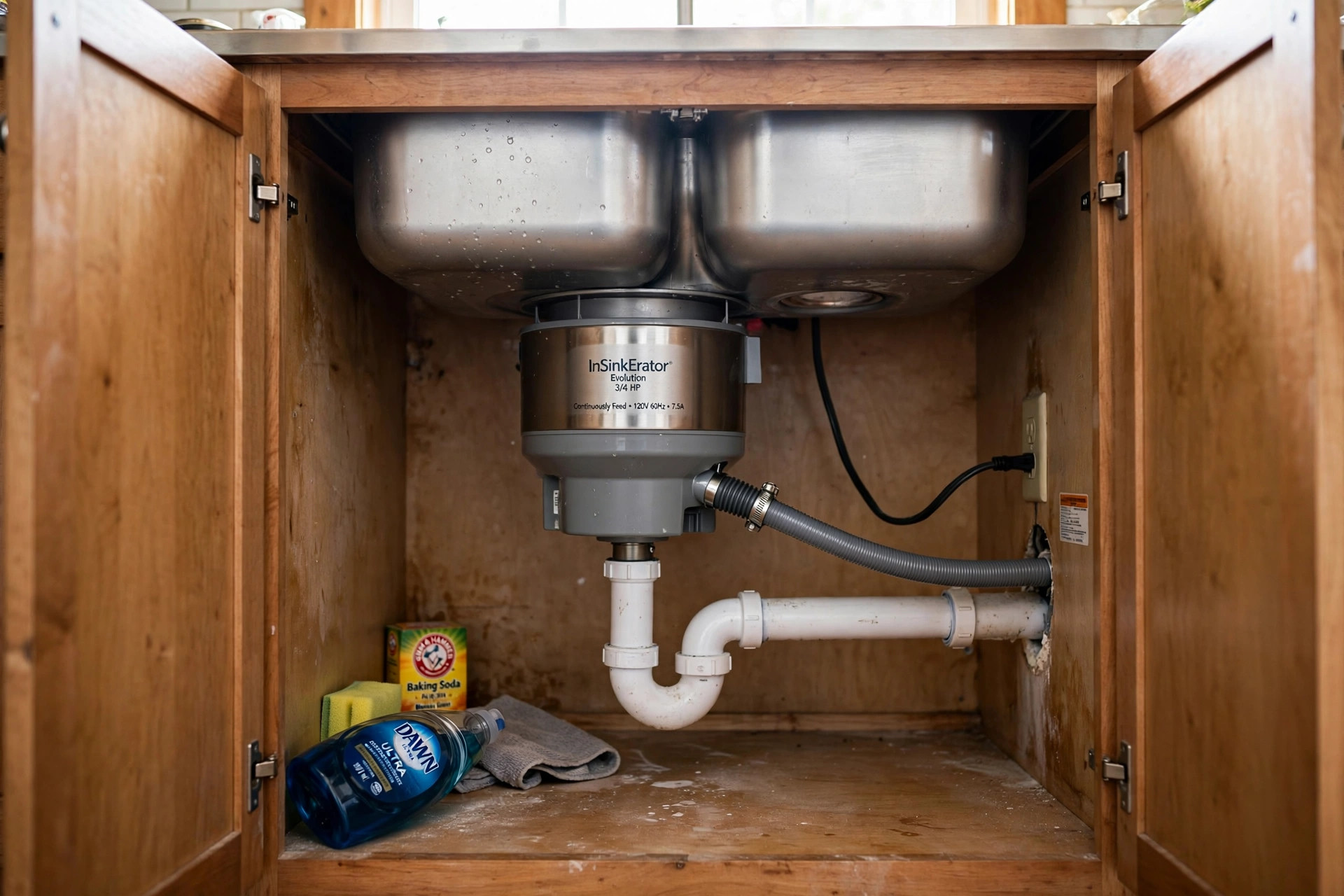

The kitchen sink works hard in any home. Food scraps pile up fast. A garbage disposal grinds them up and sends them down the drain. Many families in the Lone Star State want one. Garbage disposal installation texas homes usa is a common search for a reason. Texas homes have their own rules and habits. Some cities watch water use. Some homes run on septic tanks. This guide walks through the whole job in plain words. It covers why a disposal helps, how to choose one, what it costs, and how to keep it safe.
Why It Matters
A garbage disposal does a simple job. It grinds food waste into tiny bits. The bits wash down the drain. The sink stays clear. The trash can fills up slower. That matters in a warm state. Texas heat makes trash smell fast. Less food in the can means fewer odors. It also means fewer flies in summer.
Kitchens with disposals are easier to keep clean. Rinsing plates takes less time. There is no need to scrape every bit into the bin. The work flows faster after a meal.
There are tradeoffs too. A disposal uses water. It uses power. It can clog if treated badly. In Texas, some areas face drought. Cities may ask homes to save water. A disposal can add to water use. On the other hand, less food in landfills helps the wider state. The choice deserves real thought.
Some Texas homes sit on septic systems. A disposal sends extra waste into the tank. The tank fills faster. It needs pumping sooner. Many plumbers warn against disposals on septic tanks. Others say a light touch is fine. Know your setup before you buy.
What to Look for: How to Choose a Disposal: Garbage Disposal Installation Texas Homes Usa
Buying a disposal is not hard. A few key facts guide the choice. Match the unit to your home, your sink, and your cooking habits.
Power and Motor Size
Disposals come in horsepowers. The common sizes are one third, one half, three quarters, and one horsepower. A small home that cooks light meals can use one third or one half horsepower. A family that cooks daily will like three quarters. A big household or a home cook who grinds bones and peels will want a full horsepower.
More power means less jamming. The grind plate turns with force. Tough scraps break down. A weak motor strains and stalls. It may burn out early. In Texas homes with large families, three quarters horsepower is a safe middle choice.
Feed Type
Most home units use continuous feed. You flip a wall switch. The unit runs. You push scraps in. This type is simple and cheap. It is the most common in American kitchens.
Batch feed units work in small batches. You load the chamber. You put the stopper in. The unit starts only when the stopper is in place. Hands cannot reach the chamber while it runs. This type is safer. It costs more. It suits homes with small children.
Noise Level
Some disposals are loud. The grind rattles the cabinet. Newer models add sound shields. They run quieter. If your kitchen sits near the living room, noise matters. Read the box for decibel notes. Online reviews also help. Check what Consumer Reports says about noise ratings before you decide.
Sink and Drain Fit
Most disposals fit standard sinks. The drain opening is three and a half inches across. Measure yours. Farmhouse sinks and thick stone sinks need extra checks. Some need a longer flange. The mounting ring must sit flush.
Also check the space under the sink. Disposals hang below the drain. Tall units crowd the cabinet. You may lose room for cleaning supplies. Measure the height from the drain to the cabinet floor. Compare it with the unit’s size on the box.
Septic System Compatibility
If your Texas home runs on septic, choose with care. Some makers build septic-assist models. These add enzymes that break down waste. They are made for septic tanks. They cost more. They give peace of mind. Ask your plumber if one is worth it. For broader kitchen planning, see our undermount stainless sinks buying guide for sink choices that pair well with a disposal.
Types and Options
Disposals fall into a few groups. The price and the feel change with each.
Entry-level units use one third to one half horsepower. They have basic grind parts. They suit light use. They cost the least. They last about five to eight years.
Mid-range units use one half to three quarters horsepower. They add sound shields. The grind chamber is stainless steel. They suit daily family cooking. They last eight to twelve years. This is the sweet spot for most Texas homes.
Premium units use one full horsepower. They run quiet. They grind fast. They often carry long warranties. They suit heavy cooks. They can last twelve years or more.
Septic-safe units come in mid and high power. They add a bio-charge or enzyme cartridge. The cartridge breaks down food waste. It helps the septic tank cope. Refills cost a few dollars each month.
When you shop at Home Depot or browse Lowe’s, you will see these tiers side by side. Compare the warranty length. Compare the grind stage. Some units use two-stage grinding. They grind finer than one-stage units. Finer grind means fewer clogs.
Cost and Price
The unit itself is only part of the cost. Labor adds more. Here is what Texas homeowners usually pay.
– A basic unit costs 60 to 120 dollars. – A mid-range unit costs 120 to 250 dollars. – A premium unit costs 250 to 450 dollars. – A septic-safe unit costs 150 to 350 dollars.
Professional install adds 100 to 300 dollars. The price moves with the city. Dallas and Houston plumbers may charge more than small-town plumbers. If the wiring is missing, an electrician adds 100 to 200 dollars. The disposal needs a grounded outlet under the sink.
Some homes need extra parts. A new sink flange runs 10 to 20 dollars. A dishwasher drain hookup kit runs 5 to 15 dollars. An air switch, which lets you run the unit with a counter button instead of a wall switch, runs 20 to 40 dollars.
Total cost for a pro job often lands between 200 and 600 dollars. Do-it-yourself jobs cost only the unit and parts. Many Texas homeowners do the swap themselves. It takes one to two hours with basic tools.
Check GE Appliances and Bosch Home Appliances for current model prices. Big-box prices shift with sales. Spring and fall often bring discounts.
Care and Upkeep
A disposal lasts longer with simple care. The rules are easy to learn.
Run cold water before, during, and after use. Cold water keeps grease solid. Solid grease breaks into small bits. Hot water melts grease. Melted grease coats the pipes. It hardens later. It causes clogs.
Feed scraps a little at a time. Do not dump a full plate at once. Let the grind plate clear between handfuls. Keep the unit running for fifteen seconds after the grind ends. This flushes the drain line.
Clean it each week. Drop a few ice cubes in. Run the unit. The ice scrubs the chamber. Add lemon or orange peels. They leave a fresh smell. Do not use harsh drain cleaners. They can harm the seals.
Never put these in the disposal:
– Grease, fat, or cooking oil – Coffee grounds in large amounts – Pasta, rice, or bread in bulk – Potato peels in bulk – Fibrous foods like celery stalks or onion skins – Bones, unless the unit is rated for them – Non-food items of any kind
Grease is the worst enemy. Pour it into a can. Let it cool. Throw it in the trash. This one habit saves many Texas drains. Hard water in parts of the state already narrows pipes with scale. Grease makes it worse.
Every few months, check under the sink. Look for drips at the flange and the drain joints. Tighten loose slip nuts by hand. A small leak caught early saves the cabinet floor.
For general sink care, our under sink filters buying guide explains filtration options that keep your water clean at the same sink where the disposal sits.
Safety
A disposal is safe when used right. It can hurt when used wrong. Follow these rules.
Keep hands out of the drain opening. Always. Use tongs to pull out a stuck item. Turn the unit off first. Unplug it if you must reach near it.
Never let children run the unit alone. Teach older kids the rules. A batch feed unit adds a layer of safety for young families. This Old House offers plain guidance on safe kitchen upgrades.
Reset, do not force. If the unit hums but does not grind, something is jammed. Turn it off. Press the red reset button on the bottom. Use the hex wrench that came in the box. Turn the flywheel from the bottom slot. Pull out the jam with tongs. Then run cold water and restart.
Keep the splash guard clean. Food stuck under the guard breeds germs. Scrub it with a brush and dish soap.
Check the wiring. The unit must plug into a grounded outlet. The cord must not touch the hot water line. If you smell burning or see sparks, stop. Call an electrician. Water and bad wiring do not mix.
Texas homes in flood zones need extra care. If the cabinet floods, do not run the unit. Let a pro check the motor first. The Energy Star site has general notes on safe appliance use in the home.
Frequently Asked Questions
Do I need a permit to install a garbage disposal in Texas?
Most Texas cities do not require a permit for a simple swap. You remove the old unit and put in a new one. No new pipes. No new wires. If you add a new outlet or change the drain layout, some cities want a permit. Call your city building office first. It takes five minutes. It saves trouble later.
Can I install a disposal myself?
Yes, many homeowners do. A swap is a common do-it-yourself job. You need a screwdriver, pliers, and plumber’s putty. The box holds clear steps. Turn off the breaker first. If you must add wiring, hire an electrician. Our garbage disposal installation buying guide walks through choosing the right unit before the job starts.
How long does a garbage disposal last?
Most units last eight to twelve years. Cheap units die sooner. Premium units live longer. Hard use shortens the life. Good care extends it. When the motor hums weakly or leaks start at the seals, it is time for a new one.
Will a disposal hurt my septic tank?
It can add strain. Food waste raises the solid load. The tank needs pumping more often. Some Texas counties advise against disposals on septic. Others allow them with care. Use a septic-safe model if you go ahead. Pump the tank on schedule. Ask your local health department for the rule in your county.
Does a disposal use a lot of water?
It uses about one gallon per day in a normal home. That is a small share of total use. Still, in drought years, Texas cities may set watering rules. A disposal will not break those rules. Just run it with a steady cold stream, not a blast.
What should I do if the disposal smells bad?
Grind ice cubes and citrus peels. Run cold water for thirty seconds. Scrub the splash guard with soap. If the smell stays, food may sit in the drain trap. A plumber can clear it. The Spruce and Bob Vila both keep simple cleaning guides online.
A Short Final Word
A garbage disposal is a small machine with a big daily role. It keeps the sink clear. It cuts trash odors in Texas heat. It asks for little care in return. Choose the right size. Check your sink and your septic setup. Learn your city’s rules. Run cold water. Keep grease out. Do these things and the unit will serve your kitchen well for years. Whether you hire a pro or do the swap yourself, the job is well within reach. Your Texas kitchen will thank you.
References
Bob Vila. (n.d.). Home improvement advice. https://www.bobvila.com Bosch. (n.d.). Home appliances. https://www.bosch-home.com Consumer Reports. (n.d.). Product reviews and ratings. https://www.consumerreports.org ENERGY STAR. (n.d.). Energy efficient products. https://www.energystar.gov GE Appliances. (n.d.). Kitchen and home appliances. https://www.geappliances.com Lowe’s. (n.d.). Home improvement products. https://www.lowes.com The Home Depot. (n.d.). Home improvement products. https://www.homedepot.com The Spruce. (n.d.). Home and garden advice. https://www.thespruce.com This Old House. (n.d.). Home renovation guidance. https://www.thisoldhouse.com
Was this guide helpful?

About Robert Taylor
The My Garden US editorial team writes practical, in-depth home and garden guides for American homeowners — tested advice, no fluff.
You May Also Like

Kitchen Island Hanging Lights: Where to Buy in the USA
March 4, 2026 0 views
Kitchen Island Seating for California Homes
February 1, 2026 0 views
Butcher Block Countertops Deals Near Me: How to Find Quality Wood Counters at Low Prices
February 22, 2026 0 views