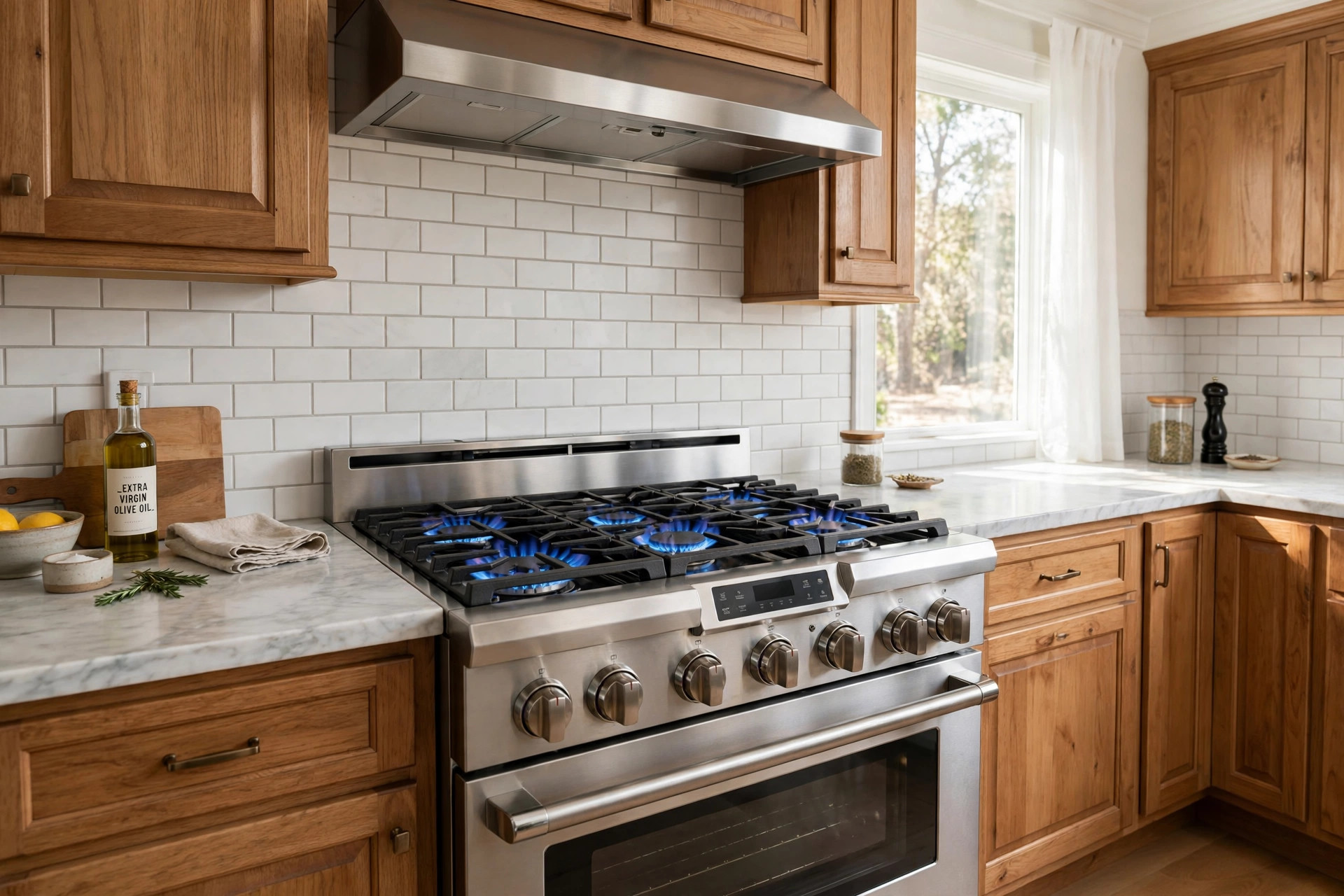

A new range is one of the largest purchases in a kitchen. Gas kitchen ranges usa online deals make that purchase easier on the wallet, but a low price alone is not enough. The range must fit the kitchen, match the home gas line, and cook the way a family needs. This guide walks through the whole process in plain language: what these appliances are, why shoppers look for them online, how to compare models, what prices to expect, and how to keep the new range safe and clean for years.
Why Gas Kitchen Ranges Matter
A gas range combines a cooktop and an oven in one appliance. It runs on natural gas or liquid propane. Cooks have favored gas for more than a century for one simple reason: the flame answers at once. Turn the knob and the heat rises. Turn it down and the heat drops. There is no waiting for an element to warm up or cool down.
That instant control changes daily cooking. A sauce that must not boil over can be pulled back from the edge in a second. A wok that needs fierce heat gets it right away. Many home cooks also like the even heat of a gas oven, which browns bread and roasts meat in a steady way.
Buying online has changed how Americans shop for these machines. Local stores show a handful of floor models. The web shows hundreds. Shoppers can compare burner counts, oven sizes, and prices across many stores without driving across town. Seasonal sales events in the spring and around major holidays often bring the deepest price cuts of the year. That is why so many buyers search for gas kitchen ranges usa online deals before they settle on a model.
How to Choose the Right Gas Range: Gas Kitchen Ranges Usa Online Deals
Start with measurements. This step matters more than any other. Pull the old range out a few inches and measure the width of the opening, the depth from the wall to the front of the counter, and the height under the counter top. Standard ranges in the United States are 30 inches wide, but 24-inch and 36-inch models are common too. A range that is even half an inch too wide will not fit, and no deal is worth that trouble.
Next, check the fuel. Most homes use natural gas from a city line. Homes in rural areas often use a propane tank. Many ranges can burn either fuel, but they need the right kit to switch. Read the product page to see which fuel the range is set for and whether a conversion kit is included.
The cooktop deserves close study. Count the burners and look at their power, which is measured in BTUs. A typical range has one high-power burner of 15,000 to 18,000 BTUs for fast boiling and searing, several mid-range burners for daily cooking, and one low burner of about 5,000 BTUs for simmering soups and sauces. Continuous cast-iron grates that cover the whole cooktop let heavy pots slide from burner to burner without lifting.
For the oven, note the size in cubic feet. Most 30-inch gas ranges offer between 4.8 and 5.8 cubic feet, which holds a large turkey with room to spare. Convection fans, which move hot air around the food, help baked goods brown evenly and are worth having if the budget allows.
Readers who are still weighing gas against other fuels can start with our gas kitchen ranges buying guide usa for a full comparison of features.
Types and Options on the Market
Freestanding Ranges
Freestanding ranges are the most common type. The sides have a finished look, and the back has a raised control panel. They slide between cabinets and can also stand alone. Prices are usually the lowest, which makes them the first choice for shoppers hunting gas kitchen ranges usa online deals.
Slide-In Ranges
Slide-in ranges have controls on the front and no raised back panel, so they sit flush with the counter and backsplash. They give a built-in look at a smaller cost than a true built-in. They need a finished wall behind them, and they usually cost a few hundred dollars more than a freestanding model of the same size.
Professional-Style Ranges
These heavy ranges look like restaurant equipment. They have thick grates, high-BTU burners, and large ovens. A 36-inch or 48-inch model can anchor a serious home kitchen. The price climbs fast, often two or three times the cost of a standard range, and the home may need a stronger gas line and a more powerful vent hood.
Dual Fuel Ranges
A dual fuel range burns gas on the cooktop and uses electricity in the oven. Some bakers prefer the dry, even heat of an electric oven. Our dual fuel ranges buying guide usa explains when this mix is worth the extra cost.
Many buyers pair a new range with a fresh ventilation setup, so it pays to read our stainless range hoods buying guide usa before the purchase is final.
Where to Find the Best Online Deals
The first rule of finding gas kitchen ranges usa online deals is patience. Prices swing through the year. The biggest markdowns usually arrive during spring sales events, summer holiday weekends, and the year-end season when stores clear out models for the next year. Open-box and clearance sections on large retail sites can cut prices further, often by 20 to 40 percent, on ranges with small dents or scratches that never affect cooking.
Compare the final price, not just the sticker. A range that looks cheap can grow costly once delivery, haul-away of the old unit, installation, and a gas line hookup are added. Some retailers bundle free delivery and haul-away during sales. Others charge several hundred dollars for the same services. Add up the whole bill before choosing.
Sign up for price alerts on the models you like. Many large stores let shoppers watch a price and send an email when it drops. Manufacturer rebates are common too. Brands often run cash-back offers that stack on top of a store sale, so check the maker website for the model you want.
Package deals are worth a look when more than one appliance is old. Buying a range, dishwasher, and refrigerator from the same brand in one order can unlock a package rebate worth several hundred dollars. The math sometimes beats hunting separate deals.
A few well-known brand sites help set a baseline for price research. Shoppers often compare listings from Whirlpool and GE Appliances before checking big-box retailers such as The Home Depot and Lowe’s, where open-box and clearance pages list extra markdowns.
Cost and Price Expectations
Gas range prices fall into three broad bands. Budget models from about $600 to $1,100 cover basic cooking well. They have four or five burners, a standard oven, and simple knobs. Most families will find everything they need in this band.
Mid-range models from about $1,100 to $2,200 add features that many cooks enjoy: convection ovens, a fifth oval burner for griddles, easy-clean enamel, and nicer grates and knobs. This band is where most gas kitchen ranges usa online deals land during big sales.
Premium and professional-style models run from about $2,200 up to $8,000 or more. The extra money buys heavier build quality, higher BTU output, dual ovens, and a look that suits a high-end kitchen.
Do not forget the costs around the purchase. Professional installation by a licensed gas fitter usually runs between $150 and $400 depending on the area and the work needed. If the gas line must be moved or extended, the cost rises. A new gas shut-off valve or a flexible supply line adds a smaller charge. These numbers should sit beside the range price in every comparison.
Energy use is small compared with heating and cooling, but shoppers who watch their bills can check efficiency guidance at Energy Star before they buy.
What to Check Before You Click Buy
Read the full product page twice. Confirm the width, depth, and height. Confirm the fuel type and whether a propane conversion kit is in the box. Confirm whether the price includes delivery, and what kind of delivery: curbside drop-off is not the same as room-of-choice placement.
Read the return policy with care. Appliances are heavy and costly to ship back. Some stores allow returns within 30 days but charge a restocking fee. Others require the buyer to keep the original box. A clear return policy is part of a good deal.
Check the warranty. Most ranges carry a one-year warranty on parts and labor from the maker. Extended plans sold at checkout add years of coverage but also add cost. Weigh the plan price against the repair cost of the most likely failures, such as an igniter or a control board.
Read recent customer reviews, but read them with a calm eye. A handful of angry reviews about shipping damage say more about delivery than about the range. Look for repeated notes about the same problem, such as uneven oven heat or a burner that will not stay lit. Patterns matter more than single complaints.
Third-party testing sites such as Consumer Reports publish range ratings that can confirm or challenge what reviews claim.
Care and Upkeep
A gas range rewards simple, regular care. Wipe spills on the cooktop once it cools. Burned-on food is much harder to remove after a week than after a day. Most enamel cooktop surfaces clean with warm soapy water and a soft cloth. Avoid steel wool on porcelain or stainless surfaces, which scratch easily.
Lift out the burner caps and grates for a deeper clean every few weeks. Soak them in hot soapy water, scrub with a non-scratch pad, and dry them fully before setting them back. Moisture left on burner parts can cause clicking or weak flames.
Clean the oven with the method the manual names. Self-clean cycles use high heat to burn off residue. They work well but fill the kitchen with heat and odor, so run them when the house can be aired out. Manual-clean ovens do best with a paste of baking soda and water left overnight, then wiped out with care.
Watch the flames now and then. Healthy gas flames burn blue and steady. Yellow, lazy flames can mean the burner ports are dirty or the air mix is wrong. Clean the ports first. If the color stays yellow, call a technician.
The care tips from Bob Vila and This Old House include seasonal checklists that help owners keep gas appliances in good shape.
Safety in a Gas Kitchen
Gas is a safe fuel when it is treated with respect. The most important rule is simple: if you smell gas, act at once. Leave the area, do not touch light switches or appliances, and call the gas company or emergency services from outside the home.
Ventilation matters every time the range is on. Run the range hood to carry heat, steam, and cooking fumes out of the kitchen. Gas burners also release small amounts of combustion byproducts, so fresh air is important, especially in a tight modern home.
Keep flammable items away from the cooktop. Towels, paper, and wooden spoons should rest at a safe distance. Never leave a lit burner unattended, and turn pot handles inward so they cannot be bumped.
Have the gas line and connections checked by a licensed technician if the home is older, if a range is being converted from natural gas to propane, or if anything about the installation looks worn. The Family Handyman guides and the kitchen coverage at The Spruce both stress that gas hookups are jobs for trained hands, not weekend guesswork.
Keep a working carbon monoxide detector on every floor of the home, and test it twice a year. It is a small device with a large job.
Frequently Asked Questions
Do I need a gas line to buy a gas range? Yes. The range must connect to a natural gas line or a propane supply. If the kitchen has only an electric hookup, adding a gas line requires a licensed plumber or gas fitter, and the cost should be part of the budget.
Can a gas range run on propane instead of natural gas? Many can. Most ranges arrive set for natural gas and include or offer a propane conversion kit. The switch changes small burner parts called orifices and must be done carefully, often by a technician.
Are online deals really cheaper than store prices? They often are, because online stores compete across the whole country and run frequent sales. The savings hold only if delivery, installation, and haul-away are counted. A low online price with high fees can cost more than a fair store price with free services.
What size range fits a standard kitchen? Most American kitchens are built for a 30-inch-wide range. Measure the opening before ordering. Older homes and apartments may use 24-inch models, and large kitchens may fit 36-inch or wider professional-style ranges.
How long should a gas range last? A well-kept gas range usually lasts 15 to 20 years. Burner igniters and oven sensors are the parts most likely to need replacement along the way, and both are common repairs.
Is a convection oven worth the extra cost? For many cooks, yes. The fan moves hot air so food browns more evenly, and baking times drop slightly. Shoppers who bake often will notice the difference. Those who mostly heat simple meals may not miss it.
A Short Final Word
Finding strong gas kitchen ranges usa online deals takes a little homework but pays off in a kitchen that works well for years. Measure first, match the fuel, compare the full price including delivery and installation, and read the reviews with care. Then enjoy the quick blue flame that has kept cooks loyal to gas for generations.
References
Bob Vila. (n.d.). Home improvement advice. https://www.bobvila.com Consumer Reports. (n.d.). Product reviews and ratings. https://www.consumerreports.org ENERGY STAR. (n.d.). Energy efficient products. https://www.energystar.gov Family Handyman. (n.d.). DIY home repair and maintenance. https://www.familyhandyman.com GE Appliances. (n.d.). Kitchen and home appliances. https://www.geappliances.com Lowe’s. (n.d.). Home improvement products. https://www.lowes.com The Home Depot. (n.d.). Home improvement products. https://www.homedepot.com The Spruce. (n.d.). Home and garden advice. https://www.thespruce.com This Old House. (n.d.). Home renovation guidance. https://www.thisoldhouse.com Whirlpool. (n.d.). Home appliances. https://www.whirlpool.com
Was this guide helpful?

About Sarah Mitchell
The My Garden US editorial team writes practical, in-depth home and garden guides for American homeowners — tested advice, no fluff.
You May Also Like

Kitchen Backsplash Tiles: Where to Buy in the USA
July 16, 2026 0 views
Kitchen Backsplash Tiles USA Online Deals: A Plain Guide to Buying Smart
April 7, 2026 0 views
Kitchen Pantry Cabinets: A Guide for American Homes
February 19, 2026 0 views