
A dog agility set for backyard training fun can turn a plain yard into a place of play and learning. You do not need a large lot or a big budget. A small stretch of grass is enough to start. Many owners buy a simple kit with jumps, weave poles, and a tunnel. Others build a course from pipe and wood. Both paths work well. The goal is the same. Give your dog a task to learn, a body to move, and a mind to use. This guide explains what a set includes, how to choose one, what it costs, and how to keep training safe.
Why Backyard Agility Is Good for Your Dog
Dogs need more than food and walks. They need work that uses their brains. Agility gives them a job. A dog that learns to weave through poles or run a tunnel is learning to focus. Focused dogs are calmer dogs. Many behavior problems come from boredom. Chewing, digging, and barking at the fence often mean a dog has too much energy and too little to do.
Agility also builds fitness. Jumps build leg strength. Tunnels build confidence in tight spaces. Weave poles build balance and body control. Short sessions keep the heart working without overdoing it. This is true for young dogs, adult dogs, and even seniors. Older dogs can run a low course at a walk. Puppies can learn simple moves on the ground.
Training together builds trust between you and your dog. You learn to read each other. Your dog learns to listen to your voice and your hand signals. Many owners say agility time is the best part of the day. Pet health guides at PetMD note that daily active play supports weight control and joint health in dogs of all breeds.
What a Dog Agility Set Usually Includes: Dog Agility Set for Backyard Training Fun
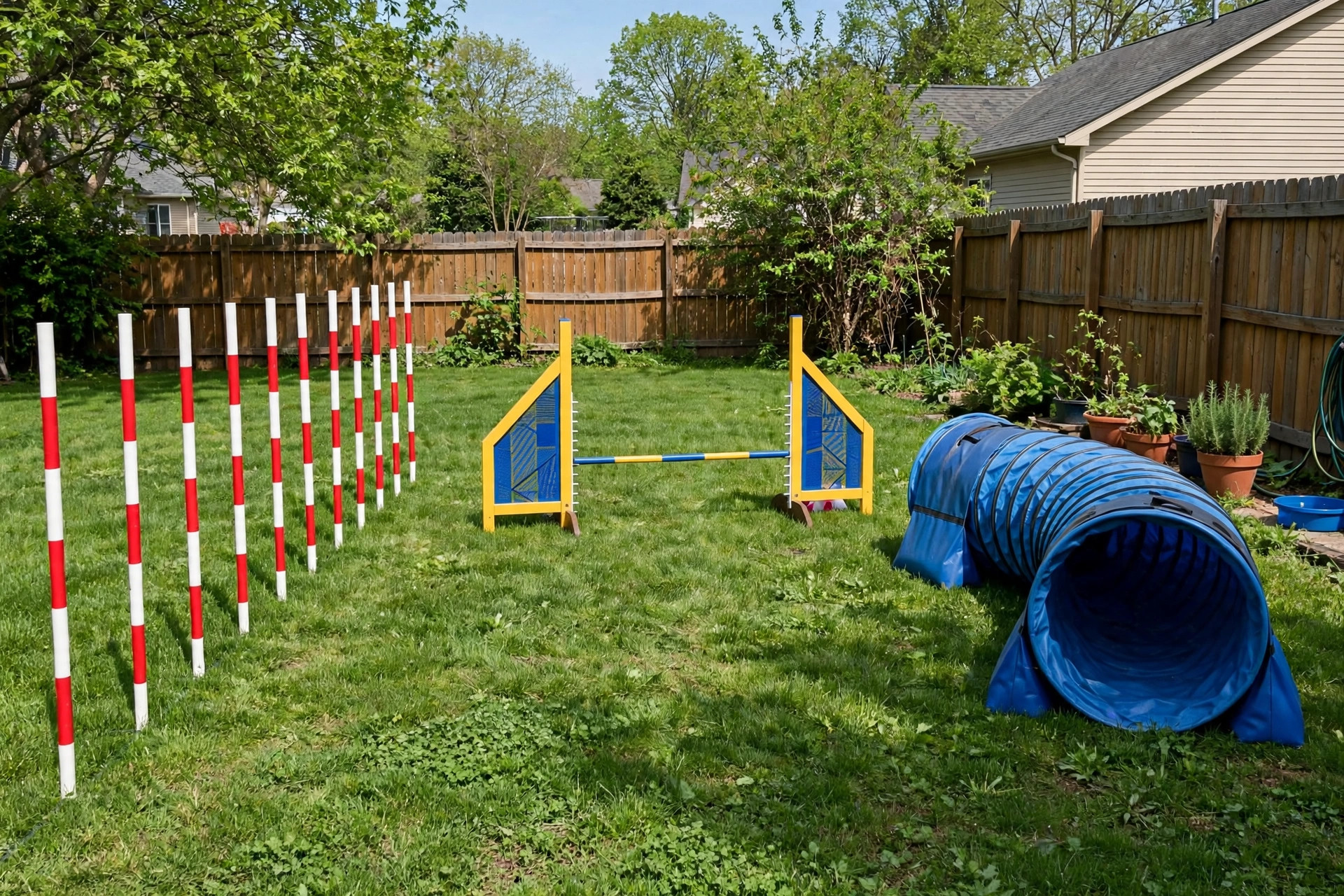
Most starter kits share the same basic parts. A jump hurdle is the most common piece. It is a bar set across two posts. The bar drops if the dog hits it. This keeps the jump safe. Weave poles are a row of upright sticks. The dog snakes in and out between them. They teach footwork and patience.
A tunnel is a long tube made of nylon or plastic. Dogs run through it from one end to the other. Many kits use a collapsible tunnel that folds flat for storage. Some sets add a pause table. This is a low, flat platform. The dog jumps up and holds a sit or down stay for a few seconds. It teaches control.
Larger sets may include an A-frame ramp, a seesaw, or a tire jump. These pieces suit owners who have more room and a dog that already knows the basics. If you are new to the sport, start small. A kit with a jump, weave poles, and a tunnel is plenty. Competition rules and course ideas are published by the American Kennel Club, which runs agility trials across the country.
How to Choose the Right Set
Size and Fit
Measure your yard first. A full course needs about thirty by thirty feet. A starter kit needs much less. Six weave poles take about fifteen feet in a line. A single jump needs only a few feet of width. Many owners move one piece at a time through the yard. This is a good way to train in a small space. Check that the pieces fit your storage too. A shed, a garage corner, or a deck box can hold a folded tunnel and stacked poles.
Think about your dog as well. Small breeds do best with lower jumps and shorter tunnels. Large breeds need wide, stable equipment that does not tip. Border collies, shepherds, and terriers often love agility. Bulldogs and basset hounds can join in too, but they need lower obstacles and shorter sessions.
Materials
Look for weatherproof parts. PVC pipe and aluminum hold up in rain and sun. Cheap plastic cracks after one season outside. Ripstop nylon tunnels last longer than thin vinyl ones. Metal frames with powder coating resist rust. Buyers can compare equipment at pet retailers such as Chewy, where customer reviews often note how well a set survives a summer outdoors.
Connectors matter more than most people think. Poles should slide together snugly. Joints that wiggle make the course unsafe. Feet and bases should be wide enough to stop tipping. If you build your own gear, hardware stores such as The Home Depot carry PVC pipe, fittings, and sandbags you can use to weight the bases.
Your Dog’s Age and Breed
Age sets the pace. Puppies under six months should stick to flat work. Let them walk through a flat tunnel or around poles lying on the ground. Do not ask young pups to jump. Their growth plates are still open. High jumps can harm young joints. Most vets clear medium and large breeds for jumping between twelve and eighteen months. Small breeds often mature a bit sooner. Ask your own vet before you raise the jump bars.
Senior dogs need care too. Lower the jumps. Skip the steep A-frame. Keep sessions short and watch for heavy panting or stiffness the next day. The ASPCA offers general guidance on age-appropriate exercise for dogs, and their advice is a good starting point for new owners.
Types of Dog Agility Sets for Home Use
Starter kits are the most common choice. They cost less and store well. A typical kit has a jump, six weave poles, a short tunnel, and a pause table. These sets suit first-time owners and young dogs.
Deluxe sets add more obstacles. They may include a longer tunnel, a tire jump, and a small A-frame. They need more room and cost more. They suit owners who plan to train most days of the week.
Build-your-own gear is a third option. Many owners make jumps from PVC pipe using free plans found in training books. A homemade course costs little and can be shaped to your yard. It takes time to build, but the pieces are easy to repair. Pet supply chains such as Tractor Supply carry fencing, stakes, and outdoor hardware useful for a custom backyard setup.
Portable travel sets are a fourth type. They fold into a bag and go to the park. They are lighter and less sturdy than home sets. They work best for small dogs and for practice away from home.
Cost and Price: What to Expect
Prices vary widely. A basic three-piece kit often costs between forty and ninety dollars. These kits use light plastic and thin nylon. They are fine for light use and small dogs.
Mid-range sets run from one hundred to two hundred fifty dollars. They add sturdier poles, longer tunnels, and extra jumps. Most backyard owners land in this range. The parts last several seasons with care.
Full deluxe courses can cost three hundred to six hundred dollars or more. They include many obstacles and carry cases. They are overkill for most beginners, but serious trainers like them.
Homemade gear can cost under fifty dollars in pipe and fittings if you own basic tools. Used sets show up at yard sales and online marketplaces for half the retail price. Always inspect used gear for cracks, rust, and loose joints before you buy. Chains such as PetSmart and Petco also run sales on dog agility equipment through the year, so it pays to watch for deals.
Setting Up Your Course in the Backyard
Choose flat ground with good grass. Grass gives your dog grip and cushions landings. Avoid concrete, asphalt, and bare dirt. Check the area for holes, rocks, and sharp objects. A secure fence matters too. Dogs run fast when they are excited. If your yard is not fully fenced, look into a best dog fence for large yard no digging option to keep training sessions safe.
Start with one obstacle at a time. Teach the jump first. Then add the tunnel. Then add weave poles. Add pieces slowly so your dog does not feel rushed. Space the obstacles with plenty of room between them. Your dog needs room to turn and land.
Keep sessions short. Five to ten minutes is enough for a beginner. End on a success. Let your dog finish with a jump it knows well, then praise and stop. Many owners train before meals so treats work better. Fresh water should always be near. Product roundups at The Spruce Pets include useful tips on arranging small-yard courses.
Care and Upkeep
Outdoor gear needs regular care. Rinse the tunnel and poles after rain. Wipe metal joints dry to stop rust. Store the set under cover when you are not using it. A deck box or shed keeps sun damage down. UV light weakens nylon over time.
Check joints and connectors each month. Tighten loose bolts. Replace cracked plastic before it breaks during a run. Re-stake weave poles if the ground softens after heavy rain. Sandbags on jump feet add stability on windy days.
In winter, bring nylon tunnels inside. Cold makes cheap plastic brittle. In summer, check metal parts for heat before training. Equipment left in full sun can burn paw pads. Morning or evening sessions are best in hot months.
A tidy storage spot keeps the yard safe too. Loose poles on the lawn are a tripping hazard. For puppies that need a safe rest area between sessions, a best dog playpen for puppies indoor outdoor keeps them close by without running loose.
Safety Rules for Backyard Training
Safety comes first. Warm your dog up with a short walk before each session. Cool down with a slow walk after. Never train on slippery or flooded ground.
Start jumps at the lowest setting. Raise the bar only when your dog clears it with ease. A good rule is to keep jumps at or below your dog’s shoulder height for home play. Skip the seesaw and high A-frame until your dog has solid basic skills.
Watch the weather. Heat is the biggest risk. Dogs overheat fast. Train in the morning or evening in summer. Bring water and shade. Stop if your dog pants heavily, slows down, or lies down.
Supervise every session. Do not let children run the course alone. Keep other pets out of the training area. If you share the yard with a dog run, give the training zone its own space, such as an outdoor dog run with roof for backyard kept separate from the agility lane.
Frequently Asked Questions
Is agility safe for my dog? Yes, when you start slow and use the right equipment. Keep jumps low. Keep sessions short. Skip high-impact obstacles for puppies and seniors. Ask your vet if your dog has joint or heart issues.
What age can a dog start agility training? Puppies can learn flat work from about eight weeks. This means walking through a flat tunnel or around poles on the ground. Full jumping should wait until growth plates close, usually twelve to eighteen months depending on breed. Your vet can confirm the right time for your dog.
How much yard space do I need? A starter course fits in a space of about twenty by twenty feet. You can also train with one obstacle at a time in a much smaller area. Move pieces around the yard as you practice.
Can small dogs do agility? Yes. Small dogs often do very well. Use lower jumps and a narrower tunnel. Keep the course compact. Many small breeds learn weave poles faster than large dogs.
How long should training sessions be? Five to ten minutes is plenty for beginners. Two short sessions a day beat one long one. Always end while your dog is still happy and eager.
Do I need to join a club to train at home? No. Home training is enough for fun and fitness. A club helps if you want to compete. Clubs offer lessons, real courses, and trial events. Many owners start at home and join a club later.
A Short Final Word
A dog agility set for backyard training fun is one of the simplest ways to keep a dog active and engaged. Start small. Choose gear that fits your yard and your dog. Train in short, happy sessions. Keep safety first in every run. In a few weeks, you will have a dog that watches your every move and waits for the next command. That is the real prize of backyard agility.
References
American Kennel Club. (n.d.). Dog care and training resources. https://www.akc.org ASPCA. (n.d.). Pet care and animal welfare resources. https://www.aspca.org Chewy. (n.d.). Pet supplies. https://www.chewy.com Petco. (n.d.). Pet supplies and services. https://www.petco.com PetMD. (n.d.). Pet health information. https://www.petmd.com PetSmart. (n.d.). Pet supplies and services. https://www.petsmart.com The Home Depot. (n.d.). Home improvement products. https://www.homedepot.com The Spruce Pets. (n.d.). Pet care guides and product reviews. https://www.thesprucepets.com Tractor Supply Co. (n.d.). Farm and ranch supplies. https://www.tractorsupply.com
Was this guide helpful?

About Lisa Anderson
The My Garden US editorial team writes practical, in-depth home and garden guides for American homeowners — tested advice, no fluff.
You May Also Like
Cat Door for Interior Door Installation Easy: A Simple Guide for Pet Owners
June 2, 2026 0 views
Best Dog Door for Sliding Glass Door Installation
September 5, 2026 0 views
Best Elevated Feeder for Large Dogs Bloat Prevention
July 22, 2026 0 views