
A Softer Way Up for Older Dogs
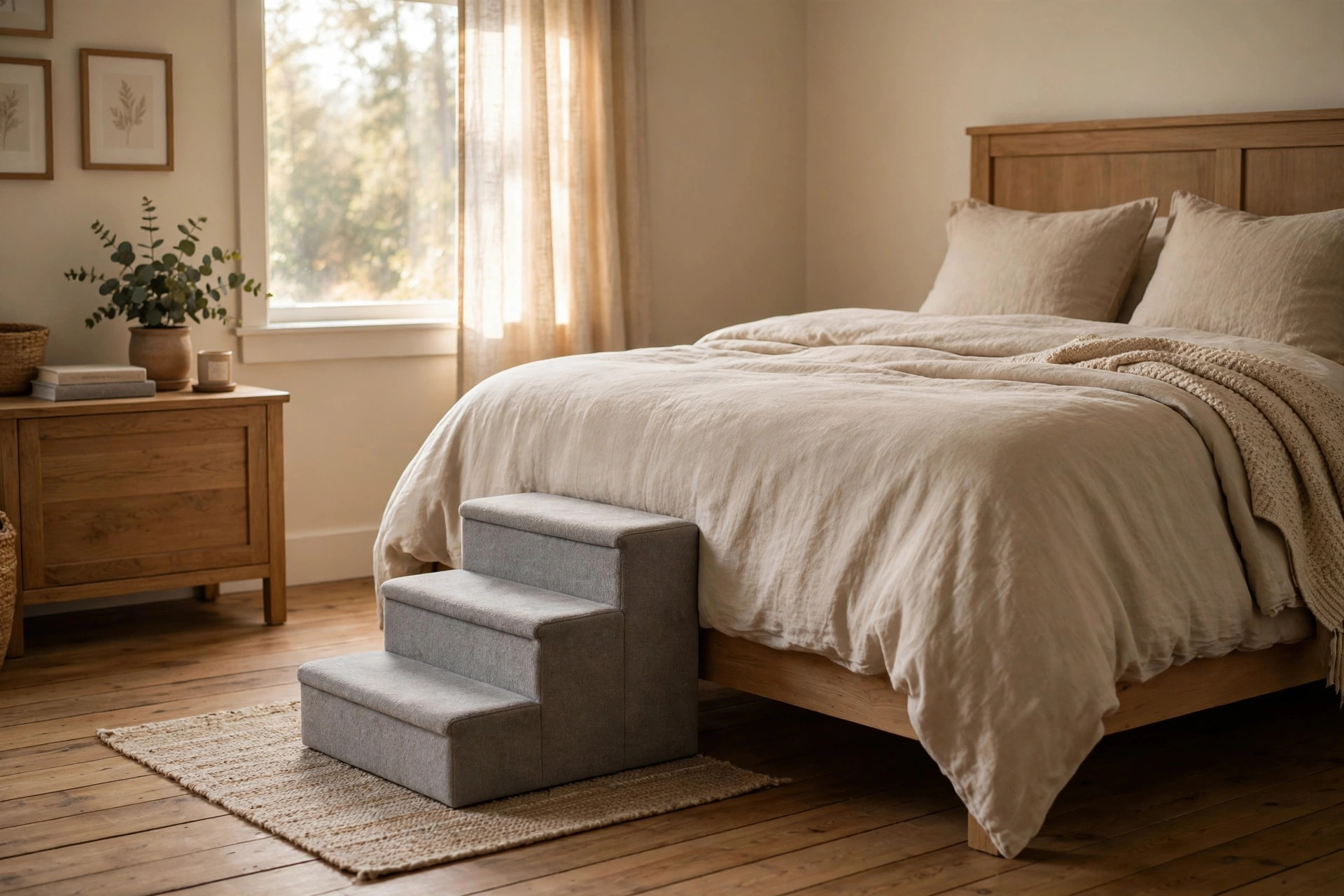
A dog does not stay young for long. The small pup that once flew onto the bed in one leap now stops and looks up. The bed seems higher than before. Pet stairs for high bed small dogs seniors were made for this exact moment. They turn a hard jump into a gentle walk. The dog climbs two or three low steps. Then it reaches the soft blanket. No leap. No hard landing.
Owners often notice the change slowly. The dog waits to be lifted. It whines at night. It circles the bed but will not jump. These are signs of age. The joints stiffen. The muscles grow weak. Arthritis is common in old dogs. PetMD lists limping and stiffness as early signs of arthritis in dogs, and its free guides help owners spot these signs early (petmd.com). Pain makes the dog avoid the jump. That is normal. It is not bad behavior. The dog simply needs help. A small set of steps gives that help. It keeps the dog in its favorite spot. It keeps the dog close at night.
Why Stairs Matter for Senior Dogs: Pet Stairs for High Bed Small Dogs Seniors
Old dogs face the same joint troubles as old people. Their cartilage wears down. Their hips ache. A jump from a tall bed can jar the whole body. The landing is worse than the climb. A small dog may drop two feet onto a hard wood floor. That shock hits the front legs first. Over time, these shocks cause real harm.
The American Kennel Club notes that senior dogs need extra care for their joints and bones (akc.org). Vets say the same. The American Veterinary Medical Association advises regular checkups for senior pets so that joint pain is found early (avma.org). VCA animal hospitals teach owners to lower the daily strain on old pets with small home changes (vca.com). A set of stairs is one of the simplest changes.
Cost is another reason. A good set of dog stairs for small dogs costs less than one vet visit. A broken leg or a hurt back costs far more. It also costs the dog pain. Prevention is cheaper than treatment.
Safety at night matters too. Dogs that try the jump in the dark may miss the edge. They fall. Stairs with a wide base stay in place. The dog climbs with care.
There is also the matter of dignity. Old dogs like to do things on their own. Being lifted is fine, but some dogs prefer to climb. Stairs let them keep that freedom. They walk up when they wish. They walk down when they need water.
What to Look for in Pet Stairs
Not all pet steps fit every dog. A wise buyer checks a few key points before choosing.
Height and Step Count
Measure the bed first. Stand a tape measure from the floor to the top of the mattress. Most tall beds need three or four steps. A bed that is 24 inches high needs steps of six to eight inches each. The rise should be low. Old legs cannot lift far.
Width and Depth
The steps must be wide enough for the dog to turn. Small dogs need steps about 14 to 16 inches wide. The tread depth should be 10 to 12 inches. Shallow steps make small paws slip. Deep steps give a safe footing.
Weight Rating
Check the weight limit on the box. Most foam stairs hold 15 to 20 pounds. Wooden stairs hold more. Buy stairs rated well above your dog’s weight. A margin of safety is wise.
Surface and Grip
Smooth steps are a danger. Look for carpet, fleece, or rubber treads. The cover should grip the paw. Some covers come off for washing. That is a plus.
Frame Material
Foam stairs are light and soft. They are quiet at night. Wooden stairs look fine in a bedroom. They last for years. Plastic stairs are cheap and easy to clean. Each type has its place.
Stability
The stairs must not wobble. A wide base helps. Rubber feet stop sliding on wood floors. Test the stairs yourself. Press each step with your hand. If it tips, choose another model. Consumer Reports tests many home products for safety and sturdiness, and its method is a good model for your own check at home (consumerreports.org).
Types of Pet Stairs for Senior Dogs
Shops sell many kinds of pet steps for senior dogs. The main types are foam, wood, plastic, and folding models.
Foam Stairs
Foam stairs are the most popular choice for small senior dogs. They are soft. If the dog stumbles, the landing is kind. They are light, so an owner can move them with one hand. They make no noise. The cover zips off for washing. The weak point is the foam itself. Cheap foam flattens with time. High density foam lasts longer. Look for stairs that list the foam grade.
Wooden Stairs
Wooden stairs look like small furniture. They suit a bedroom with wood floors. They are strong. Many hold up to 100 pounds. The steps often have carpet pads. The weak point is weight. They are heavy to move. They can scratch floors if they lack rubber feet.
Plastic Stairs
Plastic stairs are the low cost option. They wipe clean in seconds. They resist water. Some fold flat for storage. The weak point is noise. Plastic can sound loud when paws strike it. It can also feel cold to old paws. A carpet runner on each step fixes this.
Foldable and Storage Stairs
Some models fold flat or hide a storage box inside. This helps in small rooms. The stairs serve as a nightstand by day. They fold away when guests come. Check the locking parts. A folding stair must lock tight. A fold that opens under a dog is unsafe.
Stairs or a Ramp?
For some dogs, a ramp can help more than steps. A ramp has no steps at all. The dog walks a gentle slope. Dogs with bad hips or spine trouble often do better with ramps. But ramps take more floor space. They need a long slope to stay gentle. In a small bedroom, stairs fit better. Try to match the aid to the dog. A vet can advise which suits your dog best. The Spruce Pets publishes clear guides on ramps and stairs for older pets (thesprucepets.com).
Cost and Price
Prices vary by material and size. Foam stairs for a small dog cost about 25 to 60 dollars. Plastic models cost about 30 to 70 dollars. Wooden stairs cost about 60 to 120 dollars. Large or deluxe sets cost 100 dollars or more.
On Chewy, you can read thousands of owner reviews before you buy (chewy.com). Reviews tell you if the stairs wobble or wear fast. Basic models are easy to find at large stores such as Walmart (walmart.com). Some home stores, like Home Depot, also carry pet steps in their pet aisles (homedepot.com).
Watch for sales in spring and near the holidays. A fair price for a good foam set is about 40 dollars. Do not chase the cheapest model. A weak stair that breaks is no bargain.
Care and Upkeep
Good care keeps the stairs safe for years. Wash the covers every month. Most covers zip off and go in the machine. Use mild soap. Dry them flat so they keep their shape.
Wipe plastic frames with a damp cloth. Check wooden stairs for loose screws twice a year. Tighten what you find. Feel the foam once a month. If a step sinks under light pressure, the foam is worn. Replace the stair set.
Keep the stairs in a dry room. Damp foam grows mold. Damp wood warps. If the stairs sit near a window, keep them out of strong sun. Sun breaks down fabric.
Pair the stairs with rest. An orthopedic bed on the floor gives the dog a soft spot when it does not want to climb at all. Some owners keep both. The dog chooses.
Safety Rules for Old Dogs on Stairs
Safety comes first. Place the stairs tight against the bed. No gap should sit between the last step and the mattress. A paw can catch in a gap.
Put the stairs on a rug or carpet if you can. Hard floors let stairs slide. Rubber feet help, but a rug is better.
Train the dog with treats. Place a treat on each step. Let the dog climb at its own pace. Never push the dog. A frightened dog will not use the stairs again.
Use a night light near the bed. Old dogs see less well in the dark. A soft light helps them find the steps.
Watch the weight limit. A stair rated for 20 pounds should not hold a 30 pound dog. The frame can crack without warning.
The ASPCA offers free guides on senior pet care and home safety (aspca.org). These guides cover stairs, floors, and daily routines for old pets. They are worth reading.
For trips to the vet, a pet stroller may help an older dog that tires on long walks. The stroller and the stairs serve the same goal. They keep the senior dog part of family life.
Frequently Asked Questions
Are pet stairs safe for senior dogs? Yes, when the stairs are sized right and placed well. Low steps with grip surfaces are safest. A wide base stops tipping. Always train the dog with treats first. Watch the first climbs. If the dog seems scared, try a ramp instead.
How many steps does my dog need? Measure the bed height. Divide by six or seven inches. That gives the step count. Most tall beds need three or four steps. Two steps suit low beds and sofas. The rise of each step should stay low for old legs.
Should I choose stairs or a ramp? It depends on the dog. Dogs with mild stiffness do well on stairs. Dogs with bad hips, spine trouble, or very weak legs do better on ramps. Ramps need more floor space. Stairs fit small rooms. Ask your vet if you are unsure.
Will my dog learn to use the stairs? Most dogs learn in a few days. Use treats on each step. Start with the stairs flat on the floor. Let the dog walk over them. Then stand them up. Praise each climb. Old dogs may learn more slowly. Patience works.
Can a very small dog use the same stairs as a medium dog? Small dog stairs for high beds often have lower steps. A medium dog can still use them. But a medium dog needs a higher weight rating. Check the limit on the box. When in doubt, buy the stronger model.
How often should I replace foam stairs? Good foam lasts two to four years. Cheap foam lasts less. Press each step once a month. If it sinks and stays sunk, replace the set. Worn foam lets the dog sink too far. That strains the legs.
A Short Final Word
An old dog gives years of love. A small set of stairs is a small return. Pet stairs for high bed small dogs seniors keep the dog safe, close, and free. Measure the bed. Pick a sturdy set. Train with treats. Your senior dog will thank you with a soft sigh on the pillow.
References
American Kennel Club. (n.d.). Dog care and training resources. https://www.akc.org American Veterinary Medical Association. (n.d.). Pet care resources. https://www.avma.org ASPCA. (n.d.). Pet care and animal welfare resources. https://www.aspca.org Chewy. (n.d.). Pet supplies. https://www.chewy.com Consumer Reports. (n.d.). Product reviews and ratings. https://www.consumerreports.org PetMD. (n.d.). Pet health information. https://www.petmd.com The Home Depot. (n.d.). Home improvement products. https://www.homedepot.com The Spruce Pets. (n.d.). Pet care guides and product reviews. https://www.thesprucepets.com VCA Animal Hospitals. (n.d.). Pet health resources. https://www.vca.com Walmart. (n.d.). Everyday low prices. https://www.walmart.com
Was this guide helpful?

About Lisa Anderson
The My Garden US editorial team writes practical, in-depth home and garden guides for American homeowners — tested advice, no fluff.
You May Also Like
The Best Pet Camera for Watching Dogs at Work: A Plain Guide for Owners
July 30, 2026 0 views
The Best Cat Litter for Odor Control in Multi Cat Homes
May 5, 2026 0 views
Best Pet Hair Vacuum for Hardwood Floors: A Simple Buying Guide
June 15, 2026 0 views