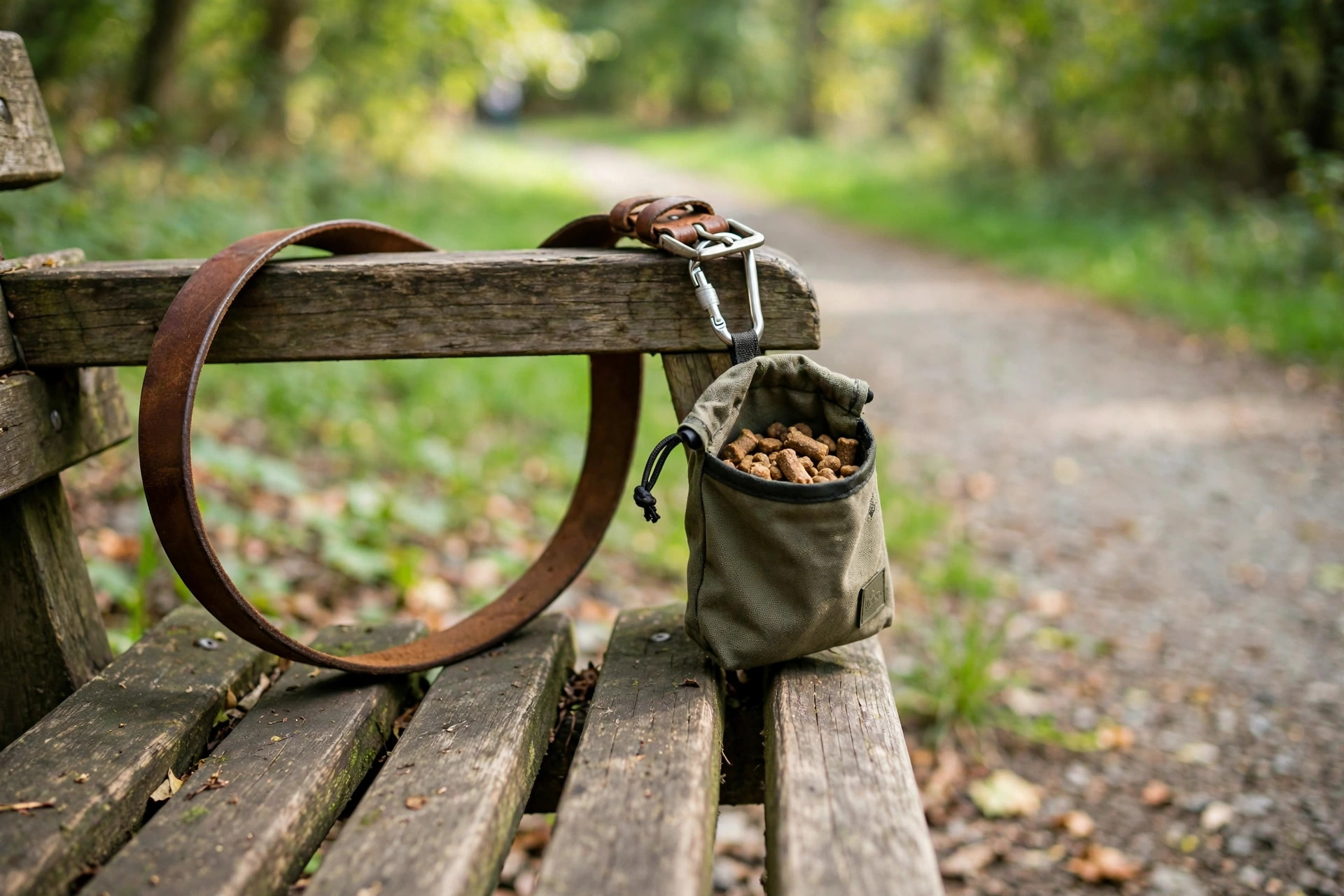
A good walk can teach a dog a great deal. The best dog treat pouch for training walks usa owners can buy is the one that keeps small rewards close at hand. When a dog sits on cue, the reward must come in a second. Fumbling in a pocket breaks the moment. A treat pouch worn at the hip solves this simple problem. It keeps treats near your hand and your hand near the dog. This guide explains what matters in a pouch, the types sold in the United States, what they cost, and how to care for them.
Why a Treat Pouch Matters on Training Walks
Timing is the heart of dog training. A reward given within two seconds tells the dog which act earned it. A reward given ten seconds late teaches nothing. Pockets are slow. Plastic bags are noisy and tear. A treat pouch opens with one hand and closes on its own. This small speed makes a real difference over months of walks.
Many trainers in the United States rely on reward-based methods. Groups such as the American Society for the Prevention of Cruelty to Animals and the Humane Society of the United States support positive training. A pouch fits this style well. It lets you reward calm walking, polite greeting, and quick recall. Over time, the dog learns that good manners pay.
A pouch also keeps your hands free. Leash handling takes two hands at times. With a pouch on your belt, you never hold a bag of treats in your teeth. You stay ready for a sudden pull, a passing dog, or a dropped leash. Safety rises along with training success.
What to Look For in a Dog Treat Pouch: Best Dog Treat Pouch for Training Walks Usa
Not all pouches serve the same need. A short walk around the block asks little. A long training hike asks more. Think through these points before you buy.
Easy Opening and Closing
The mouth of the pouch should stay open while you work and close fast when you stop. A drawstring top or a spring hinge does this well. Test it with one hand. If you must look down or use both hands, the pouch will slow you down. The American Kennel Club runs training clubs across the country, and its trainers stress quick delivery of rewards. A stiff pouch fights you at every step.
Size and Treat Capacity
A small pouch holds a half cup of treats. That suits a twenty-minute walk with a small dog. A large pouch holds two cups or more. Big dogs earn big treats, and long sessions burn through them. Do not buy larger than you need. A full pouch gets heavy on the hip and bounces as you walk.
Belt, Clip, or Waist Strap
Most pouches clip to a belt or slide onto a waistband. Some come with their own waist strap. A clip that fits a wide belt works best for winter coats. A shoulder strap lets you wear the pouch across the chest. Try the fit at home before the first walk. The pouch should ride at your hip, not swing at your thigh.
A Second Pocket
Many pouches add a small zip pocket. It holds a phone, keys, or waste bags. A separate mesh pocket keeps smelly treats away from your phone. This small detail matters on long walks when you carry more gear.
Washable Material
Treats leave crumbs, grease, and scent. The pouch will get dirty fast. Pick a pouch with a removable liner or one that turns inside out for washing. Nylon and polyester wash well. Canvas works but dries slowly. Avoid pouches with sewn-in linings that trap smell.
Scent Control
Dogs read the world through their noses. A pouch that leaks scent all day can distract the dog before training even starts. Look for a top that seals well between rewards. A drawstring closes tight and keeps smell in. A spring hinge keeps the mouth open, which is faster but leaks more scent. Some owners want the leak. They let the dog catch a whiff so the dog stays keen. Others want the scent sealed so the dog must earn each whiff. Pick the style that fits your dog. If your dog is nose-driven, a tighter seal helps. If your dog needs more drive, an open mouth can help. Either way, rinse the liner often. Old grease holds a stale smell that muddies every training session. The Humane Society of the United States notes that a motivated dog learns faster, and clean gear keeps the reward smell clear and fresh.
Main Types of Treat Pouches
Stores across America sell several styles. Each suits a different kind of walker.
The Classic Hip Pouch
This is the most common type. A round or flat bag clips to your belt. The top stays open with a spring. It holds about one cup of treats. It suits daily walks and basic obedience. Most cost little and last years. Online pet shops such as Chewy and PetSmart carry wide ranges, and sites like The Spruce Pets publish gear reviews that compare them.
The Drawstring Training Bag
This style closes with a cord. It keeps treats sealed and scent in. It works well for dogs that steal treats from open pouches. Some models have a wide base so they stand on a table. They hold more than hip pouches. The trade-off is speed. You must pull the cord each time, which adds a second to every reward.
The Multi-Pocket Trainer Vest Pouch
Serious trainers wear a pouch with many pockets. One pocket holds soft treats. Another holds dry kibble. A third holds a clicker or whistle. These suit long sessions at the park or in class. They cost more but replace a whole training bag. Trainers who walk dogs for a living, including many listed on Rover, often use this style.
The Silicone Treat Pouch
Newer pouches use food-grade silicone. They do not hold smell. They rinse clean in seconds. They fold flat in a pocket when empty. They suit owners who hate washing fabric. The mouth is less stiff, so it can close on its own while you walk. For short training walks this is a small flaw. For heavy use, pick a stiffer model.
Cost and Price in the USA
Prices run wide. A basic fabric pouch costs five to twelve dollars. Mid-range models with good clips and extra pockets cost twelve to twenty-five dollars. Premium trainer pouches cost twenty-five to forty dollars. Silicone models sit in the middle range. Sets that add a waist strap, a clicker, and a waste bag holder cost a little more.
Price does not always track quality. A ten-dollar pouch from a known brand can outlast a thirty-dollar fashion pouch. Check the stitching at the belt clip. That joint takes all the strain. Read the return policy before you order. Many owners buy two. They keep one in use and one in the wash. That habit keeps a clean pouch ready every day.
Shipping costs matter too. A five-dollar pouch with eight-dollar shipping is not a deal. Stores like Petco often sell the same models in person. You can test the clip and the opening before you pay.
Care and Upkeep
A treat pouch needs regular care. Old crumbs go stale and sour. Wash the pouch once a week in warm water with mild soap. Turn it inside out to reach the corners. Let it dry fully in open air. Never put a damp pouch in a closed drawer. Mold grows fast on treat residue.
Check the drawstring and the spring hinge each month. Cords fray. Springs lose tension. A pouch that will not stay open slows your timing. Most makers sell no spare parts, so a broken clip means a new pouch. Store the pouch empty and open between walks. This keeps air moving through it.
Rotate your treats as well. Old treats crumble and coat the lining with dust. Fresh treats train better. Store the main supply in a sealed jar at home and fill the pouch before each walk. Your dog will notice the difference in smell, and your pouch will stay cleaner.
Safety Tips
Treats are food, and food brings rules. Keep chocolate, grapes, raisins, and xylitol out of the pouch at all times. These are toxic to dogs. The American Veterinary Medical Association and PetMD both publish lists of foods dogs must avoid. Read them once and keep the list on your fridge.
Wash your hands after handling treats. Raw or semi-moist treats can carry germs. Keep the pouch away from small children. A toddler may eat the treats or choke on small pieces. On hot days, do not leave the pouch in a parked car. Heat melts soft treats into a sticky mess and can spoil meat-based rewards.
Watch the dog, not the pouch. Some dogs fixate on the pouch and ignore the walk. If your dog stares at your hip, reward eye contact instead of the stare. Vary which pocket you reach into. This keeps the dog guessing and the walk moving.
Frequently Asked Questions
Can I use a treat pouch for a puppy?
Yes. Puppies train best with many small rewards. A pouch keeps tiny training treats ready. Use soft treats cut to pea size. Puppies learn fast, and a pouch keeps your timing sharp during those first key months.
How many treats should I carry on a walk?
A twenty-minute walk needs about a quarter to a half cup of small treats. A one-hour training session may need a full cup. Bring more than you think you need. Running out mid-walk teaches the dog that rewards stop. That is the wrong lesson.
Will a treat pouch make my dog beg?
A pouch alone does not create begging. Begging comes from rewarding the wrong acts. Use the pouch only to reward trained cues and calm acts. Put the pouch away at home. The dog soon learns that the pouch on a walk means work, not free food.
Can I wear a treat pouch with winter clothes?
Yes. Clip it to a coat belt or use the waist strap over your jacket. Some pouches have extra-long clips for thick belts. Test the reach with gloves on. Thick gloves slow your fingers, so a wide mouth matters more in winter.
Do I need a clicker with the pouch?
No, but many trainers pair them. The click marks the exact act, and the treat follows. Many pouches have a small pocket made for a clicker. Try training with and without one. Some dogs respond better to a spoken marker word like yes.
What treats work best in a pouch?
Soft, small, smelly treats work best. They break apart fast and the dog eats them in one bite. Hard biscuits slow the session. Cut large treats into small pieces before the walk. Keep the pieces uniform so the dog knows what to expect.
A Final Word
The best dog treat pouch for training walks usa shoppers choose is rarely the fanciest. It is the one that opens fast, rides still on the hip, washes clean, and holds enough treats for the walk ahead. Pair it with sound training habits. Reward the acts you want. Keep sessions short. End on a win.
Good gear supports good training, and training never stops at the walk. At home, a no pull dog harness for strong pullers can make outings calmer, a dog crate for anxious dogs gives restless dogs a safe den, and a dog car seat cover for back seat protection keeps your car clean on the way to the park. Start with the pouch, train with care, and enjoy the walks ahead.
References
American Kennel Club. (n.d.). Dog care and training resources. https://www.akc.org American Veterinary Medical Association. (n.d.). Pet care resources. https://www.avma.org ASPCA. (n.d.). Pet care and animal welfare resources. https://www.aspca.org Chewy. (n.d.). Pet supplies. https://www.chewy.com Petco. (n.d.). Pet supplies and services. https://www.petco.com PetMD. (n.d.). Pet health information. https://www.petmd.com PetSmart. (n.d.). Pet supplies and services. https://www.petsmart.com Rover. (n.d.). Pet sitting and dog walking services. https://www.rover.com The Humane Society of the United States. (n.d.). Animal protection and care. https://www.humanesociety.org The Spruce Pets. (n.d.). Pet care guides and product reviews. https://www.thesprucepets.com
Was this guide helpful?

About James Carter
The My Garden US editorial team writes practical, in-depth home and garden guides for American homeowners — tested advice, no fluff.