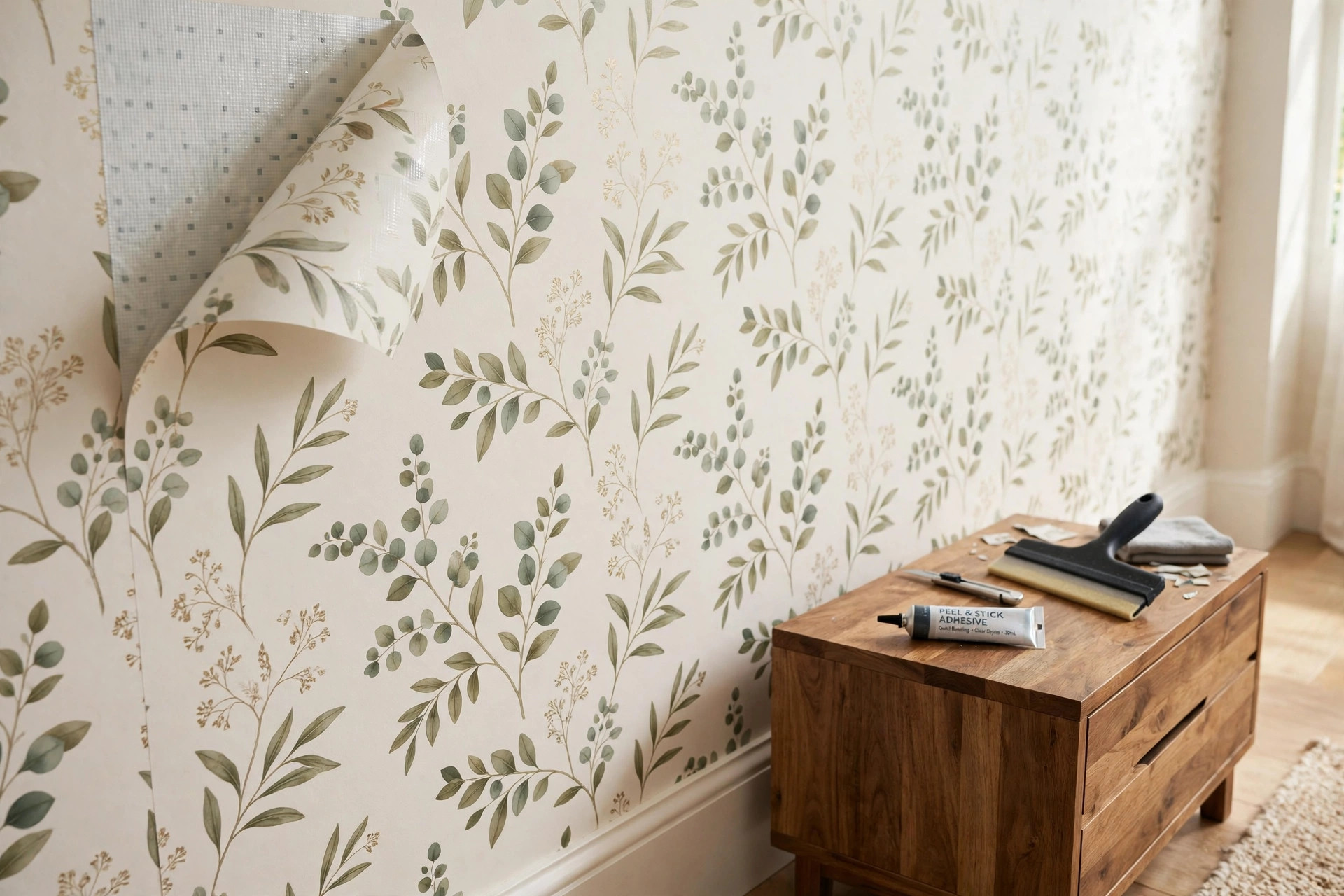

Peel and stick wallpaper has changed the way people decorate their homes. It is easy to hang. It comes down without harm. And renters love it for those two reasons. But every so often, a strip starts to lift at the edge. A corner curls on a warm afternoon. Or a long seam opens on a wall that was never quite smooth. This is where the best adhesive for peel and stick wallpaper comes in. A small tube or spray of the right glue can fix loose spots, help on tricky walls, and keep your work flat for years.
The best adhesive for peel and stick wallpaper is not one product. It depends on your wall and your paper. Some glues work best for thin vinyl films. Others suit heavy fabric panels. A few are made only for seams that will not stay down. This guide walks through the main kinds, how to choose, what they cost, and how to use them with care. It also answers the questions that come up most often.
Why Extra Adhesive Matters
Peel and stick wallpaper is sold as a self-stick product. Most rolls work fine on their own. But walls are not perfect. A wall with a light texture, old paint, or a coat of primer can give the factory glue less to hold. Heat and damp air also play a part. Bathrooms, kitchens, and laundry rooms see more lift than dry bedrooms.
When the edges of the best adhesive for peel and stick wallpaper matter most, think about the weak spots. Seams lift first. Then corners. Then the bottom edge behind a sofa where no one looks. Catching these spots early is easy. Fixing them late, after dust has settled under a curled edge, takes more work. A touch of extra adhesive at the start saves trouble later. Many home guides on This Old House note that wall prep matters as much as the paper itself, and the same is true for the glue you add.
What to Look for When You Choose: Best Adhesive for Peel and Stick Wallpaper
Not every glue suits every wall. Read the label with care. The best adhesive for peel and stick wallpaper shares a few traits.
First, it should stay clear when dry. Cheap glues can leave a yellow line along a seam. That line shows in daylight. A clear-drying formula keeps the paper looking clean.
Second, it should allow repositioning. The point of peel and stick paper is that you can move it. A glue that grabs hard and fast takes that away. Look for words like “repositionable,” “removable,” or “low tack” on the label.
Third, it should be safe for walls. Some strong glues pull paint off when you remove the paper. That defeats the purpose. A gentle adhesive keeps your walls sound when the paper comes down. The paint experts at Benjamin Moore remind homeowners that wall finish affects how well anything sticks, and the same care applies to added glue.
Fourth, it should suit the room. Bathrooms and kitchens need glues that resist damp air. Some products fail in steam. Check that the label mentions bathrooms or high humidity if that is where you hang the paper.
Fifth, it should match the paper. Thin vinyl films need only a light tack glue. Heavy woven panels need more grip. If your paper is thick or textured, step up to a stronger formula. A quick check of The Spruce wall guides can help you match glue to paper weight.
Types and Options
There are five main kinds of extra adhesive that work with peel and stick wallpaper. Each has its place.
1. Seam Repair Glue
This is the most common choice. It comes in a small tube with a fine tip. You lift the loose edge, run a thin bead under it, press it back down, and wipe away the extra. It dries clear and holds light paper well. It is best for small fixes, not for whole walls. Keep a tube in a drawer after any paper job.
2. Repositionable Spray Adhesive
A light spray gives an even coat over a larger area. It is useful when a whole strip loses its grip, such as on a wall with light texture. You mist the back of the strip, wait the time shown on the can, and smooth it back in place. Spray glues are also handy when you first hang paper on a doubtful wall. Mask off the floor and trim before you spray. The project guides at HGTV often show spray tack used for wall projects, and it works the same way here.
3. Wallpaper Border Adhesive
Border paste is made for paper edges. It comes in bottles and tubs. It is a bit stronger than seam glue. It works well on corners and around door frames where paper tends to pull away. Spread it thin with a small brush. Too much will ooze out and show.
4. Clear Double-Sided Mounting Tape
Tape sounds odd for wallpaper, but it works for short runs. A thin double-sided tape along a lifting edge can hold it flat. Use a removable grade so it will not take paint off later. Tape shows up best where edges meet trim or molding.
5. Primer and Sizing Products
This is a step you take before you hang, not after. A coat of wallpaper primer or sizing gives slick walls more grip. Walls with glossy paint, fresh primer, or old vinyl coatings often need it. Roll it on, let it dry, then hang the paper as normal. Many painters trust Behr primers for wall prep work before any wall covering goes up.
Cost and Price
The good news is that none of these products cost much. The best adhesive for peel and stick wallpaper is one of the cheapest parts of the job.
Seam repair tubes run about four to eight dollars. One tube covers many repairs. Repositionable spray cans run about eight to fourteen dollars. A single can handles several rooms. Border adhesive bottles cost about six to ten dollars. Primer or sizing runs about ten to eighteen dollars a quart, enough for an average bedroom.
Buy only what you need. A tube of seam glue and a spray can cover most homes. Keep in mind that glue has a shelf life. Once opened, most tubes and sprays stay good for about a year. Store them upright in a cool, dry spot. For pricing and stock in your area, check Lowe’s or Home Depot, which both carry the main brands in stores and online.
How to Apply Extra Adhesive
Good results come from clean work. Follow these steps.
Start with a clean wall. Wipe the loose area with a damp cloth. Let it dry. Dust and grease kill grip faster than anything else.
Lift the edge with care. Use a plastic putty knife or your finger. Do not bend the paper hard. A sharp crease will show forever.
Apply a thin line of glue. Less is more. You can always add more. Too much glue will squeeze out and leave a mark.
Press the paper back down. Smooth from the center toward the edge. Use a smoothing tool or a clean dry cloth. Work out any bubbles as you go.
Wipe away the extra at once. A damp cloth takes wet glue off the face of the paper. Do this before it sets.
Let it rest. Keep the room at a normal temperature for a day. Do not pull at the edge to test it. Give the bond time to set.
If you are new to wall covering work, the how-to articles on Bob Vila cover smoothing and edge work in plain terms that suit a first project.
Care and Upkeep
Once the paper is up and the extra adhesive has set, care is simple. Wipe the walls with a damp cloth when they need it. Do not scrub the seams. Scrubbing lifts edges.
Watch the weak spots once each season. Check behind doors, near heat vents, and along the top of the wall. Heat dries glue out over time. A small touch-up once a year keeps everything flat.
Keep rooms at a steady temperature when you can. Big swings of heat and cold move paper more than steady air does. In summer, a room that bakes in the sun may need the blinds drawn at midday. The decorating guides at Sherwin-Williams stress stable room conditions for any wall finish, and paper is no exception.
When the time comes to take the paper down, start at a corner and pull slow and low. Warm the paper with a hair dryer if it resists. Most extra adhesives made for this work come away clean. If a spot of glue stays on the wall, rub it with a damp cloth or a mild cleaner.
Safety
These products are safe for normal home use, but a few rules apply. Work in a room with fresh air, above all with spray adhesives. Sprays carry fine mist. Open a window and keep the door ajar. Wear a simple dust mask if the room is small.
Keep glues away from open flame and heat vents. Sprays can catch fire. Store cans away from furnaces and stoves.
Keep all tubes, bottles, and cans out of reach of small children and pets. Some glues look like craft paste. Put them up high after use.
Wear gloves if your skin is sensitive. Most of these products wash off with soap and water while wet. If glue gets in your eyes, rinse with clean water and call your doctor if pain lasts.
Read the label of each product you buy. Labels list the right room, the right surface, and the drying time. When in doubt, test on a small hidden spot first. The safety and how-to notes on Bob Vila are worth a look before you start any glue work.
FAQ
Will extra adhesive harm my walls when I remove the paper?
Not if you choose the right kind. Pick a glue made for removable or repositionable paper. Avoid construction glues and super glues. Those will take paint off. Test any new glue on a small hidden spot and let it dry before you trust it on a full wall.
Can I use extra glue when I first hang the paper?
Yes. Many people add a light spray or a line of seam glue on walls they do not trust. Walls with fresh primer, glossy paint, or light texture are good candidates. Hang the strip as normal after the glue is ready. For more on matching paper to walls, see our guide to grasscloth wallpaper installation near me.
What is the best adhesive for peel and stick wallpaper in a bathroom?
Choose a product that lists humidity or bathroom use on the label. Steam weakens weak glues fast. A seam repair glue rated for damp rooms works well. Also make sure the wall is fully dry and clean before you hang the paper. Let new paint cure for a full month in a bathroom before adding paper.
My seams keep lifting no matter what I do. What is wrong?
The wall may be the problem, not the glue. Walls with dust, grease, or fresh paint give no grip. Walls that get very hot, such as walls behind a stove, move the paper all day. Clean the wall well, use a primer or sizing coat, and pick a glue made for heavy use. If the paper itself is very old, the factory glue may be spent, and a light full spray of repositionable adhesive can save it.
Can extra adhesive fix paper on textured walls?
It helps, but texture is hard. Light orange-peel texture can work with a sizing coat and a light spray. Heavy texture will almost always show through and lift. For heavy texture, most pros advise skimming the wall smooth first. If you rent and cannot skim, try one test strip before you buy a whole room of paper.
How long does the bond last?
With the right glue on a clean wall, a repair can last as long as the paper itself. Most paper makers expect their product to last three to five years on the wall. Heat and steam shorten that time. A yearly check of seams and corners keeps small problems from growing. And if you are planning other wall work, our look at stucco painting cost per square foot usa can help you budget the bigger jobs.
A Final Word
Peel and stick wallpaper earns its good name. It goes up fast and comes down clean. A little extra adhesive makes it better. Keep a seam glue tube on hand. Know when a light spray is the answer. Prep the wall with care. These small steps keep every strip flat and smooth for years.
The best adhesive for peel and stick wallpaper is the one that suits your wall, your paper, and your room. Buy a small amount. Test it. Apply it thin. Your walls will thank you with a clean, flat finish. For more wall and trim projects, see our review of best paint for front door usa reviews.
References
Behr. (n.d.). Paints, primers, and stains. https://www.behr.com Benjamin Moore. (n.d.). Paints and stains. https://www.benjaminmoore.com Bob Vila. (n.d.). Home improvement advice. https://www.bobvila.com HGTV. (n.d.). Home and garden ideas. https://www.hgtv.com Lowe’s. (n.d.). Home improvement products. https://www.lowes.com Sherwin-Williams. (n.d.). Paints and coatings. https://www.sherwin-williams.com The Home Depot. (n.d.). Home improvement products. https://www.homedepot.com The Spruce. (n.d.). Home and garden advice. https://www.thespruce.com This Old House. (n.d.). Home renovation guidance. https://www.thisoldhouse.com
Was this guide helpful?

About Lisa Anderson
The My Garden US editorial team writes practical, in-depth home and garden guides for American homeowners — tested advice, no fluff.
You May Also Like

Painting Stucco House Cost in Arizona: A Full 2026 Guide
February 17, 2026 0 views
Polyaspartic Garage Floor Coating Cost USA
August 24, 2026 0 views
Basement Floor Epoxy Kit for Sale USA: A Plain Buyer’s Guide
August 9, 2026 0 views