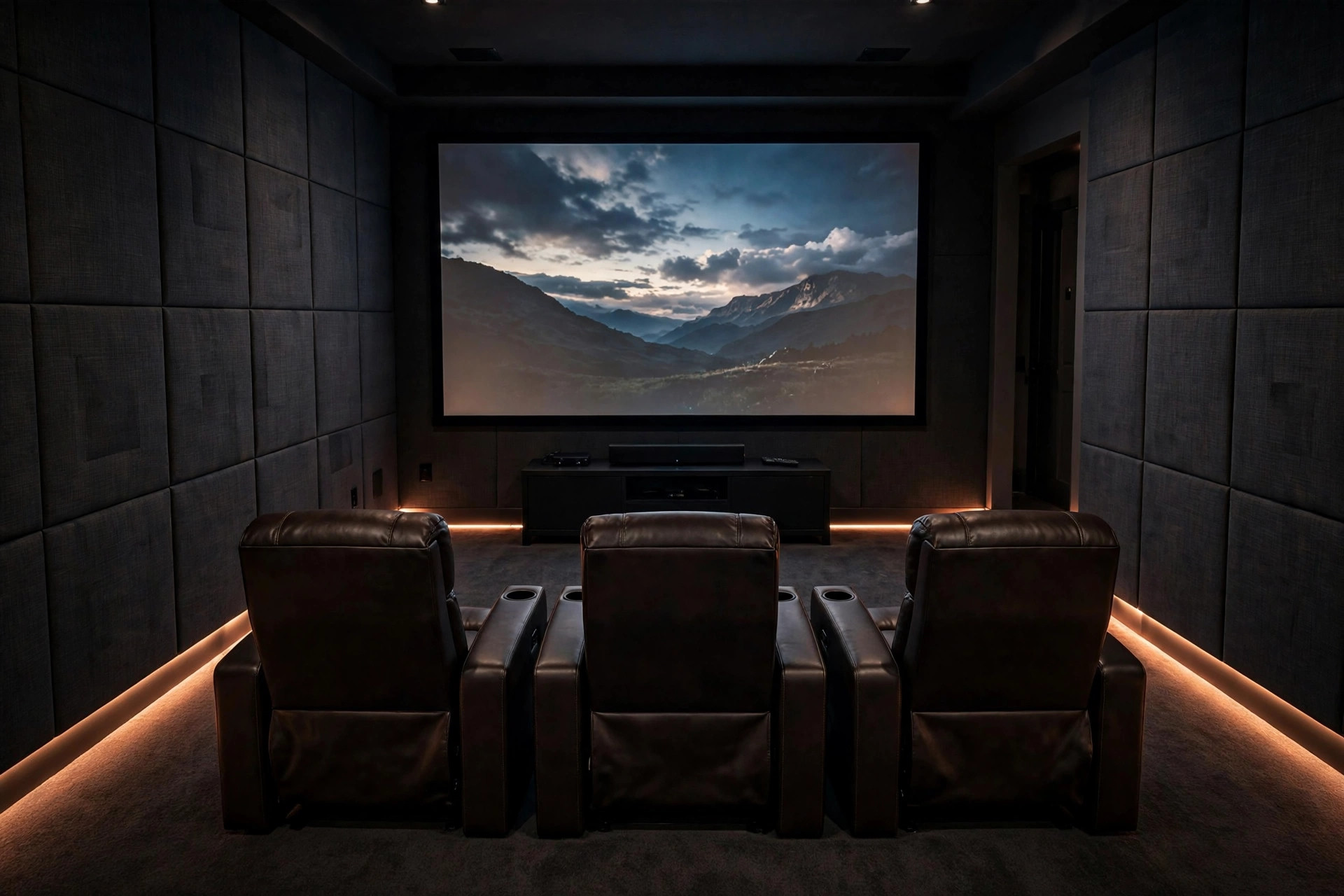

A home theater lives or dies by its sound. Many families buy a fine television and a good set of speakers, then find that voices still sound thin and the bass still booms in the wrong places. The problem is seldom the gear. It is the room. Bare drywall throws sound back and forth until the words of the actors blur together. Acoustic wall panels for home theater usa homes use fix this problem at the source. They soak up stray sound and let the movie come through clean.
This guide explains what these panels are, how they work, and how to choose them. It covers the common types on the American market, what they cost in 2026, how to mount them, how to care for them, and what to watch for on the safety side. The aim is plain advice for a real room in a real house.
Why Acoustic Wall Panels Matter in a Home Theater
Sound behaves like light in a hall of mirrors. When a speaker sends out a sound wave, part of it travels straight to your ears. The rest strikes the walls, the ceiling, and the floor, then bounces back with a slight delay. These late reflections smear dialogue. A whispered line becomes hard to follow. An explosion loses its punch because its echo arrives half a beat later. In a room with bare walls, this effect can ruin the work of even costly equipment.
Acoustic panels absorb the part of the sound that hits them. Instead of bouncing back, the energy is trapped in soft, porous material. The direct sound from the speakers stays clear. You can turn the volume down and still hear every word.
American home theater builders have used this trick for decades. The modern panels are far neater than the curtains and pads of the 1980s. They look like design elements, not science projects. When guests walk in, they see handsome wall treatment. The better sound is a quiet bonus.
What to Look for When Choosing Panels: Acoustic Wall Panels for Home Theater Usa
Shopping for acoustic panels is simpler than it looks. Four facts matter most.
The Noise Reduction Coefficient
Every serious panel carries an NRC rating. NRC stands for Noise Reduction Coefficient. It is a number between 0 and 1. A panel rated 0.0 reflects all sound. A panel rated 1.0 absorbs all sound. For a home theater, aim for panels rated 0.75 or higher. Thin foam squares from discount bins often rate near 0.3, which is why so many buyers feel cheated. Ask the seller for the NRC number before you spend a dollar. Reputable makers publish it. Retail guides like those at The Spruce explain how to read these ratings in plain terms.
Thickness and Core Material
Thicker panels absorb lower sounds. A one-inch panel handles the mid-range well, which is where voices live. A two-inch panel reaches deeper and tames the heavy rumble of action scenes. The most common cores are fiberglass, mineral wool, and molded polyester fiber. Fiberglass and mineral wool perform best for the money. Polyester fiber is a fair choice for households that want a chemical-free option. Avoid plain open-cell foam for a serious room. It does little at a fair price and ages poorly.
Fabric Covering
The fabric must let sound pass through. If the cover is stiff or sealed, the sound bounces off the face of the panel and the core never gets to work. Acoustically clear fabric feels like a light curtain. Hold a swatch to your mouth and blow through it. If your breath passes with ease, the fabric will work. Many makers sell panels already wrapped. Others sell bare cores so you can wrap them in cloth that matches your room. Decorating resources such as HGTV show how fabric choice changes the look of a finished wall.
Size and Placement
Standard panels measure two feet by four feet. This size is easy to handle and mounts in minutes. A typical twelve-by-sixteen home theater needs eight to twelve panels to make a real difference. Do not cover every inch of wall. A room with no reflections at all sounds dead and unnatural. Treat the first reflection points first: the spots on the side walls where sound from each front speaker would bounce to your seat. A mirror held against the wall by a helper shows the spot while you sit in place. The back wall comes next, since it sends echoes straight at the viewer.
Types of Acoustic Wall Panels
Fabric-Wrapped Fiberglass Panels
These are the workhorses of the home theater world. A rigid fiberglass board sits inside a wooden frame and is wrapped in fabric. They perform well, look tidy, and cost less than most buyers expect. Many installers use them as the default. They come in dozens of fabric colors, so they can match a dark theater palette or a lighter family room.
Wooden Diffuser and Slat Panels
Not every surface should absorb. The back wall of a theater often benefits from diffusion, which scatters sound instead of swallowing it. Slat panels with wooden strips over an absorbing core give a room both effects at once. Woodworkers sometimes build them at home, but ready-made versions are common at large retailers like The Home Depot and Lowe’s.
Art Acoustic Panels
Some firms print photographs or movie posters on acoustically clear fabric and stretch it over an absorbing core. The result is wall art that works as a sound trap. These panels suit households where a spouse or landlord objects to plain boxes on the wall. They cost more than plain panels, but they solve the decor question in one move.
Foam Wedge Panels
Foam panels with wedge or pyramid shapes are cheap and widely sold. They help a little in a practice room or a vocal booth. For a home theater they are usually a poor buy. The NRC is low, the look is dated, and the foam crumbles after a few years. If the budget is tight, a smaller number of good fiberglass panels beats a wall of cheap foam every time.
Bass Traps
Low sounds collect in corners. Bass traps are thick panels made for those corners. They are the final step in a serious room. Most families do not need them at first. Add them later if the bass still booms after the walls are treated. Corner placement guides from outlets like This Old House and Bob Vila explain the simple geometry behind it.
Cost and Price: What to Expect in the USA
Prices for acoustic wall panels for home theater use fall into three bands. Knowing the bands keeps you from overpaying.
Budget band: $15 to $40 per panel. This is foam territory. The panels are thin and the NRC is modest. Fine for a child’s practice room. Poor value for a theater.
Mid band: $50 to $120 per panel. This is the sweet spot for most homes. Fabric-wrapped fiberglass panels in this band rate 0.75 to 1.0 NRC. A full room of ten panels runs $500 to $1,200, which is less than the cost of one good subwoofer.
Premium band: $150 to $400 per panel. Art panels, thick bass traps, and custom wooden diffusers live here. The sound is excellent and the finish can be gallery grade. Buyers with a dedicated room and a long-term plan find this band worth the money.
Do not forget mounting hardware. Most panels hang on French cleats or simple Z-clips that cost a few dollars each. A level, a drill, and an afternoon are enough for a full wall. Hiring a handyman for the job typically adds $200 to $400 for a full room.
A side note on finishes: if you plan to paint the rest of the room, choose your wall color before you order fabric. Dark, matte walls are the theater standard because they kill light reflections from the screen. Makers such as Sherwin-Williams and Behr carry matte finishes that suit a theater room and can help you match paint to fabric without clashing.
How to Mount Panels Step by Step
Mounting is a weekend job. The order of work is simple.
First, map the reflection points. Sit in the main viewing seat. Have a helper slide a small mirror along each side wall at ear height. Where you can see the nearest speaker in the mirror, mark the wall. Those marks are your first panel sites.
Second, mount the side-wall panels. French cleats are the cleanest method. Screw one half of the cleat to the studs, and fix the other half to the back of the panel. The panel then slides down onto the wall and sits flat. Leave a small air gap behind the panel if you can. A one-inch gap improves low-end absorption at no extra cost.
Third, treat the wall behind the seats. Panels there cut the echo that arrives last and bothers the ears most. Panels on the front wall, behind the screen if it is acoustically transparent, tighten the bass.
Fourth, step back and listen. Play a dialogue-heavy scene you know well. The change is usually clear at once. Add panels in pairs if the room still rings.
Fifth, check the corners. If bass notes boom or thump unevenly, add floor-to-ceiling bass traps in the front corners. This is the step that turns a good room into a great one.
Care and Upkeep
Acoustic panels ask for little care. Dust them with a soft brush or a vacuum with an upholstery head every few months. The fabric collects household dust the way curtains do. Do not wet them. Water stains fabric and can crush fiberglass cores. For spots, dab gently with a dry cloth and a little mild soap, then let the panel dry in place.
Keep the room’s humidity in the normal range. Damp will shorten the life of any wall treatment.
Inspect the mounts once a year. A panel that slips off a cleat can dent a floor or knock into a speaker. Tighten any loose screws and replace tired adhesive mounts with real hardware.
Fabric-wrapped panels fade in direct sun like any cloth. If the room has windows, keep the blinds closed during the day.
Safety Notes
Two safety matters deserve attention before you buy.
Fire rating. Fiberglass and mineral wool cores are naturally resistant to flame, but the fabric cover and any glue must meet the same standard. Look for panels rated Class A under ASTM E84. Most honest sellers print this on the box. Keep the paperwork that comes with the panels.
Fibers and dust. Bare fiberglass can shed fine fibers that itch the skin and irritate the lungs. This is why panels should be wrapped in fabric with sealed edges. Never mount an unwrapped fiberglass board where people sit or sleep. When cutting panels to fit, wear a dust mask and gloves, and work in a garage or yard with a breeze. Once wrapped and hung, sealed panels are safe for daily use.
Mounting strength. A two-by-four fiberglass panel weighs ten to twenty pounds. That is enough to hurt a child if it falls. Mount into studs, not bare drywall. If the wall layout forces you to miss a stud, use heavy-duty toggle anchors rated well above the panel’s weight.
FAQ
How many panels does a home theater need? Most rooms need eight to twelve panels of standard size. Start with the first reflection points on the side walls, then treat the back wall.
Can I install acoustic panels myself? Yes. It is a common do-it-yourself job. A drill, a stud finder, a level, and French cleats are the whole toolkit. Most homeowners finish a room in one weekend.
Do acoustic panels block sound from leaving the room? No, and this is the most common mix-up. Panels treat echoes inside the room. They do not stop sound from passing through walls. If you need to keep movie noise from reaching the bedrooms, you need soundproofing: mass, sealing, and decoupled framing. Panels and soundproofing solve different problems.
Will panels work in a living room that is also a theater? Yes, with care. Choose art panels or fabric colors that match the decor so the room still feels like a living room.
What is the best fabric color for a theater? Dark, non-shiny colors are the rule. Black, deep gray, and dark brown vanish in a darkened room and do not reflect screen light. Paint guides from makers such as Benjamin Moore show which deep tones stay truly flat on the wall.
How long do acoustic panels last? Fabric-wrapped fiberglass panels last fifteen years or more with simple dusting. Foam panels last three to five years before they sag and crumble. Buy the type that matches how long you plan to keep the room.
A Short Final Word
Good sound is mostly a room problem, and rooms can be fixed. A dozen well-placed panels cost less than a single high-end speaker, yet they can lift the whole system. Start with the reflection points, buy panels with a real NRC rating, mount them solidly, and listen. The movie room you dreamed of is closer than the gear catalogs suggest.
For ideas on tying the panels into the room’s decor, look at accent wall painting ideas for living rooms, or see how shiplap wall installation and faux brick wall panels are used to give bare walls character before acoustic treatment goes up.
References
Behr. (n.d.). Paints, primers, and stains. https://www.behr.com Benjamin Moore. (n.d.). Paints and stains. https://www.benjaminmoore.com Bob Vila. (n.d.). Home improvement advice. https://www.bobvila.com HGTV. (n.d.). Home and garden ideas. https://www.hgtv.com Lowe’s. (n.d.). Home improvement products. https://www.lowes.com Sherwin-Williams. (n.d.). Paints and coatings. https://www.sherwin-williams.com The Home Depot. (n.d.). Home improvement products. https://www.homedepot.com The Spruce. (n.d.). Home and garden advice. https://www.thespruce.com This Old House. (n.d.). Home renovation guidance. https://www.thisoldhouse.com
Was this guide helpful?

About James Carter
The My Garden US editorial team writes practical, in-depth home and garden guides for American homeowners — tested advice, no fluff.
You May Also Like

Sage Green Paint for Living Room: A Complete USA Guide
August 9, 2026 0 views
Gel Stain for Kitchen Cabinets: Reviews and a Buying Guide for American Homes
July 3, 2026 0 views
Chalk Paint for Outdoor Furniture Reviews: What Buyers Really Say
April 14, 2026 0 views