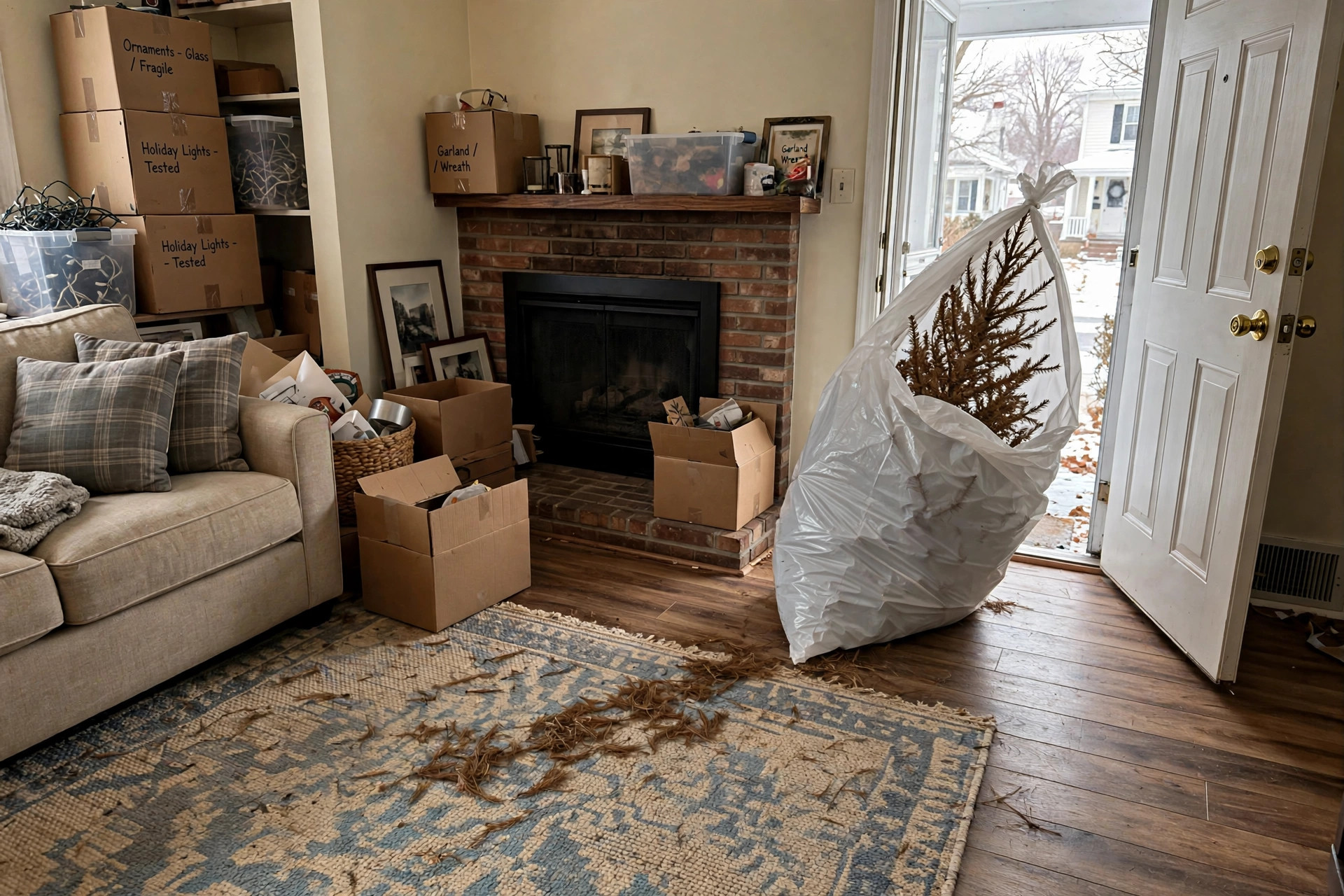

Every January, millions of American homes face the same job. The Christmas tree must come down. By this time the tree is dry. Its needles fall at the lightest touch. A christmas tree disposal bag for easy cleanup usa turns this messy job into a simple one. The bag slides over the whole tree before it is moved. Every loose needle and small branch stays inside. The floors and the rugs stay clean.
Many people put off this task because they fear the mess. They should not. With a good bag and a clear plan, one person can take down a tree in less than half an hour. The key is to prepare the bag before the tree is touched. This article explains why the bag matters, how to choose one, what types are sold, what they cost, and how to use them with care.
Why It Matters
A real Christmas tree drops needles from the day it is cut. The drop gets worse as the weeks pass. By early January, the tree can be very dry. Carrying it through the house without a bag leaves a trail. Needles get into carpet, into hardwood cracks, and under furniture. They stick to socks and pet fur. The cleanup can take longer than the removal itself.
A disposal bag stops this at the source. The bag wraps the tree like a large sleeve. The branches are pulled tight to the trunk. This also makes the tree easier to carry through narrow doors and halls. Wide branches no longer catch on door frames or scrape the paint on walls.
The bag also helps on the porch or in the yard. Many towns in the United States collect trees for composting or mulching. The bag keeps the tree in one neat bundle for the crew. In some areas, the bag must be removed before the tree is left at the curb, so it is wise to check local rules. Large home improvement stores sell these bags in the seasonal aisle each December, which shows how common the need is.
How to Choose: Christmas Tree Disposal Bag for Easy Cleanup Usa
Start with size. A disposal bag must fit the full height of the tree with room to spare. Most bags are made for trees between six and nine feet tall. Measure the tree before shopping. If the tree is nine feet tall, buy a bag rated for ten feet. A bag that is too small will not close at the top. A bag that is much too large will drag and catch on furniture.
Next, look at the material. Thick plastic resists tears from branch tips. Thin bags cost less but rip easily. For a dry tree with sharp needles, a heavy bag is worth the extra money. Some bags use drawstrings. Others use a simple gathered top. A drawstring gives a tighter seal and makes carrying easier.
Check the width as well. Trees with full lower branches need a wide bag. Narrow bags suit slim trees. If the bag is too tight, pushing it over the branches will shake more needles loose. The goal is a smooth fit.
Consider also how the bag will be carried. Some bags have handles or straps. These help when the tree must travel down stairs or across a long hall. A plain bag works well if the trip to the curb is short.
Types and Options
The simplest type is the large open-ended plastic sleeve. It has no bottom. You slide it over the top of the tree and pull it down. The bottom stays open until the tree is lifted from its stand. Then the open end is folded or tied shut.
The drawstring type adds a cord at the top. Once the bag is pulled down, the cord is pulled tight. This type costs a little more. It keeps more needles inside during a long carry.
A third type is the flat folded bag. It unfolds into a large sheet, then the tree is laid on it and wrapped like a parcel. This style works well for trees that are already taken from their stands.
Related products often sit nearby on the store shelf. For artificial trees, a reusable tree storage bag is the better buy, since it is built to be packed and unpacked each year. The guide to the best christmas tree storage bag for 9ft tree explains how those differ from single-use disposal bags.
How to Use It, Step by Step
Good results come from a steady order of steps. Rushing shakes needles loose before the bag is on.
First, remove every decoration. Take off the ornaments, the lights, and the garland. Store them in their boxes. Remove the tree skirt from the base. Some people put the skirt back under the tree next year, so it is worth folding it with care.
Second, spread the bag near the tree. If it is a sleeve, open it wide. Have a helper hold it open if one is at hand. Working alone is still fine.
Third, slide the bag over the top of the tree. Lower it slowly. Let the branches fold upward as the bag moves down. Move with steady hands and stop if a branch catches.
Fourth, free the tree from its stand. Loosen the screws or bolts. If the tree uses a heavy-duty stand for real trees, the base may be tight after a month of watering, so turn the knobs with care and keep the tree upright while the bag holds the branches. Lift the trunk out and fold the open end of the bag under the cut base.
Fifth, carry the wrapped tree to the curb or the truck. Move slowly through doorways. Two people make this safer for large trees. Set the bundle down gently.
Sixth, check your town rules. Some collection programs want the bag removed at the curb. If so, pull the tree out and drop the bag in the trash or recycling bin, as the local rules allow.
Cost and Price
Disposal bags are among the cheapest holiday supplies. In most stores across the United States, a single bag costs between one and five dollars. Thicker bags and drawstring types sit at the high end of that range. Thin single-use sleeves sit at the low end.
Packs of two or three bags are common. They suit homes that keep two trees, or homes that want a spare. Buying a pack rarely costs more than ten dollars.
The price should not be the only factor. A bag that tears halfway to the door costs more in time and cleanup than the money saved. For a large tree, pay for the thickest bag on the shelf.
Discount stores, craft retailers, and warehouse stores all stock these bags in December and early January. Online sellers list them year round. Buying in December gives the best choice of sizes.
Care and Upkeep
Most disposal bags are made for one use. Still, a little care keeps the job clean from start to finish. Store the bag in a dry spot before use. A bag left in a damp garage can stick to itself.
When the tree is down, shake the bag out over a trash can before folding it for trash. This keeps stray needles out of the car trunk and the hallway.
If the bag will be recycled, check the printed label. Many thick plastic bags can go into store drop-off bins for plastic film. Curbside bins often do not accept them, so a drop-off point is the safer choice.
Safety
Trees and bags bring a few risks worth knowing. A dry tree is light but bulky. It can tip while it is being freed from its stand. Keep children and pets in another room during removal.
Watch for mold. A real tree that sat in water for weeks can grow mold near the base. People with allergies should wear a simple dust mask. Work gloves also help. Dry needles and branch stubs can scratch the hands.
Fire safety matters too. A dry tree should never sit near a heater or fireplace while it waits for the curb. The federal guidance on holiday and home product safety warns that dry trees can catch fire fast. Move the wrapped tree out of the house as soon as it is bagged.
Lift with the legs, not the back. A wrapped tree is awkward even when it is light. If the tree is tall, ask a second person for help.
Options After the Curb
Many towns turn old trees into mulch. Some parks chip them for trail paths. A few wildlife groups sink trees in ponds to build fish habitat. Ask the local public works office what happens after pickup. Knowing the end use makes the job feel worthwhile.
If curbside pickup is not offered, drop-off sites are the next choice. Counties often open a lot or a park gate for two or three weekends in January. The tree goes in a large pile. No bag is needed at a drop-off site, since the pile is already full of needles.
Some people cut the tree into pieces for the woodpile or the chipper. This is good when the trunk is thick. Wear gloves and cut on a steady surface. Keep the pieces away from dry leaves until the day of pickup.
Frequently Asked Questions
Can the bag be reused?
Most disposal bags are thin and meant for one tree. Some thick drawstring bags survive a second use if they did not tear. If the goal is yearly reuse, buy a reusable tree storage bag instead. It is built for packing and unpacking.
Will the bag fit a tree with very wide branches?
It will if the bag is wide enough. Measure the widest point of the lower branches, not just the height. Buy the widest bag in the size that fits the height. When in doubt, go one size up.
Do I have to remove the bag at the curb?
It depends on the town. Many compost programs want bare trees, since plastic does not break down in mulch. Some trash programs accept the bagged tree as is. A quick call to the town office settles the question.
Can the bag go in the recycling bin?
Usually not. Curbside bins in most American towns do not take plastic film. Take the used bag to a store drop-off bin that accepts plastic bags. The label on the bag often lists a website with drop-off locations.
What if the tree is too dry and needles fall before bagging?
Slide a bed sheet under the tree first. The sheet catches the early fall. Then bag the tree over the sheet. Roll the sheet and tree together into the sleeve. This adds one step but saves a long sweep.
A Short Final Word
Taking down the tree does not have to be the worst part of the season. A christmas tree disposal bag for easy cleanup usa costs only a few dollars and saves real work. Measure the tree, buy a bag with room to spare, strip the decorations first, and bag the tree before it leaves its stand. The floors stay clean. The trip to the curb stays simple. The house starts the new year fresh.
Homeowners who decorate each year often plan the whole season in advance. Holiday planning guides from home magazines and home and garden sites are a good place to start next year’s calendar. Television holiday programs also show new ideas for tree themes. For general home care advice through the winter, trusted home repair sites and discount home stores carry guides that go well past the holidays.
References
Bob Vila. (n.d.). Home improvement advice. https://www.bobvila.com Country Living. (n.d.). Country home and lifestyle. https://www.countryliving.com HGTV. (n.d.). Home and garden ideas. https://www.hgtv.com Lowe’s. (n.d.). Home improvement products. https://www.lowes.com Michaels. (n.d.). Arts and crafts supplies. https://www.michaels.com Target. (n.d.). Retail store. https://www.target.com The Home Depot. (n.d.). Home improvement products. https://www.homedepot.com The Spruce. (n.d.). Home and garden advice. https://www.thespruce.com U.S. Consumer Product Safety Commission. (n.d.). Product safety information. https://www.cpsc.gov Wayfair. (n.d.). Furniture and home goods. https://www.wayfair.com
Was this guide helpful?

About Michael Thompson
The My Garden US editorial team writes practical, in-depth home and garden guides for American homeowners — tested advice, no fluff.
You May Also Like

Spring Table Runner for Easter Brunch Decor: A Complete Guide
July 29, 2026 0 views
Christmas Light Clips for Gutters and Shingles USA: A Complete Guide
August 7, 2026 0 views
Best Christmas Tree With Lights Pre Lit 7ft: A Complete Buying Guide
March 11, 2026 0 views