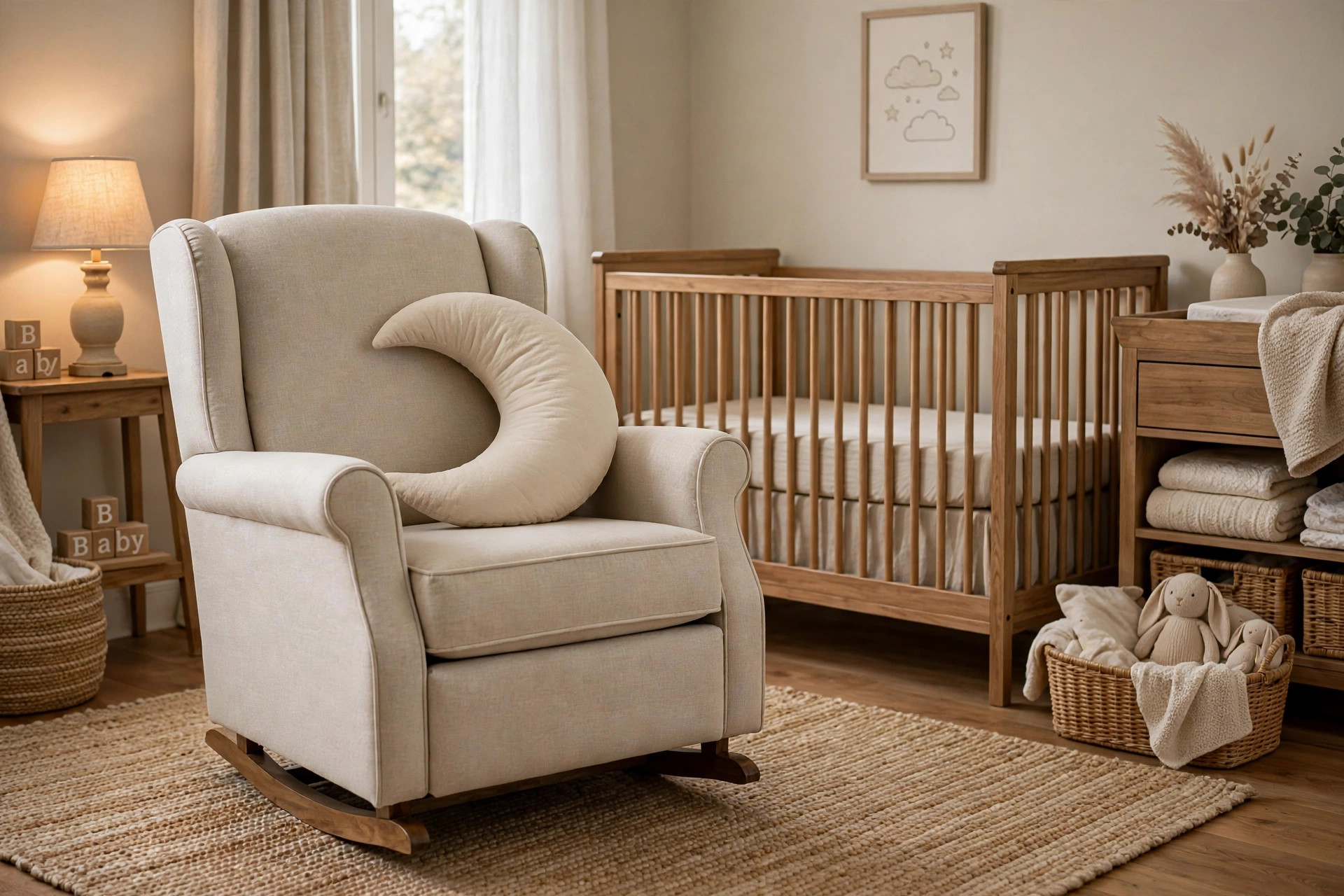
A nursery glider with nursing pillow set is one of the most used pieces of furniture in a home with a new baby. In the first months, a parent may spend three to five hours a day seated and feeding. A glider that pairs with a nursing pillow gives the body steady support during that time. The back rests against the chair. The arms settle on the rests. The nursing pillow lifts the baby to breast height. This takes the strain off the neck, shoulders, and lower back.
Many new parents buy the crib first and forget the chair. Then the feeds begin. They learn fast that the sofa is too low and the bed is too soft. A glider solves this problem. When it comes with a nursing pillow set, the solution is complete on day one. This guide covers why the set matters, how to choose one, the main types, cost, care, and safety.
Why It Matters
Feeding a newborn is a round the clock job. Most babies eat eight to twelve times a day in the first weeks. Each feed can take twenty to forty minutes. That adds up to long hours in a chair. Poor support leads to sore shoulders and a stiff neck. Many mothers report back pain in the first months. A good chair and pillow reduce that strain.
A nursery glider with nursing pillow set helps in three ways. First, the glider moves in a smooth back and forth motion. This motion calms babies. Studies of infant sleep show that rhythmic motion helps babies settle. It also helps the parent relax. Second, the nursing pillow brings the baby up to the right height. Without it, the parent hunches forward. With it, the parent sits upright and the baby comes to the breast. Third, the set works as a team. The chair and pillow are sized to fit each other. The pillow does not slip off the lap. The armrests are at a height that lets the arms rest while the pillow holds the baby.
There are benefits beyond feeding. The glider becomes the reading chair for bedtime stories later. It becomes the rocking seat for a sick toddler. Many families keep the glider for years. A set that includes the nursing pillow often costs less than buying each piece alone. It also avoids the mismatch of a pillow that is too wide for the chair.
How to Choose the Right Set: Nursery Glider with Nursing Pillow Set
Start with your space. Measure the corner where the glider will sit. Allow room for the full glide motion. Most gliders need about three feet of depth when in motion. Add space for a small side table for water, a phone, and a burp cloth. If the room is small, look for a compact glider. Slim armrests and a narrow base fit tight rooms. You may also want to check guides for a nursery glider recliner for small apartment if space is your main concern.
Next, sit in chairs before you buy if you can. Every body is different. A chair that fits a tall father may swamp a small mother. Check that your head rests on the headrest. Check that your feet touch the floor or reach the footrest. The armrests should let your elbows rest at a natural angle. The nursing pillow should feel firm, not flat. A pillow that sags will not hold the baby at the right height.
Look at the fabric. Nursery fabrics take spills. Milk, spit up, and drool are part of daily life. Choose a fabric that cleans with a damp cloth. Many sets use polyester blends or performance fabrics. Light colors show stains. Mid tone grays, taupes, and soft blues hide wear. Removable covers are a plus. You can wash them in the machine.
Check the frame and motion. A good glider moves without noise. Squeaks will wake a sleeping baby. Rock the chair in the store. It should glide for several seconds on one push. The base should feel solid. It should not tip when you lean to one side. Metal glide tracks tend to last longer than wood in daily use.
Think about the nursing pillow in the set. Some sets include a simple crescent pillow. Better sets include a full nursing pillow set: the main pillow, a small lumbar pillow for the mother, and sometimes a wedge for positioning. Check that the pillow has a washable cover. Check that it keeps its shape. A pillow with a strap or wrap can help hold it in place during night feeds.
Read reviews from other parents. Look for notes about long night feeds. A chair that feels fine for ten minutes in a store may fail at 3 a.m. after an hour of feeding. Parent reviews often mention this. Consumer testing sites publish durability ratings for nursery furniture, and general home guides such as those found on The Spruce cover nursery setup basics in plain terms.
Types and Options
Gliders come in several styles. The classic glider is a chair on a track base. It moves straight back and forth. It is simple and stable. The reclining glider adds a back that tilts. Many reclining gliders also have a footrest that pops up. This is a fine option for parents who want to doze during night feeds.
The swivel glider sits on a round base. It glides and also turns. This is handy when the crib and the changing table are in different corners. You can turn to face the room without standing. Some sets pair a swivel glider with a nursing pillow that has extra side support.
Upholstery varies. Many modern gliders use linen look polyester. It resists stains and holds its shape. Some use soft chenille or velvet for a warm feel. Leather look vinyl wipes clean but can feel hot in summer. Pick what fits your climate and your cleaning habits.
Nursing pillow sets also vary. The common crescent pillow wraps around the waist. It lifts the baby about four inches. A full set may add a back support pillow. This small pillow fills the gap between your lower back and the chair. It keeps your spine in a neutral line. Some sets include a storage caddy that hangs on the chair arm. It holds diapers, wipes, and a water bottle. This is a small thing that makes night feeds much easier.
There are also combo sets. A nursery glider chair with ottoman for breastfeeding pairs the chair with a footstool instead of a built in footrest. An ottoman lets you change leg position. Some parents prefer this. A nursery ottoman matching glider for nursing keeps the look tidy.
Cost and Price
A nursery glider with nursing pillow set ranges from about 200 dollars to about 900 dollars in the United States. The price depends on the brand, the fabric, and the features.
Budget sets run 200 to 350 dollars. These are simple gliders with a basic nursing pillow. The fabric is plain polyester. The motion is smooth enough. They do the job. They may not last for a second child without wear.
Mid range sets run 350 to 600 dollars. This is the sweet spot for most families. You get a reclining back, a footrest, better fabric, and a full nursing pillow set with washable covers. The frame is sturdier. The glide is quieter.
Premium sets run 600 to 900 dollars. These use high end fabrics and solid hardwood frames. The nursing pillow set may include memory foam. Some have power recline. They look like fine living room furniture. Many parents move them to the living room after the nursery years.
Shop sales. Nursery furniture goes on sale often. Holiday weekends bring discounts at large retailers such as IKEA, Wayfair, and Target. Baby specialty stores like Buybuy Baby run registry completion discounts. If you are buying early in pregnancy, you have time to wait for a sale. A 20 percent discount on a 500 dollar set saves 100 dollars.
Do not forget the total cost. You may want a small side table, a floor lamp with a dimmer, and a washable rug under the chair. These add 100 to 200 dollars. Plan for them in the nursery budget.
Care and Upkeep
A glider used for months of feeds needs care. Vacuum the fabric once a week. Use the upholstery tool. This picks up crumbs and dust. Spot clean spills at once. Blot, do not rub. Rubbing pushes the stain deeper. Use a mild soap and water. Test any cleaner on a hidden spot first.
Wash the nursing pillow covers on a regular schedule. Once a week is a good rule in the first months. Milk residue builds up fast. Most covers go in the machine on gentle and dry on low. The pillow insert itself should be aired out. Do not soak foam inserts. If the pillow loses its firmness, replace it. A flat pillow puts the strain back on your arms.
Check the glide track twice a year. Dust and pet hair collect in the track. Wipe it clean. Add a drop of silicone lubricant if the motion gets stiff. Do not use oil based products. They attract dirt. Tighten any loose bolts. A glider that wobbles is a glider that needs attention.
Keep the chair out of direct sun. Sun fades fabric and dries out the frame. If the nursery window faces the chair, use curtains during the day. Rotate any loose cushions so they wear evenly.
Safety
Safety comes first with nursery furniture. The United States Consumer Product Safety Commission publishes standards for nursery products, and its guidance at CPSC is worth a read before you buy. Look for a glider that meets current safety standards. Check for recalls on the model you choose.
Place the glider away from windows, cords, and curtain pulls. A curious toddler will reach for anything near the chair. Keep the glide path clear. Small toys and shoes can jam the track. Never let a child play under or behind the glider. The moving parts can pinch small fingers.
Use the nursing pillow only for feeding while you are awake and alert. Never sleep with the baby on the nursing pillow. Never place the nursing pillow in the crib. The American Academy of Pediatrics advises a bare sleep space for infants, and groups like HealthyChildren explain safe sleep rules in clear language. When the feed is done, move the baby to the crib or bassinet.
Check weight limits. Most gliders hold 250 to 300 pounds. This covers the parent plus the baby with room to spare. Do not exceed the limit. Lock the recline before you stand up. A chair that tips forward as you rise is a fall risk.
Frequently Asked Questions
Do I really need a nursing pillow if I have a glider?
You can feed without one. But the pillow makes a large difference. It lifts the baby to the right height. Your arms and shoulders rest instead of holding the baby’s weight. Most lactation nurses advise using a pillow for the first weeks. A set that includes one saves a separate purchase.
When should I buy the set?
The second trimester is a good time. It gives you time to shop sales and test chairs in stores. It also lets you wash the fabrics and air out any new furniture smell before the baby arrives. If you are short on time, many retailers ship in one to two weeks.
Can fathers and partners use the glider too?
Yes. A glider is for any caregiver. Night feeds are often shared. Choose a chair size that fits both parents if you can. An adjustable headrest helps. The nursing pillow works for bottle feeding as well. It holds the baby at a good angle for any feeder.
How long will I use the nursing pillow?
Most parents use it daily for three to six months. Some use it for a year. As the baby grows and holds the head up, you may need it less. The pillow then works as a tummy time support or a small backrest. The glider itself often stays in use for years.
Is a reclining glider worth the extra cost?
For many parents, yes. The recline lets you rest during long night feeds. The footrest takes pressure off the lower back. If you plan to spend hours in the chair each day, the extra 100 to 150 dollars is well spent. If space is tight, a simple glider with an ottoman is a fine choice.
What fabric is best for a nursery glider?
A stain resistant polyester blend is the most practical. It cleans with a damp cloth. It resists pilling. It holds color well. If you prefer a soft feel, look for performance chenille. Avoid dry clean only fabrics. You will not have time for the dry cleaner with a newborn.
A Short Final Word
A nursery glider with nursing pillow set is not a luxury. It is a tool for one of the hardest jobs in early parenthood. The right set supports your back, lifts your baby, and gives you a calm place for the long hours of feeding. Measure your space. Test the chair. Pick a fabric that forgives spills. Watch for sales. Then set up your corner and rest easy. The night feeds will come. You will be ready. Parenting resources such as What to Expect and Pottery Barn Kids offer more nursery planning ideas, and independent reviews from Consumer Reports can help you compare models on durability and safety.
References
American Academy of Pediatrics. (n.d.). HealthyChildren.org. https://www.healthychildren.org buybuybaby. (n.d.). Baby gear, furniture, and nursery decor. https://www.buybuybaby.com Consumer Reports. (n.d.). Product reviews and ratings. https://www.consumerreports.org IKEA. (n.d.). Home furnishings. https://www.ikea.com Pottery Barn Kids. (n.d.). Kids furniture and decor. https://www.potterybarnkids.com Target. (n.d.). Retail store. https://www.target.com The Spruce. (n.d.). Home and garden advice. https://www.thespruce.com U.S. Consumer Product Safety Commission. (n.d.). Product safety information. https://www.cpsc.gov Wayfair. (n.d.). Furniture and home goods. https://www.wayfair.com What to Expect. (n.d.). Pregnancy and parenting guidance. https://www.whattoexpect.com
Was this guide helpful?

About Robert Taylor
The My Garden US editorial team writes practical, in-depth home and garden guides for American homeowners — tested advice, no fluff.