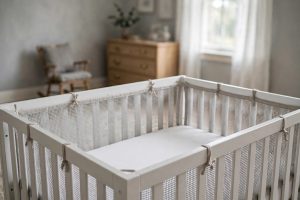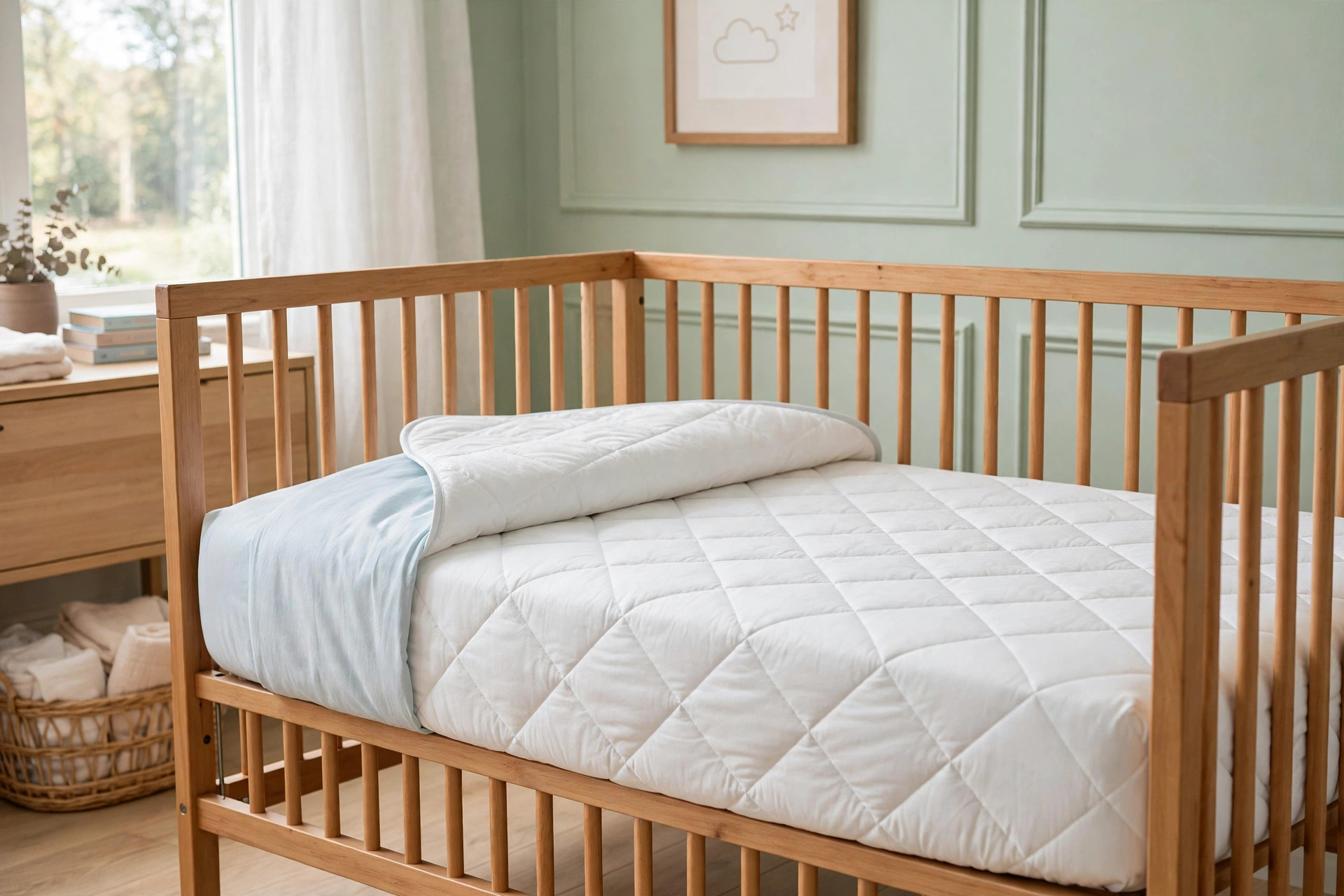

Every parent learns the same lesson at some point. A baby sleeps through the night, and the morning brings a surprise. A diaper leak soaks the sheets, and the liquid reaches the mattress itself. A crib mattress pad waterproof for accidents exists for this exact moment. It is a fitted pad that lies between the sheet and the mattress. Its top feels soft like cotton. Its middle layer drinks in liquid. Its bottom layer stops water from passing through. The mattress stays dry while the baby sleeps in comfort.
A crib mattress is not easy to clean. It is large, heavy, and slow to dry. Once urine soaks into the foam or coils, the smell can stay for weeks. A mattress pad solves this problem before it begins. It catches the accident, and it goes straight into the washing machine. This article explains why the pad matters, what to look for when buying one, the main types on the market, the cost, how to care for it, and how to keep it safe for your baby.
Why It Matters
A crib mattress is one of the most used items in a nursery. A newborn sleeps up to sixteen hours a day. That is a long time spent lying in one place. Diaper leaks happen to every family. Milk spit-up, sweat, and drool add to the wear. Without a barrier, the mattress absorbs all of it. Over months, the inside of a mattress can grow mold and mildew. The surface can stain. The foam can break down faster. A mattress pad waterproof for accidents acts as a shield. It keeps the mattress in clean, new condition for years.
There is also a health reason. A damp mattress is a breeding ground for bacteria and dust mites. Babies breathe close to the mattress surface. Clean, dry bedding lowers the risk of skin rashes and breathing trouble. The American Academy of Pediatrics reminds parents that a clean sleep area is part of healthy sleep for infants. A waterproof pad makes that clean area easier to keep.
Money is another reason. A good crib mattress costs real money. If it is ruined by stains in the first year, it must be replaced. A pad costs a fraction of that price. One or two pads can protect a mattress through every child in the family. Many parents hand a crib and its mattress down to a sibling or a friend. A protected mattress looks clean and safe for the next baby.
Sleep is the final reason. When an accident happens at two in the morning, speed matters. With a pad in place, the fix is simple. Pull off the wet sheet and pad. Put on a fresh pad and sheet. The baby goes back to sleep. Without a pad, the whole mattress needs wiping, airing, and turning. The crying lasts longer. The night is lost. A crib mattress pad waterproof for accidents turns a crisis into a five-minute task.
How to Choose a Waterproof Crib Mattress Pad: Crib Mattress Pad Waterproof for Accidents
Shopping for a pad can feel confusing. Many products look alike on the shelf. A few clear points make the choice simple.
Fit and Size
A crib pad must fit the mattress with no gaps and no loose fabric. The standard American crib mattress measures about 52 inches long and 28 inches wide. Most pads are cut to this size. Check the depth too. Crib mattresses range from three to six inches thick. A deep pocket pad fits thick mattresses. An elastic edge holds the pad tight around the corners. A loose pad is a safety risk, so fit comes first. Brands like Pottery Barn Kids list exact mattress dimensions on their pad pages, which helps parents match the pad to their crib.
The Waterproof Layer
Not all waterproof layers work the same way. Some pads use a vinyl or PVC backing. This blocks water well, but it can feel stiff and warm. It may also crack after many washes. Other pads use a TPU layer, a thin plastic film that is quiet and soft. TPU is the most common choice in modern pads. It blocks liquid without the crunch of vinyl. A third style uses a coated fabric. This is light and breathable but may wear out faster. For daily use, a TPU backing is the best balance of comfort and protection.
The Top Fabric
The top of the pad touches the baby through the sheet. Cotton and cotton blends are the softest choice. Organic cotton costs more but suits parents who want natural fibers. Some pads use a quilted top for extra padding. A quilted top adds comfort for babies who sleep on a firm mattress. The top should feel smooth, not scratchy. Rough fabric can irritate a baby’s skin.
Quiet and Breathability
Cheap waterproof pads make noise. The plastic backing crinkles every time the baby moves. Light sleepers wake up. A good pad is silent. TPU and laminated cotton are quiet. Breathability matters too. A pad that traps heat makes the baby sweat. Look for pads that describe themselves as breathable. They let air pass while blocking water. This keeps the sleeping surface cool in summer.
Ease of Washing
A pad is only useful if it washes well. Read the care label before buying. The best pads go in the washing machine and the dryer at normal heat. Some require line drying, which is slow. Some need gentle cycles only. A busy parent needs a pad that survives hot water and a hot dryer. High heat also kills germs, which matters after a bad accident.
Types of Waterproof Crib Mattress Pads
Several styles share the shelf. Each has strengths.
Fitted pads. These look like a fitted sheet with elastic all around. They pull tight over the mattress corners. They stay in place through the night. This is the most popular style.
Flat pads. These are simple rectangles without elastic. They lay on top of the mattress under the sheet. They are cheap and easy to wash. They can shift during the night, so they need a snug sheet on top to hold them.
Quilted pads. These have a thick, padded top stitched in a pattern. They add a layer of softness to a firm mattress. They are heavier and take longer to dry.
Organic pads. These use organic cotton tops and safer waterproof films. They cost more. Parents who worry about chemicals choose these. One option is to pair the pad with a crib mattress waterproof organic for newborns for a fully natural sleep setup.
Disposable pads. These are single-use sheets placed on top of the regular bedding. They are handy for travel and for the first weeks at home. They create waste and cost more over time, so most families use them only as a backup.
For most families, two fitted pads with TPU backing cover every need. One stays on the crib while the other is in the wash.
Cost and Price
Prices vary by brand and material. A basic fitted pad costs between ten and twenty dollars. Mid-range pads with TPU backing and cotton tops run twenty to forty dollars. Organic pads cost forty to sixty dollars each. Packs of two often cost less per pad than buying singles.
Think about how many you need. Two pads are the minimum. One is in use, one is clean. Three pads are better for babies who have accidents often. Nighttime potty training and tummy troubles go through pads fast. A third pad saves midnight trips to the laundry.
Watch for sales at large retailers. IKEA and Wayfair carry low-cost pads that perform well. Target stocks many brands in one place and runs frequent baby sales. Price is not the only guide, but an expensive pad is not always better. Read the label, check the backing material, and feel the fabric if you shop in a store.
Care and Upkeep
A waterproof pad needs the right care to last. Follow these rules.
Wash a new pad before the first use. This removes factory dust and softens the fabric. It also sets the waterproof layer.
After an accident, change the pad right away. Do not leave urine sitting on the pad for hours. Rinse it in cold water first if you cannot wash it at once. Cold water stops stains from setting.
Wash in warm or hot water with a mild detergent. Hot water kills bacteria. Skip fabric softener. Softener coats the waterproof layer and weakens it over time. Skip bleach on most pads. Bleach can eat through TPU film.
Dry on medium heat unless the label says otherwise. High heat can melt or crack the backing. Take the pad out while it is still slightly warm and smooth it flat. This keeps it from wrinkling.
Check the pad every few months. Hold it up to a light. If you see cracks or thin spots in the backing, replace it. A worn pad leaks, and a leaking pad defeats its purpose. Most pads last one to two years of heavy use.
Store spare pads in a dry drawer. Fold them loosely. Do not press heavy objects on top for months. Long pressure can crease the waterproof film.
Pairing the pad with the right bedding helps too. A soft toddler bedding set with pillow for crib or a gentle best nursery bedding set for baby girl sits well over a smooth pad and keeps the whole sleep surface cozy.
Safety
A mattress pad must be safe before it is anything else. The rules are clear.
The pad must fit tight. Loose bedding is a known risk for infants. The U.S. Consumer Product Safety Commission warns that soft, loose bedding in a crib raises the risk of suffocation. A pad that bunches or slides is dangerous. If the pad does not grip the mattress corners, buy a different size.
The crib should hold only a firm mattress, a fitted pad, and a fitted sheet. No pillows, no blankets, no bumpers, no toys for babies under one year. The pad counts as one of the fitted layers. Do not stack two pads on top of each other. Extra layers soften the sleep surface. A soft surface is not safe for a newborn.
Check that the pad lies flat with no wrinkles. Wrinkles can press into a baby’s face. Smooth the pad each time you change the sheet.
Avoid pads with vinyl or PVC if you worry about chemical smells. Some parents report a strong plastic odor from cheap vinyl pads. Air the pad out for a day before use if it smells. TPU and coated cotton pads have less odor.
The What to Expect guides and Babylist checklists both list a waterproof pad as a nursery must-have, but they place it under the sheet, never on top of the baby. Keep the pad where it belongs: under the sheet, tight on the mattress.
Watch the baby’s skin. A few babies react to synthetic backings with heat rash. If red spots appear on the back or neck, try a pad with a cotton top and better airflow. The Spruce has guides on choosing breathable nursery bedding that can help.
FAQ
How many waterproof crib mattress pads do I need? Two is the least. Three is the sweet spot for new parents. Accidents come in waves, and laundry takes time. With three pads, you always have a clean one ready.
Can I put the pad on top of the sheet? No. The pad goes under the fitted sheet, right on the mattress. The sheet touches the baby. The pad stays hidden beneath it. This keeps the surface smooth and safe.
Will the waterproof layer make my baby sweat? A cheap vinyl pad can trap heat. A TPU or breathable pad should not. Choose a pad labeled breathable, and keep the nursery near 68 to 72 degrees. If the baby sweats, switch to a lighter pad.
Can I use a waterproof pad with an organic mattress? Yes. Many parents pair an organic mattress with a separate waterproof pad. This keeps the mattress natural while still blocking accidents. Look for a pad with an organic cotton top.
How do I get the urine smell out of a pad? Rinse in cold water first. Then wash in the hottest water the label allows with a full measure of detergent. Add a half cup of baking soda to the wash. Dry fully. If the smell stays after two washes, replace the pad.
Do waterproof pads work for potty training? Yes, they help a lot. Nighttime training brings many accidents. A pad saves the mattress every time. Some parents layer a pad, a sheet, a pad, and a sheet. Then a midnight accident needs only the top two layers pulled off.
A Final Word
A crib mattress pad waterproof for accidents is a small purchase with a large payoff. It protects the mattress, keeps the baby dry, and makes midnight cleanups fast. Choose a pad that fits tight, uses a quiet TPU backing, and washes well. Buy two or three. Keep them under the sheet and the crib stays a clean, safe place to sleep. Every parent faces the soaked-sheet morning. With the right pad, it is a small chore, not a disaster.
References
American Academy of Pediatrics. (n.d.). HealthyChildren.org. https://www.healthychildren.org Babylist. (n.d.). Baby registry and gear guides. https://www.babylist.com IKEA. (n.d.). Home furnishings. https://www.ikea.com Pottery Barn Kids. (n.d.). Kids furniture and decor. https://www.potterybarnkids.com Target. (n.d.). Retail store. https://www.target.com The Spruce. (n.d.). Home and garden advice. https://www.thespruce.com U.S. Consumer Product Safety Commission. (n.d.). Product safety information. https://www.cpsc.gov Wayfair. (n.d.). Furniture and home goods. https://www.wayfair.com What to Expect. (n.d.). Pregnancy and parenting guidance. https://www.whattoexpect.com
Was this guide helpful?

About Robert Taylor
The My Garden US editorial team writes practical, in-depth home and garden guides for American homeowners — tested advice, no fluff.
You May Also Like
Toddler Bedding Set with Pillow for Crib: A Plain Guide for Parents
August 4, 2026 0 views
Best Nursery Night Light with White Noise: A Parent’s Buying Guide
August 26, 2026 0 views
Kids Dresser Knobs Replacement for Fun Decor: A Complete Guide
August 13, 2026 0 views