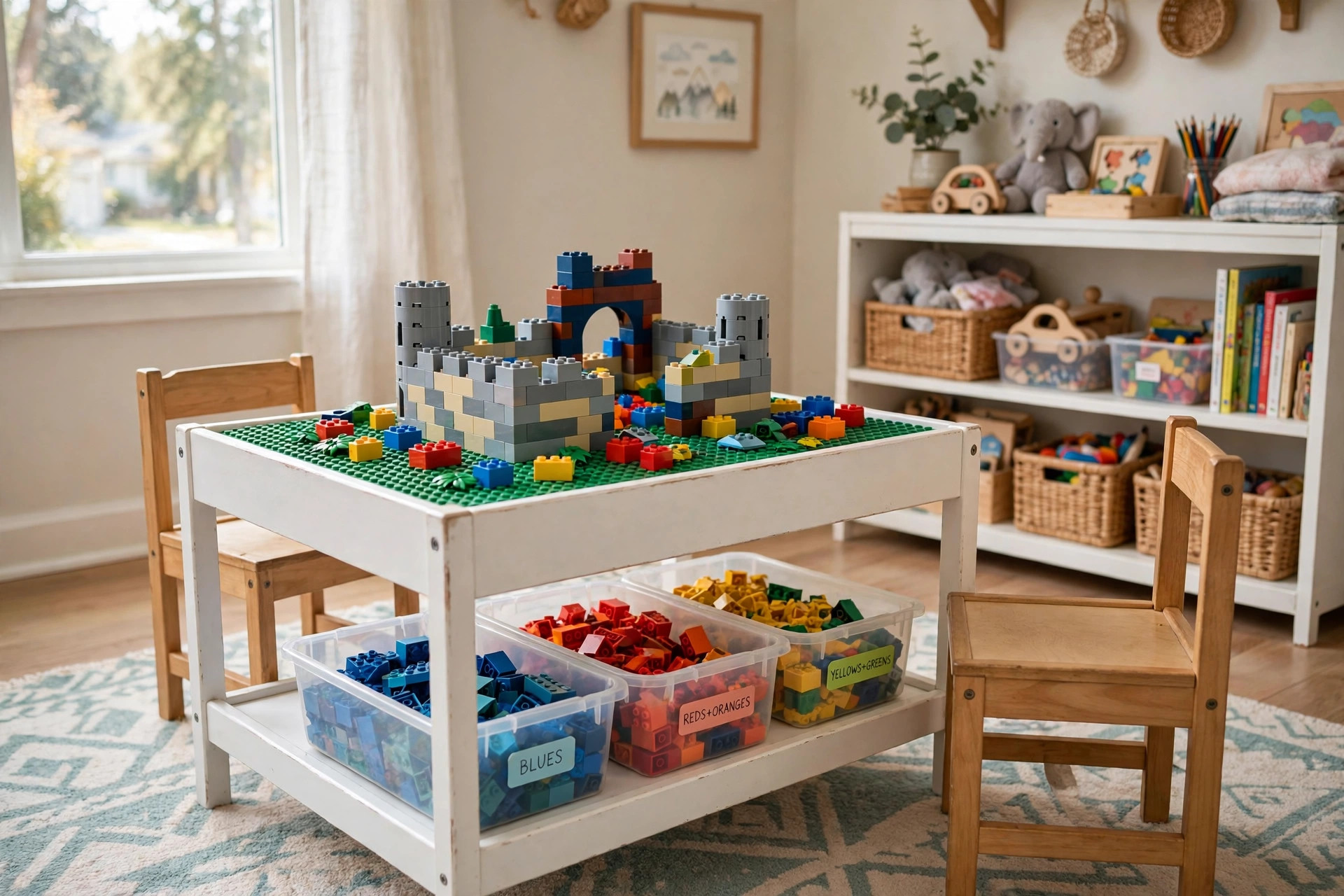

Every parent of a young builder knows the scene. Small plastic bricks cover the living room rug. A half-finished castle sits on the floor where someone will step on it. The child wants to build, and the parent wants the bricks off the floor. The best kids table for lego building play solves both problems at once. It gives the child a steady work surface. It keeps the pieces in one place. This guide explains what to look for, what kinds exist, what they cost, and how to keep them safe and clean.
Why a Building Table Matters
Children who build with small bricks spend long stretches in deep focus. A table at the right height lets them sit with good posture. Their back stays straight. Their arms rest at a natural angle. On the floor, the same child hunches over for an hour. That bent position strains the neck and back. A table removes that strain.
A building table also protects the bricks. Loose bricks on a rug collect dust, crumbs, and pet hair. They roll under the sofa and disappear. On a table with a raised edge, the pieces stay where the child put them. The build can wait until tomorrow without being kicked apart.
There is a social benefit too. A table invites a second child to join. Two chairs at one table turn a solo hobby into shared play. Siblings learn to take turns. Friends who visit have a clear place to sit and build. The toddler table and chair set for playroom approach works on the same idea: give children furniture at their own scale, and they use it well.
Parents also gain a cleaner house. A table with storage bins underneath or beside it turns cleanup into a quick job.
What to Look for When You Choose: Best Kids Table for Lego Building Play
Table Height and Size
The most common mistake is buying a table that is too tall. A child of three or four needs a table top about 17 to 20 inches from the floor. A child of six or seven can use one that is 21 to 24 inches high. The child’s elbows should rest a little below shoulder level when seated. Feet should reach the floor or a footrest.
Measure the space before you buy. A square table of about 30 by 30 inches fits two children. A larger table of 40 by 28 inches gives one serious builder plenty of room. Leave space around the table for chairs and for the child to walk. Furniture guides at The Spruce often remind readers to measure twice, and the advice is sound here too.
The Building Surface
Some tables come with a top that accepts standard building bricks. The raised studs on the top hold the child’s base plates in place. This is a real advantage. A base plate locked to the table will not slide when the child presses bricks onto it. Tall towers stay upright.
Other tables have a plain smooth top. A smooth top works fine if the child builds on base plates anyway. Many families prefer a smooth top with a separate building mat. The mat can be lifted away when the table is needed for drawing or snacks. A reversible top, smooth on one side and studded on the other, gives both options.
Check how the studs are spaced. They should match the child’s brick brand. Most major brands follow the same spacing, but it is worth checking before you buy.
Storage
Storage is what separates a good building table from a great one. Look for bins or drawers built into the table body. Shallow bins work best for small bricks. Deep bins turn into mixed piles where the child cannot find the piece he or she wants.
Some tables include removable containers that slide out from the sides. Others have a fabric hammock or net slung under the top. A hammock catches the bricks that roll off the edge during play. Simple is better. A table with two or three easy bins will be used daily. A table with twelve tiny drawers will be used never.
Sturdiness and Weight
Children lean on tables. They climb on them. They push them across the room. A building table must be heavy enough to stay put and strong enough to hold the child’s weight. Solid wood tables are the most stable. They cost more, but they last through several children.
Plastic tables are lighter and cheaper. A light table can slide when the child presses hard on a brick. If you choose plastic, look for one with a wide base and non-slip feet. The U.S. Consumer Product Safety Commission lists tip-over and collapse hazards among the issues it tracks in children’s furniture, so check that the table has been tested to a known safety standard.
Chairs
A table is only half the setup. The child needs a chair at the right height. Many tables are sold with one or two matching chairs. This is the easy path. The chairs are sized for the table, and they look right in the room.
If you buy chairs separately, match the seat height to the table. The child should be able to sit with knees at a right angle and feet flat. An adjustable kids desk chair for growing children can be a smart buy for an older child, since it grows with the child and can move to a homework desk later.
Types and Options
Studded Building Tables
These are tables made for one job. The top is covered with studs that grip building bricks. Most include a set of storage bins underneath. They come in plastic and wood. They are the most popular choice, and they do the job well. The drawback is single use. When the child outgrows the building phase, the table has less purpose.
Convertible Activity Tables
A convertible table has a reversible or replaceable top. One side has studs. The other side is smooth for drawing, puzzles, or snacks. Some models add a chalkboard or whiteboard surface. These tables cost more than single-use tables. They also last longer. A family that wants the table to serve from age three to age eight should look here. Parenting advice at What to Expect often notes that toys with more than one use earn their keep, and the same is true of furniture.
Wooden Play Tables
Solid wood tables from makers like IKEA’s children’s furniture range and Pottery Barn Kids’ play tables look at home in a living room. They are heavy, stable, and easy to wipe clean. Most have smooth tops, so the family adds its own building mat or base plates. They cost the most up front. They also hold their value and can be handed down.
Foldable and Compact Tables
Small homes need small solutions. A foldable table sets up for building time and folds flat behind a door. A compact square table fits in a bedroom corner. These are not as stable as full-size tables, and storage is limited. For a family short on space, they are better than the floor.
DIY Table Builds
Some parents build their own. A small coffee table from a thrift store, a sheet of building base plates glued to the top, and a pair of bins underneath make a fine building station. The cost is low. The result can be exactly the right size.
Cost and Price
Building tables span a wide price range. A basic plastic table with bins sells for about 30 to 60 dollars. These work well for young children and light use. A mid-range wooden or convertible table sells for about 80 to 150 dollars. These are sturdier and better finished. Premium solid wood tables from specialty children’s brands sell for 150 to 300 dollars or more.
Do not judge by price alone. A 40 dollar table that tips over is no bargain. A 200 dollar table that lasts ten years is cheap per year. Read the weight rating and the age range on the box. Check whether chairs are included. Two chairs bought separately can add 40 to 80 dollars to the bill.
Watch for sales at large retailers. Wayfair’s kids furniture section and Target’s toy storage options often discount play tables in the late summer, when families set up playrooms for the school year. Walmart’s play furniture range runs rollback prices through the holidays. A little patience can save real money.
Used tables are worth a look. Check the joints, the finish, and the stability before you buy. Make sure no recall applies to the model. The U.S. Consumer Product Safety Commission keeps a searchable list of recalled children’s products, and a quick check costs nothing.
Care and Upkeep
A building table takes daily abuse. Crumbs, glue, paint, and marker ink all find their way to the top. Wipe the table down each evening with a damp cloth. For stuck-on grime, a little dish soap in warm water does the job. Avoid harsh cleaners that can strip the finish.
Studded tops need extra care. Dust settles between the studs. A soft brush or an old toothbrush clears it out. If the child glues bricks to the top, soak the spot with warm water before you pry. Pulling hard can break the studs.
Check the table every few months. Tighten any loose screws. Look for cracks in plastic and splinters in wood. Sand a rough spot smooth at once, before it gives the child a splinter. Replace a wobbly chair rather than risking a fall.
Teach the child the cleanup routine early. Bricks go in the bins. The top gets a quick wipe. A child who learns this at four will still do it at eight. Pair the table with a kids bookshelf with bins for toy storage nearby, and the whole play area stays under control.
Safety
Safety comes first with any children’s furniture. The table must be stable. It should not tip when the child leans on one edge. It should not collapse when the child climbs on it. Look for products tested to the ASTM standard for children’s furniture. The standard exists for a reason.
Watch the small parts. Storage bins with lids can pinch small fingers. Hinges should have soft-close action or a finger guard. Avoid tables with sharp metal corners. Round the edges if you build your own.
Keep the table away from windows with blind cords. A child who stands on the table can reach a cord that is safe at floor level. Cord safety rules from child health experts apply here as they do everywhere in the home. Child health advice from HealthyChildren.org covers playroom setup in plain terms, and it is worth a read.
Supervise young builders. Small bricks are a choking hazard for children under three. Keep the table in a room where an adult can see it. Put the bins out of reach of toddlers who still put things in their mouths.
Check finishes for lead. Older painted tables, especially secondhand ones, may carry lead paint. New tables sold in the United States must meet lead limits, but a thrift store find deserves a test kit. Test kits are cheap and easy to use.
Frequently Asked Questions
What age is right for a Lego building table?
Most children are ready between ages three and four. By then they can sit for a stretch and handle larger bricks. Younger toddlers need bigger bricks and closer watch. There is no upper limit. Many children build happily at the table until age nine or ten, when they may want a larger desk.
Should the table top have studs or be smooth?
Studs hold base plates steady, which helps young builders. A smooth top is more useful for other play. If you must pick one, a reversible top gives both. If the child already owns base plates, a smooth top with plates on it works just as well.
How big should the table be?
For one child, a top of about 30 by 24 inches is enough. For two children building together, look for 36 by 30 inches or more. Measure the room first. Leave at least two feet of clear space on the chair side so the child can push back and stand.
Can a building table work for other toys?
Yes. A smooth or reversible top handles drawing, puzzles, train sets, and doll play. The storage bins hold crayons and cars as well as bricks. Families get the most value from a table that serves more than one kind of play. LEGO’s building sets pair well with the table, but the table need not be limited to one brand of brick.
How do I stop bricks from ending up all over the house?
Give every brick a home. Bins under the table catch the daily pieces. A rule that bricks stay at the table helps, though no rule works perfectly. A quick nightly sweep by the child keeps the drift under control. Many parents keep a small dustpan near the play area for fast pickup.
Is it worth buying a used building table?
Often yes. Wooden tables age well. Check for stability, smooth edges, and sound joints. Wash it well before the child uses it. Check the model against recall lists. Skip any table with peeling paint, cracked plastic, or missing hardware.
A Final Word
The best kids table for lego building play is the one that fits your child, your room, and your budget. Measure the space. Pick the right height. Favor storage and stability over looks. Keep it clean and check it now and then. Do that, and the table will give your child years of steady building time, and give you a living room floor you can walk across in bare feet.
References
American Academy of Pediatrics. (n.d.). HealthyChildren.org. https://www.healthychildren.org IKEA. (n.d.). Home furnishings. https://www.ikea.com LEGO. (n.d.). Building toys. https://www.lego.com Pottery Barn Kids. (n.d.). Kids furniture and decor. https://www.potterybarnkids.com Target. (n.d.). Retail store. https://www.target.com The Spruce. (n.d.). Home and garden advice. https://www.thespruce.com U.S. Consumer Product Safety Commission. (n.d.). Product safety information. https://www.cpsc.gov Walmart. (n.d.). Everyday low prices. https://www.walmart.com Wayfair. (n.d.). Furniture and home goods. https://www.wayfair.com What to Expect. (n.d.). Pregnancy and parenting guidance. https://www.whattoexpect.com
Was this guide helpful?

About James Carter
The My Garden US editorial team writes practical, in-depth home and garden guides for American homeowners — tested advice, no fluff.
You May Also Like
Nursery Ottoman Matching Glider for Nursing: A Complete Guide
March 3, 2026 0 views
Nursery Theme Wall Decals for Baby Shower Parties
September 18, 2026 0 views
Kids Play Tent with Tunnel for Indoor Fun
April 16, 2026 0 views