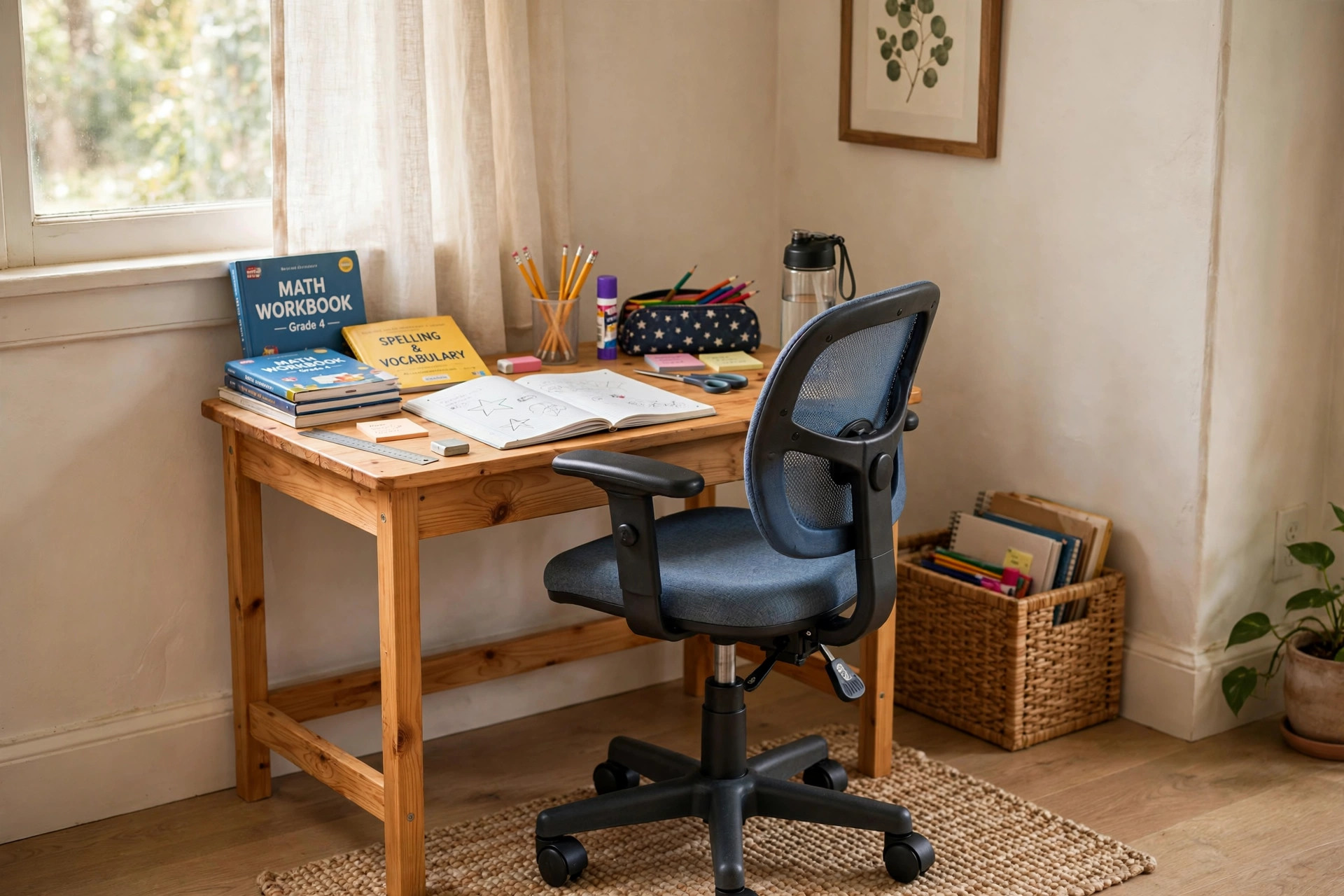

A kids desk chair adjustable for growing children is one of the most useful pieces of furniture a parent can buy for a home study area. Children grow fast. A chair that fit perfectly last year can be too short or too stiff this year. When the chair no longer fits, the child sits in a poor position. Homework becomes uncomfortable. Reading time feels too long. An adjustable chair solves this problem because it can be raised, lowered, and reset as the child grows. This guide explains why the chair matters, what to look for, how much to spend, and how to keep the chair safe and in good shape.
Why It Matters
Children now spend many hours at a desk. Homework, reading, drawing, and school projects all take place at the same small table. A chair that fits well helps the child sit upright with feet on the floor and back against the support. A chair that is too tall forces the child to perch on the edge. A chair that is too low makes the child slump over the desk. Over months and years, these habits can lead to sore necks, tired backs, and poor posture.
An adjustable chair grows with the child. Most models allow the seat height to move up and down by several inches. Many also allow the backrest to move or tilt. This means one chair can serve a child from early grade school through the middle school years. The parent does not need to buy a new chair every two years. The child always has a seat that fits the body. That fit helps the child focus on the work instead of the discomfort.
Posture also affects learning. A child who sits well can write more neatly and read for longer periods. Teachers often note that students with proper desks and chairs work with more care. The home study area works the same way. A good chair sends a quiet message that the work matters. Pair the chair with a good kids desk lamp with usb port for homework and the study corner becomes a place the child wants to use.
What to Look for When You Choose: Kids Desk Chair Adjustable for Growing Children
Seat Height Range
The seat height is the most important feature. Measure the child sitting at the desk. The feet should rest flat on the floor. The knees should bend at about a right angle. The desk top should sit near elbow height. Check the minimum and maximum seat height on the chair. A good adjustable desk chair for kids should cover at least a four inch range. Some models cover six inches or more, which can last from age five to age twelve.
Back Support
Look for a backrest that supports the lower back. Some chairs have a curved back that follows the shape of the spine. Some have a simple flat back. Either can work for a child. The key point is that the child can sit with the back touching the rest while the feet stay flat. A chair with an adjustable backrest height gives more years of use.
Sturdy Base
Most adjustable chairs use a five leg base with small wheels. This design gives steady support and lets the child move a short distance to reach books or supplies. Check that the base is wide enough to keep the chair from tipping. A steel or thick plastic base lasts longer than thin plastic. Some parents prefer chairs without wheels for very young children, because a rolling chair can slide away from the desk. A chair with locking wheels is a good middle ground.
Materials and Padding
The seat should have enough padding to stay comfortable for an hour of homework. Fabric covers breathe better than vinyl in warm rooms. Vinyl and leather-like covers wipe clean more easily, which helps when the chair sits near an art corner. Check the weight limit on the chair. Most kids chairs hold between 110 and 175 pounds. Buy a chair with a limit well above the child’s current weight so it stays safe as the child grows.
Simple Controls
The height lever should be easy for the child to reach and pull. A gas lift cylinder gives smooth up and down motion. Avoid chairs with small parts that pinch fingers. Test the lever in the store if you can. The child should be able to adjust the chair with little help from a parent.
Types of Adjustable Kids Desk Chairs
Standard Gas Lift Task Chair
This is the most common type. It looks like a small office chair. A lever under the seat raises and lowers the height. The backrest may tilt or stay fixed. These chairs cost less than most other types. They fit well at a homework desk and match most room styles. Many parents start with this type because it is simple and easy to find.
Ergonomic Chair for Children
An ergonomic chair for children adds more adjustment points. The armrests may move up and down. The lumbar support may slide. The seat depth may shift forward or back. These chairs cost more, but they give a precise fit. They suit older children who spend long hours at the desk. Some models are sized for small adults too, so they can last into the teen years.
Drafting Style Chair
A drafting style chair has a taller height range and a foot ring. It suits desks that are higher than standard, such as art tables or raised counters. The foot ring gives the feet a place to rest when the seat is high. This type works well for tall children or for desks that cannot be lowered.
Kneeling Chair and Saddle Options
Some families try kneeling chairs or saddle seats. These designs tilt the body forward and open the hip angle. They have no backrest. They can help some children sit upright. They do not suit every child. A child who fidgets may find them tiring. Try one in a store before buying, and keep the old chair as a backup.
Cost and Price
Prices for a kids desk chair adjustable for growing children fall into three broad groups. Basic gas lift task chairs often cost between twenty and sixty dollars. Mid range chairs with better padding and stronger bases often cost between sixty and one hundred fifty dollars. Full ergonomic chairs for children often cost between one hundred fifty and three hundred fifty dollars.
Price is not the only measure of value. A sixty dollar chair that lasts four years costs less per year than a thirty dollar chair that breaks in one year. Read reviews from other parents. Check the warranty. Many good chairs carry a one to three year warranty on the lift cylinder and parts. Buying from a known retailer makes returns and warranty claims easier. Guides at Consumer Reports can help compare brands, and project ideas at Family Handyman show how families set up study areas on a budget.
Keep the full study corner in mind when you plan the budget. The chair is one part. A toddler table with storage bins underneath or a simple desk, good lighting, and a kids desk organizer for school supplies storage complete the space. Spend the most on the chair, because the body rests on it every day.
Care and Upkeep
An adjustable chair needs little care, but a few habits keep it working well.
Wipe the seat and back with a damp cloth each month. Vacuum fabric covers to remove dust and crumbs. Check the wheels for hair and thread that can wrap around the axle. A small pair of scissors cuts away tangles.
Test the height lever twice a year. Lift the chair to the top, then lower it to the bottom. The motion should feel smooth. If the chair sinks slowly under weight, the gas cylinder may be worn. Many makers sell replacement cylinders for a small price.
Tighten the screws and bolts once a year. Sit in the chair and rock it gently to find loose parts. A loose base can make the chair wobble. Most chairs use a simple hex key that comes in the box. Keep that key in a drawer with the assembly guide.
As the child grows, reset the height every six months. Sit the child at the desk and check the three points: feet flat, knees bent, elbows near desk height. Raise the seat one step at a time until the fit is right. Mark the correct height with a small piece of tape on the post so the child can reset it after a sibling borrows the chair.
Safety
Safety comes first with any furniture a child uses. Buy chairs that meet current furniture safety standards. The U.S. Consumer Product Safety Commission publishes guidance on safe children’s furniture and recalls. Check their site before you buy, and check again once a year to see if the model has been recalled.
Keep small parts out of reach during assembly. Follow the assembly guide step by step. Do not skip the base cap or the locking pin. Place the chair on a flat floor. A chair on a thick rug can roll unevenly, so test it in the room where it will be used.
Teach the child a few simple rules. Do not lean back until the chair tips. Do not stand on the seat to reach a high shelf. Do not spin at high speed. These rules prevent most chair injuries. For very young children, a chair without wheels or with locked wheels is the safer choice.
Health is part of safety too. The American Academy of Pediatrics offers guidance on posture and screen time for children. Even with the best chair, children should stand up, stretch, and move every thirty to forty five minutes. A short break helps the eyes, the back, and the mind.
Where to Shop
Many families start at large furniture stores. IKEA and Wayfair both carry wide ranges of children’s desk chairs at many price points. Pottery Barn Kids offers styles that match a finished bedroom or study. For general home ideas, The Spruce covers kids room layouts, and What to Expect has parenting guides on setting up study spaces.
When you shop, bring the child’s measurements. Know the desk height and the child’s seated height. Sit the child in the floor model if the store has one. Online shoppers should read the listed seat height range with care and check the return policy. A chair that looked right on screen may feel wrong in the room.
Frequently Asked Questions
What age should a child start using an adjustable desk chair?
Most children are ready around age five or six, when homework and drawing become regular. Check the minimum seat height against the child’s leg length. If the smallest setting still leaves the feet dangling, the chair is too big. Wait a year or add a footrest.
How often should I adjust the chair height?
Check the fit every six months, or any time the child has a growth spurt. Children can grow two or three inches in a year. A quick check takes one minute. Sit the child down, look at the feet and knees, and move the seat up or down as needed.
Are wheels safe on a kids desk chair?
Wheels are safe for most children over age six when the chair has a wide, stable base. For younger children, lock the wheels or choose a chair without them. Teach the child not to push off from the desk at speed. Carpet slows the wheels and adds stability.
What is the difference between a kids chair and a small adult chair?
Kids chairs have lower minimum seat heights and smaller seats. A small adult chair may work for a tall child over age ten. Check the seat depth. If the seat is too deep, the child cannot sit back against the backrest. A true kids model fits better for most children under twelve.
Can one chair last from kindergarten to high school?
It is possible with a chair that has a wide height range and a high weight limit. Many ergonomic models cover ages five to fifteen. The style may look young for a teen, so some families buy a fresh chair at age twelve or thirteen. The old chair can move to a sibling or a craft table.
How do I clean a fabric kids desk chair?
Vacuum the seat and back first to remove dust. Wipe stains with a cloth dampened with mild soap and water. Test the soap on a hidden spot first. Let the chair dry fully before use. For vinyl or leather-like covers, a damp cloth is usually enough.
A Final Word
A kids desk chair adjustable for growing children is a small purchase with a long payoff. The right chair supports the back, fits the body, and lasts for years of homework, reading, and art projects. Take the time to measure, compare, and test. Reset the height as the child grows. With a little care, one good chair can carry a child from first grade reading to middle school science projects in comfort.
References
American Academy of Pediatrics. (n.d.). HealthyChildren.org. https://www.healthychildren.org Consumer Reports. (n.d.). Product reviews and ratings. https://www.consumerreports.org Family Handyman. (n.d.). DIY home repair and maintenance. https://www.familyhandyman.com IKEA. (n.d.). Home furnishings. https://www.ikea.com Pottery Barn Kids. (n.d.). Kids furniture and decor. https://www.potterybarnkids.com The Spruce. (n.d.). Home and garden advice. https://www.thespruce.com U.S. Consumer Product Safety Commission. (n.d.). Product safety information. https://www.cpsc.gov Wayfair. (n.d.). Furniture and home goods. https://www.wayfair.com What to Expect. (n.d.). Pregnancy and parenting guidance. https://www.whattoexpect.com
Was this guide helpful?

About Emily Rodriguez
The My Garden US editorial team writes practical, in-depth home and garden guides for American homeowners — tested advice, no fluff.
You May Also Like

Kids Wall Clock for Learning Time Decor: A Parent’s Guide
January 10, 2026 0 views
Nursery Wall Decals Clouds for Ceiling Decor: A Calm Sky Above the Crib
April 22, 2026 0 views
The Best Rocking Chair for Nursery Small Spaces: A Parent’s Guide
June 17, 2026 0 views