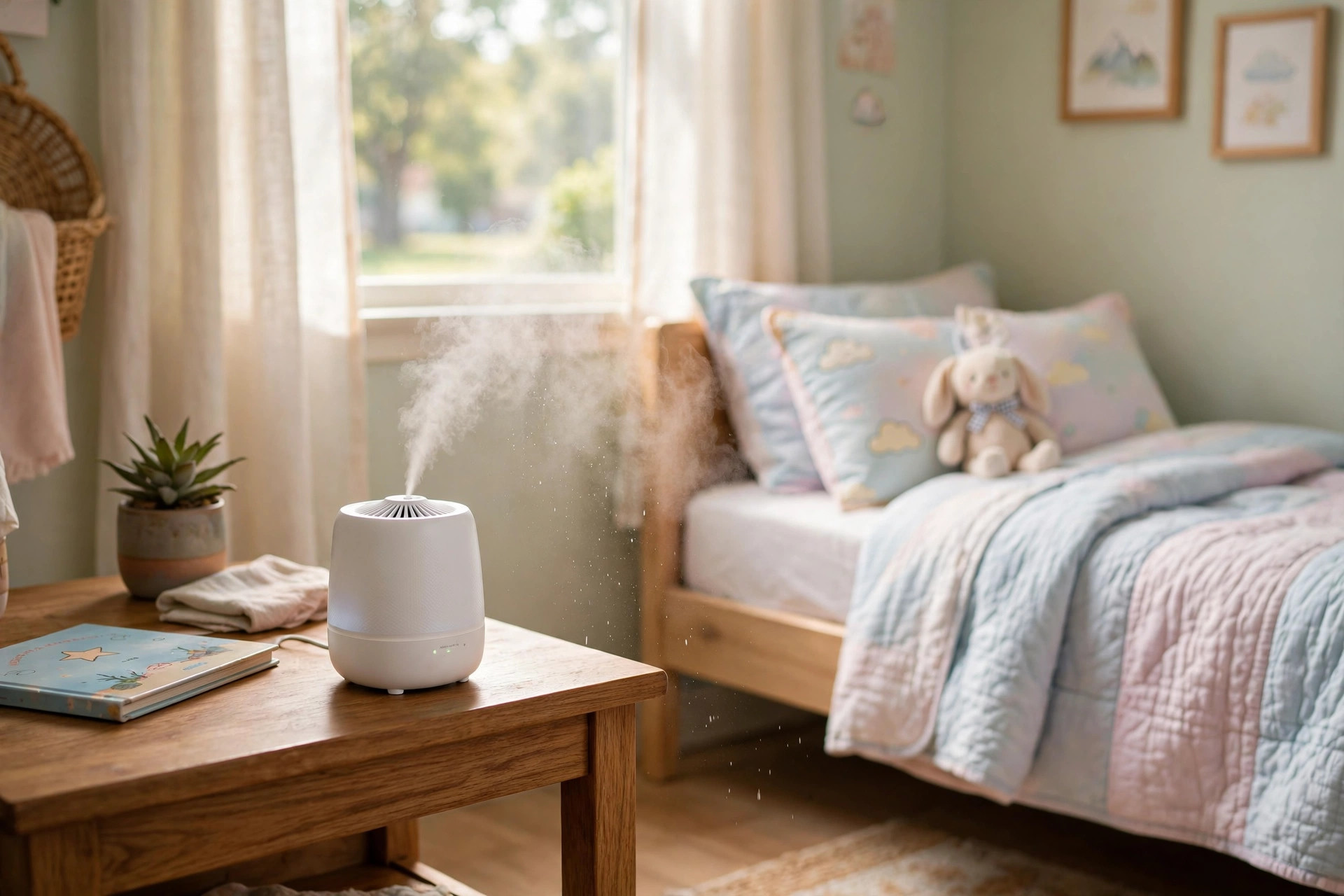

Dry air is common in many American homes. Heat runs in winter. Air conditioning runs in summer. Both pull moisture from the air. A child may wake with a dry nose, a dry throat, or a rough cough. The right unit can fix the problem. This guide looks at the best kids room humidifier for dry air. It explains what to look for, the main types, fair prices, care, and safety rules.
Why Dry Air Matters in a Child’s Room
Indoor air should hold some moisture. A healthy range is about 30 to 50 percent relative humidity. In winter, the air inside a home can drop below 20 percent. That dry air pulls moisture from skin, lips, and airways. Children feel it first. Their noses are small. Their airways are narrow. A little dryness can make breathing loud or scratchy. It can make a cough worse at night.
Dry air can also wake a child with a stuffy nose even when there is no cold. Wood floors may creak. Static shocks may grow worse. Houseplants may brown at the tips. These are all signs of dry indoor air.
A humidifier adds moisture back into the room. It does not cure illness. It can make the room feel kinder to a child who is resting. Many parents run one through the cold months and put it away in spring. Others use one all year in dry climates. Either way, the goal is simple: keep the air soft and comfortable while a child sleeps.
What to Look for When You Choose One: Best Kids Room Humidifier for Dry Air
Not every unit fits every room. A few key facts decide whether a model is a good buy.
Room Size and Tank Capacity
Check the square footage of the room. Most small units cover 200 to 300 square feet. That is enough for a standard nursery or a small bedroom. A larger playroom may need a bigger unit or a second one.
Tank size sets how often you refill. A tank of half a gallon may last a night in a small room. A one-gallon tank can run 24 hours or more. If you dislike daily refills, pick a larger tank. But remember that a large tank is heavier to carry to the sink. For a busy parent, that trade-off matters.
Look for a unit with a clear tank or a fill window. It is easy to see when the water runs low. An automatic shut-off is also useful. The machine stops when the tank is empty. That is one less thing to watch.
Mist Type and Noise Level
Cool mist is the usual pick for a child’s room. It puts out room-temperature vapor. There is no hot water and no heating part. That makes it safer near children.
Warm mist units heat water to make steam. Some parents like them in winter. But a hot steam unit can burn a curious child. If you choose warm mist, keep it high and out of reach.
Noise is another real issue. A cool mist humidifier for kids room use should run quiet enough for sleep. Many models run at 30 decibels or less. That is near the level of a soft whisper. Look for a sleep mode or a night-light setting. A bright display can wake a light sleeper. Some models let you dim or turn off the lights.
A top-fill design is worth the extra cost. You pour water in from the top. You do not have to flip the tank over. That small detail saves time and spills.
The Main Types of Kids Room Humidifiers
Shops sell three main types. Each has strengths and weak points.
Cool Mist Evaporative
These units pull air through a wet wick or filter. The air picks up moisture on the way out. They are simple and steady. They rarely over-humidify a room. The wick needs cleaning or replacement every few weeks. That is the main upkeep cost.
Cool Mist Ultrasonic
These units shake water with high-speed vibration. The vibration makes a fine cool mist. They are very quiet. They use little power. They need no wick. But they can leave a fine white dust on nearby furniture if your tap water is hard. Distilled water fixes that problem. The best humidifier for baby room dry winter air is often an ultrasonic model with a quiet motor and a night-light.
Warm Mist Steam
These units boil water and send out warm steam. The heat kills most germs in the water. Some parents like that. But the steam is hot. The unit uses more power than the other types. For most children, cool mist is the safer pick.
When you shop, you may also see models sold as nursery gear at large home stores. A small room humidifier for children should have a simple dial or button set. Avoid complex touch panels. A grandparent or a babysitter should be able to run it without a manual.
Cost and Price
Prices are friendly. A basic cool mist model for a small room often costs 25 to 45 dollars. These work well. They cover the key needs: quiet run, auto shut-off, and a decent tank.
Mid-range models cost 50 to 90 dollars. They add features. You may get a top-fill tank, a built-in humidistat, or a sleep timer. A built-in humidistat is useful. It reads the room air and stops the mist when the air is moist enough. That saves water and power.
High-end models run 100 dollars and up. They may link to a phone app or track air quality. Most parents do not need those extras. Spend the money on a larger tank or a better filter instead.
Running costs are low. Water is the main cost. Use tap water if your water is soft. Use distilled water if your water is hard. Filters and wicks cost 5 to 15 dollars and last a few weeks to a few months. Power use is small for cool mist models. A unit may add only a dollar or two to a monthly power bill.
You can compare prices and styles at stores that sell kids room goods. Many parents also check nursery furniture shops when they set up a room. If you are decorating a small bedroom, a quiet humidifier blends in with the rest of the plan.
Care and Upkeep
A humidifier needs regular cleaning. Water left sitting can grow mold or germs. That is the biggest drawback of these machines. But the fix is easy.
Empty the tank each day. Rinse it with fresh water. Once a week, give it a deeper clean. Fill the tank with a mix of water and white vinegar. Let it sit for 20 minutes. Rinse well. That breaks up mineral scale. A soft brush can clean tight corners. Never use harsh soap inside the tank. Residue can end up in the mist.
Change or clean the wick as the maker directs. A brown or sour-smelling wick is past its time. Replace it. If you use an ultrasonic model, wipe the water basin weekly. Look for pink or brown film. That is the start of growth. Clean it right away.
Let the tank dry fully when you store the unit. Pack it with the tank empty and the lid off. A stored unit with old water inside can smell stale when you start it again.
A hygrometer helps you track moisture. Some units have one built in. If yours does not, buy a small digital one for a few dollars. Place it across the room from the unit. Keep the reading between 30 and 50 percent. Above 60 percent is too much. Damp air can grow mold in walls and bedding.
Safety Rules for a Child’s Room
Safety comes first. A quiet humidifier for nursery use is safe when a few rules are followed.
Place the unit where a child cannot reach it. A dresser top or a sturdy shelf works well. Keep it at least three feet from the crib or bed. Do not put it on the floor next to the bed. A toddler can tip it or drink from the tank.
Use cool mist, not warm mist, in a young child’s room. This is the advice found in most new parent guides. Hot steam can burn. There is no need for that risk.
Keep cords out of reach. Run the cord behind furniture. A child who pulls the cord can pull the whole unit down. Water and power are a bad mix.
Change the water daily. Old water can carry germs into the air. Never add oils or medicine to the tank unless the maker says it is safe. Most child models are not built for oils. Oils can coat the inside parts and damage the unit.
Watch the room for signs of too much moisture. Wet windows, damp walls, or a musty smell mean the air is too wet. Turn the unit down or run it for fewer hours. Dampness in a child’s room can feed mold. That is worse than dry air.
Read safety guidance from the Consumer Product Safety Commission before you buy any electric product for a nursery. The commission tracks recalls and safety standards for children’s goods. Check that your model has not been recalled.
You can also find child health advice from pediatricians about indoor air and breathing. The American Academy of Pediatrics publishes guidance for parents on safe sleep and healthy rooms. For general air quality questions, indoor air quality guidance can help you set a healthy target for your home.
If you are setting up a full nursery, a nursery dresser changing table combo for small space can give you a high shelf for the humidifier. For older kids, best kids dresser with mirror for teens and toddler wardrobe armoire for small bedroom guides cover other pieces of the room.
Frequently Asked Questions
Is a humidifier safe to run all night in a child’s room?
Yes, if you follow basic rules. Use cool mist. Place the unit out of reach. Change the water each day. Keep the room between 30 and 50 percent humidity. A unit with auto shut-off adds a safety margin. Turn it off if the room feels damp.
Cool mist or warm mist: which is better for a child?
Cool mist is the better pick for most children. There is no hot water. There is no risk of a steam burn. Warm mist uses more power and needs more care. Ask your child’s doctor if you are unsure.
Can a humidifier help a child with a cold?
It can ease dry air symptoms. Moist air may loosen a stuffy nose and calm a dry cough at night. It does not cure a cold. It does not replace medicine. If a child has trouble breathing, call your doctor. Do not rely on a machine for a serious illness.
How often should I clean the humidifier?
Rinse and refill the tank every day. Do a deeper clean with vinegar once a week. Change filters or wicks as the maker directs. A unit that smells musty or shows pink film needs cleaning right away.
What size humidifier does a small bedroom need?
A unit rated for 200 to 300 square feet fits most small bedrooms. Check the maker’s rating on the box. A tank of at least half a gallon will run through the night. For a large room, buy a bigger unit or run two small ones.
Should I use tap water or distilled water?
Tap water is fine in most homes. If your water is hard, it may leave white dust on furniture near an ultrasonic model. Distilled water stops that. It also slows mineral buildup inside the unit. If you see white dust, switch to distilled.
Final Word
The best kids room humidifier for dry air is a quiet, cool mist model that fits the room. Pick the right size. Keep the tank clean. Keep the unit out of reach. Watch the humidity level. A simple unit, cared for well, will do the job for years. Your child gets softer air and calmer nights. That is worth a small price and a few minutes of care each day.
References
American Academy of Pediatrics. (n.d.). HealthyChildren.org. https://www.healthychildren.org American Academy of Pediatrics. (n.d.). Child health resources. https://www.aap.org IKEA. (n.d.). Home furnishings. https://www.ikea.com Pottery Barn Kids. (n.d.). Kids furniture and decor. https://www.potterybarnkids.com The Spruce. (n.d.). Home and garden advice. https://www.thespruce.com U.S. Consumer Product Safety Commission. (n.d.). Product safety information. https://www.cpsc.gov U.S. Environmental Protection Agency. (n.d.). Protecting human health and the environment. https://www.epa.gov Wayfair. (n.d.). Furniture and home goods. https://www.wayfair.com What to Expect. (n.d.). Pregnancy and parenting guidance. https://www.whattoexpect.com
Was this guide helpful?

About Jennifer Lee
The My Garden US editorial team writes practical, in-depth home and garden guides for American homeowners — tested advice, no fluff.
You May Also Like

Nursery Glider Replacement Cushions for Comfort: A Parent’s Guide
May 7, 2026 0 views
Best Nursery Rug for Tummy Time Play: A Complete Guide
September 17, 2026 0 views
Toddler Step Stool for Bathroom and Kitchen: A Simple Guide for Parents
September 28, 2026 0 views