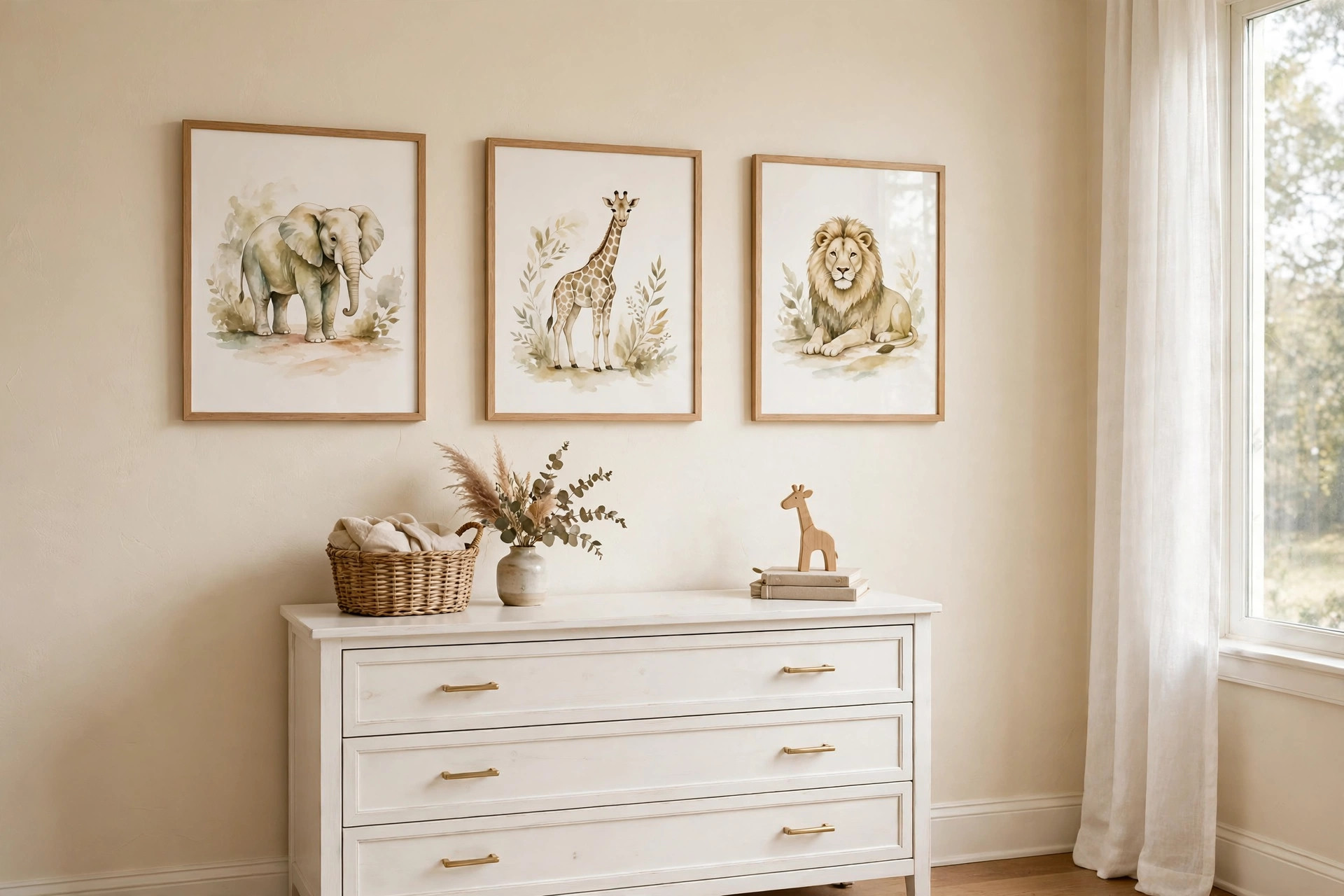

Many parents today choose to keep the nursery free of pink and blue. They want a room that feels calm, warm, and open. Nursery wall art safari animals for gender neutral spaces is one of the most loved answers to this wish. Soft images of elephants, giraffes, lions, and zebras bring life to the walls. They suit a boy or a girl. They also suit parents who do not know the sex of the baby yet. This guide explains how to choose safari wall art, what it costs, and how to hang it with care.
Why Gender Neutral Nursery Art Matters
A nursery is the first room a baby sees each morning. The walls set the mood of the space. Bright pink or bold blue can feel fixed and loud. A gender neutral theme leaves room to grow. Safari animal art is a natural fit for this style. The savanna palette runs on sand, cream, tan, olive, and warm gray. These tones read as calm to the eye. They work with light wood, white cribs, and woven baskets.
There are practical reasons too. Neutral rooms are easy to reuse for a second child. A nursery wall art set with safari animals works for a brother today and a sister tomorrow. Room designs that grow with the child, as covered by Parents, make the most of a neutral palette.
The theme has a gentle learning side. Babies notice simple shapes and faces early. Animal prints give the eye something to rest on. A giraffe with a long neck or a round elephant face can catch the attention of a small child. As the baby grows, the same art can spark talks about animals and places far away.
What to Look for When You Choose Safari Wall Art: Nursery Wall Art Safari Animals for Gender Neutral
The market is full of choices. Prints, canvas, decals, and wooden signs all appear under the same search. A few clear rules will help you pick well.
Color Palette
Look for prints in warm, earthy tones. Sand, beige, terracotta, soft green, and muted gold are the heart of the safari look. Avoid sets that lean hard into pink or navy. Many sellers offer the same art in two colorways. Pick the one with balanced tones. Hold the print against the wall paint in daylight before you buy if you can. A print that looks warm on a screen can turn cool in a north facing room.
Size and Placement
Size changes how the art feels. One large print over the crib or the dresser makes a clear focal point. A set of three or four smaller prints works well in a row or a grid above a glider chair. Measure the wall first. A good rule is that art should cover about two thirds of the width of the furniture below it. Leave breathing room around the frames. Crowded walls feel busy in a small room.
Material and Print Quality
Paper prints in frames are the least costly and the most common. They look sharp and are easy to swap later. Canvas prints feel softer and warmer. They need no frame. Peel and stick options are best for renters. Check that inks are water based and low odor. Babies spend a lot of time close to the walls. Products that follow safe home standards give extra peace of mind.
Frames and Mounting
Thin wood frames in oak, beech, or white are the classic match for safari art. Thick black frames can feel heavy in a nursery. If you use glass, choose acrylic instead. Acrylic will not shatter if it falls. Hang all frames with anchors that hold in your wall type. Drywall anchors are cheap and strong. Keep heavy pieces away from the space directly over the crib where a sleeping baby lies.
Types of Safari Animal Nursery Wall Art
Framed Print Sets
Framed print sets are the most popular pick. A set of three often shows a lion, an elephant, and a giraffe in matching tones. Sets of six add a zebra, a hippo, and a rhino. The look is clean and planned. You can buy the prints and frames as one package, or buy prints alone and frame them at home. Many nursery retailers, including Pottery Barn Kids, sell prints and frames as matched sets. Print only sets cost less and let you choose frame wood that matches the crib.
Canvas Wall Art
Canvas prints stretch over a wood frame. They sit light on the wall and need no glass. The texture of canvas softens fine detail, which suits the calm nursery look. One wide canvas over the dresser can carry the whole theme. Dust it with a dry cloth a few times a year.
Peel and Stick Decals
Decals are the renter friendly choice. They peel off the backing and press onto the wall. When you move, they lift away without damage. Safari sets often mix big animals with small leaves, grass, and sun shapes. You can place them around the room like a scene. The main risk is poor wall paint. On fresh or cheap paint, even safe decals can pull off bits of color. Test a small piece in a hidden spot first. Removable wall decals in soft safari tones are easy to find at major home stores.
Wooden Plaques and 3D Letters
Some parents like raised art. Cut wood shapes of animal heads or names add depth to the wall. Keep them light and small. A heavy wooden elephant above a changing table is not a good idea. Pair one 3D piece with flat prints to keep the balance.
Watercolor and Hand Drawn Styles
Safari art comes in two broad styles. The bold style shows strong outlines and bright color. The watercolor style shows soft washes and gentle edges. For a gender neutral room, the watercolor style often works best. Its soft edges calm the eye.
How to Plan a Safari Gallery Wall
A gallery wall is a group of prints hung as one design. It suits the space above a dresser or beside the glider. Start by laying the frames on the floor. Try a straight row, a grid, or an organic cluster. Leave two to three inches between frames. Use paper cutouts taped to the wall to test the layout before you drive any nails. Step back and look from the door. The group should read as one picture, not a set of separate pieces.
Think about growth. Safari art suits a nursery, but it also suits a toddler room. When you hang the art, picture it there for three or four years. Neutral tones age well. A set that feels baby soft today can still work when the crib gives way to a small bed. This long life is part of the value of a gender neutral choice.
Cost and Price Guide
Prices for nursery wall art vary with size and material. The ranges below reflect common United States prices in recent years.
– Paper prints, unframed: 8 to 25 dollars per print for standard sizes. – Print and frame sets of three: 40 to 120 dollars depending on frame wood. – Canvas prints: 25 to 90 dollars for small to medium sizes. – Peel and stick decal sets: 15 to 60 dollars for a full wall set. – Custom watercolor prints: 30 to 150 dollars for artist made work.
Most parents spend between 50 and 150 dollars to decorate one nursery wall. That budget covers a three print set with frames and proper hanging hardware. Buying a bundle set is almost always cheaper than buying prints one by one. Check return rules before you order online. Colors on screens shift, and a print that looks cream online may arrive more yellow.
Money can be saved in simple ways. Buy the prints and frame them with store brand frames. Basic wood frames from IKEA or other home stores keep framing costs low. Wide canvas prints from Wayfair often sell at fair prices too. Thrift stores carry solid wood frames for a few dollars. A coat of white paint makes mismatched frames match. If you like craft, you can also paint simple safari shapes on canvas board yourself. The result will not look store bought, but that is part of its charm.
Hanging, Care, and Upkeep
Hang art at a height that suits the room, not just the adults. In a nursery, the main viewer is a baby in a crib or on a mat. Art hung a little lower feels closer to the child. The center of a print should sit around 50 to 60 inches from the floor in most rooms. Over a dresser, hang the bottom edge six to eight inches above the surface.
Use the right hardware. Picture wire and two hooks hold a frame level better than one nail. For rentals, use strip style removable hooks rated for the frame weight. Check them twice a year. Keep frames away from direct sun. Sunlight fades prints over time, and south facing windows are the worst.
Care is simple. Dust frames with a soft dry cloth. Clean glass or acrylic with a mild spray and a microfiber cloth. Never spray cleaner straight onto art. For decals, smooth down lifted edges with a soft cloth. If a decal will not stay down, a small piece of removable mounting putty behind the edge can help. Store spare prints flat in a dry closet. Rolled prints can curl at the edges and are hard to frame later.
Safety Notes for Baby Rooms
Safety comes before style in any nursery. The Consumer Product Safety Commission sets the baseline for safe nurseries, and wall art should follow the same care. Never hang heavy frames over the crib. A falling frame is a real danger to a sleeping baby. Keep art with glass out of reach of toddlers who pull up on furniture. Acrylic glazing is the safer pick wherever a child might touch the frame.
Check cords and wires. Some light up wall art uses cords. Cords near a crib are a strangulation risk. Battery art is safer, but keep battery covers screwed shut. Small parts on 3D plaques can come loose. If a piece has small glued parts, hang it high and out of reach. New parent guides such as BabyCenter remind parents to anchor heavy furniture to the wall as well as the art. When in doubt, flat prints in light frames are the safest choice of all.
Paint and ink safety matters too. Choose prints made with non toxic, low odor inks. Avoid strong chemical smells when you open the package. Let new prints air out for a day before you hang them. The same rule applies to wooden plaques. Water based finishes are the safer pick. Health guidance for young children notes that babies explore with their mouths, so anything within reach should be free of lead and harsh chemicals.
Keep the room calm as well as safe. Too many bright images can overstimulate a baby at bedtime. A few soft safari prints support rest. A wall covered edge to edge in bold animals may do the opposite. The goal is a room that feels gentle when the lights go low. Parents who plan the nursery around baby sleep basics often find that a calm wall helps the whole routine.
Frequently Asked Questions
Is safari animal art truly gender neutral?
Yes. Safari animals carry no strong boy or girl signal. Warm earth tones like sand, cream, olive, and tan read as neutral. Avoid sets dipped in pink or baby blue. The animals themselves are loved by all children.
What animals work best in safari nursery art?
Elephants, giraffes, lions, zebras, hippos, and rhinos are the classic set. For a calm nursery, pick three or four animals with soft expressions. Watercolor styles feel gentler than bold cartoon styles. Round, friendly faces suit newborns best.
How many prints should I hang?
Three to five prints suit most nursery walls. One large print works as a single focal point. A set of three in a row is the most common layout. More than six pieces can feel busy in a small room. Start with fewer pieces. You can always add later.
Can I mix safari art with other nursery themes?
Yes, with care. Safari art pairs well with jungle leaves, boho rainbows, and simple nature prints. A forest mural on the next wall works too, since both share a nature theme. It clashes with strong themes like space or princess castles. Keep one shared color palette across all pieces. If the safari prints are warm and earthy, the other art should be too. A shared frame style ties mixed art together.
What is the best wall art for renters?
Peel and stick decals are the best pick for renters. They remove cleanly and leave no holes. Strip style hooks hold light frames without nails. Avoid heavy canvas or wood pieces that need anchors. Test any adhesive on a hidden patch of wall first.
Will safari art still suit a toddler room?
Most likely yes. Neutral safari tones age well. The same prints that felt soft in a nursery still work at two or three. Toddlers love pointing at animals and naming them. If the child later wants a new theme, the old prints move easily to a playroom or hallway. Flat prints in simple frames are the most reusable of all.
A Final Word
Nursery wall art with safari animals is a kind choice for a gender neutral room. It is warm without being loud. It suits a boy, a girl, or a baby whose sex is still a surprise. It reuses well for the next child. Start with a small set in earthy tones and hang it with care. The result is a room that feels calm, kind, and ready for the years ahead. For more room ideas, browse nursery wall art sets and soft home pieces to round out the look.
References
American Academy of Pediatrics. (n.d.). HealthyChildren.org. https://www.healthychildren.org BabyCenter. (n.d.). Toddler play and learning guides. https://www.babycenter.com HGTV. (n.d.). Home and garden ideas. https://www.hgtv.com IKEA. (n.d.). Home furnishings. https://www.ikea.com Parents. (n.d.). Parenting advice and family life. https://www.parents.com Pottery Barn Kids. (n.d.). Kids furniture and decor. https://www.potterybarnkids.com The Spruce. (n.d.). Home and garden advice. https://www.thespruce.com U.S. Consumer Product Safety Commission. (n.d.). Product safety information. https://www.cpsc.gov Wayfair. (n.d.). Furniture and home goods. https://www.wayfair.com What to Expect. (n.d.). Pregnancy and parenting guidance. https://www.whattoexpect.com
Was this guide helpful?

About Michael Thompson
The My Garden US editorial team writes practical, in-depth home and garden guides for American homeowners — tested advice, no fluff.
You May Also Like
Nursery Rocker With Lumbar Support Pillow: A Parent’s Complete Guide
April 25, 2026 0 views
A Nursery Wall Shelf for Books and Decor: A Complete Buying Guide
May 10, 2026 0 views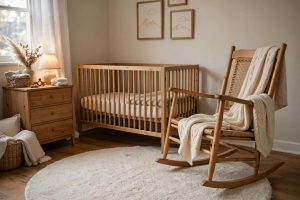
How to Choose a Nursery Rug Round for Rocking Chair Area
June 1, 2026 0 views