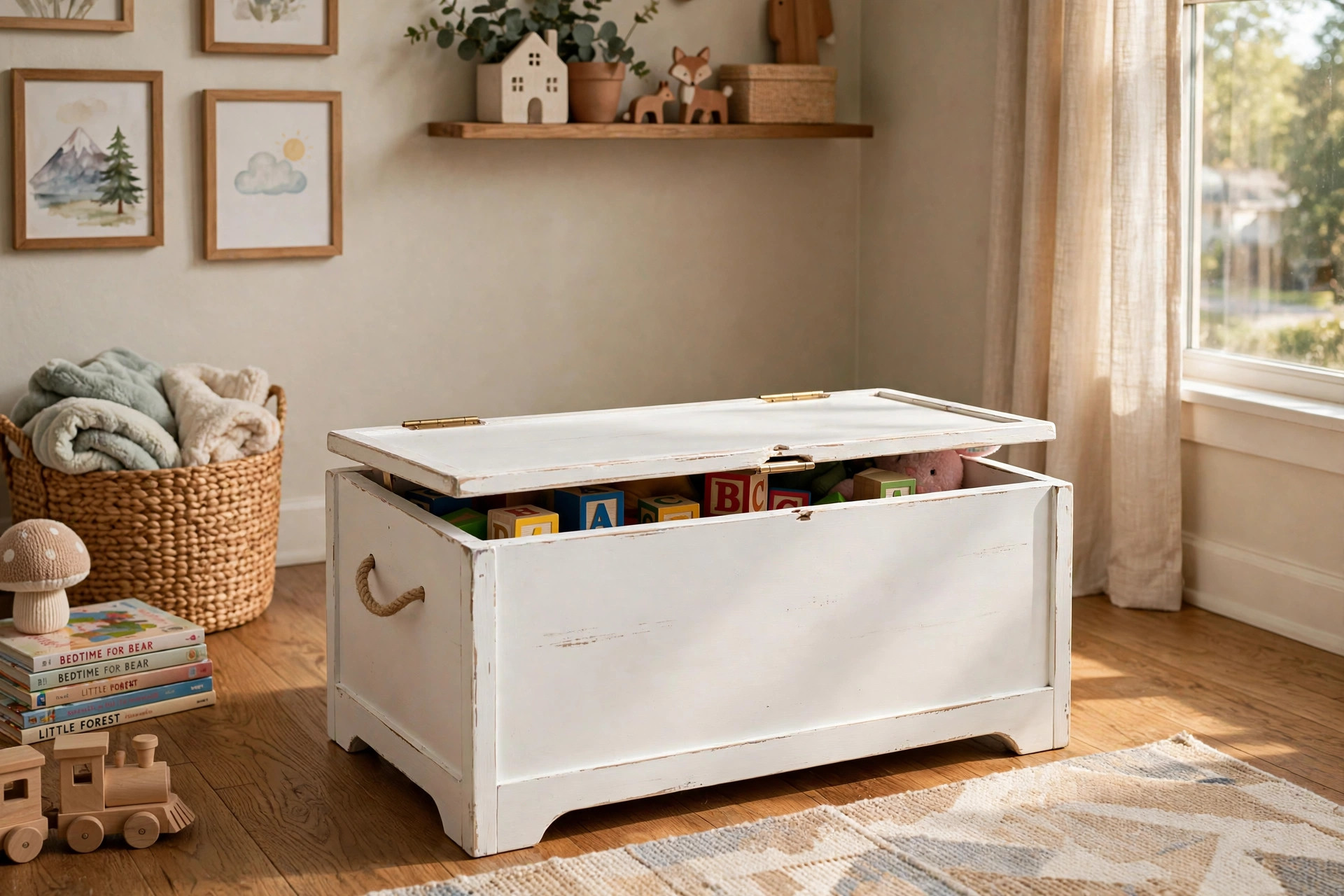

Every home with young children knows the same sight. Blocks on the floor. Dolls under the table. Cars behind the couch. Toys seem to spread into every room. A good toy chest can end that daily mess. A kids toy chest with safety hinge lid goes one step further. It stores the toys and protects small fingers at the same time.
Most ordinary chests have a simple hinge. The lid falls shut when a child lets go. A heavy lid can hurt a hand or pinch fingers badly. A safety hinge lid works in a different way. It stays open at any angle. It closes slowly when pushed. It cannot slam. Parents often pick this kind of chest once they see how it works.
This guide explains what a safety hinge is. It shows how to choose the right chest for your home. It covers types, prices, care, and safety. It also answers the questions parents ask most.
Why a Safety Hinge Lid Matters
Small children do not think about danger. They open a chest and drop the lid. A heavy lid can trap fingers or even close on a child who climbs inside. The United States Consumer Product Safety Commission has warned for years about injuries from falling toy chest lids.
A safety hinge changes the whole picture. The hinge holds the lid up. It will not drop by itself. When the lid is closed, it comes down gently. This is why many parents now treat the safety hinge as a must-have feature rather than a bonus. You will see this feature on many children’s chests in the toy storage aisle of IKEA.
The value goes beyond safety. A chest that stays open makes cleanup easier. Children can see everything inside. They learn to tidy up on their own. That small change can turn cleanup time into a habit instead of a fight.
A safety hinge changes the whole picture. The hinge holds the lid up. It will not drop by itself. When the lid is closed, it comes down gently. This is why many parents now treat the safety hinge as a must-have feature rather than a bonus. You will see this feature on many children’s chests in the toy storage aisle of IKEA.
The value goes beyond safety. A chest that stays open makes cleanup easier. Children can see everything inside. They learn to tidy up on their own. That small change can turn cleanup time into a habit instead of a fight.
How the Safety Hinge Works: Kids Toy Chest with Safety Hinge Lid
The safety hinge is a simple piece of hardware. It uses a spring or a friction joint. The hinge keeps the lid at whatever angle you leave it. Push the lid up and it stays up. Pull it down and it comes down at a slow, even speed.
This is the same idea used on kitchen cabinet doors with soft-close hinges. Good toy chests use two or three hinges across the back edge. Cheap chests may use one weak hinge that wears out fast.
Some lids also have an air gap when closed. The gap stops the lid from sealing tight. It gives the child air if the worst happens and the child climbs inside. The Consumer Product Safety Commission offers guidance on toy chest hazards that every parent should read before buying.
Types of Toy Chests with Safety Hinges
Wooden Toy Chests
Wooden chests are the most common type. They are strong and they last for years. Many parents choose them because they look like real furniture. They fit well in a living room or a bedroom. Pine is the most common wood. It is light and affordable. Hardwood chests cost more but they hold up better to daily use.
A painted wooden chest can match the colors of a nursery or playroom. White, gray, and pastel colors are popular. Some chests come unfinished so you can paint them yourself.
Upholstered Bench Chests
Some chests have a padded lid. The top doubles as a bench. Children can sit on it to read or play. These are often called toy box benches. The padding adds comfort and softens any bump.
Plastic Toy Chests
Plastic chests are light and easy to clean. A spill of juice or paint wipes off with a damp cloth. They do not rot in a damp basement. They cost less than wooden chests. The downside is looks. Plastic does not match most room decor as well as wood does.
Themed and Character Chests
Children love chests with bright prints or characters. Many stores sell chests with cartoon art, animals, or space scenes. These chests make cleanup fun for young children. The safety hinge is the same as in a plain chest. The themed cover just makes the child want to use it. Browse design ideas for a child’s room on The Spruce to see how a themed chest can fit a whole room plan.
What to Look for When You Buy
Hinge Quality First
Open the lid and let go. It should stay exactly where you left it. Push it down gently. It should move down slowly and evenly. Repeat this several times. If the lid drops fast or slams at the end, the hinge is not good enough. A well-made safety hinge feels smooth and controlled.
Check how the hinge is attached. Screws should go into solid wood, not into thin particle board. Metal brackets should feel stiff, not flimsy. If you are buying online, read reviews that mention the hinge. One bad hinge ruins the whole chest.
Size and Capacity
Think about what will go inside. Blocks and dolls need less room than dress-up clothes or stuffed animals. A medium chest of about two to three cubic feet suits most small rooms. A large chest of four cubic feet or more works for a playroom with many toys.
Ventilation
A child may climb into any chest. That is why ventilation matters. Look for air holes in the sides or back. Some chests have a gap under the lid when it is closed. This gap lets air in. It also stops the lid from sealing shut. Safety groups recommend this feature for every toy chest.
Rounded Edges
Young children bump into furniture all day. Rounded corners are kinder than sharp ones. Run your hand along the edges. They should feel smooth. A chest with soft edges is better for toddlers who are still unsteady on their feet.
Weight and Stability
A very light chest can tip if a child leans on the open lid. A very heavy chest is hard to move for cleaning. The best chests sit low and wide. They do not rock when the lid opens. If the chest comes with wall anchors, use them. Anchoring keeps the chest from tipping.
Materials and Finish
Check the finish for chips and rough spots. Paint should be smooth and even. Ask if the paint is non-toxic and lead-free. Any chest made for children in the United States should meet the current safety rules for lead in paint. Wood should be sanded smooth inside and out.
Cost and Price
Prices vary with size, material, and brand. A simple plastic chest with a safety hinge costs about 30 to 60 dollars. A painted wooden chest costs about 60 to 150 dollars. A large hardwood chest or a padded bench chest can cost 150 to 300 dollars.
Handmade or custom chests cost more. A carpenter-built chest with a name carved on it can cost 300 dollars or more. These are gifts for special occasions. They last long enough to pass down to the next child.
Shipping adds to the cost for online orders. A large chest ships in a flat box and needs assembly. You will need a screwdriver and about half an hour. Compare prices across retailers before you buy. A price comparison on Wayfair can show you how much the same size chest varies from one brand to another.
Do not buy the cheapest chest without checking the hinge. A weak hinge on a cheap chest can fail within months. Spending a little more on a sturdy hinge pays off in safety and in years of use.
Care and Upkeep
A toy chest takes hard use. Children throw toys into it. They spill drinks on it. They climb on the lid. Regular care keeps it looking good and working well.
Dust the chest once a week with a damp cloth. For sticky spots, use mild soap and water. Dry it well after cleaning. Water left on wood can warp it or lift the paint.
Check the hinges every few months. Open and close the lid slowly. If the lid starts to drop faster than before, the hinge may be wearing out. Tighten the screws. If the hinge is still loose, replace it. Replacement safety hinges are sold at hardware stores for a few dollars. Many step-by-step repair guides appear in the home repair section of Better Homes & Gardens.
Empty the chest twice a year. Sort the toys. Give away what the child has outgrown. Throw away broken pieces. An overflowing chest is a sign that some toys need to leave the house.
If the chest is painted, touch up chips with matching paint. Chips can expose bare wood. A quick touch-up keeps the chest looking new and safe to touch.
Safety Tips for Parents
A safety hinge lid is a big step forward. But no chest is safe on its own. Parents still need to set rules and check the chest.
– Never let a child play inside the chest. Teach that it is for toys, not for hiding. – Keep the chest away from windows with cords. A child standing on the chest can reach a cord. – Anchor tall or narrow chests to the wall. – Check for recalls before you buy a used chest. Old chests may have lids that slam. – Remove any chest with a broken hinge from use until it is fixed.
Pediatric experts remind parents that toy chests are a known hazard for head and finger injuries. The child health site HealthyChildren.org has articles on keeping play areas safe. The American Academy of Pediatrics also publishes safety guidance for home furniture. Reading these resources takes only a few minutes and can prevent real harm.
Organizing Toys Inside the Chest
A big open chest can turn into a jumble. Small pieces sink to the bottom. The child dumps everything out to find one toy. A few simple habits fix this.
Use small bins or bags inside the chest. Sort by type. One bin for blocks, one for cars, one for dolls. The child can pull out one bin at a time. This keeps the mess small.
Put picture labels on the bins. A toddler who cannot read can still match a picture of a car to the car bin. Labels teach sorting and make cleanup a game.
Keep the heaviest items at the bottom. Books and large toys go down low. Light items go on top. This stops the chest from becoming top-heavy.
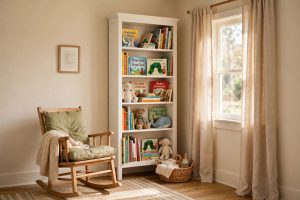
A chest works best as part of a full storage plan. Pair it with a kids bookshelf with bins for toy storage for books and small items. Add a toddler table and chair set for playroom so art supplies have their own home. Use kids wall shelves for books and toys display to show off favorites and keep the floor clear.
For more ideas, the nursery specialists at Pottery Barn Kids sell matching storage pieces that pair well with a wooden chest. Stage-by-stage playroom safety guidance is easy to find on What to Expect. The editors at Parents also cover toy storage ideas that grow with the child.
Frequently Asked Questions
What is a safety hinge on a toy chest?
A safety hinge is a special hinge that holds the lid open at any angle. It keeps the lid from falling shut on its own. When you push the lid down, it closes slowly and gently. This stops the lid from slamming on small fingers.
Are toy chests with safety hinges required by law?
No single law requires every toy chest to have a safety hinge. But United States safety rules do set standards for toy chests sold for children. Always check that a chest meets current safety rules before you buy.
Can I add a safety hinge to an old toy chest?
Yes. Safety hinges are sold as replacement parts at hardware stores. You remove the old hinge and screw the new one in its place. Make sure the new hinge is rated for the weight of your lid. If the old chest has other problems, like lead paint or sharp edges, it may be better to buy a new chest.
What age is a toy chest safe for?
A toy chest is useful from about age two, when a child can learn to put toys away. Toddlers under two should not use a chest alone. Always watch young children around any chest with a lid.
How much does a kids toy chest with safety hinge lid cost?
Expect to pay 30 to 60 dollars for a basic plastic chest. A wooden chest costs 60 to 150 dollars. Large or padded bench chests run 150 to 300 dollars. Custom handmade chests cost more.
How do I clean a wooden toy chest?
Wipe it with a damp cloth and mild soap. Dry it right away so water does not warp the wood. Touch up paint chips with matching paint. Check the hinges while you clean and tighten any loose screws.
A Short Final Word
A kids toy chest with safety hinge lid is a small buy with a big payoff. It keeps the playroom tidy. It teaches the child to clean up. Most of all, it keeps small fingers safe from a heavy falling lid. Choose a chest with a strong hinge, smooth edges, and good ventilation. Check the hinge now and then. Keep the chest anchored and the toys sorted. Do those simple things, and the chest will serve your family well for years.
References
American Academy of Pediatrics. (n.d.). HealthyChildren.org. https://www.healthychildren.org American Academy of Pediatrics. (n.d.). Child health resources. https://www.aap.org Better Homes & Gardens. (n.d.). Home and garden ideas. https://www.bhg.com IKEA. (n.d.). Home furnishings. https://www.ikea.com Parents. (n.d.). Parenting advice and family life. https://www.parents.com Pottery Barn Kids. (n.d.). Kids furniture and decor. https://www.potterybarnkids.com The Spruce. (n.d.). Home and garden advice. https://www.thespruce.com U.S. Consumer Product Safety Commission. (n.d.). Product safety information. https://www.cpsc.gov Wayfair. (n.d.). Furniture and home goods. https://www.wayfair.com What to Expect. (n.d.). Pregnancy and parenting guidance. https://www.whattoexpect.com
Was this guide helpful?

About Jennifer Lee
The My Garden US editorial team writes practical, in-depth home and garden guides for American homeowners — tested advice, no fluff.
You May Also Like

Toddler Duvet Cover Set for First Big Bed: A Simple Guide for Parents
April 7, 2026 0 views
How to Choose a Crib Mobile Arm for Attaching to Crib
May 10, 2026 0 views
The Toddler Floor Bed Montessori Style Low: A Parent’s Complete Guide
April 22, 2026 0 views