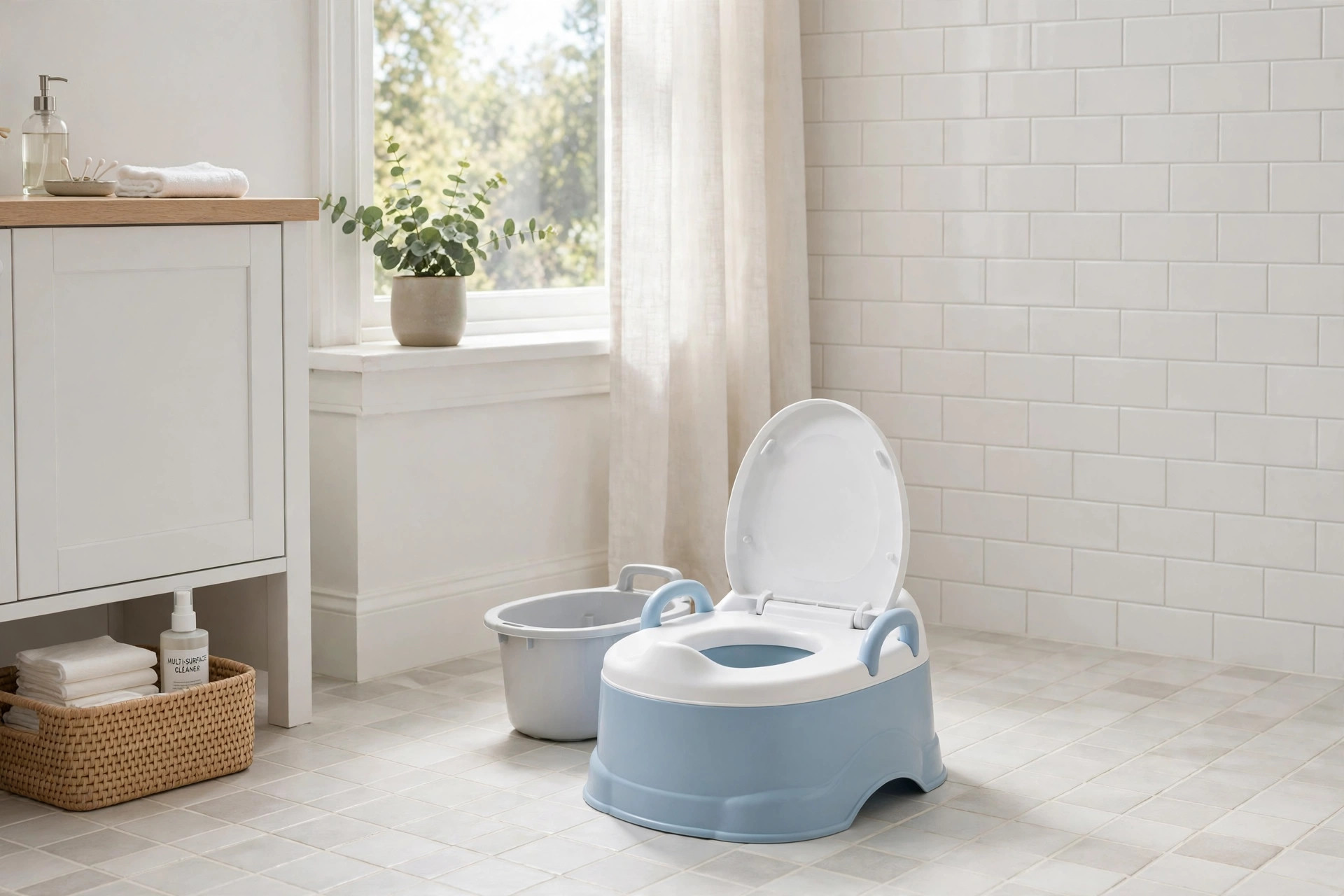

Most children show signs of readiness between eighteen months and three years. A toddler potty chair for bathroom training gives the child a seat that fits. The feet touch the floor. The body feels steady. These small facts matter more than most parents expect. A calm child learns faster than a frightened one.
This guide explains what to look for, what kinds exist, what they cost, and how to keep them clean. It also covers safety and answers common questions. The aim is simple. Help the child feel sure. Help the parent feel sure too.
Why a Potty Chair Matters
A regular toilet is built for an adult body. For a small child it is high, wide, and loud when it flushes. Many children fear falling in. A chair made for the child removes that fear. The child can sit down alone. The child can stand up alone. That sense of control builds trust.
Pediatric health writers often note that readiness comes in stages. Physical control, the wish to copy adults, and the wish to stay dry all play a part. A good chair supports each stage. It lets practice happen in a calm place. HealthyChildren.org offers plain guidance on readiness signs that many parents find useful. What to Expect also walks parents through the steps of early training in simple terms.
The chair also shapes the room. Many families keep the potty in the bathroom from the first week. The child learns that the bathroom is the place for this task. Others keep it in the bedroom corner at first, then move it. Both plans work. What matters is that the chair stays in one steady spot.
Routine helps as well. Many parents set the child on the chair after meals and naps. The body often needs to go at those times. A short, calm sit of three to five minutes is enough. If nothing happens, praise the try and move on. Over time the child links the chair with the act, and the act with praise. That link is the heart of training.
Where the chair lives can change how the child feels about it. A dark hallway corner can seem cold. A bright bathroom corner feels open. If the bathroom is small, place the chair by the door side where the child can enter and exit with ease. Some parents add a small rug or a foot mat near the chair. The mat marks the spot and keeps feet from slipping on cold tile.
What to Look for in a Toddler Potty Chair: Toddler Potty Chair for Bathroom Training
Size and Stability
The base must sit flat on the floor. Wide legs help. Rubber pads under the legs stop sliding on tile. Test the chair before the child uses it. Press on one side. If it tips, choose another model.
The seat opening should match the size of the child. Too wide and the child feels loose. Too narrow and the child feels squeezed. Many makers list an age range on the box. Use the range as a guide, not a rule. The shape of the child matters more than the age.
Ease of Cleaning
Training is messy at first. A removable inner pot makes life easier. Lift it out, empty it, rinse it, and put it back. Look for smooth plastic with few seams. Seams trap dirt. One-piece seats clean fastest. Some models split into many small parts. Those parts save space but take more time to wash.
Check the label for cleaning advice. Most chairs wash with soap and warm water. Strong bleach can dull bright colors. A mild cleaner works well and smells less harsh.
Comfort and Design
A smooth rim helps the child sit longer. A backrest gives support. Some chairs play music when used. Music can please some children and distract others. A simple chair suits most homes best.
Color can help too. A chair in a bright color feels like a toy. The child may look forward to using it. But the chair should not look so much like a toy that the child plays rough with it. Balance is the goal. IKEA and Pottery Barn Kids both sell simple nursery and child products that fit a calm room plan. A potty chair that matches the room can feel less strange to a small child. If you are still setting up the nursery, a wooden rocking chair with a classic look or soft cloud wall decals for the ceiling can make the whole space feel safe and warm.
Types of Potty Chairs
Stand-Alone Potty Chairs
These sit on the floor. They need no adult toilet. They are the most common first choice. The child walks up, turns, and sits. Many have a lid and a carry handle. A lid keeps smell in when the pot waits to be emptied. Some stand-alone chairs later convert into a step stool. That gives the chair a second life after training ends.
Seat Reducers with Step Stools
A seat reducer is a small ring that fits on the big toilet. It makes the opening smaller. A step stool lets the child climb up alone. This pair teaches the child to use the real toilet from the start. It saves floor space. But some children fear the height. Watch the child the first few times. If the child grips the sides in fear, go back to a floor chair for a while.
Travel and Folding Chairs
These fold flat for bags and cars. They help keep the routine steady on trips. A foldable seat reducer also fits in a tote. Public restrooms can feel strange to a child. A known seat from home can calm the child. Keep the travel chair clean and dry between trips.
Cost and Price Range
A basic plastic potty chair often costs between ten and twenty dollars. Models with padded seats, music, or step-stool conversion cost more. A full set with a reducer and a sturdy step stool can reach forty to sixty dollars.
Price does not always track quality. Some plain chairs last through two children. Some costly chairs crack at the seams. Read the label. Feel the plastic. A thick, smooth body beats a thin, fancy one. Target, Walmart, and Wayfair list wide ranges of models, which makes it easy to compare prices side by side. BuyBuy Baby focuses on child and baby goods and often groups training products together.
Secondhand chairs appear in many shops and sale groups. If you buy used, check every part. Make sure no piece is cracked or missing. Wash the chair well before first use.
Care and Upkeep
Empty the inner pot after each use. Rinse it with warm water. Wash it daily with soap. Let it dry in the air. A damp pot can smell and can grow mold in the seams.
Wipe the seat and the base once a day. Pay care to the rim and the back. Once a week, take the chair apart if it comes apart. Wash each part. Check for cracks while you wash. A cracked seat can pinch the skin. Throw it away and buy a new one.
Keep spare parts in mind. Some makers sell extra inner pots. Two pots let one dry while the other is in use. That small trick saves time on busy days.
Good care also means good placement. Keep the chair near the bathroom or in it. The Spruce offers many home care guides, and The Spruce covers child product cleaning in plain language. A tidy spot makes the daily wash a quick habit.
Safety Notes
The United States Consumer Product Safety Commission sets rules for child products. The CPSC posts recall lists online. Check the list before you buy. If a model you own is recalled, stop using it and follow the maker’s steps for a fix or a return.
Never leave a small child alone in the bathroom. Water in tubs and buckets is a hazard. Keep the potty away from the tub edge. Make sure cords and cleaners sit out of reach. A safe room lets the parent step back a little, and a little space helps the child learn.
Watch the weight limit on the box. Most chairs hold children up to about fifty pounds. A heavier child can crack the base. Also check for small parts. Buttons, stickers, and loose caps can come off and reach the mouth. Pick models with as few loose parts as you can.
Stability matters most on smooth floors. Tile and wood can be slick. A rubber mat under the chair can help. If the child rocks or stands on the chair, teach the child to sit still. Praise calm sitting. Move fast to stop rough play.
Also look at the paint and finish. Bright paints can chip and flake. Flakes can reach the mouth of a small child. Choose chairs with solid color plastic rather than painted coats when you can. If paint does chip, sand the rough edge smooth or replace the chair. Small cuts on lips or legs are rare but they do happen, and they are easy to avoid with a quick weekly check.
Frequently Asked Questions
When should training start?
Most children are ready between eighteen months and three years. Signs include dry diapers for two hours, hiding to pass waste, and words for the act. Start when the child shows two or three signs. Do not rush. A late start often goes faster than an early one.
Potty chair or seat reducer?
A floor chair suits most first steps. It feels safe and needs no climbing. A reducer and step stool suit a child who wants to copy adults. You can own both. Use the floor chair at first. Move to the reducer when the child asks.
How long does training take?
Weeks for some, months for most. Day dryness often comes first. Night dryness can take much longer. Praise each small win. Keep the tone calm after misses. Punishment slows learning.
What if the child refuses the chair?
Take a break for one or two weeks. Keep the chair where the child can see it. Let the child sit on it with clothes on. Read a book there. When the chair feels normal, try again. Pressure makes refusal worse.
How do I clean a travel potty?
Rinse it as soon as you can. Carry wipes for the road. Wash it fully at home with soap and warm water. Let it dry open before you fold it. A damp fold can smell by the next trip.
Can I use the same chair for two children?
Yes, if it is still strong and clean. Check for cracks and loose parts. Wash it fully. If the plastic feels brittle or the seat wobbles, buy a new one. Safety comes before savings.
A Final Word
A toddler potty chair for bathroom training is a small tool with a big job. It gives the child a right-sized place to learn a new skill. Choose a steady base. Choose smooth, easy-clean parts. Keep the tone warm and the pace slow. The chair does not train the child. The child trains at the child’s own pace. The chair simply makes that pace easier.
Many families find that the bathroom corner becomes a proud spot. The child walks in alone. The child sits. The child stands. These small acts add up. With a good chair, clean care, and steady patience, training becomes one more normal part of growing up. Pairing the potty corner with other calm room pieces, like theme curtains for a boy’s bedroom, can help the whole home feel steady for a small child.
References
American Academy of Pediatrics. (n.d.). HealthyChildren.org. https://www.healthychildren.org buybuybaby. (n.d.). Baby gear, furniture, and nursery decor. https://www.buybuybaby.com IKEA. (n.d.). Home furnishings. https://www.ikea.com Pottery Barn Kids. (n.d.). Kids furniture and decor. https://www.potterybarnkids.com Target. (n.d.). Retail store. https://www.target.com The Spruce. (n.d.). Home and garden advice. https://www.thespruce.com U.S. Consumer Product Safety Commission. (n.d.). Product safety information. https://www.cpsc.gov Walmart. (n.d.). Everyday low prices. https://www.walmart.com Wayfair. (n.d.). Furniture and home goods. https://www.wayfair.com What to Expect. (n.d.). Pregnancy and parenting guidance. https://www.whattoexpect.com
Was this guide helpful?

About David Wilson
The My Garden US editorial team writes practical, in-depth home and garden guides for American homeowners — tested advice, no fluff.
You May Also Like

Nursery Wall Mount for Baby Monitor Camera: A Simple Guide for New Parents
August 4, 2026 0 views
Crib Sheets Waterproof for Nighttime Accidents: A Parent’s Complete Guide
May 22, 2026 0 views
Nursery Glider Slipcover for Easy Washing: A Complete Guide
April 26, 2026 0 views