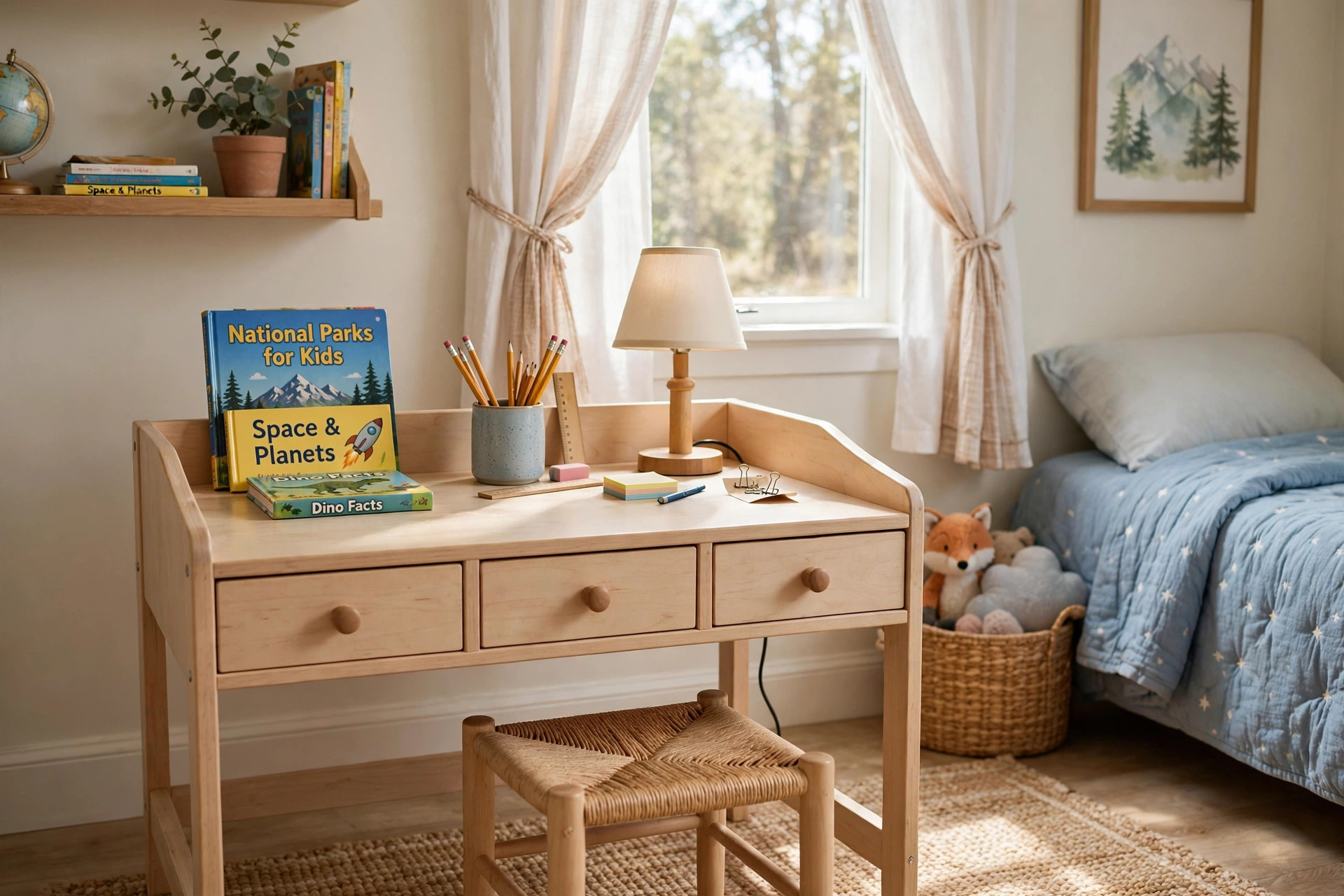

Every child needs a quiet corner of their own. A kids desk with drawers for bedroom study gives them that place. It is not just a table. It is a small work space where homework, drawing, and reading can happen without clutter.
Many parents start with the kitchen table. That works for a while. But a bedroom study space lets a child settle into a routine. The drawers hold pencils, paper, and books. The room stays tidier. The child learns to care for their own things.
This guide explains what to look for in a kids desk with drawers for bedroom study. It covers sizes, styles, prices, and safety. It also answers common questions from parents.
Why a Study Desk Matters for Children
Children do better work when they have their own place for it. A desk marks a clear line between play and study. When a child sits down at their desk, they know it is time to focus.
A bedroom study setup also builds good habits. The child puts books back in the drawers. They keep the top clear for writing. Over time, this order becomes second nature. Teachers often notice the difference in children who have a steady place to work.
The drawers are the key part. A flat table lets papers pile up. Drawers give every item a home. Crayons go in one drawer. Notebooks go in another. The child learns to sort and store.
A desk also protects posture. Many children write on the bed or the floor. That strains the neck and back. A desk at the right height keeps the body straight. Pair it with an adjustable kids desk chair so feet can rest flat on the floor.
What to Look for When You Choose: Kids Desk with Drawers for Bedroom Study
Size and Height
Measure the room first. Leave at least three feet of clear space in front of the desk. The child needs room to pull the chair out and stand up.
For young children, the desk top should sit about twenty to twenty four inches high. For older children, twenty six to thirty inches is common. Many desks now adjust as the child grows. That saves money over the years.
Check the depth too. Eighteen inches is the bare minimum for a book and an elbow. Twenty four inches is more comfortable. A deeper top leaves room for a lamp at the back.
Number and Type of Drawers
Two or three drawers suit most children. One shallow drawer holds pens and small tools. Deeper drawers hold books and paper.
Look at how the drawers move. They should slide in and out without sticking. Metal glides last longer than wood on wood. Soft close drawers are quieter and safer for small fingers.
Some desks have a mix. A long pencil drawer runs under the top. Two boxy drawers sit on one side. That layout keeps daily tools near the hands.
Material and Build
Solid wood is the strongest choice. It costs more, but it lasts through years of use. Pine and rubberwood are common for children’s desks.
Engineered wood is cheaper. It looks fine and holds up well if the edges are sealed. Check that the finish has no sharp spots.
Metal frames add strength. A steel leg frame keeps the desk steady. Some parents prefer this for rough use. Big box stores like Home Depot and Target carry both wood and metal frame desks, so you can compare them side by side.
Finish and Color
Light colors suit small rooms. White and pale wood reflect light and make the corner feel open. Dark desks can feel heavy in a small bedroom.
A smooth, sealed finish matters more than color. It wipes clean after paint and glue. It also resists water rings from cups.
Let the child pick between two or three options you approve. They will use the desk more if they had a say.
Types of Kids Desks with Drawers
The Classic Writing Desk
This is a simple flat top with two drawers under it. It fits almost any room. It works for homework, art, and reading. The price stays low because the design is simple.
The Pedestal Desk
A pedestal desk has a bank of three or four drawers on one side. It stores more than a writing desk. It suits children who keep lots of supplies. The open side gives leg room.
The Hutch Desk
A hutch adds shelves above the desk top. Books stand upright within reach. The shelves work well with a kids bookshelf with bins for toy storage nearby for the overflow. A hutch needs wall space, so check the wall before you buy.
The Corner Desk
A corner desk fits into an L shape. It uses space that often goes to waste. The drawers sit under one arm. This style suits shared rooms where every inch counts.
The Adjustable Desk
Some desks change height with a crank or a motor. They grow with the child from age five to fifteen. Office supply stores such as Staples stock several models, and the staff can show you how the crank works.
Where to Place the Desk in the Bedroom
Pick the spot before you buy. A corner near a window works well. The child gets daylight and a wall for the desk to rest against. Leave the closet door and the bedroom door clear. The chair needs room to pull out.
Keep the desk away from the bed if you can. A desk next to the bed invites lounging instead of work. A small gap between sleep and study helps the child switch modes. In a tiny room, a folding screen or a bookshelf can mark the line between the two zones.
Think about outlets. A lamp and a charger need power nearby. Run cords along the wall so no one trips. If the only free corner has no outlet, use a battery lamp and keep devices charged elsewhere.
Cost and Price
A kids desk with drawers for bedroom study can cost anywhere from eighty to six hundred dollars. The range is wide because materials and features vary.
Budget desks run from eighty to one hundred fifty dollars. They are usually engineered wood with two drawers. They serve well for a few years.
Mid range desks run from one hundred fifty to three hundred fifty dollars. This is the sweet spot for most families. You get solid wood or strong metal frames, smooth drawers, and a clean finish. Retailers like Walmart and Amazon list many models in this range with customer reviews you can read.
High end desks run from three hundred fifty to six hundred dollars and up. These use hardwoods. They may adjust in height. They often come from children’s furniture makers like Pottery Barn Kids, where the pieces match bedroom sets.
Plan for extras. A good chair, a desk lamp, and an organizer tray add fifty to one hundred fifty dollars. A kids night light projector is a nice touch for younger children who study before bedtime and like a soft glow in the room.
Buy once if you can. A sturdy desk bought at age seven can last until high school. That makes the mid range desk the best value for many families.
Care and Upkeep
Dust the desk once a week with a soft cloth. Crumbs and paper dust settle in the drawer tracks. A quick wipe keeps the drawers sliding well.
Clean spills right away. Water and juice stain raw wood. Most sealed tops need only a damp cloth. Skip harsh cleaners. They dull the finish.
Check the hardware twice a year. Screws loosen with daily use. A loose drawer pull is easy to fix if you catch it early. Keep the small wrench or screwdriver that came with the desk in one of the drawers.
Teach the child to open one drawer at a time. Pulling two full drawers out at once can tip a light desk. This rule matters most for tall, narrow models.
If the finish scratches, a furniture marker in a matching shade hides small marks. Deeper scratches may need a dab of wood filler and a light sanding.
Safety
Safety comes first with children’s furniture. The Consumer Product Safety Commission sets rules for children’s products in the United States. Check that the desk meets current standards.
Anchor tall desks to the wall. Any desk over twenty seven inches tall can tip if a child climbs on it. Use the anti tip strap that comes in the box. It takes ten minutes to install.
Check for pinch points. Drawers should not slam on small fingers. Soft close glides help. If the desk has older style drawers, show the child how to push them gently.
Keep cords away. A desk lamp cord should run behind the desk, not across the floor. Clip it to the back leg. Battery lamps remove the cord risk entirely.
Mind the edges. Round corners are safer than sharp ones for young children. If the desk has sharp corners, add clear corner guards.
The American Academy of Pediatrics, through HealthyChildren.org, offers guidance on safe home setups for children. Their pages cover furniture safety and good study habits.
Place the desk near a window when you can. Natural light helps the eyes. Add a lamp for evening work. The light should come from the side of the writing hand to cut shadows.
Frequently Asked Questions
What age should a child get a study desk?
Most children are ready around age five or six. That is when school work starts to need a steady place. A younger child can use a low desk for drawing. Adjustable desks work from preschool through the teen years.
How big should the desk be?
For one child, a top of about thirty six inches wide and twenty inches deep is enough. Leave room for a book, a lamp, and writing space. In a small bedroom, a thirty inch wide desk can work if the drawers hold the overflow.
Are desks with drawers better than plain tables?
For a bedroom study space, yes. Drawers keep supplies off the floor and out of sight. A plain table soon fills with piles. The drawers also teach the child to organize. That skill carries into school work.
Should the desk face the wall or the window?
Facing the wall cuts visual distraction. Many children focus better this way. Facing the window gives natural light but invites daydreaming. A wall facing desk with a lamp is the most common choice. Parenting sites like What to Expect note that a calm, low clutter corner helps children settle into homework routines.
What chair goes with a kids study desk?
Use a chair that fits the desk height. The child’s feet should touch the floor. The knees should bend at a right angle. An adjustable chair grows with the child and is worth the cost. A chair with back support beats a stool for long homework sessions.
How do I keep the desk organized?
Give every drawer a job. Top drawer for pens and tools. Middle drawer for paper and notebooks. Bottom drawer for books and projects. Once a month, clear the desk with your child and throw away the trash. A small tray on top holds the items used each day.
A Short Final Word
A kids desk with drawers for bedroom study is a simple buy with a long payoff. It gives your child a place of their own. It keeps the room neat. It builds habits that help in school and beyond.
Take your time. Measure the room. Let the child try the chair. Pick solid build and smooth drawers over fancy looks. A good desk will serve your family for years.
References
Amazon. (n.d.). Online shopping. https://www.amazon.com American Academy of Pediatrics. (n.d.). HealthyChildren.org. https://www.healthychildren.org Pottery Barn Kids. (n.d.). Kids furniture and decor. https://www.potterybarnkids.com Staples. (n.d.). Office supplies and furniture. https://www.staples.com Target. (n.d.). Retail store. https://www.target.com The Home Depot. (n.d.). Home improvement products. https://www.homedepot.com U.S. Consumer Product Safety Commission. (n.d.). Product safety information. https://www.cpsc.gov Walmart. (n.d.). Everyday low prices. https://www.walmart.com What to Expect. (n.d.). Pregnancy and parenting guidance. https://www.whattoexpect.com
Was this guide helpful?

About Lisa Anderson
The My Garden US editorial team writes practical, in-depth home and garden guides for American homeowners — tested advice, no fluff.
You May Also Like
Kids Wall Clock for Learning Time Decor: A Parent’s Guide
January 10, 2026 0 views
Crib Mobile Projector With Lullaby Music: A Complete Guide for New Parents
April 3, 2026 0 views
Nursery Hamper With Lid for Odor Control: What Parents Need to Know
June 16, 2026 0 views