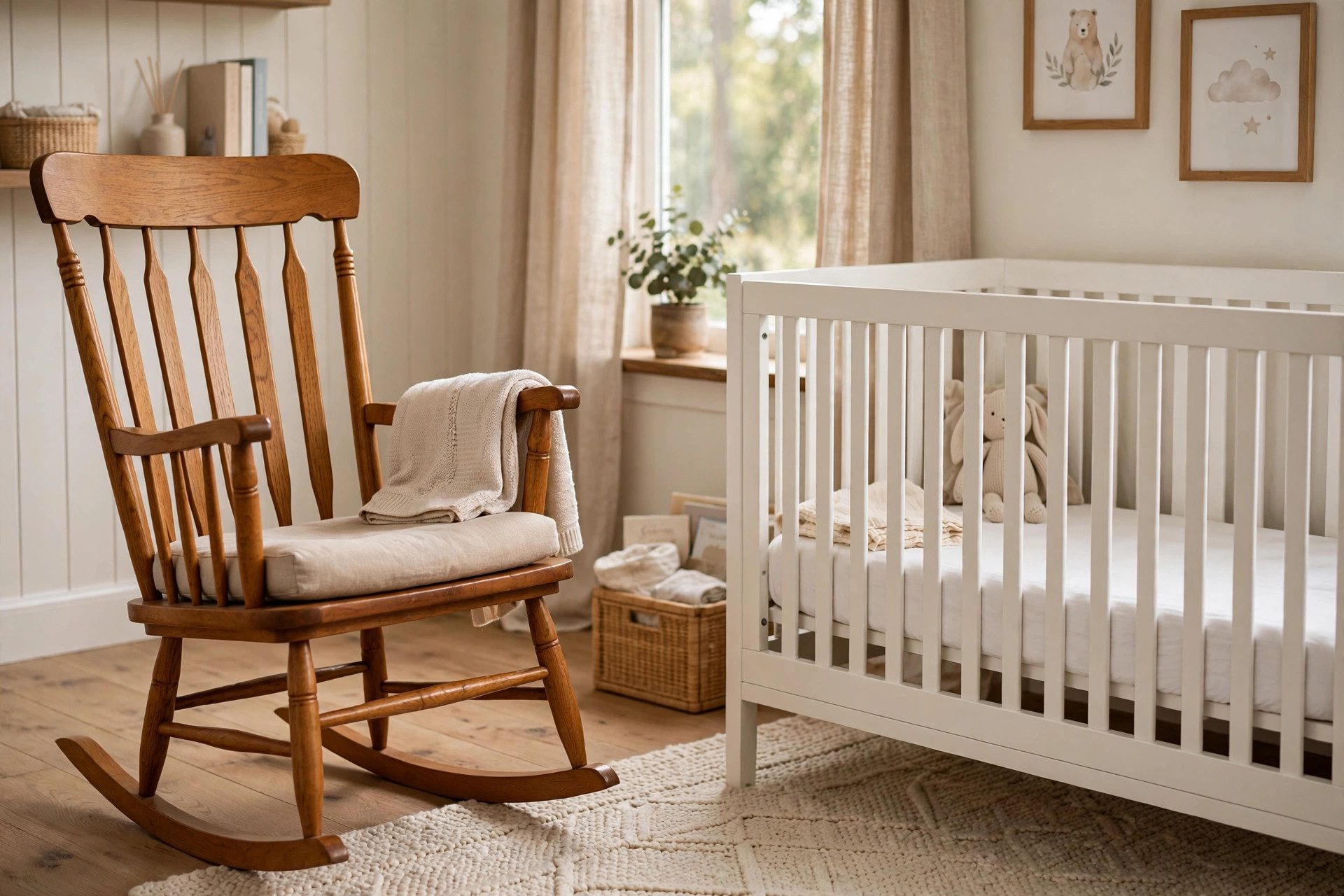

Few pieces of furniture carry as much quiet history as the wooden rocking chair. For over two centuries, parents have sat in such chairs to feed, soothe, and lull their babies to sleep. A nursery rocking chair wooden for classic look draws on that long tradition. It suits rooms decorated in a timeless style, and it pairs well with white cribs, soft rugs, and framed prints. This guide explains why the classic wooden rocking chair remains a strong choice, how to choose one that fits your space and your body, and how to keep it in good order for years.
Why a Wooden Rocking Chair Matters in the Nursery
The rocking motion has a simple and well known effect on infants. The steady back-and-forth calms a restless baby and shortens the time it takes for the child to settle. Parents feel the effect too. A slow rock lowers the heart rate and eases the tension of a long day. A nursery rocking chair wooden for classic look gives you both the motion and the look of an heirloom piece.
Wooden rockers also age well. Fabric gliders can look dated as tastes change, and their cushions can stain or wear thin. A solid hardwood chair, kept dry and clean, can serve two or three children and then move on to another family. Many parents report that the chair becomes the most photographed corner of the nursery. It is where the late-night feeds happen and where the first stories are read.
The classic look itself has real design value. Light oak, maple, or painted white finishes match nearly every nursery theme. Whether the room is done in soft pastels or in a bolder safari print, a wooden rocking chair does not clash. It grounds the room with a sense of calm and order.
How to Choose the Right Chair: Nursery Rocking Chair Wooden for Classic Look
Choosing well matters more than choosing fast. Sit in the chair before you buy if you can. The seat should support your back through a full feed, which can last twenty to forty minutes. Armrests should be at a height where your elbows rest without lifting your shoulders. Many nursing guides stress good posture during feeds, and a chair that fits your body makes that easier.
Measure Your Space First
Nursery rooms are often small. Measure the spot where the chair will sit, and add at least twelve inches on each side for the runners to move freely. A full-size wooden rocker needs a footprint of about three feet by four feet when in motion. If your room is tight, you may want to compare with best rocking chair for nursery small spaces, which covers compact options for smaller rooms.
Check the Wood and Joinery
Look for hardwoods such as oak, maple, beech, or rubberwood. These woods hold their shape and resist dents from everyday use. Check that the joints are tight and that the runners are straight. Rock the chair in the store. It should move smoothly and come to a gentle stop on its own, with no squeak and no side-to-side wobble. A chair that wobbles in the shop will not improve at home.
Think About the Finish
A clear varnish shows the grain and suits a warm, traditional nursery. A painted white or cream finish matches a crisp, clean room and hides small scratches better over time. Make sure the finish is non-toxic and lead-free. The Consumer Product Safety Commission publishes nursery safety guidance that every new parent should read, and its product safety pages cover furniture standards in plain language.
Types of Classic Wooden Rocking Chairs
The classic wooden rocking chair comes in several forms. Each has its own strengths.
The traditional spindle rocker. This is the old Boston-style chair, with turned spindles along the back and a shaped wood or cane seat. It is light, narrow, and easy to move. Some parents add a seat cushion for comfort during long feeds. It suits a room with an antique or farmhouse theme.
The mission-style rocker. Oak frames, straight lines, and thick slats give this chair a craftsman feel. It is heavier and sturdier than the spindle type, and the wide seat suits larger bodies. Leather or fabric cushions are common and can be tied on and replaced.
The Windsor rocker. A Windsor back with a sculpted seat looks refined and sits comfortably for many body types. The bowed arms and steam-bent runners give it a graceful outline. This style works well in a room that mixes old and new pieces.
The modern classic rocker. Some makers build rockers in solid wood but with cleaner lines and upholstered seats. These chairs keep the classic feel while adding more padding. If you need extra comfort, you may also want to read about nursery rocking chair upholstered for comfort to compare padded options.
The convertible rocker-glider. A few wooden rockers use a glider base hidden under the frame. These give the smooth motion of a glider with the look of wood. They cost more, and the mechanism adds parts that may need care. For a straight comparison of glider motion, see nursery glider chair with ottoman for breastfeeding.
Cost and Price Expectations
A nursery rocking chair wooden for classic look can cost anywhere from about one hundred dollars to over one thousand. Price depends on the wood, the maker, and the finish.
Budget chairs in the one-hundred to two-hundred dollar range are usually made of rubberwood or mixed woods with simple finishes. They serve well for one child but may show wear sooner. Mid-range chairs from two hundred to five hundred dollars use better hardwoods and tighter joinery. This range holds most of the well-made chairs sold by nursery furniture brands.
High-end rockers above five hundred dollars often come from furniture makers with long records. They use kiln-dried hardwoods, hand-rubbed finishes, and brass or steel hardware. Many carry long warranties. Antique chairs from estate sales can cost less than new mid-range chairs, but check them with care. Loose joints or cracked runners can be costly to repair.
Watch for sales around major holidays and baby events. Large retailers such as Wayfair, Target, and IKEA run seasonal promotions on nursery furniture. Specialist stores such as Pottery Barn Kids and Graco also offer regular discounts.
Styling the Chair in a Classic Nursery
The chair should feel like part of the room, not an afterthought. A small rug under the runners keeps the motion quiet and protects the floor. Choose a flat-weave rug so the runners move freely over it. A soft throw pillow at the lower back adds color and support.
Light matters during night feeds. A dim lamp or a warm night light on the side table lets you see without waking the baby fully. Keep a small basket nearby with a burp cloth, a water bottle, and a book. Parents who set up this small station report less stress during the night.
The classic wooden chair also photographs well, which matters to many families. Place it near the window so daylight falls on the wood grain. Simple bedding and plain walls keep the focus on the chair and the baby. Parenting editors at What to Expect and The Spruce offer many nursery styling ideas in a classic tone.
Care and Upkeep
Wood needs little care, but it needs steady care. Dust the chair each week with a soft dry cloth. Wipe spills at once with a damp cloth and dry the spot right away. Water left standing on wood can cloud the finish or raise the grain.
Once or twice a year, check every bolt and screw and tighten what has worked loose. Wood moves slightly with changes in heat and moisture, and joints can loosen over time. A small bottle of wood-safe oil or wax polish will keep the finish fresh. Apply it thinly and buff with a soft cloth.
Keep the chair out of direct sun for long hours. Strong sun can fade the finish and dry the wood. Keep it away from heating vents too, since hot dry air can crack joints over time. If the rockers start to squeak, a drop of paraffin wax or a bar of dry soap rubbed on the contact points will quiet them.
For families with toddlers, expect some dings. Light scratches in varnish can be softened with a matching touch-up marker. Deeper dents need a filler and a dab of stain, which most hardware stores carry in small sizes.
Safety in the Nursery
Safety comes before style. A rocking chair has moving parts, and small children need care around it.
Place the chair where toddlers cannot reach it to rock on their own. A chair left rocking can tip forward if a child climbs it the wrong way. Many families move the chair to a corner or a locked room during the day when the baby becomes mobile.
Keep the space around the chair clear. Loose rugs, toys, and cords under the runners are trip hazards. Tie cords from lamps and monitors high on the wall. Dress the chair with care: long ties on cushions can wrap around a small child, so keep them short and tight.
Check recalls before buying secondhand. The CPSC site lets you search recalls by product type. Old chairs with peeling paint may hold lead, so have any pre-1978 painted chair tested before use. The American Academy of Pediatrics, through HealthyChildren.org, gives clear guidance on safe sleep and safe nursery setup.
Frequently Asked Questions
Is a wooden rocking chair comfortable enough for nursing? Yes, if it fits your body. Many mothers nurse for months in a wooden rocker with a good cushion. A lumbar pillow behind the lower back and a firm seat cushion make long feeds easier. Some parents prefer full upholstery, but many find that a well-shaped wooden seat with padding is enough.
How long does a solid wood rocking chair last? A hardwood rocker that is kept dry and tightened now and then can last for decades. It is common for such chairs to serve several children and then pass to grandchildren. The finish may need a fresh coat after many years, but the frame stays sound.
Wood rocker or glider for a classic nursery look? The wood rocker keeps the classic look without question. Gliders offer smoother motion and often come with matching ottomans, but their boxy frames suit a modern room better. If the classic look is your goal, the wood rocker is the natural pick.
Can I buy a used wooden rocking chair safely? You can, with care. Check for cracks in the legs and runners, test every joint, and confirm the finish is intact. Avoid chairs with wobbly frames or missing parts. Clean the chair well and consider a fresh coat of non-toxic finish.
What wood color suits a classic nursery? Honey oak, natural maple, and warm cherry are the most popular for a classic look. White or cream paint suits a bright, airy room. Choose a tone that echoes another wood piece in the room, such as the crib, so the set feels planned.
Do I need an ottoman with a rocking chair? It is not required, but it helps. An ottoman lifts the legs and takes pressure off the lower back during long feeds. Some wooden rockers have matching footstools. A simple padded ottoman in a matching fabric works just as well.
A Final Word
A nursery rocking chair wooden for classic look is one of the few nursery buys that outlasts the baby years. It rocks a newborn to sleep in year one and holds a toddler for story time in year three. Chosen with care, kept tight and clean, it becomes a family piece rather than a nursery item. Take your time, sit in a few chairs, and pick the one that feels like home.
References
American Academy of Pediatrics. (n.d.). HealthyChildren.org. https://www.healthychildren.org Graco. (n.d.). Baby gear and nursery products. https://www.graco.com IKEA. (n.d.). Home furnishings. https://www.ikea.com Pottery Barn Kids. (n.d.). Kids furniture and decor. https://www.potterybarnkids.com Target. (n.d.). Retail store. https://www.target.com The Spruce. (n.d.). Home and garden advice. https://www.thespruce.com U.S. Consumer Product Safety Commission. (n.d.). Product safety information. https://www.cpsc.gov Wayfair. (n.d.). Furniture and home goods. https://www.wayfair.com What to Expect. (n.d.). Pregnancy and parenting guidance. https://www.whattoexpect.com
Was this guide helpful?

About David Wilson
The My Garden US editorial team writes practical, in-depth home and garden guides for American homeowners — tested advice, no fluff.
You May Also Like

Nursery Theme Wall Decals for Baby Shower Parties
September 18, 2026 0 views
Nursery Storage Drawers Under Crib Space: A Practical Guide
August 15, 2026 0 views
Nursery Glider Slipcover for Easy Washing: A Complete Guide
April 26, 2026 0 views