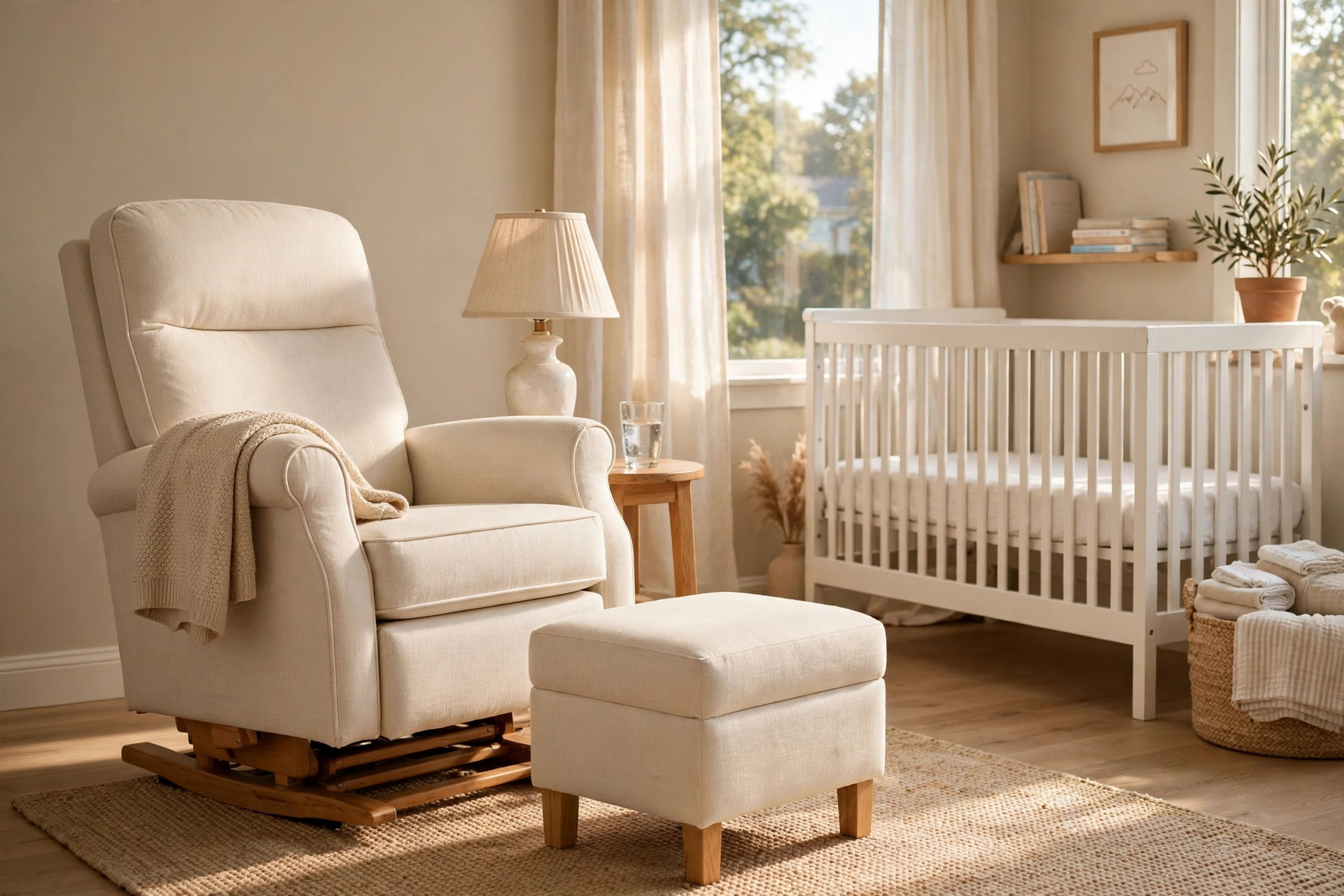

A new mother who has just had a C section needs rest, soft support, and calm. Feeding a newborn takes many hours each day. A good chair makes those hours easier on a sore body. The best nursery glider for C section recovery is not the most costly one. It is the one that lets a mother sit down and stand up without pain, holds her back in a firm but gentle way, and keeps the baby close at a safe height.
Many mothers buy a glider for looks alone. That is a mistake after surgery. The cut across the lower belly heals for weeks. The muscles near it stay weak. Sitting in a low, deep chair can strain the wound each time she rises. This guide explains what to look for, which types exist, what they cost, and how to keep them safe and clean.
Why the Right Glider Matters After a C Section
A C section is major surgery. The doctor cuts through the skin and the wall of the womb. The healing takes six to eight weeks for most women. During this time, lifting is limited. Twisting is painful. Getting up from a seat uses the belly muscles, and that hurts.
A well made glider helps in three ways. First, the seat height lets the mother sit with her knees level and her feet flat. This takes load off the belly. Second, high, firm arms give her something to push on when she stands. She does not need to pull with her stomach muscles. Third, the gentle glide motion soothes the baby and relaxes the mother without rocking the wound side to side.
A nursing chair after C section use also matters for milk let down. When a mother is tense, milk flows less freely. A calm seat, a warm room, and a slow glide help her relax. Many mothers say the glider becomes the most used seat in the home during the first months.
The American Academy of Pediatrics offers postpartum recovery guidance for new parents. Their advice stresses rest, gradual movement, and support for the healing body. The right chair fits that advice.
What to Look for in a Nursery Glider: Best Nursery Glider for C Section Recovery
Not all gliders suit a mother after surgery. Look at these points before you buy.
Seat Height and Firmness
The seat should be firm, not soft. A seat that sinks makes rising hard. The front edge should sit about knee height when the mother stands next to it. Her feet must reach the floor flat. If her feet dangle, she cannot push up with her legs. Many mothers add a small footstool, but the right seat height matters more.
Arm Height and Width
Arms are the most important part after a C section. They should be high enough to press down on. Wide, flat arms work best. Thin or low arms give no leverage. Test this by sitting and pushing yourself up with your arms only. If you must use your belly muscles, the arms are too low or too weak.
A nursery glider chair with ottoman for breastfeeding can add leg support, which takes more weight off the lower body.
Back Support and Lumbar Shape
The backrest should reach at least to the middle of the shoulder blades. A curved lumbar area supports the lower back. After a C section, posture often slumps because standing tall hurts. A glider with good lumbar shape keeps the spine in line during long night feeds. Recline helps too. A back that tilts slightly lets the mother lean back while the baby feeds at breast height with a pillow.
Recline and Locking Motion
A glider that also reclines is a strong choice. A mild recline opens the belly angle and eases pressure on the cut. Make sure the recline locks in place. A back that drifts shut on its own is unsafe when you hold a newborn. The glide motion should be smooth and quiet. A squeaky base will wake a sleeping baby and a tired mother.
Fabric and Cleaning
Newborn life is messy. Milk spills. Diapers leak. Choose fabric that wipes clean or a cover that comes off for washing. Stain resistant weaves last longer. Dark or patterned fabrics hide small marks. Avoid rough textures that scratch a baby’s skin. Many DaVinci baby furniture models offer washable covers made for this stage of life.
Types of Gliders and Rockers
Shops sell several styles. Each has its own strengths after surgery.
Wooden Frame Gliders
These have a wood base with padded cushions on the seat and back. They are light and often less costly. The glide is smooth. The weak point is the arms, which are often wood and narrow. Some add pads. They suit mothers who want a simple chair that later moves to another room.
Fully Upholstered Gliders
These are the most popular choice for recovery. Thick arms, a high back, and soft but firm padding support the whole body. Many look like small armchairs. They are heavier and take more floor space. For a mother healing from surgery, this type is usually the best pick.
Swivel Gliders and Recliners
These turn in a full circle and recline like a living room chair. The swivel helps a mother turn to reach a side table without twisting her body. Twisting strains a healing cut, so the swivel is a real benefit. Check that the base is stable. The Delta Children glider range includes swivel models built for nurseries.
Rockers
A classic wooden rocker moves on curved rails. The motion is pleasant, but the rails can tip on thick rugs, and the seat is often low and hard. For C section recovery, a glider is usually safer and more comfortable than a rocker.
Cost and Price Guide
Prices range widely. Simple wooden gliders start around one hundred fifty dollars. Mid range upholstered gliders run from three hundred to six hundred dollars. High end models with power recline and premium fabric can pass one thousand dollars.
You do not need the dearest chair. Focus on arm height, seat firmness, and a locking recline. Consumer Reports product testing can help compare build quality across brands before you buy.
Shop end of season sales. Many stores cut nursery prices in late summer and after the holidays. The Pottery Barn Kids nursery collection and the IKEA nursery range often list gliders at different price points. Online stores like the Target baby department and Amazon glider listings let you read buyer reviews about comfort after surgery.
Remember the extra costs. A washable cover, a nursing pillow, and a small side table for water add to the total. Plan for them in your budget.
Care and Upkeep
A glider gets daily use for months. Simple care keeps it in good shape.
Vacuum the seat and back each week with the soft brush tool. This stops dust from settling into the fabric. Wipe the base and arms with a damp cloth. Tighten bolts on the glide frame every few months. Wood parts can creak as they loosen. A small drop of oil on the glide bearings quiets the motion.
Wash removable covers by the maker’s label. Cold water and mild soap protect the fabric. Air dry when you can. Heat from a dryer can shrink covers so they no longer fit. Spot clean stains fast. Milk and spit up set if left to dry. Keep a folded cloth on the arm during feeds to catch drips.
When the chair is no longer needed in the nursery, it can move to a living room or reading corner. A comfortable glider often finds a second life. Some families pair it with a kids bean bag chair for a reading corner to make a cozy spot for older children.
Safety Tips
Safety comes first when a newborn is in the chair.
Keep the glide path clear. Toys, cords, and rugs under the base can stop the motion or tip the chair. Set the glider away from windows and blind cords. The CPSC safety standards for nursery products stress keeping cords out of reach of children.
Always lock the recline before you pick up the baby. Stand up slowly. Place the baby in the crib first, then rise using the arms. Never hold a hot drink while the baby feeds in the chair. Set cups on a side table.
Check the weight limit on the frame. Most gliders hold two hundred fifty pounds or more, which covers mother and baby with ease. Look for tip over warnings in the manual. Do not let older children rock hard in the chair or climb the back.
Choose paint and finish that are low in harsh chemicals. Many makers now list this on the tag. A comfortable rocker for postpartum recovery should be a healthy seat too. For night feeds, guides on baby sleep from Nanit baby sleep resources can help you build a calm routine around the chair.
Frequently Asked Questions
How soon after a C section can I use a nursery glider? Most mothers can use it within days of coming home, as long as sitting does not pull the wound. Start with short sits. Ask your doctor if you feel sharp pain when you rise.
Is a glider or a recliner better for C section recovery? A glider that reclines gives you both. The glide soothes the baby. The recline eases pressure on the cut. A plain recliner without glide is fine too, but the smooth motion of a glider calms many newborns faster.
What seat height is best after surgery? Look for a seat about nineteen to twenty one inches from the floor. Your feet should rest flat. Your knees should sit level with your hips or slightly below. This keeps the belly relaxed.
Do I need an ottoman with my glider? An ottoman helps, but it is not required. Raised feet improve blood flow in the legs and take weight off the lower back. Some gliders match with a gliding ottoman that moves with the chair. A glider with lumbar support for new moms paired with an ottoman is a strong setup for night feeds.
Can I fall asleep in the glider with the baby? No. Falling asleep in a chair with a newborn is a known risk. Feed, burp, and place the baby on the back in the crib. If you feel drowsy, ask your partner to take over or put the baby down first. Pairing the nursery with a bumper-free safe sleep crib bedding set supports safe sleep habits.
How long will I use the glider? Most families use it daily for the first six to twelve months. After that it often becomes a reading chair. A well built glider can serve for years and for later children.
A Short Final Word
The best nursery glider for C section recovery is the chair that lets you rest while you care for your baby. High firm arms, a supportive back, a locking recline, and easy clean fabric matter more than style. Test the chair if you can. Sit, rise, and glide before you buy. Your body is healing, and it deserves a seat that helps, not one that hurts. Choose with care, and those quiet hours will bring comfort to both mother and child.
References
Amazon. (n.d.). Online shopping. https://www.amazon.com American Academy of Pediatrics. (n.d.). HealthyChildren.org. https://www.healthychildren.org Consumer Reports. (n.d.). Product reviews and ratings. https://www.consumerreports.org DaVinci Baby. (n.d.). Nursery furniture. https://www.davincibaby.com Delta Children’s Products. (n.d.). Children’s furniture. https://www.deltachildren.com IKEA. (n.d.). Home furnishings. https://www.ikea.com Nanit. (n.d.). Baby sleep guides. https://www.nanit.com Pottery Barn Kids. (n.d.). Kids furniture and decor. https://www.potterybarnkids.com Target. (n.d.). Retail store. https://www.target.com U.S. Consumer Product Safety Commission. (n.d.). Product safety information. https://www.cpsc.gov
Was this guide helpful?

About Sarah Mitchell
The My Garden US editorial team writes practical, in-depth home and garden guides for American homeowners — tested advice, no fluff.
You May Also Like
Toddler Table and Chairs Plastic for Outdoors: A Practical Buying Guide
July 13, 2026 0 views
Toddler Step Stool for Bathroom and Kitchen: A Simple Guide for Parents
September 28, 2026 0 views
How to Choose a Crib Mobile Arm for Attaching to Crib
May 10, 2026 0 views