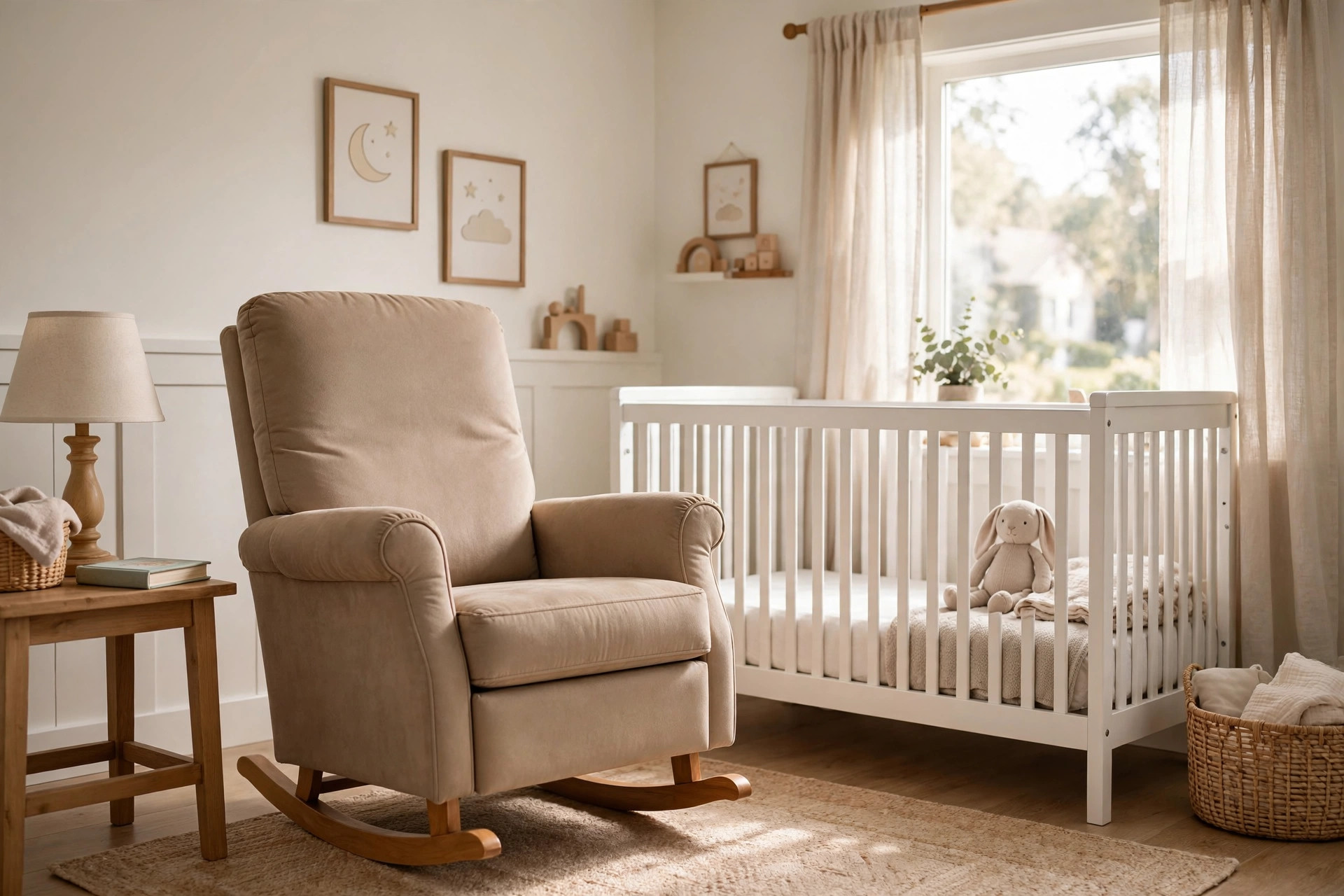

A nursery rocking chair upholstered for comfort is one of the most used pieces of furniture in a new home. Parents spend long hours in that seat, day and night. They feed the baby, calm the baby, and watch the baby sleep. The chair must feel good for a long time. This guide explains what to look for, what the types are, what they cost, and how to keep one in good shape.
Why a Comfortable Rocking Chair Matters
A baby needs care around the clock. New parents often sit for thirty to sixty minutes at a time. They sit in the dark. They sit with sore backs and tired arms. A hard or poorly shaped chair makes this work harder. A chair that is soft and well built makes it easier.
Doctors who study infant care note that feeding and holding a baby often goes on for months. The body of the parent must stay in a healthy posture. If the chair fails to support the back, the parent may develop neck pain and lower back pain. The American Academy of Pediatrics family site offers general guidance on infant sleep and feeding routines that keep these long sessions in mind.
Comfort also matters for the baby. A steady, gentle rock can calm a fussy infant. Many parents find that a smooth glide helps the baby settle to sleep. This is one reason the upholstered glider rocker has become so common in American nurseries. Retailers such as Wayfair and Target carry wide ranges of these chairs, which shows how large the demand has become.
What to Look for When You Choose: Nursery Rocking Chair Upholstered for Comfort
Buying a nursery rocking chair upholstered for comfort is not the same as buying a living room accent chair. The needs are different. The following points should guide your choice.
Seat Depth and Width
The seat should be deep enough to hold a parent and a baby. A seat depth of about twenty to twenty four inches works for most adults. The width should let you rest your arms at your sides without effort. Sit in the chair with a pillow the size of a newborn. This test shows whether the seat truly fits.
Back Support
The backrest should reach at least to the middle of your shoulder blades. Taller parents may need a higher back. Look for gentle lumbar support, a slight curve that fills the small of the back. Some chairs add a separate pillow. Others build the curve into the frame. Either can work if the shape is right.
Armrests
Armrests matter more than most buyers expect. You rest your elbows and arms on them during feeding. They should sit at a natural height, not too high and not too low. Padded armrests are kinder than bare wood. Some designs include wide flat tops where a bottle or a book can rest. Babylist gear guides often point out that arm height is one of the first things parents should test in a store.
Rocking or Gliding Motion
Traditional rockers move on curved rails. Gliders move on a track with a back and forth motion. Many modern nursery chairs combine both, and some add a gentle swivel. Each motion type has fans. The key test is simple. Sit in the chair, lean back, and move gently. The motion should feel smooth and quiet. It should not jerk, squeak, or tilt you forward.
Upholstery Fabric
The word upholstered covers many fabrics. Each has trade offs. Soft microfiber and performance polyester resist stains and wipe clean. Cotton and linen blends feel natural and breathe well in warm rooms. Boucle and velvet look rich but may catch pet hair. For a nursery, easy cleaning is often the top concern. Babies spit up. Bottles spill. Choose a fabric that can take a damp cloth without harm.
Types of Upholstered Nursery Rocking Chairs
The Classic Upholstered Rocker
This is the chair most people picture. It has a tall padded back, padded arms, and wooden or metal rockers underneath. It looks at home in a traditional nursery. It is often the least costly option. It tends to be light enough to move between rooms.
The Glider Rocker
A glider moves on a fixed base. It does not travel across the floor. This makes it safer in small nurseries where a pet or a toddler may lie near the chair. Most gliders now come fully upholstered in soft fabric. Many include a matching ottoman or a built in footrest. Parenting sites such as What to Expect list gliders among the most registered nursery items.
The Swivel Glider Recliner
This type adds a full recline and a swivel base. You can lean back almost flat during long night sessions. You can turn toward the crib without standing up. These chairs cost more. They also take up more space. They suit parents who plan to use the chair for many months, or who want the chair to move to the living room later.
The Compact Accent Rocker
Some nurseries are small. A compact upholstered rocker fits where a full glider will not. The seat is narrower. The back is lower. Comfort is still possible, but try before you buy. A chair that is too small will strain your shoulders during feeding.
Cost and Price Ranges
Prices for a nursery rocking chair upholstered for comfort vary widely. A simple upholstered rocker may cost between one hundred fifty and three hundred dollars. A mid range glider with an ottoman often runs from three hundred to six hundred dollars. A premium swivel glider recliner in performance fabric can reach eight hundred to one thousand two hundred dollars or more.
Marketplaces such as Amazon show this full range side by side, which makes price comparison easy. When you compare prices, read what is included. Some chairs ship with a lumbar pillow. Some do not. A matching ottoman may be sold apart. Delivery fees for large furniture can add fifty to one hundred dollars.
Cost also includes time. A chair that keeps its shape for five years is cheaper in the long run than a chair that sags after one year. Check the frame warranty. A five year frame warranty is a good sign. A one year warranty on a costly chair is a warning.
Care and Upkeep
A nursery chair takes daily use. Simple care keeps it looking and feeling good.
Vacuum the seat and back once a week with an upholstery tool. This removes dust and crumbs. Treat spills at once. Blot, do not rub. Rubbing pushes the stain deeper. Use a mild soap solution on most synthetic fabrics. Test any cleaner on a hidden spot first.
Rotate the seat cushion if the design allows it. This spreads wear evenly. Keep the chair out of strong direct sun. Sun fades fabric over weeks and months. If the chair has wooden rockers or legs, tighten the bolts every few months. Loose bolts cause squeaks and wobble. Home guides from The Spruce cover basic upholstery care that applies to nursery chairs as well.
For deeper cleaning, many slipcovers can go through a gentle wash. Read the care tag first. Some fabrics must be cleaned by a professional. If you have pets, a lint roller kept near the chair saves time each day.
Fabric protection sprays can add a shield against spills. Choose a spray made for home upholstery and safe for indoor air. Spray lightly and let the chair dry fully before the next use. Test on a hidden area first, since some sprays change the color of natural fibers.
Check the seams and piping twice a year. Loose threads should be trimmed, not pulled. Pulling can open a seam. A small repair made early stops a larger tear later. Keep a needle and thread that matches the fabric color in a drawer nearby, so quick fixes take minutes rather than weeks.
Safety Notes
Safety deserves its own section because this chair holds an infant.
Place the chair away from windows with cords. Cords are a strangulation hazard for small children. The Consumer Product Safety Commission warns against corded window coverings near any seat a child may use.
Check that the chair cannot tip. Sit in it and lean. It should feel steady. Gliders on a fixed base tip less than rockers on rails. Keep small objects, remotes, and hot drinks off the armrests. A spill of hot coffee during a night feed is a real risk.
If the chair reclines, learn the lock. A recliner that slips back on its own can startle a parent holding a baby. Keep the mechanism clean and free of toys and blankets. Large retailers such as IKEA publish assembly and safety notes with their seating; read the notes for whatever brand you buy.
Older second hand chairs need extra checks. Look for loose frames, broken springs, and worn fabric that could tear. Baby gear makers such as Graco remind parents that used items should meet current safety expectations before use.
Fitting the Chair Into the Nursery
Think about the room before the chair arrives. Measure the space. A full glider recliner needs room to rock and to recline. Leave at least two feet of clear space behind and in front of the chair. A small side table helps. It holds a bottle, a glass of water, and a phone.
Lighting matters for night use. A soft lamp near the chair lets you feed without waking the baby fully. Our guide to the best nursery lamp for breastfeeding at night covers dimmable options that pair well with a reading corner. A coordinated look helps too; see the best nursery bedding set for baby girl and a soft overhead glow like a nursery chandelier for baby girl room decor for ideas on finishing the room.
Frequently Asked Questions
How long will I use a nursery rocking chair?
Most parents use the chair daily for the first year. Many keep it for two or three years. A sturdy upholstered chair can then move to a playroom or a bedroom. This long life makes the purchase easier to justify.
Is a glider better than a rocker?
Neither is strictly better. Gliders move smoothly and stay in one place. Rockers have a classic motion and are often lighter and cheaper. Test both if you can. Choose the motion that feels natural to your body.
What fabric is best for a nursery rocking chair?
Performance polyester and microfiber are the most practical. They resist stains and clean with a damp cloth. Cotton blends feel softer but may stain more easily. Pick a medium tone rather than white or black. Medium tones hide small marks.
Do I need the matching ottoman?
An ottoman raises your feet and takes pressure off your lower back. Many parents call it essential. Some glider recliners have a built in footrest, which makes a separate ottoman unnecessary. If your chair lacks one, a simple footstool works.
Can a nursery rocking chair be used after the baby years?
Yes. A well built upholstered chair fits any room. Remove the nursery styling and it becomes a reading chair. This is one reason to choose a fabric and color that suit the whole house, not only the nursery.
How do I clean spit up from upholstery?
Act fast. Blot up what you can with a clean cloth. Mix a small amount of mild dish soap with cool water. Dab the spot gently. Rinse by dabbing with plain water. Let the chair air dry. Avoid heat, which can set protein stains.
A Short Final Word
A nursery rocking chair upholstered for comfort is a workhorse, not a decoration. It will hold you through long nights and quiet mornings. Choose for fit, support, and fabric that cleans well. Measure your space. Test the motion. Read the safety notes. The right chair pays for itself in comfort many times over.
References
Amazon. (n.d.). Online shopping. https://www.amazon.com American Academy of Pediatrics. (n.d.). HealthyChildren.org. https://www.healthychildren.org Babylist. (n.d.). Baby registry and gear guides. https://www.babylist.com Graco. (n.d.). Baby gear and nursery products. https://www.graco.com IKEA. (n.d.). Home furnishings. https://www.ikea.com Target. (n.d.). Retail store. https://www.target.com The Spruce. (n.d.). Home and garden advice. https://www.thespruce.com U.S. Consumer Product Safety Commission. (n.d.). Product safety information. https://www.cpsc.gov Wayfair. (n.d.). Furniture and home goods. https://www.wayfair.com What to Expect. (n.d.). Pregnancy and parenting guidance. https://www.whattoexpect.com
Was this guide helpful?

About Michael Thompson
The My Garden US editorial team writes practical, in-depth home and garden guides for American homeowners — tested advice, no fluff.
You May Also Like

Crib Rail Cover for Teething Protection Padded: A Parent’s Guide
September 14, 2026 0 views
Kids Toy Organizer with Labeled Bins: A Practical Guide for Tidy Playrooms
September 6, 2026 0 views
Kids Toy Storage Hammock for Stuffed Animals: A Simple Guide
April 23, 2026 0 views