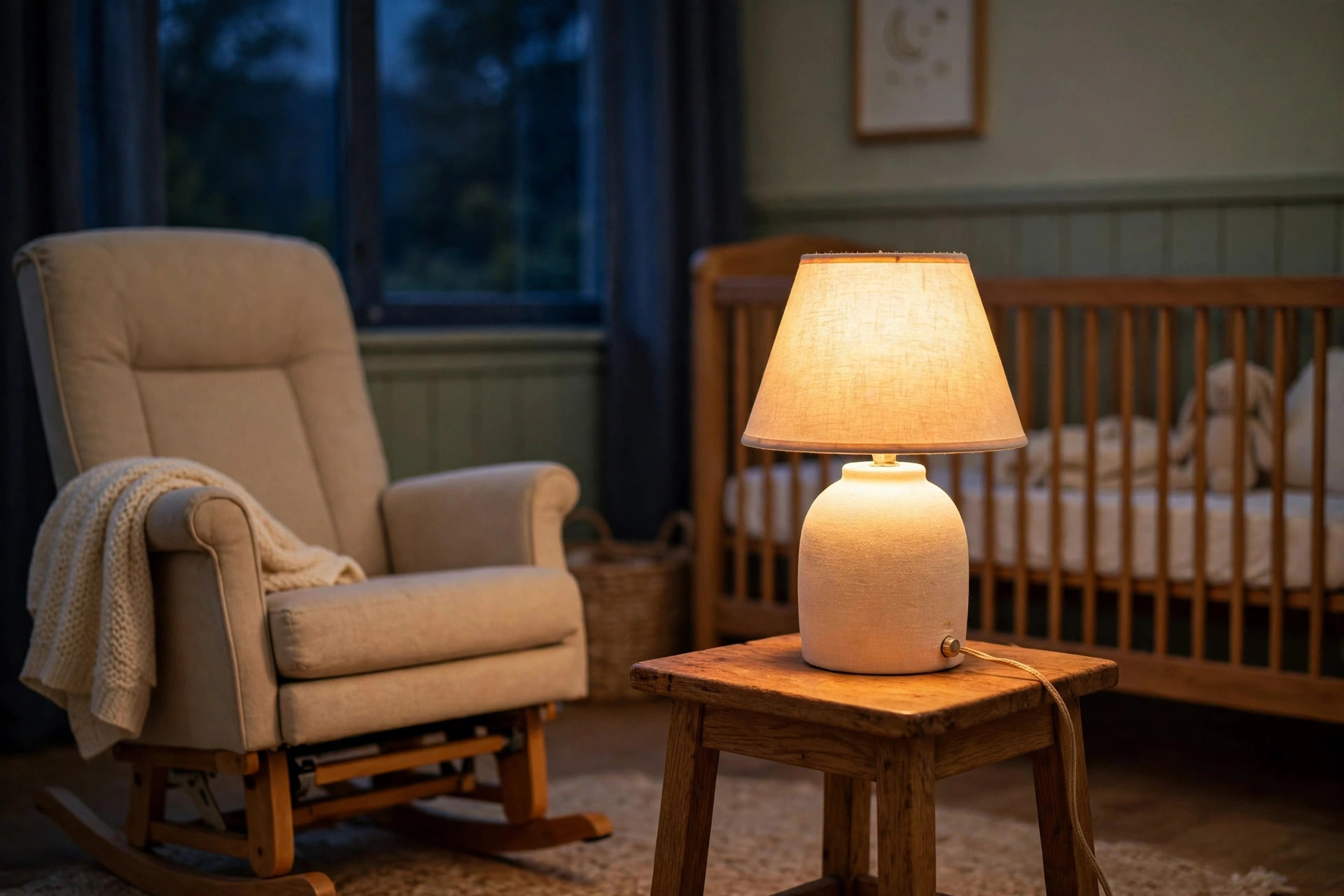

A new mother feeds her baby many times in the dark hours. The overhead light is too bright, and the hall light is too far away. The best nursery lamp for breastfeeding at night sits close at hand and throws a soft, warm pool of light exactly where it is needed. This guide explains what to look for, which types work best, what they cost, and how to keep one safe in the nursery.
Why a Nursery Lamp Matters for Night Feeds
Light and the Sleep Cycle
Bright light tells the brain that it is daytime. When a mother turns on a harsh overhead light at two in the morning, both her body and the baby’s body receive the wrong signal. A soft lamp avoids this problem. Warm, low light lets the mother see the latch, check the clock, and read a story page without fully waking either of them. Studies shared by pediatric health groups such as HealthyChildren.org stress that calm, dim surroundings help babies learn the difference between night and day.
Comfort for the Mother
Night feeds can last twenty to forty minutes. During that time the mother needs to see without straining her eyes. She may also need to change a diaper, find a burp cloth, or take a sip of water. A small lamp on the side table beside the nursing chair solves all of these needs at once. Many nursing parents who plan their nursery with help from What to Expect list a dimmable lamp as one of the few items they would not skip. Over the months, that small lamp becomes part of the night routine. Its soft glow marks the quiet space where mother and baby meet, and its familiar light can help a tired mother relax the moment she sits down.
What to Look For When Choosing
Not every lamp works well for night nursing. The details below separate the good choices from the poor ones. Take this list with you when you shop, whether you browse online or visit a store in person. A few minutes of checking will save months of small annoyances.
Warm Color Temperature
Look for a lamp marked 2700K or lower. That number measures color temperature, and 2700K means a warm amber glow like candlelight. Cool white light above 4000K feels clinical and keeps tired eyes from relaxing. Many lamps from IKEA and Pottery Barn Kids list the Kelvin rating on the box, so the choice is easy to check in the store.
Dimmable Brightness
A lamp that offers only one level of brightness is a poor fit for the nursery. The mother may need a bit more light for a diaper change and almost none for a sleepy feed. A dimmer, a touch control, or a lamp with three to five preset levels gives her that range. Touch lamps are kind to tired hands because there is no small knob to hunt for in the dark.
Easy Placement and Reach
The lamp should sit within arm’s reach of the nursing chair but far from curious toddler hands. A small table lamp on a stable side table is the classic answer. Cord length matters as well. A long cord lets the mother place the lamp behind furniture where little fingers cannot find it, while a short cord forces the lamp into awkward spots. Wide selections of small table lamps appear on Wayfair and Target, where cord length is usually listed in the details.
Quiet and Cool Operation
Any lamp that buzzes, clicks, or grows hot is wrong for a nursery. LED bulbs stay cool, use little power, and last for years. They are the standard choice now. Check that the lamp takes a standard LED bulb or has an LED unit built in, so replacement is simple.
Simple Controls Found by Touch
In the dark, small buttons and pull chains are hard to find. A mother holding a sleepy baby has only one free hand. That is why touch bases, large rocker switches, and lamps with remote controls rank so high for night nursing. Test the control before buying if you can. Tap it with your eyes half closed and see if the action feels natural.
A Style That Grows With the Room
The lamp will stay in the room long after nursing ends. A neutral shade in cream, soft gray, or pale wood fits any nursery theme and later moves into a toddler room or a guest room. Avoid very babyish shapes that will look out of place in a year. A simple drum shade or a small glass globe is a safe pick that suits most homes.
Types of Nursery Lamps for Night Nursing: Best Nursery Lamp for Breastfeeding At Night
Touch-Control Table Lamps
A touch lamp changes brightness each time the base is tapped. One tap for soft light, two taps for more, three for bright. These are the most popular choice for night nursing because the control is found by feel alone. They cost little and come in many nursery styles.
Dimmable Plug-In Nightlights
A small nightlight that plugs into a wall outlet gives steady, very low light. It is not enough for reading, but it works as a second layer of light in the room. Some mothers use one plug-in light near the door and the main lamp near the chair. Gear lists at Babylist often pair the two for this reason.
Portable and Battery Lamps
A battery lamp moves where the mother moves. She can carry it from the nursing chair to the changing table without waking the house. Look for a model that holds a charge through the night and recharges by USB. These are also handy for travel and grandparents’ houses. Many newer battery lamps also include a dimmer on the base, so the mother keeps full control of brightness even without a wall outlet nearby.
Floor Lamps With Reading Arms
A floor lamp with a small reading arm gives a taller pool of light and needs no table at all. This suits rooms where every surface is already full. Choose one with a heavy base and a shade that points downward, so the light falls on the book or the baby rather than into the mother’s eyes. Make sure the arm locks in place and cannot swing into the crib or the chair.
Clip-On and Wall Lamps
A clip lamp fastens to the nursing chair, a shelf, or the crib side. A wall lamp mounts above the changing table. Both keep the surface clear and the cord out of reach. Mounted lamps suit small rooms where a side table does not fit.
Cost and Price
Prices for nursery lamps cover a wide range, and the price does not always match the quality.
| Type | Typical Price Range | |——|———————| | Simple plug-in nightlight | 10 to 20 dollars | | Basic touch-control table lamp | 25 to 60 dollars | | Dimmable LED nursery lamp | 40 to 90 dollars | | Designer nursery lamp | 80 to 200 dollars |
A budget of about fifty dollars buys a reliable touch lamp with warm dimmable light. That is enough for almost every family. Spending more buys style and brand name rather than better function. Shoppers comparing prices on Crate & Barrel and Wayfair will see that the features that matter, warm color and dimming, appear at every price level.
When to Buy
Nursery lamps go on sale during the spring home events and the fall holiday season. A mother who plans ahead can buy the lamp with the rest of the nursery set, such as a toddler wardrobe armoire for small bedroom or a crib mattress pad waterproof for accidents, and save on shipping.
Care and Upkeep
A nursery lamp needs little care. Dust the shade once a month with a dry cloth, because dust dulls the glow over time. Wipe the base with a damp cloth and dry it well. If the lamp uses a replaceable bulb, keep one spare bulb in the nursery drawer so a burned-out bulb never leaves the mother in the dark.
Check the cord twice a year. Look for fraying, cracks, or loose plugs. A damaged cord is a fire risk and should be replaced at once, not taped. Battery lamps should be recharged on a set day each week so they never die mid-feed. Most LED units last five to ten years, so the lamp may serve for more than one child.
Safety in the Nursery
Safety comes before style in any nursery. The Consumer Product Safety Commission offers clear guidance for nursery products, and lamps are no exception. Keep these rules in mind:
– Place the lamp out of the baby’s reach once the baby can pull up or cruise. Babies grab cords and hot shades without warning. – Run the cord behind heavy furniture. A cord across the floor is both a trip hazard and a temptation. – Choose LED bulbs only. Older bulbs grow hot enough to burn small hands or scorch fabric shades. – Keep lampshades away from curtains, blankets, and crib sides. Fabric too close to a bulb is a fire hazard even with LED lights. – Pick a lamp with a heavy, wide base. A top-heavy lamp tips over when a tired elbow bumps the table. – Look for lamps tested to recognized safety standards, marked by a testing label on the box or base.
Seasonal light matters too. The editors of the Old Farmer’s Almanac note how long winter nights keep families up late, which is one more reason a safe, steady nursery lamp earns its place through the dark months.
Frequently Asked Questions
How bright should a nursery lamp be for night feeding?
Aim for 200 to 400 lumens at the brightest setting, with a dimmest setting well below that. This is enough to see the baby’s face and latch but not enough to signal daytime to the brain. A dimmer makes the exact level easy to tune.
Is warm or cool light better for breastfeeding at night?
Warm light is better. A warm 2700K glow keeps the room calm and helps the mother’s eyes relax. Cool white light feels alert and makes it harder for both mother and baby to fall back asleep.
Can I use a regular table lamp as a nursery lamp?
Yes, if it meets three tests. The bulb must be warm and dimmable, the lamp must be stable and cool to the touch, and the cord must run where the baby cannot reach it. Many regular table lamps pass all three tests.
Where should the lamp go in the nursery?
The best spot is a small table beside the nursing chair, on the side the mother favors. The light should fall on the baby without shining in anyone’s eyes. A second low light near the door helps with middle-of-the-night navigation.
Do I need a special lamp, or will a nightlight do?
A nightlight alone is usually not enough. It marks the room but gives too little light for latching, diaper changes, or reading a medicine label. Most families end up with both: a main dimmable lamp for feeds and a soft plug-in light for the hallway.
When should I stop using the nursery lamp?
Many families keep the lamp through the toddler years. It becomes the bedtime reading light and later a comfort light for a child who wakes at night. When decorating for the next stage, families often pair it with pieces like a toddler duvet cover set for first big bed to keep the room feeling calm and familiar.
A Short Final Word
The best nursery lamp for breastfeeding at night is not the most expensive one or the most stylish one. It is the one that gives soft warm light at the touch of a hand, stays cool and steady, and sits safely out of the baby’s reach. Choose dimmable, warm, and simple, and the dark hours of early motherhood will feel a little easier.
References
American Academy of Pediatrics. (n.d.). HealthyChildren.org. https://www.healthychildren.org Babylist. (n.d.). Baby registry and gear guides. https://www.babylist.com Crate and Barrel. (n.d.). Furniture and home decor. https://www.crateandbarrel.com IKEA. (n.d.). Home furnishings. https://www.ikea.com Pottery Barn Kids. (n.d.). Kids furniture and decor. https://www.potterybarnkids.com Target. (n.d.). Retail store. https://www.target.com The Old Farmer’s Almanac. (n.d.). Gardening calendars and advice. https://www.almanac.com U.S. Consumer Product Safety Commission. (n.d.). Product safety information. https://www.cpsc.gov Wayfair. (n.d.). Furniture and home goods. https://www.wayfair.com What to Expect. (n.d.). Pregnancy and parenting guidance. https://www.whattoexpect.com
Was this guide helpful?

About Lisa Anderson
The My Garden US editorial team writes practical, in-depth home and garden guides for American homeowners — tested advice, no fluff.
You May Also Like
Nursery Night Light With Dimmer for Feeding: A Simple Guide
February 13, 2026 0 views
Toddler Wardrobe Armoire for Small Bedroom: A Parent’s Buying Guide
March 31, 2026 0 views
Nursery Diaper Caddy Organizer Portable: A Complete Guide
October 4, 2026 0 views