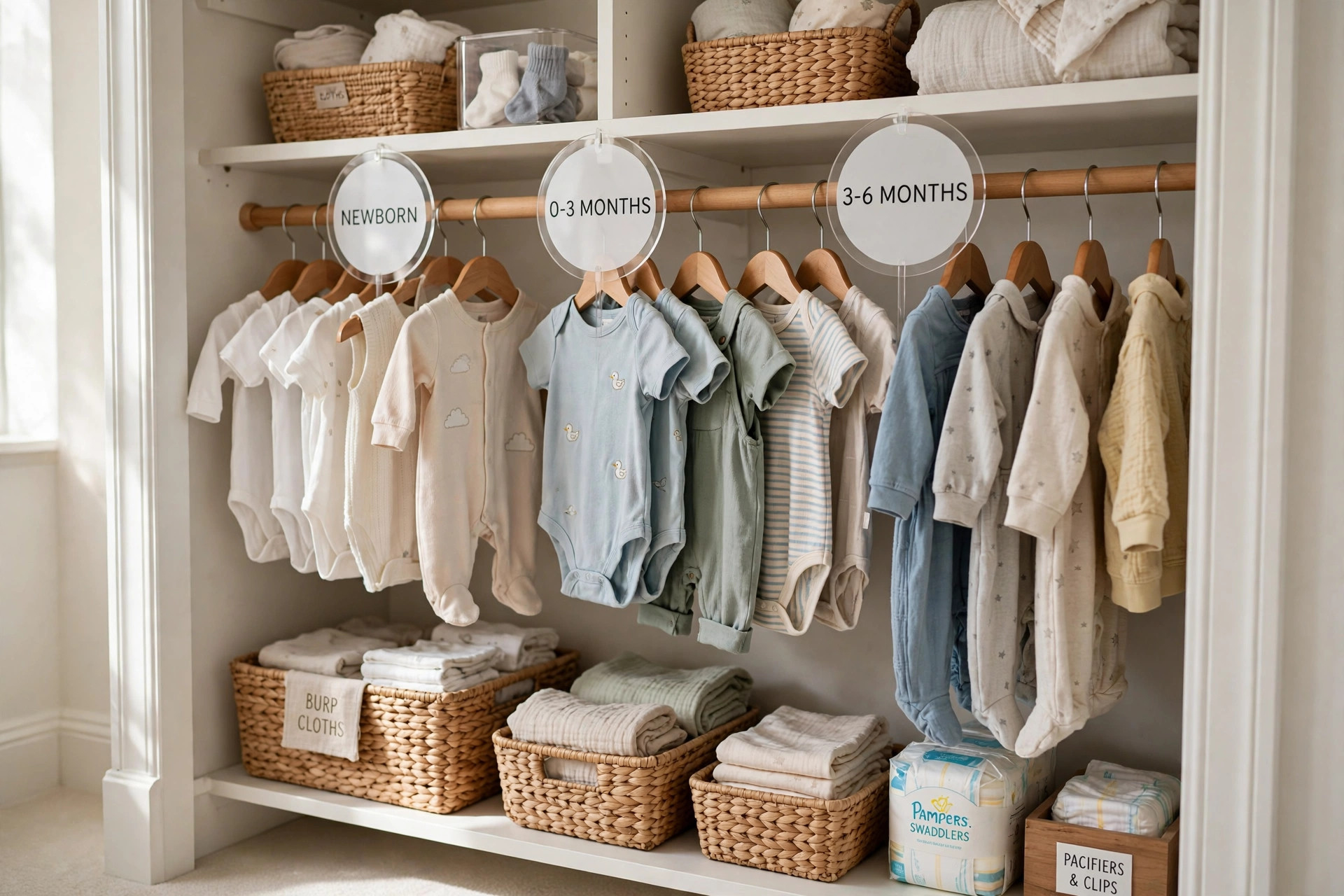

Babies grow fast. One month an outfit fits. The next month it is too small. Many parents find that nursery closet dividers for organizing sizes solve this problem. These small rings or cards hang on the closet rod. Each one marks a size group. Newborn, 0 to 3 months, 3 to 6 months, and so on. They keep tiny clothes in order. They save time on busy mornings. They also help when grandparents or babysitters dress the baby.
This guide explains what nursery closet dividers for organizing sizes are. It shows why they matter. It covers how to choose a set. It lists the main types. It gives price ranges. It covers care and safety. It answers common questions. By the end, you will know exactly how to set them up.
Why Nursery Closet Dividers for Organizing Sizes Matter
A baby closet fills up quickly. Friends and family bring gifts. Some are newborn size. Some are for six months. Some are for a year. Without a system, every shirt looks the same. Parents dig through hangers to find the right fit. That wastes time. It also wears out the clothes from extra handling.
Nursery closet dividers for organizing sizes fix this at once. Each size group gets its own section on the rod. A parent can see in seconds where the current size hangs. Future sizes sit to the right, ready when the baby grows. Sizes the baby has outgrown can be removed or packed away.
Organization also helps the baby feel comfortable. A tight onesie on a growing baby can irritate the skin. A very loose outfit can bunch up. When each size has its own spot, parents grab the correct fit every time. Health experts note that comfortable clothing supports rest and play for infants, and simple routines around dressing help parents stay calm, as the guidance on HealthyChildren.org explains.
Dividers also help other caregivers. A babysitter may not know which pile is 3 to 6 months. Clear labels remove the guesswork. Anyone can dress the baby with confidence.
What to Look for When You Choose a Set: Nursery Closet Dividers for Organizing Sizes
Not all dividers work the same way. A good set shares a few traits.
Clear, Easy Labels
The labels must be easy to read. Large print works best. Some sets print both sides of the ring. That way the label shows no matter which way it hangs. Numbers like “0-3M” are common. Words like “Newborn” and “12 Months” are also common. Pick a style you can read from a few feet away.
The Right Opening
Most dividers have a gap or opening that slides over the closet rod. Check that the opening fits your rod. Standard closet rods are about one inch thick. A divider with a narrow opening may not fit a thick wooden rod. A divider with a wide opening may slide around too much. Measure the rod first. Then check the product size.
Sturdy Material
Baby clothes are light, but the dividers get moved often. Thin cardboard wears out fast. Look for thick chipboard, laminated card, or plastic. Plastic sets last the longest. They also wipe clean. Laminated card is a good middle choice. Plain paper is the weakest choice.
Enough Rings for the Sizes You Own
Count the sizes you need before you buy. A basic set covers newborn through 24 months. That is usually six to eight rings. Some sets include extra blanks. Blanks let you write in custom labels. This is useful for preemie sizes or for sizes past 24 months. If you plan to keep the same set for a second child, choose plastic rings that will last for years.
Style That Matches the Nursery
Dividers come in many styles. Some are plain white. Some have soft colors. Some show cute prints like stars or animals. A matching nursery closet organizer for baby clothes can complete the look. Choose a style that fits the room. Function matters more than looks, but a nice set makes the closet pleasant to open.
Types of Nursery Closet Dividers for Organizing Sizes
Round Ring Dividers
Round rings are the most common type. They look like large circles with a gap at the top. They hang on the rod between groups of hangers. The size label sits in the center. They are easy to move when the baby grows into the next size. Most parents prefer this type for its simplicity.
Rectangular Tab Dividers
Rectangular tabs clip or hang on the rod. They stick out like small flags. The label is easy to spot from across the room. They work well in deep closets. Some tabs attach with hooks instead of a gap. This can keep them from sliding.
Card Dividers With Clips
Some dividers are flat cards with a small clip at the top. The clip grips the rod. These do not slide around. They are a good choice if the closet rod is thick or uneven. The cards can be two-sided, with a size on each face.
Blank and Customizable Sets
Blank sets let parents write their own labels. This is useful for unusual size systems. Some brands size clothes differently. A blank ring can say “Carters 3M” or “Hand-Me-Downs.” A permanent marker works well on plastic. Pencil works on cardboard. Laminated blanks can be written on with a dry-erase marker and changed later.
Printable Dividers
Some parents print their own dividers at home. Free templates exist online. This is the cheapest option. The downside is durability. Home-printed card bends and tears. It works fine as a short-term fix. For long-term use, a store-bought set lasts longer.
Cost and Price Ranges
Nursery closet dividers for organizing sizes are one of the cheapest nursery items. Most sets cost between 5 and 15 dollars. Basic cardboard sets sit at the low end. Plastic sets with printed labels sit in the middle. Decorative sets with fancy prints cost a little more.
Bulk packs exist for twins or daycare use. These packs often include 12 or more rings. They cost between 10 and 20 dollars. Custom or handmade sets from craft shops can cost 15 to 25 dollars. These may include matching nursery decor.
Price is not the main factor. A 7-dollar set of sturdy plastic rings can last through three children. A 20-dollar set made of thin paper may last only one season. Read the material description before you buy. Retailers that sell baby storage, such as Wayfair and IKEA, list the material in the product details. Storage specialists like The Container Store also carry closet organization sets with full specifications.
How to Set Up Your Dividers
Setting up the system takes about twenty minutes. Follow these steps.
First, take every item of clothing out of the closet. Lay the clothes on a bed. Sort them by the size printed on the tag. Note that brands size differently. A 3-month onesie from one brand may match a 6-month onesie from another. When tags disagree, sort by how the clothes look next to each other.
Second, hang the clothes in size order on the rod. Put the smallest size on the left. Place each larger size to the right. Hang a divider ring before each size group. The ring should face forward so the label is visible.
Third, deal with clothes that have no size tag. Hand-me-downs often lose their tags. Hold them up against a tagged item. Place them in the closest size group. You can also keep a small basket for “unsure” items. Check them against the baby later.
Fourth, leave room for growth. Do not pack the rod too tight. Clothes need air space. Tight packing makes it hard to see the labels. If the rod is full, move outgrown sizes to storage bins.
Fifth, label the outgrown bin by size as well. When the baby moves up, you will know exactly which bin holds the next size. This keeps the whole system working for months.
Many parents pair dividers with a full nursery closet organizer for baby clothes. Shelves and bins below the rod can hold shoes, blankets, and diapers. The dividers handle the hanging clothes. Together they turn a small closet into a tidy system.
Care and Upkeep
Nursery closet dividers for organizing sizes need very little care. Plastic rings can be wiped with a damp cloth. Cardboard rings should stay dry. If a ring gets dirty, wipe it gently and let it air dry. Do not soak cardboard rings. They will warp.
Check the rings every few months. The baby grows fast in the first year. Some parents move the size groups every six to eight weeks. When a size group is empty, slide its ring to the right end of the rod. Keep it there for the next child, or store it with the outgrown clothes.
If you use blank rings with marker labels, check that the writing stays clear. Sunlight can fade ink over time. Rewrite the labels if they become hard to read.
For a nursery refresh, some parents repaint the room as the child grows. Guides on room updates from Apartment Therapy and The Spruce show how small changes keep a nursery working for toddlers. New paint or new best blackout curtains for nursery windows usa can be a good time to reset the closet system too.
Safety Notes
Closet dividers are simple items, but safety still matters. Small parts can be a choking hazard. Keep loose rings out of the baby’s reach. Hang them high on the rod where small hands cannot grab them. The U.S. Consumer Product Safety Commission reminds parents that nursery products should be free of small detachable parts near infants.
Check plastic rings for sharp edges. Cheap rings may have rough spots from the mold. Run a finger along the edge. If it feels sharp, sand it lightly or replace the ring. Cardboard rings should not have metal staples or pins. Remove any metal fasteners before hanging them.
Keep the closet itself safe. Anchor tall furniture to the wall. Keep heavy items off high shelves. Make sure the closet door or curtain cannot trap small fingers. Parenting guides at What to Expect and product testers at Good Housekeeping both stress that nursery storage must be stable and out of a climbing toddler’s reach.
Nursery Closet Dividers for Organizing Sizes and Small Spaces
Small nurseries are common. Many parents work with a single small closet. Dividers help most in tight spaces. When the rod is short, every inch counts. Size groups keep the small rod from turning into a jumble.
In a tiny closet, hang only the current size and the next size. Store the rest in labeled bins under the crib or in another room. This keeps the daily routine fast. It also keeps the closet from overflowing.
Double rods can double the space. A second rod hangs below the main rod. Baby clothes are short, so two rows fit well. Put the current size on the top rod. Put the next size on the lower rod. Use dividers on both rods. Shelving units with bins, like those shown in many kids bookshelf with bins for toy storage setups, can sit beside the closet for extra folded items.
Frequently Asked Questions
How many divider rings do I need?
Most parents need six to eight rings. A standard set covers newborn, 0 to 3 months, 3 to 6 months, 6 to 9 months, 9 to 12 months, 12 months, 18 months, and 24 months. If your baby wears preemie sizes, add one more ring. If you want to include 2T and 3T, add two more. Count your size groups before you buy.
Do the sizes match every clothing brand?
No. Brands size clothes differently. One brand’s 6-month size may fit like another brand’s 9-month size. Sort clothes by actual fit, not just the tag. Hold items next to each other. When in doubt, try the item on the baby. Move it to the correct group after.
Can I use dividers on a wire shelf instead of a rod?
Some dividers work on wire shelving. Clip-style dividers grip wires well. Ring dividers need a rod. If your closet has only wire shelves, look for clip-style tabs. Another option is to add a short tension rod inside the closet. Tension rods fit between the side walls with no screws.
What is the best material for long-term use?
Plastic is the best material for long-term use. It does not bend, tear, or absorb moisture. It wipes clean. It survives moves between homes. Laminated cardboard is the next best choice. Plain cardboard is fine for short-term use but wears out in a year or less.
Should the dividers match the nursery theme?
Matching is nice but not required. Many parents choose plain white or neutral rings. Neutral rings work in any room. They also work for a second child of a different sex. Themed sets look cute in photos. Plain sets are more practical for reuse.
When should I move clothes to the next size group?
Move clothes up when the current size looks snug. Check the neck, arms, and length. If snaps strain or sleeves ride up, the item is too small. Many parents do a quick closet check once a month in the first year. Babies grow fastest in the first six months. Expect to shift groups often during that time.
A Short Final Word
Nursery closet dividers for organizing sizes are a small purchase with a large payoff. They bring order to the baby closet. They save time every day. They help every caregiver dress the baby in the right fit. Choose sturdy rings with clear labels. Set them up in size order. Check them as the baby grows. For less than the cost of one outfit, the closet stays tidy from newborn days through the toddler years.
References
American Academy of Pediatrics. (n.d.). HealthyChildren.org. https://www.healthychildren.org Apartment Therapy. (n.d.). Home design ideas and inspiration. https://www.apartmenttherapy.com Good Housekeeping. (n.d.). Product reviews and home advice. https://www.goodhousekeeping.com IKEA. (n.d.). Home furnishings. https://www.ikea.com The Container Store. (n.d.). Storage and organization products. https://www.containerstore.com The Spruce. (n.d.). Home and garden advice. https://www.thespruce.com U.S. Consumer Product Safety Commission. (n.d.). Product safety information. https://www.cpsc.gov Wayfair. (n.d.). Furniture and home goods. https://www.wayfair.com What to Expect. (n.d.). Pregnancy and parenting guidance. https://www.whattoexpect.com
Was this guide helpful?

About Lisa Anderson
The My Garden US editorial team writes practical, in-depth home and garden guides for American homeowners — tested advice, no fluff.
You May Also Like

Nursery Rocking Chair Upholstered for Comfort: A Plain Buying Guide
February 21, 2026 0 views
Crib Rail Teething Guard Cover for Safety: A Parent’s Guide to Choosing the Right One
August 19, 2026 0 views
The Best Nursery Crib for Twins Small Room: A Complete Guide
January 18, 2026 0 views