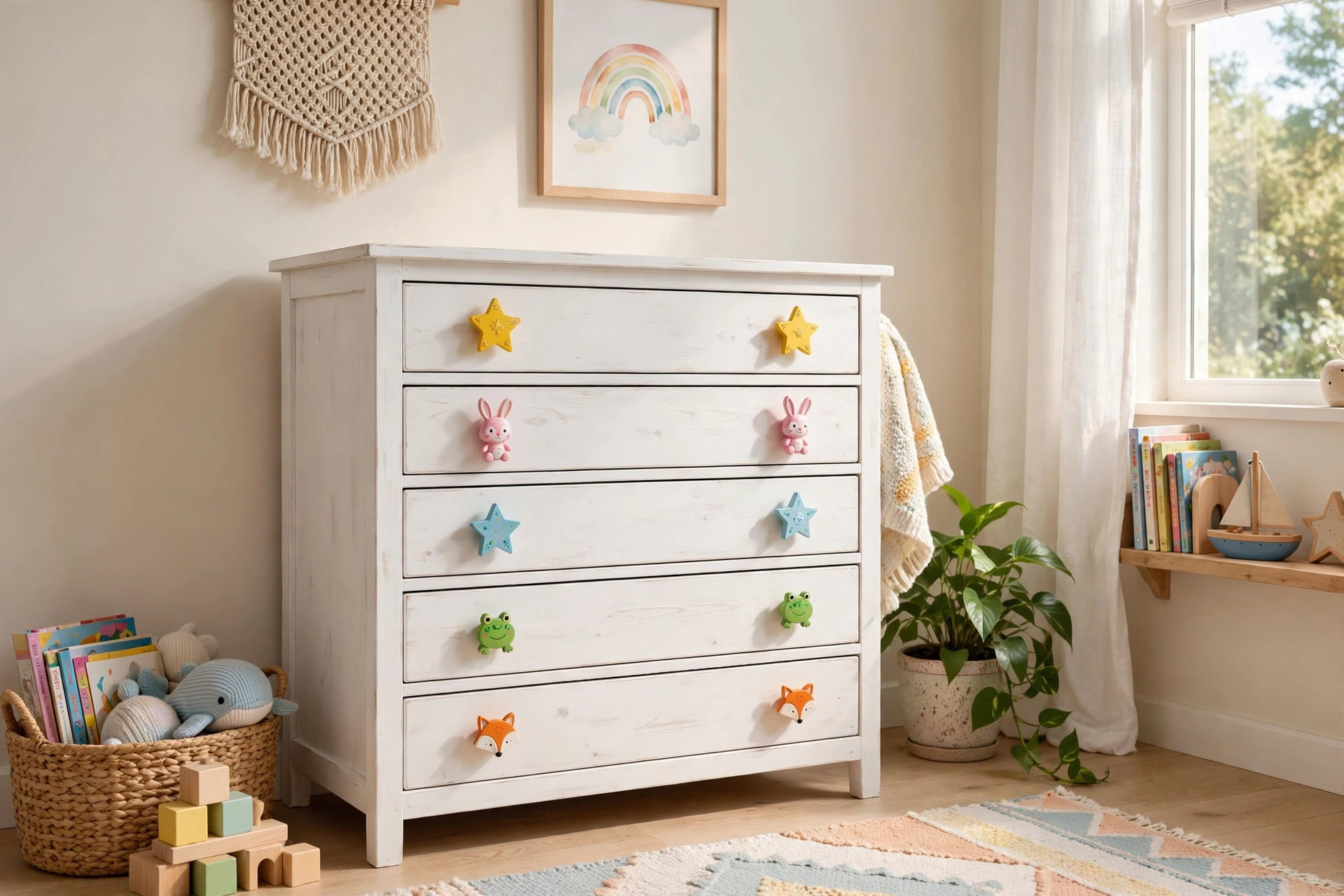

Small changes can make a big difference in a child’s room. A fresh set of knobs on a dresser can turn an old piece into something fun. Kids dresser knobs replacement for fun decor is one of the simplest and cheapest room updates a parent can do. You do not need paint or new furniture. With a screwdriver and a set of playful knobs, you can finish the job in one afternoon. Children notice small details, and a row of bright star knobs can make them smile each time they open a drawer. This guide will show you why it matters, how to choose, what it costs, and how to stay safe.
Why Fun Knobs Matter in a Child’s Room
A child’s room should feel warm and welcoming. It is a place for sleep, play, and growth. Decor sets the mood of that space. Beds and dressers get most of the attention, yet the knobs are the parts a child touches every day.
Fun knobs add color and charm at a low cost. A plain wooden dresser can look dull, but painted flower knobs make it feel new. This is a smart way to update hand-me-down furniture. Many families receive used dressers from relatives, and new knobs give these pieces a fresh start.
Fun knobs also help children feel ownership of their space. When a child picks the knobs, the room feels like theirs. A girl may choose pink hearts, and a boy may choose race cars. A child who likes the room is more likely to keep it tidy.
The change is also easy to reverse. Children grow fast. Their tastes change. Knobs can be swapped again in a few years. The dresser stays the same. Only the small details change. This makes knobs one of the most flexible decor updates in a kids dresser with changing top for nursery or any other piece.
How to Choose the Right Knobs: Kids Dresser Knobs Replacement for Fun Decor
Not every knob suits every dresser. A good choice fits the furniture, the child, and the room. Take time to plan before you buy.
Size and Fit
Most dresser knobs use a standard screw that passes through the drawer front into the back of the knob. Measure the thickness of your drawer fronts. Most drawer fronts are between half an inch and one inch thick, and the screw must be long enough to pass through the wood and grip the knob.
Most knobs use an 8-32 screw, and some use M4 metric screws. Many knob sets include screws in two or three lengths. If the included screws are too short, buy longer ones at a hardware store. Bring an old screw with you so the clerk can match it. Stores like Home Depot and Lowe’s carry these small parts in the hardware aisle.
Small knobs suit small hands. A knob that is one inch wide works well for young children. Large knobs look bold but may be hard for a toddler to grip. Star and flower shapes are pretty but can be harder to grasp. Test one knob before you buy a full set.
Shape and Design
Fun knobs come in many shapes. Stars, hearts, and flowers are classic picks. Animals like owls, elephants, and frogs are popular for nursery rooms. Sports themes suit older children. Baseballs, soccer balls, and race cars are common. Letters and numbers can spell a child’s name or mark drawer contents.
Match the knobs to the room theme: a space theme pairs well with planet or rocket knobs, and a garden theme suits flowers and butterflies. If the room has no clear theme, choose simple bright colors. Solid-color knobs in red, blue, or yellow work with almost any decor. They also last longer as tastes change.
Think about the child’s age. Babies and toddlers need smooth, simple shapes with no sharp points or parts that can break off. Older children can handle more detailed designs. Let school-age children help choose. Their input makes the project more fun.
Material
Knobs are made from wood, ceramic, glass, metal, and plastic. Each has its own strengths.
Wooden knobs are light and warm, often painted in bright colors, and a safe pick for young children. Ceramic knobs look pretty and come in many patterns, though they can chip if hit hard. Glass knobs sparkle but can break, so they suit older children’s rooms better. Metal knobs are strong and last for years. Plastic knobs are cheap and light, and they work well for toddlers.
Check the finish. Painted knobs should have a smooth, even coat. Rough paint can flake off. For young children, look for non-toxic paint. The product label should state this clearly. If it does not, choose another brand.
Types of Fun Dresser Knobs
The market offers many styles. Here are the most common types parents buy.
Painted wooden knobs. These are the most popular choice for kids rooms. They come in animals, stars, hearts, and sports shapes. They are light, safe, and cheap, and they suit toddlers best.
Ceramic knobs. These knobs have hand-painted designs. Flowers, dots, and stripes are common. They look charming on white or pastel dressers and work well in rooms for children over five.
Novelty shaped knobs. These include detailed figures like dinosaurs, fairies, and trucks. They make a strong theme statement and are often made of resin or plastic. Check them for sharp edges before you install.
Crystal and glass knobs. These catch the light and look elegant. They suit a princess theme or a calm pastel room, and they are best for older children who will not pull hard on them.
Letter knobs. Each knob shows one letter. Parents can spell a name across the drawers. These also teach young children the alphabet.
Glow in the dark knobs. These absorb light during the day and glow at night. They can comfort a child who fears the dark and help a child find the dresser at night. Look for ones that charge well and glow for hours.
You can find wide selections at large retailers. Wayfair and IKEA both carry many child-friendly hardware options. Specialty children’s stores like Pottery Barn Kids offer themed sets that match their furniture lines.
Cost and Price Guide
One of the best things about this project is the low cost. A single fun knob usually costs between one and four dollars. This matches the long-tail keyword data, which shows prices from one to four dollars per knob. A standard dresser has six to eight drawers. A full set for eight drawers may cost eight to thirty-two dollars.
Bulk packs save money. A twelve-pack of wooden star knobs may cost under fifteen dollars. Ceramic sets cost more: eight hand-painted ceramic knobs may cost twenty to thirty dollars.
You may also need new screws. A small pack of screws costs two to three dollars. If the old screws fit the new knobs, you spend nothing extra. Always test one knob with an old screw before you buy new ones.
Compare this cost to other room updates. Paint for a dresser costs twenty to forty dollars plus hours of work. New knobs give a fresh look for less money and less time. For families on a budget, knobs are one of the smartest decor buys.
How to Replace the Knobs: A Simple Step by Step
You do not need special skills for this job. Most parents finish in under an hour. Here is how to do it.
Step 1: Remove the old knobs. Open each drawer. Find the screw on the inside of the drawer front. Hold the knob still with one hand. Turn the screw counter-clockwise with a screwdriver. Pull the knob off the front and keep the old knobs and screws in a bag.
Step 2: Clean the drawer fronts. Old knobs leave marks. Wipe each spot with a damp cloth. Let the wood dry. This takes only a few minutes. Clean surfaces help the new knobs sit flat.
Step 3: Test the fit. Push a new screw through the hole from inside the drawer. Try one new knob on the front. The screw should grip well. The knob should sit flat against the wood. If the screw is too long, it will poke through the knob. If it is too short, the knob will wobble. Buy the right length before you go further.
Step 4: Attach the new knobs. Work one drawer at a time. Push the screw through from the inside. Hold the knob in place on the front. Turn the screw clockwise until snug. Do not over-tighten. Too much force can crack wooden drawer fronts or chip ceramic knobs.
Step 5: Check each knob. Pull gently on every knob. None should wobble or spin. Open and close each drawer. The drawers should move freely. If a knob rubs against the drawer above, it may be too large. Swap it for a smaller one.
For step-by-step hardware projects, see Family Handyman. The Spruce also has helpful articles on small furniture updates.
Care and Upkeep
Fun knobs need little care. Dust them when you clean the room. Wipe painted knobs with a soft damp cloth. Avoid harsh cleaners. Strong chemicals can dull the paint.
Check the screws twice a year. Children pull on knobs hard. Screws can loosen over time. A quick tighten keeps every knob secure. This takes five minutes and prevents knobs from falling off.
Replace damaged knobs right away. A cracked ceramic knob can have sharp edges. A chipped wooden knob can splinter. Keep one or two spare knobs from your original set. This makes repairs fast and easy.
If the room theme changes, you can paint wooden knobs. Sand them lightly. Apply a coat of non-toxic craft paint. Let them dry fully. Add a clear sealer made for children’s items. This gives old knobs a second life.
Safety First
Safety matters more than style in a child’s room. Knobs are small and within reach. Follow these rules.
Choose knobs that are firmly attached. A loose knob can come off in a child’s hand. Small knobs are a choking hazard for babies and toddlers. The U.S. Consumer Product Safety Commission warns that small parts can be dangerous for children under three. Pick knobs that are too large to fit through a toilet paper roll. This simple test helps you judge size.
Avoid knobs with sharp points or edges. Star shapes should have rounded tips. Check each knob with your hand before you install it. If it scratches your skin, it can scratch a child.
Use non-toxic materials. Young children put their hands in their mouths. Paint and finishes should be lead-free and non-toxic. Buy from trusted brands that state this on the label. If you buy handmade knobs, ask the maker about the paint.
Secure heavy dressers to the wall. This is not about knobs, but it is vital. Children climb dressers to reach top drawers. A falling dresser can cause serious harm. Use anti-tip straps or brackets. HealthyChildren.org, from the American Academy of Pediatrics, offers guidance on making children’s rooms safe. What to Expect also has clear checklists for nursery and child room safety.
Teach children not to hang on drawer knobs. Show them how to open drawers with a gentle pull. This habit protects both the child and the furniture.
Frequently Asked Questions
How many knobs do I need for a standard kids dresser? Most children’s dressers have six to eight drawers. Count the drawers before you shop. Buy one or two extra knobs. Spares help if one breaks later. A twelve-pack covers most dressers with extras left over.
Can I mix different knob designs on one dresser? Yes. Mixed knobs can look playful and fun. Use a clear pattern so it looks planned. Try alternating two colors. Or spell a name with letter knobs on the top row and use matching shapes below. Keep the sizes similar so the look stays balanced.
Will new knobs fit my old dresser? Most likely yes. Dresser knob holes follow standard sizes. The key factor is screw length, not the hole. Measure your drawer front thickness. Buy screws that match. Test one knob first. If it fits, the rest will fit too.
Are fun knobs safe for a toddler’s room? They can be if you choose well. Pick large, smooth knobs with non-toxic paint. Avoid small or breakable knobs. Check that each knob is tight. For children under three, avoid any knob small enough to be a choking hazard.
How long does the project take? Most parents finish in thirty to sixty minutes. Removing old knobs takes ten minutes. Testing the fit takes ten minutes. Installing the new set takes twenty minutes. There is no drying time and no mess.
Can I use fun knobs on other furniture? Yes. The same knobs work on nightstands, desks, and toy chests. They also suit a kids bookshelf with bins for toy storage if it has doors or drawers. Matching knobs across pieces ties the whole room together.
A Final Word
Kids dresser knobs replacement for fun decor is a small project with a big payoff. It costs little and takes little time, yet it can change how a child’s room feels. Let your child help pick the design and work together on the install. For more low-cost room ideas, see our guide to kids bedroom wall decals removable for renters.
References
American Academy of Pediatrics. (n.d.). HealthyChildren.org. https://www.healthychildren.org Family Handyman. (n.d.). DIY home repair and maintenance. https://www.familyhandyman.com IKEA. (n.d.). Home furnishings. https://www.ikea.com Lowe’s. (n.d.). Home improvement products. https://www.lowes.com Pottery Barn Kids. (n.d.). Kids furniture and decor. https://www.potterybarnkids.com The Home Depot. (n.d.). Home improvement products. https://www.homedepot.com The Spruce. (n.d.). Home and garden advice. https://www.thespruce.com U.S. Consumer Product Safety Commission. (n.d.). Product safety information. https://www.cpsc.gov Wayfair. (n.d.). Furniture and home goods. https://www.wayfair.com What to Expect. (n.d.). Pregnancy and parenting guidance. https://www.whattoexpect.com
Was this guide helpful?

About Robert Taylor
The My Garden US editorial team writes practical, in-depth home and garden guides for American homeowners — tested advice, no fluff.
You May Also Like

Crib Bumper Alternative Breathable Mesh Liner: A Complete Parent Guide
March 5, 2026 0 views
Kids Toy Chest with Safety Hinge Lid: A Parent’s Buying Guide
April 21, 2026 0 views
The Best Kids Bed Tent for a Cozy Sleep Space
February 6, 2026 0 views