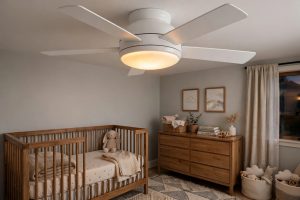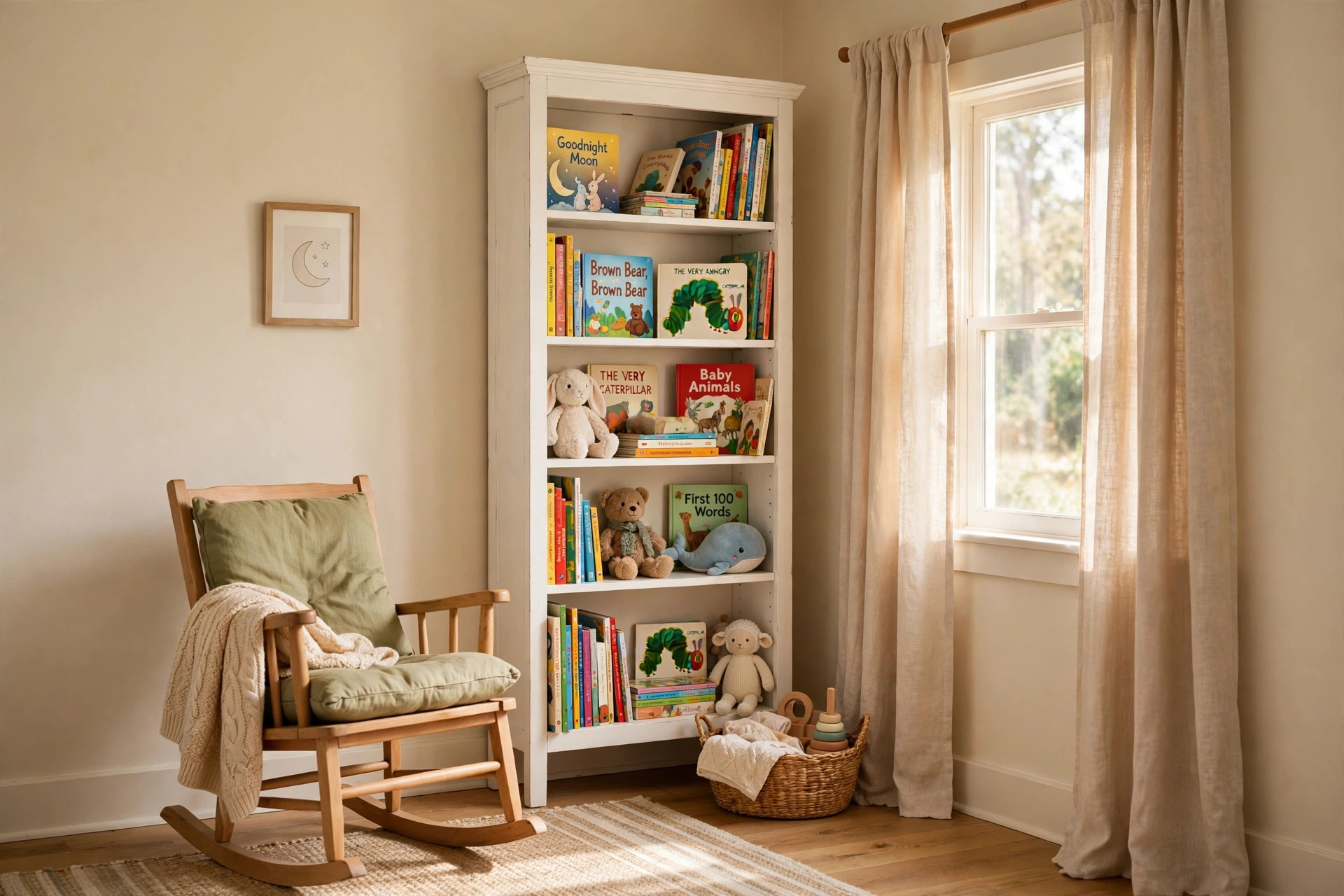

Many new parents face the same problem. The nursery is small. The crib takes one wall. The dresser takes another. There is one small corner left, and books need a home. A nursery bookcase narrow for small corner spaces solves this problem. It is tall and slim. It fits where a full bookcase never could. It keeps books close to the rocking chair and out from underfoot.
This guide explains why a narrow bookcase works so well in a small nursery. It shows what to look for when you shop. It covers types, costs, care, and safety. By the end, you will know exactly how to pick the right one for your home.
Why a Narrow Bookcase Matters in a Small Nursery
Babies need books. Pediatricians have said for years that reading to a baby builds language skills early. A shelf near the feeding chair makes reading easy. When books are easy to grab, parents read more often.
Floor space is the most precious thing in a small nursery. A standard bookcase is twelve inches deep and three feet wide. That is too much for many rooms. A narrow bookcase is often only eight to ten inches deep and twenty inches wide. It slides into a corner and leaves the walkway clear. That matters when you walk a crying baby at 3 a.m.
A corner bookcase also keeps books safe from little hands at the right age. When a baby starts to crawl and pull up, low shelves can be a problem. A tall, narrow unit puts books on the upper shelves. The lower shelves hold baskets or soft toys that cannot hurt a child.
What to Look For and How to Choose: Nursery Bookcase Narrow for Small Corner
Shopping for nursery furniture can feel overwhelming. Many brands sell bookcases. Only a few are right for a nursery corner. Focus on five points: size, safety, stability, materials, and finish.
Measure Your Corner First
Take a tape measure to the corner before you shop. Write down the width of the wall space. Write down the depth you can spare. Most narrow bookcases are 20 to 24 inches wide and 8 to 12 inches deep. A corner near a door needs extra clearance for the door swing. A corner near a window needs room for the curtains.
Think about height as well. A bookcase that reaches the ceiling holds the most books. But it is harder to anchor and clean. A bookcase that stands four to five feet tall is easy for parents to reach. It also fits under most windows.
Safety Comes Before Style
The United States Consumer Product Safety Commission sets standards for nursery furniture. A bookcase must not tip over when a child climbs it. Every year, furniture tip-overs hurt children. A narrow, tall bookcase is more likely to tip than a wide one. So a wall anchor kit is not optional. It is required.
Look for a bookcase that includes an anchor kit in the box. If it does not, buy one before you assemble it. Mount it to a wall stud if you can. If you live in a rental, ask your landlord about wall anchors. Many renters use strong removable wall hooks and furniture straps that leave only small holes.
Check for sharp edges. Run your hand along every edge of the unit. Corners should be rounded or covered. Check the shelves for pinch points. A shelf that can fall off its pins is a hazard.
Pick Strong Materials
Solid wood is the best choice for a nursery bookcase. It is heavy. It stands firm. It lasts for years. Pine and rubberwood are common and affordable. Hardwood like beech or oak costs more but lasts longer.
Engineered wood, often called MDF or particleboard, is common in budget bookcases. It can work if it is thick and well made. Thin back panels are the weak point of cheap bookcases. Look for a back panel that is nailed or screwed in, not just glued. Press on the back of the display model in the store. If it bows, skip it.
Avoid bookcases with loose laminate that can peel. A baby may chew on peeling edges. Check that the finish is non-toxic. Most new furniture sold in the United States meets lead and chemical standards, but it is wise to check the label. The U.S. Consumer Product Safety Commission posts current recalls and safety guides for nursery furniture.
Finish and Color
White is the most popular finish for nurseries. It matches almost every room. It also shows dirt, so you will wipe it often. Natural wood tones hide wear well. Gray is a good middle choice. It looks calm and modern.
Some parents paint the bookcase themselves. If you do, use paint made for children’s furniture. Let it cure fully before you put it in the nursery. Fresh paint fumes are not good for babies. Many experts say to let painted furniture air out for at least a week.
Types and Options
Narrow bookcases come in several styles. Each fits a different corner and a different budget.
Tall ladder bookcase. This style has slanted sides and open shelves. It is light and airy. It holds fewer books than a closed bookcase of the same size. The slanted shape makes it less likely to tip. It works well in a corner near the glider.
Closed-back bookcase with fixed shelves. This is the classic style. It has a solid back and sturdy shelves. It holds the most weight. Many models let you adjust the shelf height. Tall picture books need taller spaces than board books. Adjustable shelves solve that.
Corner unit with angled shelves. Some bookcases are made to sit at a 45-degree angle in a corner. They use the corner space fully. They can look very neat. But they often cost more, and they may not match other furniture.
Bookcase with doors on the lower half. This style hides clutter. The top shelves display books with the covers facing out. The lower cabinet stores diapers, wipes, and extra blankets. Parents of small nurseries love this style. It pairs well with a nursery dresser changing table combo for small space.
Convertible units. Some bookcases are built to grow with the child. They start as a nursery bookcase. Later they become a toy shelf or a school shelf. Convertible pieces cost more up front but save money over time. Many are sold by specialty retailers like Pottery Barn Kids.
Cost and Price
Prices for a nursery bookcase narrow for small corner vary widely. Budget models made of engineered wood sell for 40 to 80 dollars. Mid-range models in solid pine or rubberwood sell for 100 to 200 dollars. High-end hardwood models sell for 250 to 400 dollars.
The price usually rises with better materials and safer design. A 60-dollar bookcase may need a separate anchor kit and sturdier back panel. A 150-dollar bookcase often includes both. Compare total cost, not just the sticker price.
Watch for sales. Big furniture sales happen around holidays. Many parents buy nursery furniture during these sales and save twenty percent or more. Online stores like Wayfair often list many narrow bookcases in one place, which makes price comparison easy.
Do not forget the cost of extras. Baskets for the lower shelves cost five to fifteen dollars each. A good wall anchor kit costs under ten dollars. Shelf liner costs a few dollars and keeps books from sliding.
Care and Upkeep
A nursery bookcase needs little care. Dust it once a week with a damp cloth. Dry it right after. Water left on wood causes stains and swelling.
Check the anchor kit twice a year. Pull gently on the top of the bookcase. It should not move. Tighten any loose screws. Check shelf pins. Make sure no shelf has shifted.
Rotate the books often. Board books get heavy use. Torn pages are common. Keep a small basket on the lowest shelf for books that need repair. This keeps the shelf tidy and teaches older toddlers where books belong.
As your child grows, change what the shelves hold. For a newborn, the bookcase holds your books and feeding supplies. For a crawling baby, move breakables up high and put soft toys down low. For a toddler, let them reach the board books on the lower shelves. This supports early reading habits. The pediatric guidance on HealthyChildren.org explains why daily reading matters from birth.
If the finish chips, touch it up with a non-toxic marker or paint pen. Keep spare shelf pins in a labeled bag taped to the back of the unit. You will thank yourself when you move.
Safety
Safety is the most important section of this guide. A bookcase in a nursery must be safe for a baby and a toddler.
Anchor every bookcase to the wall. This is the single most important rule. A narrow, tall bookcase can tip when a child pulls on it. The U.S. Consumer Product Safety Commission has clear rules about furniture anchoring. Follow them exactly.
Keep heavy items low. Store heavy books on the lowest shelves. Light items go on top. This lowers the center of gravity. A bookcase is far less likely to tip when the weight is low.
Use the corner wisely. A corner gives the bookcase two walls for support. Push it tight into the corner. This adds stability. It also closes the gap behind the unit where a child could get stuck.
Check for small parts. Some bookcases come with decorative knobs or finials. If they can come loose, remove them. Anything smaller than a golf ball can choke a child.
Watch the cords. If the bookcase sits near an outlet, keep cords behind it. A lamp cord or monitor cord can tempt a toddler. Use cord covers and keep cords short.
Teach safe habits early. Toddlers learn by example. Show them how to take one book at a time. Put books back after reading. This small habit keeps the shelf tidy and keeps the child from climbing.
Many parents also pair the bookcase with a kids bookshelf with bins for toy storage. Bins on the lower shelves give toddlers safe access to toys. Books stay on the higher shelves where they stay clean and dry.
How to Style the Corner
A narrow bookcase can be more than storage. It can be the prettiest corner of the nursery.
Face a few books outward. Board books with bright covers act as art. Change them with the seasons or your child’s age. Place a small framed photo on the top shelf. Keep it out of reach of small hands.
Add a soft touch. A small stuffed animal on one shelf makes the corner feel warm. Do not put stuffed animals in the crib, but the shelf is fine. A tiny plant works too, but only if it is far from the baby’s reach. Some plants are toxic, so check before you buy.
Keep the styling simple. A crowded shelf collects dust. A shelf with space between items looks calm. It also makes it easier to grab a book with one hand while holding a baby.
Design sites like The Spruce offer many nursery styling ideas for small spaces. You can adapt them to a single corner without much cost.
FAQ
How narrow can a nursery bookcase be and still hold books?
Most picture books are eight to ten inches wide. A shelf needs to be at least nine inches deep to hold them safely. Bookcases narrower than eight inches deep work only for thin board books or display. Measure your widest books before you buy.
Will a narrow bookcase tip over more easily?
Yes. A tall, narrow bookcase has a higher center of gravity than a wide one. That is why anchoring is so important. With a proper wall anchor and heavy items on the bottom shelves, a narrow bookcase is safe.
Can I put a narrow bookcase in a corner with a baseboard heater?
Keep furniture at least a foot away from a baseboard heater. Books near heat can dry out and warp. The heat can also damage the bookcase finish. Choose a different corner if you can.
What is the best wood for a nursery bookcase?
Solid pine is the best value. It is strong, light, and affordable. Rubberwood is a step up in hardness. Hardwood like oak lasts the longest but costs the most. Any of these works well if the finish is non-toxic.
How do I fit a bookcase and a glider in a small nursery?
Put the bookcase in the corner closest to the glider. You should be able to reach the books without standing up. Many parents also add a nursery closet organizer for baby clothes to free floor space. Less clutter makes the room feel larger.
Where can I learn more about nursery safety?
The U.S. Consumer Product Safety Commission and What to Expect both publish nursery safety guides. Your pediatrician can also answer questions about safe sleep and safe furniture. Many parents register for baby gear at Babylist, which includes safety checklists for nurseries.
A Short Final Word
A nursery bookcase narrow for small corner is one of the smartest buys for a small nursery. It costs little. It takes almost no space. It keeps books where they belong. Choose a solid unit. Anchor it to the wall. Put heavy books low. Style it with care.
Your baby will not remember the bookcase. But they will remember the stories you read from it. That is what matters most. Start with a safe corner shelf, keep it full of books, and read every day. For everyday options and ideas, stores like Target carry many narrow bookcases that suit small nurseries.
References
American Academy of Pediatrics. (n.d.). HealthyChildren.org. https://www.healthychildren.org Babylist. (n.d.). Baby registry and gear guides. https://www.babylist.com IKEA. (n.d.). Home furnishings. https://www.ikea.com Pottery Barn Kids. (n.d.). Kids furniture and decor. https://www.potterybarnkids.com Target. (n.d.). Retail store. https://www.target.com The Spruce. (n.d.). Home and garden advice. https://www.thespruce.com U.S. Consumer Product Safety Commission. (n.d.). Product safety information. https://www.cpsc.gov Wayfair. (n.d.). Furniture and home goods. https://www.wayfair.com What to Expect. (n.d.). Pregnancy and parenting guidance. https://www.whattoexpect.com
Was this guide helpful?

About Robert Taylor
The My Garden US editorial team writes practical, in-depth home and garden guides for American homeowners — tested advice, no fluff.
You May Also Like

Toddler Bedding Dinosaur Theme for Boys
August 5, 2026 0 views
Toddler Bed With Tent Canopy for Imagination: A Guide for Parents
August 14, 2026 0 views
Nursery Wall Paint Color Ideas for Calm Sleep
July 30, 2026 0 views