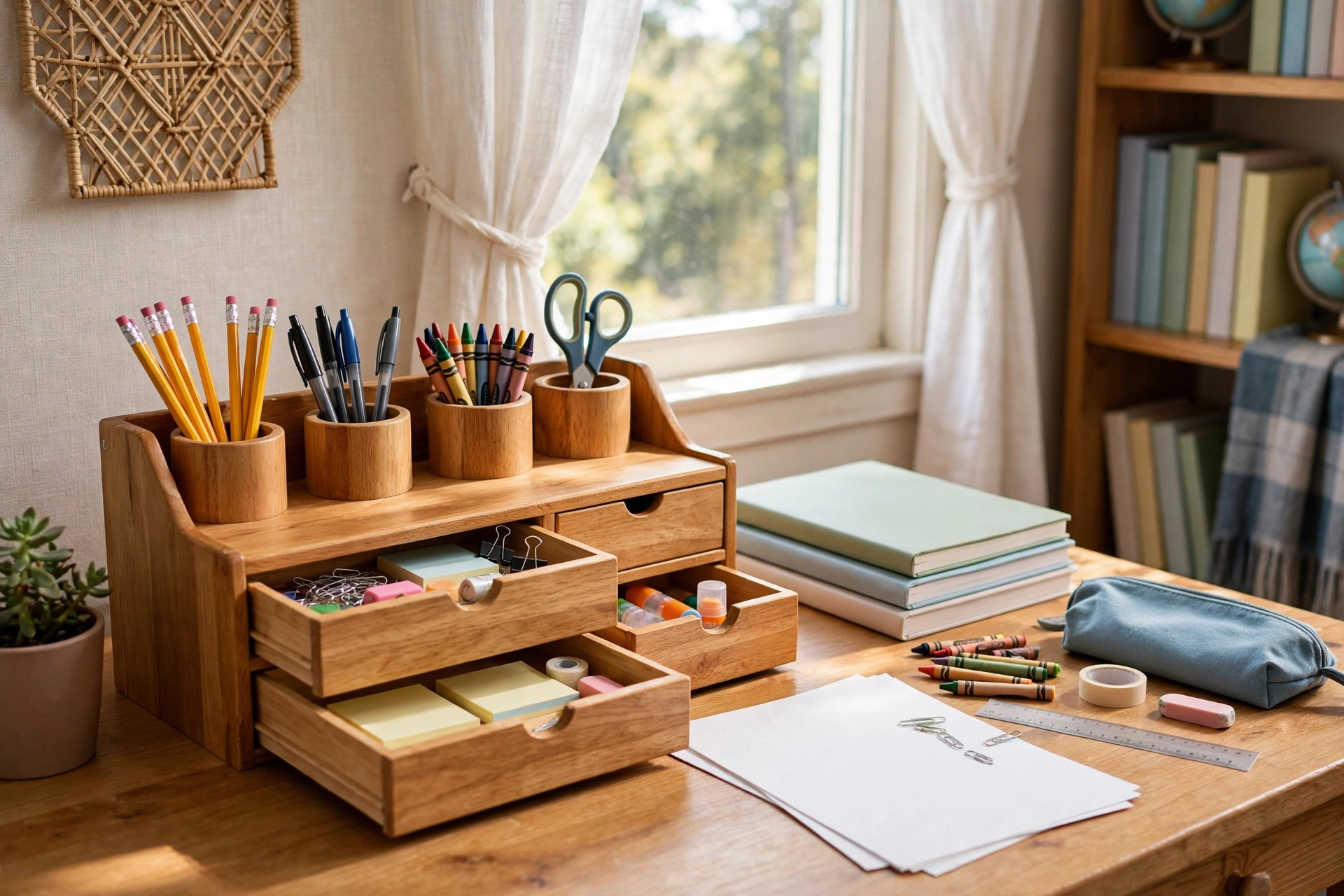

A kids desk organizer for school supplies storage is a simple tool with a big job. It holds the pencils, pens, crayons, scissors, rulers, and paper that children need for homework. When each item has a place, a child can find it fast. This saves time. It also cuts down on lost supplies. Parents spend less money on replacements. Children feel more in control of their school work. This guide will help you pick the right organizer for your child.
Why a Kids Desk Organizer for School Supplies Storage Matters
A messy desk can make homework hard. When supplies are spread across the table, a child wastes time hunting for a pencil. That breaks focus. A good kids desk organizer for school supplies storage puts every tool in one place. The child sits down, sees what is there, and starts work. The desk feels calm. Calm space helps calm minds.
Order also teaches good habits. Children learn to return each item to its slot. This is a skill they will use for life. Teachers often note that tidy students finish work with fewer delays. A desk organizer is a small step toward that goal.
Money is another reason. School supply lists grow each year. When markers dry out in a desk drawer or scissors vanish under books, parents buy them twice. A kids desk organizer for school supplies storage keeps tools safe and easy to see. Fewer items get lost. Fewer items need to be bought again.
There is also a quiet benefit. A tidy desk can ease morning stress. Many school mornings are rushed. A child who knows where the homework folder sits can grab it and go. Parents argue less about forgotten items. The day starts on a calm note. This small calm can change the mood of a whole morning.
Shared rooms gain too. Siblings who share a desk often fight over space. An organizer marks clear zones. Each child has a side. The boundary is plain to see. Fewer fights mean more peace in the house.
Match the Organizer to the Room
Think about the whole room, not just the desk. A small bedroom may have no space for a big drawer tower. A wall pocket may be the smart pick there. A large playroom may suit a two-piece set. Look at the light as well. Supplies kept in the dark get ignored. Place the organizer where the child can see it under the desk lamp.
Color can help. Young children respond to bright colors. A red cup for scissors and a blue cup for pencils can act as a simple system. Older children may prefer one color that matches the room. Ask the child what they like. They will use a system they helped pick.
How to Choose the Right Organizer: Kids Desk Organizer for School Supplies Storage
Measure the Desk First
Start with a tape measure. Note the depth and width of the desk surface. Many organizers are about 10 to 14 inches wide. Small desks need small units. A corner desk may suit a rotating caddy. If the desk already has a hutch for homework, you may only need a slim tray that fits inside a cubby.
Think About Age
Young children need wide slots and bright colors. They should see each section at a glance. Avoid tiny cups that small hands cannot reach into. For teens, a simple neutral tray or a set of boxes works better. Teens often want a clean look. Match the style to the child so they will use it.
Count the Supplies
List what the child owns. Pencils and pens go in one cup. Markers and crayons need a deeper cup or a tilted tray. Scissors and rulers need a long slot. Glue sticks, tape, and erasers fit in small drawers. Paper and notebooks may need a file holder on the side. If the list is long, choose a larger unit or a two-piece set.
Check the Build Quality
Kids are rough on things. Look for thick plastic, solid wood, or metal mesh. Joints should feel firm. Edges should be smooth. Cheap thin plastic can crack in a few months. Wood lasts longer but costs more. Read the product weight if it is listed. Heavier often means sturdier. Many families browse ideas at stores like IKEA or The Container Store to compare materials in person.
Types of Kids Desk Organizers for School Supplies Storage
Tray and Cup Sets
The most common type is a tray with cups. It sits flat on the desk. Cups hold writing tools. Small sections hold clips and erasers. These sets are cheap and light. They work well on small desks. Many parents pair them with a simple study chair for a complete homework spot; see our guide on the adjustable chair for growing children to round out the desk area.
Rotating Caddies
A rotating caddy spins on a base. The child turns it to reach any cup. These hold a lot in a small footprint. They suit corner desks. The spin action is fun for younger kids. Make sure the base turns smoothly and does not tip when full.
Drawer Towers
Small drawer towers have three to six shallow drawers. They store craft paper, stickers, and spare notebooks. Drawers hide clutter, which helps children who get distracted by bright colors. Label each drawer with tape so the child knows where things go.
Wall-Mounted Pockets
Some organizers hang on the wall or the side of a desk. These save desk space. They work well in tiny rooms. Pockets hold thin items like rulers, bookmarks, and note cards. They are not good for heavy items like books.
Desktop Hutches and Shelves
A small shelf unit sits on the back of the desk. It adds two or three tiers of storage. These suit older children with many books. For bigger storage needs beyond the desk, a bookshelf with bins can hold toys and games in the same room.
Combination Sets
Some brands sell a full set with a caddy, a drawer box, and a book stand. Sets cost more but solve the whole desk at once. They also match in color, which looks tidy.
Travel and Portable Options
Some children study in more than one place. They may work at the kitchen table some days and at a desk on other days. A small handled caddy can move from room to room. These are light and hold only the basics. They suit homework that travels with the child.
Stackable Modules
Stackable modules are small boxes that lock on top of each other. You can start with two and add more as needs grow. They suit children whose supply list grows each year. They also fit inside deep drawers when desk space runs out.
Cost and Price
Prices vary by size and material. A basic plastic cup set costs about 8 to 15 dollars. Rotating caddies run from 12 to 30 dollars. Small drawer towers cost 15 to 40 dollars. Wood organizers start near 25 dollars and can reach 60 dollars for large models. Combination sets range from 30 to 80 dollars.
Big box stores such as Target and Walmart carry many low-cost options. Online shops like Wayfair and Pottery Barn Kids offer wider style choices at higher prices. Watch for back-to-school sales in late summer. Prices often drop by 20 to 40 percent in August.
Think about value, not just price. A 12 dollar unit that cracks in six months costs more than a 30 dollar wood unit that lasts five years. Read reviews before you buy. Look for comments about sturdiness from parents of active children.
Care and Upkeep
A kids desk organizer for school supplies storage needs little care. Wipe plastic and metal with a damp cloth once a week. Dust wood units with a dry cloth. Check cups for dried glue or marker caps that slipped inside. Empty each drawer once a month. Throw away broken crayons and dried-out pens. This keeps the organizer from filling with junk.
Teach the child to tidy the desk each night. Five minutes is enough. Put pencils back in cups. Stack paper in the file holder. This habit keeps the desk ready for the next school day. Praise the child when the desk looks neat. Small rewards build the habit faster than scolding.
If the organizer starts to wobble, tighten screws or replace worn feet. A stable unit is safer and lasts longer. For metal mesh units, check for sharp wire ends. File them smooth or replace the unit.
Safety
Safety comes first with any kids product. Check that the organizer has no sharp edges or points. Small parts can be a choking risk for toddlers, so keep organizers out of reach of babies. The U.S. Consumer Product Safety Commission posts recall notices for children products, and it is wise to check CPSC before buying a used organizer.
Painted wood units should use non-toxic paint. If the finish chips, sand it smooth or seal it. Mesh metal should have folded edges, not raw cut wire. Heavy drawer towers can tip, so place them against a wall or on the floor rather than at the desk edge.
Good lighting matters too. A tidy desk with poor light can strain young eyes. Health experts share tips on study habits and posture for school age children at HealthyChildren.org, a site run by pediatricians.
FAQ
What size organizer fits a small kids desk?
Measure the desk first. Most kids desks are 20 to 30 inches wide. Pick an organizer that takes up no more than one third of the desk width. A tray about 10 inches wide and 6 inches deep suits most small desks. Wall pockets can add storage without taking any desk space.
Which material is best for a kids desk organizer?
Plastic is light and cheap. Wood is strong and looks nice but costs more. Metal mesh lets you see inside each cup. For young children, thick plastic or wood is best. Teens often prefer wood or metal for a grown up look. Sites like The Spruce publish buying guides that compare these materials in plain terms.
How many sections should the organizer have?
At least five. One for pencils and pens, one for markers or crayons, one for scissors and rulers, one small section for erasers and clips, and one for paper or notebooks. More sections help if the child keeps craft supplies at the desk. Fewer sections may be enough for a child who only does basic homework there.
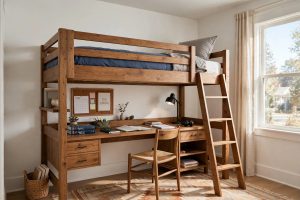
Can a kids desk organizer work with a loft bed desk?
Yes. Many loft beds have a desk built under the bed. Space there is tight, so use a slim tray or wall pockets. A rotating caddy can work if the desk is deep enough. See our guide to the best kids desk with hutch for homework for setups that pair well with loft frames.
When should I replace the organizer?
Replace it when it cracks, wobbles, or no longer holds what the child needs. Children grow, and their supply lists grow too. A kindergartner needs crayons and glue sticks. A fifth grader needs more pens, a calculator, and index cards. Upgrade the organizer when the supplies change. Family and parenting sites such as What to Expect offer school age guidance that can help you plan for each stage.
Is a used organizer safe to buy?
It can be. Check for cracks, sharp edges, and missing parts. Wash plastic units with warm soapy water. Skip any painted item with chipped paint of unknown origin. Older items may not meet current safety rules, so check the CPSC recall list before you buy second hand.
Final Word
A kids desk organizer for school supplies storage is a small buy that pays off every school day. It cuts clutter. It saves time. It teaches order. Pick the right size, choose strong material, and keep safety in mind. Set a five minute tidy habit with your child. The desk will stay neat. Homework will go smoother. That is a win for the whole family.
References
American Academy of Pediatrics. (n.d.). HealthyChildren.org. https://www.healthychildren.org IKEA. (n.d.). Home furnishings. https://www.ikea.com Pottery Barn Kids. (n.d.). Kids furniture and decor. https://www.potterybarnkids.com Target. (n.d.). Retail store. https://www.target.com The Container Store. (n.d.). Storage and organization products. https://www.containerstore.com The Spruce. (n.d.). Home and garden advice. https://www.thespruce.com U.S. Consumer Product Safety Commission. (n.d.). Product safety information. https://www.cpsc.gov Walmart. (n.d.). Everyday low prices. https://www.walmart.com Wayfair. (n.d.). Furniture and home goods. https://www.wayfair.com What to Expect. (n.d.). Pregnancy and parenting guidance. https://www.whattoexpect.com
Was this guide helpful?

About Lisa Anderson
The My Garden US editorial team writes practical, in-depth home and garden guides for American homeowners — tested advice, no fluff.
You May Also Like
Crib Bedding Bumper Free Safe Sleep Set: A Parent’s Guide
June 28, 2026 0 views
Nursery Hamper With Lid for Odor Control: What Parents Need to Know
June 16, 2026 0 views
Kids Toy Organizer with Labeled Bins: A Practical Guide for Tidy Playrooms
September 6, 2026 0 views