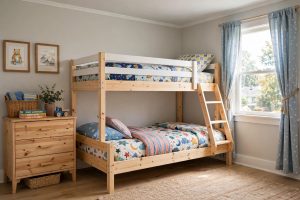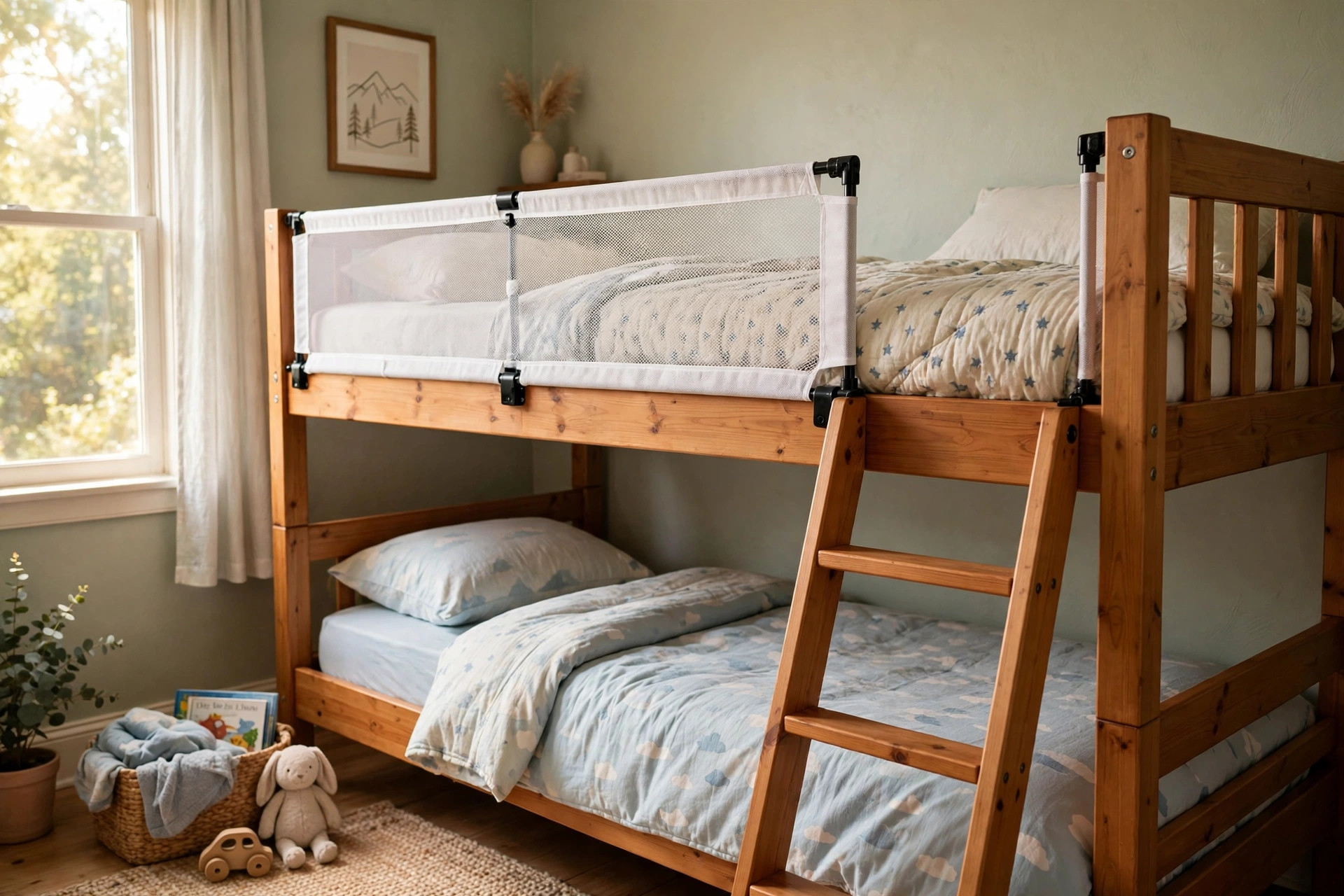

Every year, thousands of children visit emergency rooms after falls from bunk beds. Most of these falls happen from the top bunk. A good rail can stop many of them. Parents who search for the best kids bed rail for top bunk safety want one thing above all else. They want to know their child will stay in bed through the night.
Why a Bed Rail Matters on the Top Bunk
The top bunk sits high above the floor. In many homes, that height is five or six feet. A sleeping child can roll without warning. A fall from that height can break bones or cause a head injury. The Consumer Product Safety Commission warns parents about bunk bed falls each year. The commission sets safety standards for all bunk beds sold in the United States.
A bed rail forms a barrier on the open side of the top bunk. It catches a child who rolls in sleep. It also helps a child feel secure. Many children sleep better when they know they cannot fall. A rail does not make the top bunk safe for every age. Children under six should never sleep on the top bunk. That rule comes from safety experts and from the makers of most bunk beds. For older children, a rail adds a strong layer of protection.
Parents sometimes ask if the rail that comes with the bed is enough. Built-in rails help, but they can leave wide gaps. An extra rail can close those gaps. It can also raise the height of the barrier. That extra height matters for restless sleepers.
How to Choose the Best Kids Bed Rail for Top Bunk Safety
Shopping for a rail is not hard, but small details matter. The wrong size can leave a gap. The wrong mount can slip in the night. Take time with the choice.
Measure Before You Buy
Start with a tape measure. Measure the length of the open side of the top bunk. Leave a small gap near the ladder so your child can climb up. Most rails work best when they cover about two-thirds of the side. Measure the thickness of the mattress and the frame. Some rails clamp to the frame. Others slide under the mattress. Each type fits different beds.
Write the numbers down. Check them against the product listing. Do not guess. A rail that is too short leaves a danger zone at one end. A rail that is too tall can make it hard for a child to climb in and out.
Materials and Build
Most rails use one of three builds. Mesh rails are light and fold flat. They fit tight to the mattress and let air pass through. Metal tube rails are strong and simple. They often cost less than other types. Solid wood rails match wooden bunk beds and feel sturdy. Each type can be safe if it is installed well.
Look for smooth edges and rounded corners. Sharp metal points can cut skin or snag pajamas. Check the hinges on fold-down rails. They should lock in place with a firm click. A rail that swings loose is worse than no rail at all. Retailers like Target and Wayfair carry many styles, so you can compare builds side by side.
Check the finish on painted rails. Paint should be smooth and free of chips. Flaking paint can be a sign of cheap coating, and small chips can be sharp. Ask the seller if the finish is lead-free and non-toxic. Most major brands meet that standard, but it is worth a check on no-name imports.
Types of Bed Rails for Top Bunks
Rails fall into three broad types. Each type suits a different bunk bed and a different family.
Fixed Rails
Fixed rails bolt or screw to the bed frame. They stay in place at all times. These rails give the strongest hold. They work well on wooden bunk beds with solid side rails. Parents who plan to use the bunk bed for many years often pick this type.
The trade is convenience. A fixed rail makes changing sheets a bit harder. It can also block a child who wants to sit on the edge of the bed. For many families, the extra strength is worth it.
Adjustable and Fold-Down Rails
These rails fold down when not needed. A child can fold the rail flat to climb into bed. A parent can fold it flat to change the sheets. Some models adjust in length to fit different beds. This flexibility makes them popular with families who move or who share furniture between children.
Test the fold mechanism before you buy if you can. It should move with steady force. It should lock upright without play or wobble. Reviews on The Spruce often note which fold-down rails hold their lock best.
Full-Length Rails
Full-length rails run the whole open side of the bunk. They close nearly every gap. They work best for very young top-bunk sleepers, such as a six- or seven-year-old. They also suit children who move a lot in sleep.
A full-length rail needs a separate ladder opening. Some parents leave a gap at the foot and add a small guard at the ladder side. Others buy a bed that already includes a built-in ladder opening. If you are still shopping for the bed itself, a best bunk bed with stairs for kids room can make climbing safer than a steep ladder.
Cost and Price Guide
Bed rails cost less than most parents expect. Simple mesh rails start near fifteen dollars. Metal tube rails run from twenty to forty dollars. Solid wood rails cost forty to eighty dollars. Full-length or name-brand rails can reach one hundred dollars or more.
Price does not always mean safety. A thirty-dollar rail that fits your bed beats a ninety-dollar rail that leaves a gap. Spend time on fit first and on features second. Many good rails sell for under fifty dollars.
Watch for extra costs. Some rails need tools you may not own. A basic set of wrenches and a screwdriver is enough for most models. A few rails ship with their own hardware. Read the box before you pay.
Families on a tight budget can check IKEA for tested, low-cost bed safety products. Higher-end shops such as Pottery Barn Kids sell rails that match their bed lines. Both can be safe choices when the rail fits the bed.
Care and Upkeep
A bed rail needs little care, but it needs regular checks. Once a month, grip the rail and shake it. It should not move. Tighten any loose bolts or clamps. Look at the mesh for tears. Look at metal for bent tubes or cracked joints. Look at wood for splits or splinters.
Wash fabric parts when they get dirty. Most mesh covers come off and go through a gentle wash. Let them dry fully before you put them back. Damp fabric can weaken over time and can grow mold.
Teach your child to leave the rail alone. It is not a toy. Hanging from it can loosen the mounts. Pulling it can bend the frame. A quick talk can prevent damage.
Check the rail again after any move. Beds shift when a room is rearranged. A rail that fit tight last month may sit loose today.
Keep the small parts box. Screws, clamps, and hinge pins can go missing during a move. Many makers sell replacement hardware kits for a few dollars. A rail missing one bolt is not a rail you should trust.
Safety Rules for the Top Bunk
A rail is one part of top bunk safety. The rest is rules and setup. Safe Kids Worldwide and the American Academy of Pediatrics both stress the same points.
Keep these rules in mind:
– Only one child sleeps on the top bunk at a time. Extra weight and play raise the risk of a fall. – Children under six do not sleep on the top bunk, rail or no rail. – The mattress should be thick enough for comfort but low enough that the top of the rail rises at least five inches above it. – Keep the area under and around the bunk clear of hard toys and sharp furniture. – Make sure the bunk bed stands level and that all joints are tight. – Keep cords, scarves, and belts away from the bunk. They can catch on rails and posts.
The Consumer Product Safety Commission also warns about gaps. A child can get trapped in a gap between the rail and the bed. Any opening should be too small for a child’s head to pass through. Check gaps when you install the rail and check them again each month.
Night lights help too. A soft light near the ladder lets a child climb down safely for a glass of water. A toddler bed with guard rails for first bed may be a better pick than a bunk bed for a child who still wakes often at night.
Teens use bunk beds too, often in the form of a loft. If your older child sleeps high, a kids loft bed with desk underneath for teens pairs the same fall rules with a study space below.
Frequently Asked Questions
What age can a child sleep on the top bunk?
Most safety groups say age six is the minimum. Some groups say age seven is better for restless sleepers. The rule holds even with a strong rail. What to Expect offers parent guides that walk through these age rules in plain terms. When in doubt, wait another year.
Can I use a bed rail on any bunk bed?
No. The rail must fit the bed. Check the length, the frame style, and the way the rail mounts. Some bunk beds have round posts that do not take clamps well. Others have very thin frames. The bed maker may sell a rail made for that model. That rail is often the safest choice.
How tall should the rail be?
The top of the rail should sit at least five inches above the top of the mattress. Measure with the mattress in place and the sheets on. A thin mattress can make a rail look taller than it is. A thick mattress can swallow a short rail.
Do bed rails replace the built-in guardrail?
No. Keep the built-in guardrail in place. The extra rail adds to it. Two barriers cover more of the open side than one. Remove neither.
How often should I check the rail?
Check it once a month and after any move. Shake it hard. Look for loose hardware, torn mesh, bent tubes, or cracked wood. Tighten or replace as needed. A two-minute check can prevent a bad fall.
Are mesh rails as safe as metal rails?
They can be. Mesh rails meet the same safety tests when they are installed right. Mesh lets air flow and folds flat for travel. Metal feels more solid to some parents. The fit matters more than the material.
A Final Word
The best kids bed rail for top bunk safety is the one that fits your bed, locks tight, and gets checked each month. It does not need to cost much. It does need to be installed with care. Pair it with the age rules and the setup tips above. Then your child can sleep high and sleep safe.
References
American Academy of Pediatrics. (n.d.). HealthyChildren.org. https://www.healthychildren.org IKEA. (n.d.). Home furnishings. https://www.ikea.com Pottery Barn Kids. (n.d.). Kids furniture and decor. https://www.potterybarnkids.com Safe Kids Worldwide. (n.d.). Child safety resources. https://www.safekids.org Target. (n.d.). Retail store. https://www.target.com The Spruce. (n.d.). Home and garden advice. https://www.thespruce.com U.S. Consumer Product Safety Commission. (n.d.). Product safety information. https://www.cpsc.gov Wayfair. (n.d.). Furniture and home goods. https://www.wayfair.com What to Expect. (n.d.). Pregnancy and parenting guidance. https://www.whattoexpect.com
Was this guide helpful?

About James Carter
The My Garden US editorial team writes practical, in-depth home and garden guides for American homeowners — tested advice, no fluff.
You May Also Like
Kids Wall Decal Growth Chart for Measuring Height: A Complete Guide
September 18, 2026 0 views
Crib Sheet Set Organic Cotton for Sensitive Skin: What Parents Should Know
May 28, 2026 0 views
Toddler Chair With Cup Holder for Snacks: A Parent’s Complete Guide
September 5, 2026 0 views