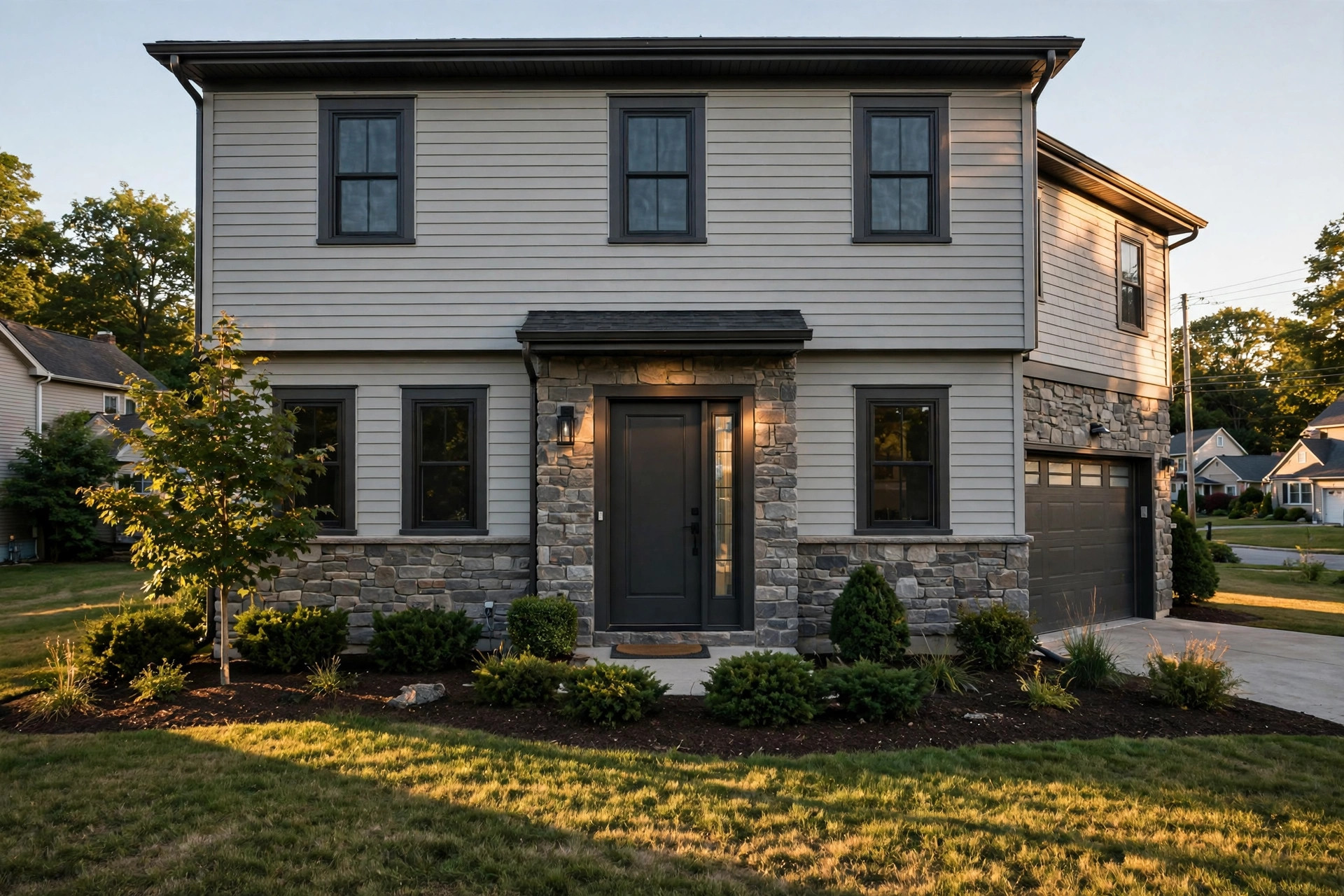

Your home’s outside face takes a beating. Rain soaks it. Sun bakes it. Wind throws dirt and leaves at it. After a few years, paint peels, wood rots, and the whole house starts to look tired. Many owners reach a point where they want a change. They want a home that looks good and stays good with little work. That is where low maintenance home exterior design services near me come in. These are local firms and contractors who plan and install outside finishes that need little care over many years. This guide explains what these services do, how to pick one, what the choices cost, and how to keep the result looking fresh.
Why Low Maintenance Matters
A house is the largest purchase most families ever make. The outside of that house is the first thing people see. It sets the mood for the whole street. But beauty fades fast when a finish cannot handle the weather. Wood siding needs paint every five to seven years. Cheap trim warps. Old gutters sag. Each repair costs money and weekends.
Low maintenance design takes a different path. It picks materials that resist rot, pests, and sun damage from the start. Fiber cement siding, for example, holds its paint for fifteen years or more and does not feed termites. Quality vinyl siding never needs painting at all. When the design is planned by a pro, the pieces work together. Overhangs throw water clear of the walls. Flashing guides rain away from windows. Good design stops damage before it starts.
There is also the matter of time. Most owners do not want to spend every spring scraping and painting. A low maintenance home gives that time back. It also tends to hold its value better. Buyers notice when a house looks sharp without signs of wear. Real estate agents often say that curb appeal can add real dollars to a sale price.
What to Look for in a Service: Low Maintenance Home Exterior Design Services near Me
Not every contractor who hangs siding is a designer. A low maintenance home exterior design service should do both. It should plan the look and pick the materials, then install or manage the install. Here is how to judge a firm before you sign.
Proof of Skill
Ask to see a portfolio of past jobs. Photos of finished homes tell you more than a sales pitch. Look for variety. A good firm handles cottages, colonials, ranch homes, and modern builds. Ask if you can drive by two or three past jobs in your town. Seeing real work, in real weather, is the best proof.
License, Insurance, and References
Make sure the firm holds a state or local contractor license. Ask for proof of general liability insurance and workers compensation. A serious firm hands these over without a fuss. Then call two or three references. Ask simple questions. Did the crew show up on time? Did the final price match the quote? Would you hire them again?
A Clear, Written Plan
Good design work starts on paper. The service should give you a drawing or a clear plan that shows the siding type, the trim, the color, and where each piece goes. The plan should list brands and product lines, not just colors. If a firm will not put the details in writing, keep looking.
Warranty
Ask what the firm covers and for how long. Many top siding makers back their product for thirty to fifty years. The installer should back the labor too. Get the warranty terms in the contract.
Low Maintenance Options
The heart of any low maintenance plan is the material. Each choice has a different look, cost, and life span. A good local service will know which ones suit your climate. A design that works in a dry western state may fail in a wet coastal town.
Fiber Cement Siding
Fiber cement is made from cement, sand, and cellulose fiber. It looks like wood but resists rot, fire, and pests. It comes pre-painted or primed, and a good paint job can last fifteen years or more. Guides from fiber cement siding makers like James Hardie show how the product is cut and hung. It is heavier than vinyl, so the crew must know what it is doing. Expect higher labor cost, but very long life.
Vinyl Siding
Modern vinyl is not the thin, wavy product of years past. Thick-gauge panels hold their shape, and insulated vinyl adds a foam backing that cuts heat loss. It never needs paint. A yearly wash keeps it clean. Before you pick a product, it helps to study an insulated vinyl siding price comparison so you know what the upgrade costs. Builders like CertainTeed offer lines rated for high wind and hail.
Brick and Stone Veneer
Real brick and manufactured stone veneer need almost no care. Brick lasts for generations and never needs paint. Stone veneer gives the same rich look at a lower weight and cost. Both are strong against fire and storms. The trade-off is price. Masonry work is slow and skilled, so labor runs high. But once it is up, you may never touch it again.
Metal Roofing
The roof is part of the outside face too. Asphalt shingles last twenty to thirty years. Metal roofs often last fifty or more. They shed snow, resist wind, and reflect heat. A metal roofing installation cost guide can help you weigh the higher upfront price against decades of avoided re-roofing. Standing seam metal gives a clean, modern look that pairs well with fiber cement or board and batten siding.
Composite Trim and PVC Boards
Wood trim rots at the ends where water sits. Composite and PVC trim boards do not. They cost more than pine but far less than the repeated cycle of repair and repaint. Smart designers use them at corners, around windows, and along the water table where splash hits hardest.
Color and Finish
Low maintenance is not only about material. Dark colors fade faster in strong sun. Light, baked-on finishes hold longer. Many makers now sell siding with color baked in at the factory. The finish carries a long fade warranty. Picking one of these colors can push the first repaint out by decades.
What It Costs
Prices move with region, labor, and home size. Still, national ranges help set hopes. Full siding replacement on a typical two-story home often runs from about fifteen thousand to forty thousand dollars. Fiber cement sits in the middle to upper part of that range. Quality insulated vinyl can cost less up front. Brick and stone veneer push higher.
Several factors move the price. A tall house needs scaffolding. Old siding must be stripped and hauled away. Rot found under the old siding adds repair work. Complex shapes, gables, and dormers add cuts and time. Local labor rates matter too. A job in a big coastal city costs more than the same job in a small inland town.
Get at least three written quotes. Each quote should list the square footage, the product name, the color, the trim, and the labor. Be wary of a quote that is far lower than the others. It often means thinner material, skipped steps, or no warranty. Retail sites like Lowe’s and Home Depot publish rough installed-price guides that can serve as a check on what local firms tell you.
Ask how the firm handles surprises. What happens if they pull off the old siding and find rot? A fair contract sets an hourly or per-sheet rate for repairs, so you are not held hostage mid-job.
Care and Upkeep
Low maintenance does not mean no maintenance. It means less, and simpler. A short yearly routine keeps the exterior sharp.
Wash the siding once a year. A garden hose and a soft brush handle most dirt. For green film and mildew, a mild soap solution works. Many owners hire out this job, and a look at top rated house power washing services can help you find local help. Use low pressure on siding. High pressure drives water behind the panels.
Clean the gutters each fall and spring. Full gutters spill water down the walls and stain the siding. Check the caulk around windows and doors once a year. Cut out cracked caulk and replace it. Touch up any paint chips on trim before moisture gets in.
Walk the house twice a year. Look for loose panels, cracked trim, and peeling paint. Small fixes are cheap. Big ones are not. Home advice from This Old House, Bob Vila, The Spruce, and Family Handyman all repeat the same rule. A twenty minute walk each spring and fall saves thousands.
Trim bushes and trees back from the walls. Plants hold moisture against the siding and scratch the finish in the wind. Keep mulch a few inches below the siding line. Soil piled against the walls invites rot and pests.
Safety
Exterior work has real risks. Falls from ladders send thousands of people to the emergency room each year. If you do any of the upkeep yourself, use a firm ladder on level ground. Keep three points of contact. Never lean past the side rails.
Homes built before 1978 may have lead paint. Scraping or sanding old paint can spread lead dust, which is unsafe for children. Federal rules require certified firms for this work. Ask any contractor about lead-safe practices before the job starts.
Paint fumes, dust, and noise are part of big jobs. Keep children and pets clear of the work zone. Make sure the crew covers shrubs and seals vents so dust stays outside. A good firm explains its safety plan before the first truck arrives.
FAQ
How do I find low maintenance home exterior design services near me? Start with local referrals from friends and neighbors. Check review sites and the local builders association. Meet three firms, see portfolios, and get written quotes. A firm that designs and installs, and backs both, is worth more than a firm that only hangs siding.
What is the lowest maintenance siding? Brick, stone veneer, and fiber cement rank at the top. They resist rot, pests, and weather with little care. Quality vinyl is close behind and costs less. The best pick depends on your climate and budget.
How long does an exterior redo take? A full siding job on a typical house takes one to three weeks. Masonry work runs longer. Weather delays are common, so ask the firm how it handles rain days.
Can I mix materials? Yes. Many of the best designs mix two or three. A common plan pairs fiber cement siding with stone veneer on the front and composite trim throughout. Mixing adds texture and can save money by using pricey material only where it shows.
Will a low maintenance exterior raise my home value? Often, yes. Appraisers and buyers favor homes that look fresh and need little work. A clean, modern exterior with a long-lived finish is a strong selling point. Keep all product warranties and receipts for the next owner.
Do I need a permit? Most towns require a permit for siding replacement and roofing. The contractor usually pulls it. Ask who handles the permit and the final inspection. Never skip this step. Unpermitted work can stall a future sale.
A Final Word
A home that looks good and asks little of you is no accident. It is the result of good planning and honest materials. Take your time picking a firm. Ask hard questions. Read the contract. Then enjoy a house that greets you clean and sharp, year after year, with only a hose and a few weekends to keep it that way.
Related guides on this site include insulated vinyl siding price comparison usa, top rated house power washing services near me, and budget friendly exterior stair railings for cold climates.
References
Bob Vila. (n.d.). Home improvement advice. https://www.bobvila.com CertainTeed. (n.d.). Building materials and exterior products. https://www.certainteed.com Family Handyman. (n.d.). DIY home repair and maintenance. https://www.familyhandyman.com Insulated vinyl siding price comparison usa. (n.d.). Home and garden information. https://www.insulated-vinyl-siding-price-comparison-usa/ James Hardie. (n.d.). Fiber cement siding and exterior products. https://www.jameshardie.com Lowe’s. (n.d.). Home improvement products. https://www.lowes.com Metal roofing installation cost guide usa. (n.d.). Home and garden information. https://www.metal-roofing-installation-cost-guide-usa/ The Home Depot. (n.d.). Home improvement products. https://www.homedepot.com The Spruce. (n.d.). Home and garden advice. https://www.thespruce.com This Old House. (n.d.). Home renovation guidance. https://www.thisoldhouse.com Top rated house power washing services near me. (n.d.). Home and garden information. https://www.top-rated-house-power-washing-services-near-me/
Was this guide helpful?

About Michael Thompson
The My Garden US editorial team writes practical, in-depth home and garden guides for American homeowners — tested advice, no fluff.
You May Also Like

Best Wood Siding Replacement for Homeowners: A Complete Guide
August 23, 2026 0 views
Reliable Roof Replacement Contractors in California: A Homeowner’s Guide
September 25, 2026 0 views
Best Concrete Driveway Resurfacing Near Me: A Plain Guide for Homeowners
February 3, 2026 0 views