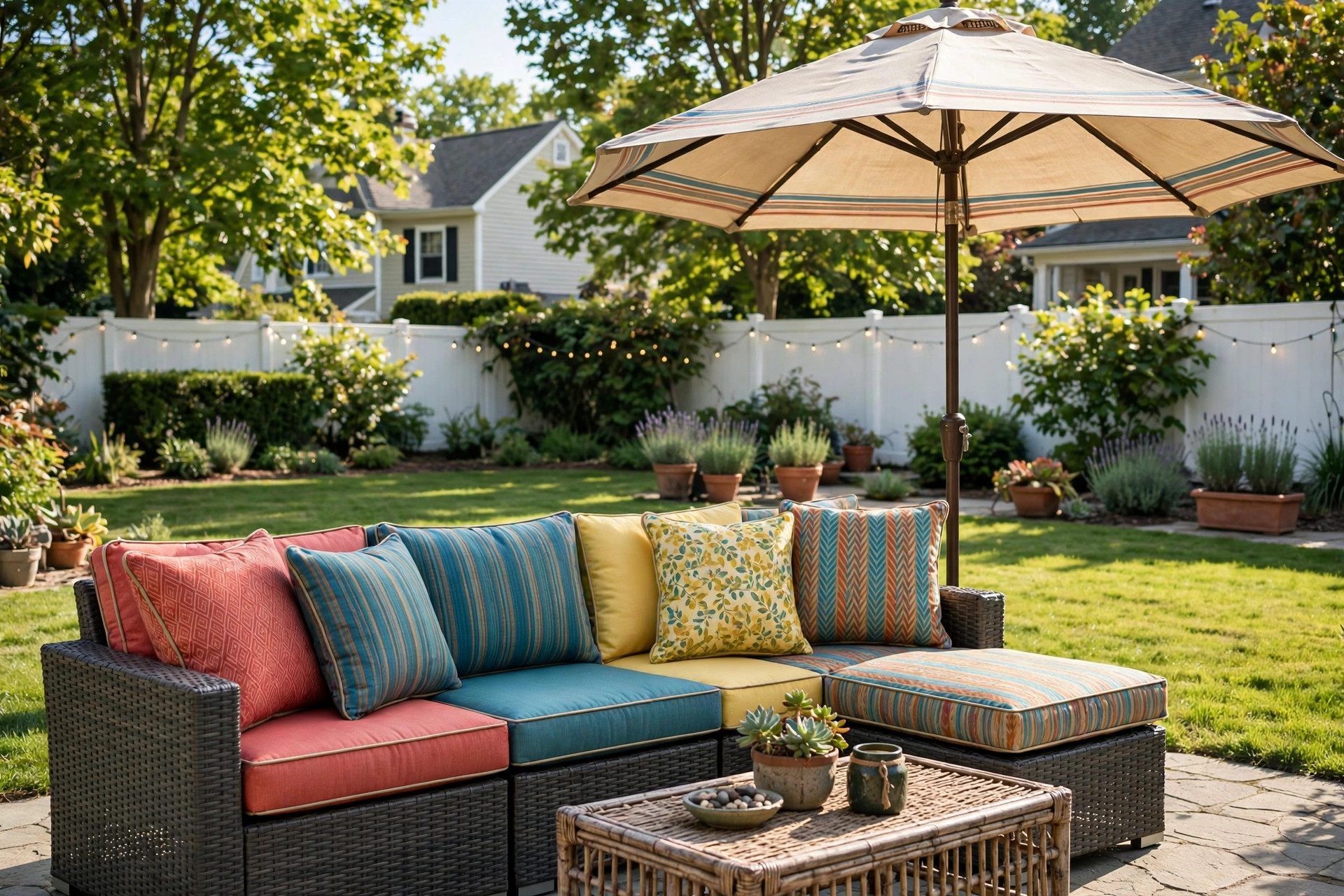

New patio cushions look rich and full of color. After one summer in the sun, they can look dull and washed out. Many homeowners ask how to keep patio cushions from fading, and the answer is simpler than it seems. Sunlight is the main cause of fading. With the right fabric, some shade, and a few simple habits, your cushions can stay bright for many seasons.
Why Sunlight Fades Patio Cushions
Sunlight carries ultraviolet rays. These rays break down the dyes in fabric. This process is called photodegradation. It happens slowly, day by day. Dark colors show fading first. Red, navy, and deep green cushions can turn pale in a single summer.
Not all fabrics fade at the same rate. Cheap cotton canvas fades fast. It may lose its color in weeks. Olefin and solution-dyed acrylic fabrics last much longer. In these fabrics, the color goes all the way through the fiber. It does not sit only on the surface.
Heat and moisture speed up fading. A cushion that stays wet will fade faster than a dry one. Dirt and pollen can also hold heat on the fabric surface. Clean cushions last longer.
The direction your patio faces matters too. A south-facing patio in the United States gets the most direct sun. Cushions there face the hardest test. A north-facing patio is gentler on color.
What to Look for When You Buy: How to Keep Patio Cushions From Fading
The best way to learn how to keep patio cushions from fading is to start at the store. The fabric you choose matters more than any spray or cover.
Look for solution-dyed acrylic. The dye is added to the liquid fiber before it is spun. This makes the color part of the yarn itself. It resists sun, rain, and mildew. Many outdoor product guides note that solution-dyed fabrics hold color best.
Check the label for a UV rating or fade warranty. Some makers promise three to five years against fading. A written warranty is a good sign. It shows the maker tested the fabric in real sun.
Lighter colors fade less visibly than dark colors. Beige, light gray, and pale blue will still fade, but you will not see it as much. If you love bold color, choose it only in a high-grade fabric.
Feel the weave. A tight, thick weave blocks more light than a loose one. Thicker fabric also stands up to rain and wear.
Ask about the filling. Foam that holds water will stay damp. Damp foam breeds mildew, and mildew stains the fabric. Quick-dry foam drains fast and keeps the cover drier.
Types of Fade-Resistant Fabric
Solution-dyed acrylic. The gold standard. It resists fading, mildew, and stains. It costs more but lasts for years. Brands that use it often print the fabric name on the tag.
Olefin. A strong synthetic fiber. It resists sun and chemicals. It costs less than acrylic. It may feel rougher to the touch.
Polyester with UV treatment. Common and cheap. The UV coating wears off over time. These cushions may need re-treatment after a season or two.
Cotton canvas. Soft and natural. It fades fast outdoors. Save it for covered porches or indoor use.
When you shop, you can compare options from large retailers and outdoor product ratings at Consumer Reports to see which fabrics hold up best in tests.
Cost and Price
Price and fade resistance go together. A set of basic polyester cushions may cost 40 to 80 dollars. They may fade in one season. Solution-dyed acrylic cushions cost 150 to 400 dollars for a full set. They can last five years or more.
Cushion covers are a cheaper fix. You can buy fade-resistant covers for 15 to 40 dollars each. A cushion cover from Wayfair in solution-dyed fabric can give old foam new life.
UV fabric sprays cost 10 to 20 dollars per bottle. They add some protection. They are not a cure. Reapply them every few weeks for best results.
Shade helps too. A patio umbrella costs 50 to 200 dollars. A shade sail costs 30 to 100 dollars. Both cut direct sun and cool the seating area. Many patio design guides at HGTV show how shade and furniture can work together.
Think in terms of cost per year. A 300-dollar set that lasts six years costs 50 dollars per year. An 80-dollar set replaced each year costs 80 dollars per year. The better fabric is often the cheaper choice over time.
Care and Upkeep
Good habits do as much as good fabric. Here is how to keep patio cushions from fading with daily and weekly care.
Give Them Shade
Move cushions out of direct sun when you are not using them. Turn them over so the same side does not always face the sun. An umbrella over the seating area cuts UV by a large amount. Trees and awnings help too.
Rotate your cushions every two weeks. This spreads sun exposure evenly. All cushions will age at the same rate, and the set will look even.
A shade sail is another good option. It costs less than a full awning. It blocks a wide area of sun. You can move it as the sun changes through the day. Pergolas with climbing plants give soft, moving shade. They cool the air and look lovely too.
Think about where you place dark cushions. Put the darkest ones in the shadiest seats. Put light cushions where the sun hits hardest. This simple plan evens out wear across the set.
Use Covers
Patio furniture covers are one of the best tools against fading. A cover blocks sun, rain, and dust. Use covers when the furniture will sit unused for days. Many covers at Lowe’s fit standard sofa and chair sizes.
Cover the cushions, not just the frame. Some covers only protect the frame. Get full covers that reach the ground. Make sure the fabric can breathe so moisture does not get trapped.
Clean Them Regularly
Brush off dust and pollen each week. A soft brush or a quick shake is enough. Dirt holds heat and grime, which speeds fading.
Wash the covers once a month in summer. Most covers come off with a zipper. Wash them in cold water with mild soap. Air dry them in the shade, not in full sun. Never use bleach. Bleach destroys color and weakens fiber.
For stains, blot fast. Use a mix of mild dish soap and water. Rinse well. Let the cushion dry fully before you put it back. Care guides from The Spruce offer step-by-step cleaning methods for common stains.
Do a deep clean twice a year. Once in spring before the season starts. Once in fall before you store the cushions. A deep clean removes the built-up grime that dulls color. Fill a bucket with warm water and a small amount of mild soap. Scrub gently with a soft brush. Rinse with a garden hose on low pressure. Stand the cushions on edge to dry. Both sides must dry fully. Flip them after a few hours.
Check zippers and seams during each deep clean. A small tear lets water into the foam. Fix it early with outdoor thread. This keeps the cushion dry and the color safe.
Store Them Right
At the end of the season, store cushions indoors. A dry garage or shed is ideal. Do not leave them out all winter. Snow and ice damage fabric fast. For more on this, see our guide on how to winterize outdoor furniture cushions.
Use a deck box for daily storage. A waterproof deck box for pool toys also works well for cushions. It keeps them dry and out of the sun between uses.
Never store damp cushions. Dry them fully first. Wrap them in breathable bags, not plastic. Plastic traps moisture and causes mildew.
Safety
Fading is not only about looks. Some safety points are worth noting.
Fabric sprays and waterproofing products contain chemicals. Use them outdoors in open air. Keep them away from children and pets until dry. Read the label before you spray.
Covers and deck boxes can trap heat. Do not let small children play under furniture covers on hot days.
Check cushions for mildew if they stayed damp. Mildew can cause breathing problems for some people. Wash or replace cushions that smell musty.
If your cushions sit near a grill, keep them clear of heat. Many grill safety tips from Bob Vila stress keeping fabric furniture away from open flame. Sparks can burn through synthetic fabric fast.
When you rearrange your patio, an outdoor accent table for patio decor can add style without adding fabric that will fade.
Frequently Asked Questions
How long should outdoor cushions keep their color? Cheap polyester cushions may fade in one summer. Solution-dyed acrylic cushions often hold color for three to five years. The amount of direct sun is the biggest factor.
Do UV sprays really work? They help a little. They add a thin shield against UV rays. They wash off in rain and wear off in sun. Reapply often. They cannot save cheap fabric for long.
Can faded cushions be fixed? You cannot restore lost color. You can dye some fabrics with fabric dye made for synthetics. Results vary. New covers are usually a better choice.
Should I buy dark or light cushions? Light colors show fading less. Dark colors look richer but fade faster. If you want dark color, pay for solution-dyed fabric. Brands like Frontgate and Article offer fade-resistant options in many colors.
Do patio umbrellas stop fading? They slow it a lot. An umbrella blocks direct UV from above. Reflected light still reaches the cushions. Combine an umbrella with covers for best results. Affordable outdoor textiles from IKEA can add both shade and style.
Is it better to store cushions in a shed or a deck box? A dry shed is best for winter. A deck box is best for daily use. Both beat leaving cushions out in the sun. Make sure air can move so moisture does not build up.
A Quick Seasonal Routine
A simple routine keeps fading under control. In spring, wash all covers and check for winter damage. Treat them with UV spray if you use one. Set up umbrellas or shade sails before the strong sun of June.
In summer, brush cushions weekly and wash covers monthly. Rotate cushions every two weeks. Use covers during heat waves and storms. In fall, deep clean everything and store cushions indoors. Winter storage is the single best gift you can give your cushions.
This routine takes little time. A few minutes each week beats buying new cushions each year.
A Final Word
Learning how to keep patio cushions from fading comes down to three things. Buy fade-resistant fabric. Give the cushions shade. Store them when they are not in use. No single trick does it all. Together, these habits keep color bright for years. Materials experts at POLYWOOD note that UV-stable materials age far better outdoors, and the same rule applies to your cushions. Start with one change this week, and your patio will thank you.
References
Article. (n.d.). Modern furniture. https://www.article.com Bob Vila. (n.d.). Home improvement advice. https://www.bobvila.com Consumer Reports. (n.d.). Product reviews and ratings. https://www.consumerreports.org Frontgate. (n.d.). Outdoor furniture and decor. https://www.frontgate.com HGTV. (n.d.). Home and garden ideas. https://www.hgtv.com IKEA. (n.d.). Home furnishings. https://www.ikea.com Lowe’s. (n.d.). Home improvement products. https://www.lowes.com Polywood. (n.d.). Outdoor furniture. https://www.polywood.com The Spruce. (n.d.). Home and garden advice. https://www.thespruce.com Wayfair. (n.d.). Furniture and home goods. https://www.wayfair.com
Was this guide helpful?

About Jennifer Lee
The My Garden US editorial team writes practical, in-depth home and garden guides for American homeowners — tested advice, no fluff.
You May Also Like
How to Clean an Outdoor Rug on a Patio: A Plain Guide
February 19, 2026 0 views
Weatherproof Patio Furniture Covers: Heavy-Duty Protection for Every Season
September 8, 2026 0 views
Best Metal Gazebo for Backyard Reviews: A Plain Guide for Buyers
September 28, 2026 0 views