
Introduction
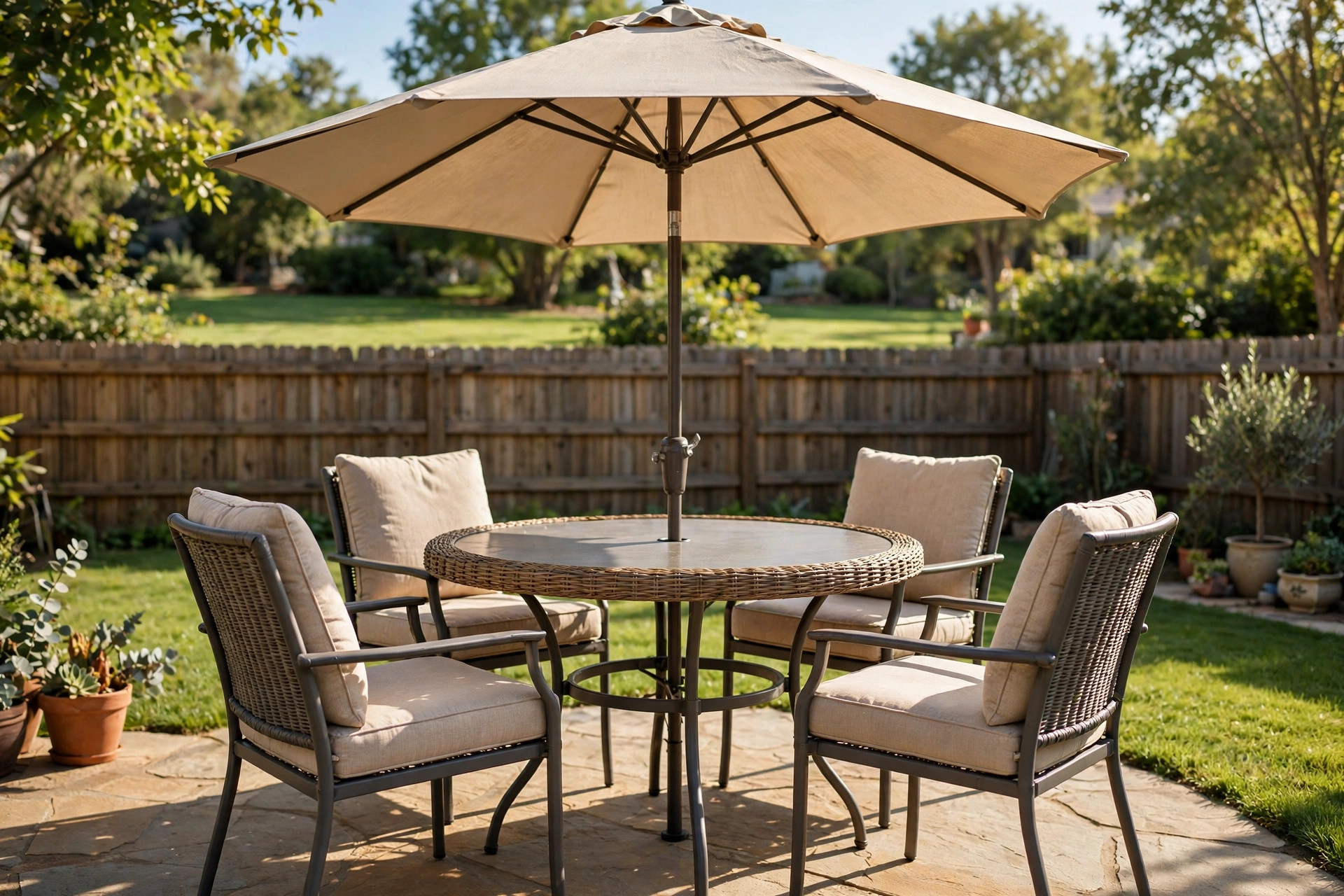
An outdoor dining set with umbrella hole is one of the most useful things a family can put on a patio. It is a table and a set of chairs built around one simple idea. The table has a small hole in the center. A patio umbrella slides through the hole and opens above the table. The result is plain to see. You eat in the shade. You drink morning coffee in the shade. You talk with friends in the shade long after the sun climbs high.
Many homes in the United States have a deck, a patio, or a small yard. These spaces sit empty on hot afternoons. The sun beats down on the stone or the wood. Metal chair arms get too hot to touch. A set with a built in umbrella hole solves this problem for a modest price. You do not need to build a roof over the patio. You do not need to hire a crew to raise a pergola. You need the right table, the right chairs, and a good umbrella that fits the hole.
This guide covers why the umbrella hole matters, how to pick the right size, which frame materials last the longest, what a fair price looks like, and how to care for the set year after year. It also answers common questions about wind, wobble, and winter storage, so your set stays safe and steady for many summers.
Why the Umbrella Hole Matters: Outdoor Dining Set with Umbrella Hole
A patio table without shade is hard to use through the summer months. The sun moves across the sky from morning to night. By noon the light grows harsh and the heat builds. Food on the table gets warm too fast. Guests squint across the plates. Cold drinks lose their chill. A freestanding umbrella can help, but it often sits in the wrong spot or blows over in a gust. When the hole is built into the table, the umbrella stays exactly where it belongs. It rises from the center of the table, and the shade falls straight down on the food and the people around it.
The hole also keeps the pole steady in a way that a lone base cannot match. A heavy base on the ground holds the bottom of the pole. The table grips the pole near the top through the hole. Two points of contact beat one. The table acts like a second anchor for the umbrella. This makes the whole setup far more stable on breezy days, and it keeps the canopy from leaning or twisting.
There is one more benefit that buyers often forget. The hole keeps the pole out of the way of people. With a center hole, the pole rises through the middle of the tabletop. Plates, bowls, and cups fit around it with ease. The pole becomes part of the table instead of an obstacle beside it.
How to Choose the Right Set
Size and Seating
Start with the number of people you plan to seat. A family of four needs a table about 48 inches across if the table is round, or about 60 inches long if the table is rectangular. Six people need 60 to 72 inches of table. Eight people need at least 84 inches of length. Measure your patio or deck before you shop, and leave about 36 inches of clear space around the table on every side. Chairs need room to slide back when people sit down and stand up.
Small patios benefit from round tables. A round table seats four people in a small circle, and it has no sharp corners to bump in a tight space. Large families and wide decks suit rectangular tables. They seat more people, and they work well placed against a wall or a railing. Bar height sets also exist for narrow decks, and they pair with tall stools instead of standard chairs.
Frame Materials
Most outdoor dining sets come in metal, wood, wicker, or recycled plastic lumber. Aluminum is light, easy to move, and it will not rust, which makes it a strong choice for rainy regions. Steel is heavier and costs less, but it needs a good powder coat finish to fight rust, so check the coating quality. Teak and eucalyptus look warm and natural on a patio, though they need a coat of oil once or twice a year to hold their color. All weather wicker is a woven plastic that looks like natural rattan, and it resists both rain and strong sun. Recycled plastic lumber looks like painted wood and lasts for many years with almost no care at all.
The Umbrella Hole Itself
Look closely at the size of the hole. Most umbrella poles are about 1.5 inches thick. The hole should fit the pole with a small amount of room to spare. If the hole is too tight, the pole will stick and scratch. If the hole is too loose, the pole will wobble and rattle in the wind. Some tables come with a ring or a cap that closes the hole when no umbrella is in place. This is a useful detail. It keeps rain out of the table frame, and it leaves the tabletop smooth for days when you want full sun.
Types and Options
Round Sets
Round tables with a center hole are the classic choice for American backyards. The umbrella rises from the middle, and every seat gets a fair share of shade. Four chair sets suit small families. Five and six chair sets suit families that host guests. Because the shape has no ends, conversation flows easily around the table, and no one sits at the head.
Rectangular Sets
Rectangular tables seat more people along two straight sides. The umbrella still rises from the center of the table. On a long table, the seats at the far ends may sit outside the shade line, while the middle seats stay cool. This is fine in practice, because the ends are good spots for serving dishes and platters. Guests who want full shade can take the middle chairs. For wide tables, a rectangular patio umbrella for table covers the seats better than a round canopy, because the shade matches the shape of the table.
Sets With Matching Pieces
Many sets include chairs, a table, and extra pieces that complete the patio. A common extra is a small outdoor side table with umbrella hole that sits beside a lounge chair. It holds drinks and books, and its own hole can take a small shade umbrella. Buying a matched set saves time and guesswork. The finish, the fabric, and the style all match from the start. You do not have to hunt through stores for pieces that go together.
Bar Height Sets
Bar height sets stand 40 to 42 inches tall. They suit narrow decks and standing parties, because guests can rest a plate on the table while they talk. The umbrella pole must be tall enough to clear the high tabletop and still open fully above it. Check the umbrella height on the box before you buy.
Cost and Price
An outdoor dining set with umbrella hole can cost anywhere from 150 dollars to 3,000 dollars or more. The price depends on the size of the set, the frame material, the brand name, and where you shop.
Budget sets under 400 dollars usually use steel frames and simple sling fabric. They serve a family well for three to five years with basic care. Mid range sets from 400 to 1,200 dollars often use aluminum frames or resin wicker with thicker cushions. These sets commonly last ten years or more. Premium sets over 1,200 dollars use teak, cast aluminum, or high density recycled lumber. With care, they can last twenty years and still look fine.
The umbrella is often sold apart from the table and chairs. A basic 7.5 foot umbrella costs 60 to 150 dollars. A stronger model with a tilt feature and a vented canopy costs 150 to 400 dollars. Add a heavy base for 40 to 100 dollars. Large retailers such as Home Depot and Lowe’s carry a wide range of sets and umbrellas at every price point. Online stores like Wayfair and IKEA offer compact sets that suit small patios and balconies.
Shoppers in windy areas should read up before they buy. A best patio umbrella for wind reviews guide shows which canopies hold up in gusts and which ones fold too soon. Design sites such as HGTV show how to style the whole patio around the new set, from rugs to lights.
Care and Upkeep
Regular Cleaning
Wash the table and chairs twice a year with mild soap and warm water. Use a soft sponge or a brush. Rinse everything with a garden hose and let it dry in the sun. Do not use a pressure washer on wicker or wood, because the hard spray can strip the finish or split the fibers. Wipe the umbrella fabric with a soft brush to lift dust and pollen. Let the fabric dry fully before you close the umbrella, or mildew can grow in the folds.
Seasonal Care
Bring cushions inside during long rains. Close the umbrella and tie the canopy when you are not using it, even on calm days. In cold regions, cover the set or move it into a garage or shed for the winter. Care guides at The Spruce and Bob Vila walk through winter storage step by step for each material.
Material Care
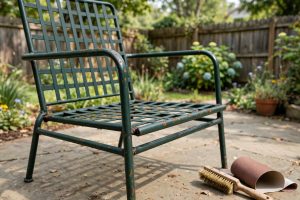
Oil teak once a year to keep its warm honey color. If you skip the oil, the wood will age to a silver gray, which many owners like just as well. Touch up small chips in powder coat paint with a brush and matching paint to stop rust before it starts. Check the screws and bolts each spring and tighten what has worked loose. Recycled plastic lumber needs no oil and no paint. Makers like Polywood build their furniture from recycled plastic that shrugs off rain, sun, and salt air with little more than a wash.
Safety
An umbrella adds height and sail area to your table, so wind is the main risk to manage. Always close the umbrella when you leave the patio, even for a short errand. Tie the canopy shut with its strap. In a storm, take the umbrella out of the table hole and lay it flat on the ground or carry it inside. A closed umbrella tied to the table is still a risk in high wind.
Use a heavy base under the table. A 7.5 foot umbrella needs at least 50 pounds of base weight. A 9 foot umbrella needs 75 pounds or more. Testing groups such as Consumer Reports rate umbrella frames for strength and wind resistance, and their findings help buyers pick sturdy models.
Keep grills and fire pits well away from the canopy. Umbrella fabric can melt or catch fire from rising heat. A safe distance is at least ten feet between open flame and fabric. Never leave candles burning under the umbrella when no one is watching. Furniture makers such as Article warn that fabric shades and open flames should never mix on a patio.
Frequently Asked Questions
What size umbrella fits an outdoor dining set with umbrella hole?
A 7.5 foot umbrella suits tables that seat four to six people. A 9 foot umbrella suits tables that seat six to eight. The canopy should reach about two feet past the table edge on each side. Do not buy a canopy so large that it catches every gust of wind.
Do all patio tables have an umbrella hole?
No, they do not. Some tables have solid tops with no hole. Some sets use an offset or cantilever umbrella that stands on a base beside the table. If you want the classic center hole style, check the product listing before you buy. The words umbrella hole or parasol hole should appear in the feature list.
Can I drill an umbrella hole in a table that lacks one?
It is not a good idea. Drilling into metal can weaken the frame. Drilling into glass can crack the top. The work may also void the warranty from the maker. Buy a table that was built with the hole from the start, and you will get a clean edge and proper support.
How do I stop the umbrella from wobbling in the hole?
Tighten the screw or clamp under the tabletop. Most tables have a small hand screw that grips the pole when you turn it. If the hole is wider than the pole, buy a plastic ring insert that fills the gap. A snug fit stops most of the wobble and the rattle.
Should I buy the set and the umbrella together?
Buying them together often saves money, and the sizes and colors match without effort. Buying them apart gives you more choice in fabric and strength. Either path works well. Just check the pole size against the hole size before you pay.
How long does a set like this last?
A budget steel set lasts three to five years. A mid range aluminum or wicker set lasts about ten years. A premium teak or recycled lumber set can last twenty years. Covers, cleaning, and winter storage add years to any set, no matter what it cost.
A Short Final Word
An outdoor dining set with umbrella hole turns a sunny slab of concrete into a room your family will actually use. Meals taste better in the shade. Morning coffee lasts longer. Evening talks stretch past sunset. Choose the right size for your space, pick a frame that suits your climate, and buy an umbrella built to stand up to wind. Give the set a little care each season. It will pay you back with many summers of good food and good company.
References
Article. (n.d.). Modern furniture. https://www.article.com Bob Vila. (n.d.). Home improvement advice. https://www.bobvila.com Consumer Reports. (n.d.). Product reviews and ratings. https://www.consumerreports.org HGTV. (n.d.). Home and garden ideas. https://www.hgtv.com IKEA. (n.d.). Home furnishings. https://www.ikea.com Lowe’s. (n.d.). Home improvement products. https://www.lowes.com Polywood. (n.d.). Outdoor furniture. https://www.polywood.com The Home Depot. (n.d.). Home improvement products. https://www.homedepot.com The Spruce. (n.d.). Home and garden advice. https://www.thespruce.com Wayfair. (n.d.). Furniture and home goods. https://www.wayfair.com
Was this guide helpful?

About Sarah Mitchell
The My Garden US editorial team writes practical, in-depth home and garden guides for American homeowners — tested advice, no fluff.
You May Also Like
How to Install an Outdoor Ceiling Fan: A Step-by-Step Guide
July 15, 2026 0 views
How to Anchor Gazebo to Patio: A Safe and Simple Guide
April 7, 2026 0 views
Outdoor Fire Table Propane Reviews: How to Choose the Right One
April 23, 2026 0 views