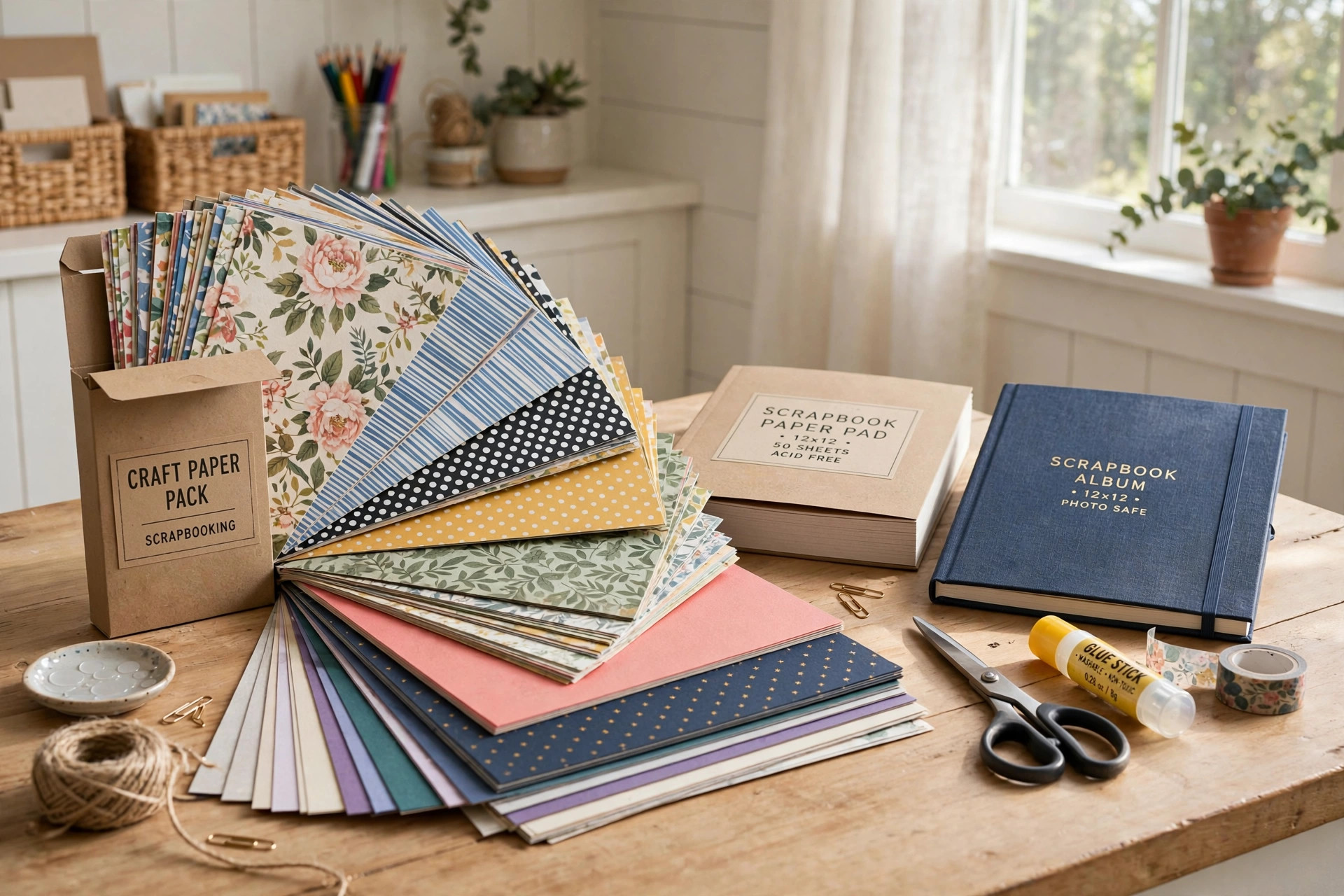

Every scrapbook starts with paper. Photographs hold the memory. Paper holds the photographs. When you search for the best craft paper pack for scrapbooking usa, you want paper that cuts clean, folds flat, and keeps its color for years. The market offers hundreds of choices. Some packs serve beginners who are building their first album. Others serve skilled crafters who plan every page in advance. This guide walks through the basics in plain terms. It covers why the paper matters, what to look for on the package, the main types of packs, honest price ranges, care, and safety. By the end, you will know how to pick a pack that fits your project and your budget.
Why the Paper Pack Matters
A scrapbook is a record. Families keep these books for decades. They pass them to children and grandchildren. Cheap paper turns yellow. It cracks at the fold. Glue fails on it. Good paper lasts. A well made scrapbooking paper pad 12×12 gives you matched patterns and colors in one purchase. You do not have to hunt for pieces that work together. The pack does the work for you. Color runs stay true from sheet to sheet. That matters when a layout uses three or four sheets side by side. A good pack also saves money. Single sheets cost more per sheet than sheets in a pack. When you build ten pages a month, the savings add up fast. Paper quality also affects your tools. Soft paper tears in a trimmer. Thin paper jams a die cutting machine. A solid pack works with your best paper cutter for scrapbooking and cards and keeps edges clean. In short, the paper pack is the foundation of the whole craft. Start with good paper and every later step gets easier.
What to Look for When You Choose: Best Craft Paper Pack for Scrapbooking Usa
Shopping feels easier with a short checklist. These six points cover most of what matters.
Weight and Thickness
Paper weight is measured in pounds or grams per square meter. Light paper feels like printer paper. Heavy paper feels like a greeting card. For scrapbook pages, medium to heavy paper works best. It holds photos without buckling. It takes glue and tape well. Look for cardstock weight if you want sturdy backgrounds. Use lighter patterned paper for layers and mats. A pack that mixes both weights gives you options for each page. If the package lists the weight, compare numbers across brands. Higher numbers mean thicker sheets.
Acid Free and Lignin Free
Acid breaks down paper over time. Lignin, a part of wood fiber, also causes yellowing. A pack labeled acid free and lignin free protects your photographs. This matters most for family albums and wedding books. You want those pages to look the same in thirty years. Most packs sold by craft stores like Michaels carry this label. Read the package before you buy. If the label is missing, skip that pack. The few dollars you save are not worth faded pages later.
Size
The common size is 12 by 12 inches. This fits standard scrapbook albums sold in the United States. Smaller packs come in 8.5 by 11 inches or 6 by 6 inches. Small sizes suit card making and mini albums. Large sizes suit full page layouts. Check your album before you buy. A 12 by 12 sheet will not fit an 8.5 by 11 album. Some crafters buy large sheets and trim them down. This works if you own a good trimmer. It wastes paper if you do not plan the cuts.
Color and Pattern Range
A good pack includes solids, small prints, and bold prints. Solids give you mats and borders. Small prints give you backgrounds. Bold prints give you accents. Packs built around one color family help beginners. Mixed packs help crafters who like variety. Look at the back of the package. Most show every sheet inside. Count the sheets you will actually use. A 48 sheet pack with only ten useful sheets is a poor buy. Pattern scale matters too. Large prints suit large photos. Small prints suit pages with many small elements.
Sheet Count and Price per Sheet
Divide the price by the sheet count. This gives you the cost per sheet. Compare packs this way. A large pack at a higher price may cost less per sheet. This simple math keeps your budget honest. It also stops impulse buys. A pretty cover can hide a weak value. The numbers never lie.
Brand Reputation
Known craft brands test their paper. They print color guides on the package. They stand behind the acid free claim. Store brands can be fine, but check reviews first. Online listings on Amazon carry buyer photos and honest notes about paper weight. Read a few before you order a pack you have never held.
Types of Paper Packs
Packs come in several styles. Each serves a different crafter.
Single Theme Packs
Theme packs center on one subject. Baby, wedding, travel, and holiday packs are common. Every sheet matches the theme. These packs make fast pages. You open the pack and start. They suit gift albums with a clear subject. The drawback is range. Once the event passes, leftover sheets sit unused. Buy theme packs only when you have the photos in hand.
Mixed Value Packs
Value packs hold many sheets at a low price. They mix colors and prints. Some include 100 sheets or more. They suit beginners and children. They also suit teachers and club leaders who supply a group. Print quality varies across brands. Check a few sheets before you buy a large pack. Stores like Walmart carry many value packs with buyer reviews you can read first. Value packs are also good for practice. New crafters can test layouts without fear of waste.
Cardstock Stacks
Cardstock stacks hold thick, solid color sheets. They form the base of a page. They also make photo mats, journal boxes, and title letters. A neutral cardstock stack in white, cream, and black is a smart first buy. Bright stacks add color when you need it. Cardstock pairs well with patterned paper from other packs. Acid free cardstock for scrapbooks is the standard for pages that must last. Keep one stack on hand at all times. You will reach for it on almost every page.
Specialty Packs
Specialty packs hold textured paper, vellum, foil, or glitter sheets. They add shine and depth to a page. Use them as accents. A full page of glitter paper overwhelms a layout. Specialty paper costs more per sheet. Buy small packs until you know how much you use. Blick Art Materials and Hobby Lobby both stock specialty lines for paper crafters. Vellum works well for overlays. Foil works well for titles. Test each type on a scrap sheet first.
Cost and Price in the USA
Prices in the United States fall into clear bands. Small 6 by 6 pads with 24 sheets sell for 5 to 10 dollars. Standard 12 by 12 packs with 36 to 48 sheets sell for 12 to 25 dollars. Large value packs with 100 or more sheets sell for 20 to 40 dollars. Specialty packs sell for 10 to 20 dollars for fewer sheets. Premium designer lines can reach 30 dollars or more for a single pack. Sales change these numbers through the year. Craft chains run paper sales often. The craft aisle at Home Depot and seasonal displays at Joann both discount paper at regular times. Buying during a sale can cut the price in half. Online sellers offer bulk deals too. Watch shipping costs on heavy orders. Paper packs are heavy. A deal online may cost more than the store shelf after freight. Set a budget per project before you shop. A simple birthday album needs one pack. A wedding album may need three. Plan ahead and you will not overspend. Keep a small notebook of prices. When you know the normal price, you will spot a real sale at once.
Care and Upkeep
Paper asks for little care, but a few habits keep it in good shape. Store packs flat. Standing them on edge bends the corners. Keep paper away from sun. Sunlight fades colors, even through a window. Keep paper dry. Damp rooms cause warping and mold. A closet or a shelf in a dry room works well. Use acid free storage boxes for finished pages. Ordinary cardboard gives off acid. It can stain pages over time. Keep scraps in labeled envelopes by color. Scraps make good mats, tags, and borders. Throw away only true waste. Keep your cutting tools sharp. A dull blade tears paper and wastes sheets. Your best craft scissors set for paper and fabric will cut clean if you use the paper pair for paper only. Fabric dulls blades fast. Wipe your work table before you start. Dust and crumbs stick to adhesive. Clean tools and a clean table keep pages neat. Once a year, check stored albums for damp or pests. Catching a problem early saves the book.
Safety Notes
Paper crafting is a safe hobby. A few cautions still apply. Craft knives cut fingers. Always cut away from your body. Use a cutting mat under the blade. Keep blades capped when not in use. Keep small paper scraps and embellishments away from toddlers. They pose a choking risk. Some adhesives give off fumes. Use spray adhesive in a room with open windows or step outdoors. Read the label on any chemical product before first use. Glitter and fine powders irritate eyes and lungs. Do not blow glitter off a page. Shake it into a tray instead. Store sharp tools out of reach of children. A simple toolbox with a latch works well. Home safety guides from Family Handyman cover safe craft room setup in more depth. Good light also matters. Poor light causes eye strain and slips with sharp tools. A bright desk lamp is a cheap safety upgrade.
Frequently Asked Questions
How many sheets do I need for one scrapbook?
A standard 20 page album uses 20 to 40 sheets. Each page may use one background sheet plus one or two accent sheets. One 48 sheet pack often covers a full small album. Buy an extra pack if you plan many layered pages. It is better to have matching sheets left over than to run short mid project.
Is expensive paper worth it?
It depends on the project. For a keepsake wedding album, yes. Acid free, heavy paper protects photos for decades. For a school project or a practice book, a value pack works fine. Match the paper to the purpose. Many crafters keep both types on hand and choose per page.
Can I mix paper brands in one album?
Yes. Brands mix well if the colors match. Lay sheets side by side before you glue. Check that whites match. One bright white next to one cream white looks like a mistake. A coordinated paper kit for memory albums from one brand removes this risk. When mixing, hold sheets under daylight to judge the true color.
What is the difference between cardstock and patterned paper?
Cardstock is thick and usually solid in color. Patterned paper is thinner and carries prints. Use cardstock for page bases and mats. Use patterned paper for backgrounds and layers. Many crafters buy both and pair them on every page. The contrast between thick base and thin layer looks clean and lasts.
Where should I buy paper packs in the USA?
Craft chains, big box stores, and online sellers all carry them. Compare price per sheet before you decide. Read buyer reviews online for honest notes on weight and color. Guides from Bob Vila and This Old House also share craft room and storage ideas that help you organize a growing paper stash.
How do I store leftover sheets?
Keep them flat in the original package or in a paper storage cube. Sort by color or theme. Label the package with the theme and date. Leftover sheets from a travel pack may suit a future trip album. Good storage turns leftovers into a free supply for the next project. If you want to dress up the craft corner itself, see our guide to a macrame cord kit for wall hanging diy for simple handmade wall decor.
A Final Word
The best craft paper pack for scrapbooking in the USA is the one that fits your project, your tools, and your budget. Start with a mid size acid free pack in colors you love. Learn what you use most. Then buy with purpose. Good paper makes the work easier and the pages last. Your future self, opening that album in twenty years, will thank you.
References
Amazon. (n.d.). Online shopping. https://www.amazon.com Blick Art Materials. (n.d.). Art and craft supplies. https://www.dickblick.com Bob Vila. (n.d.). Home improvement advice. https://www.bobvila.com Family Handyman. (n.d.). DIY home repair and maintenance. https://www.familyhandyman.com Hobby Lobby. (n.d.). Arts, crafts, and home decor. https://www.hobbylobby.com JOANN. (n.d.). Fabric and craft supplies. https://www.joann.com Michaels. (n.d.). Arts and crafts supplies. https://www.michaels.com The Home Depot. (n.d.). Home improvement products. https://www.homedepot.com This Old House. (n.d.). Home renovation guidance. https://www.thisoldhouse.com Walmart. (n.d.). Everyday low prices. https://www.walmart.com
Was this guide helpful?

About Robert Taylor
The My Garden US editorial team writes practical, in-depth home and garden guides for American homeowners — tested advice, no fluff.
You May Also Like
Bead Loom Kit for Bracelet Making Beginners: A Complete Guide
July 8, 2026 0 views
Weaving Loom Kit for Beginners Wall Art: A Complete Guide
March 7, 2026 0 views
Best Iron On Vinyl for Cricut Projects USA
July 31, 2026 0 views